2-in-1, Loose-Shell or High-Leg Running Shorts: Which Construction Fits Which Run Program?
- Share
- Issue Time
- Sep 10,2026
Summary
A construction-first comparison of three running short architectures: 2-in-1 with an integrated liner, loose shell with a separate brief, and high-leg split. Covers liner systems, shell volume, side split, waistband and storage interaction, plus the movement and bulk checks brands should complete before production.
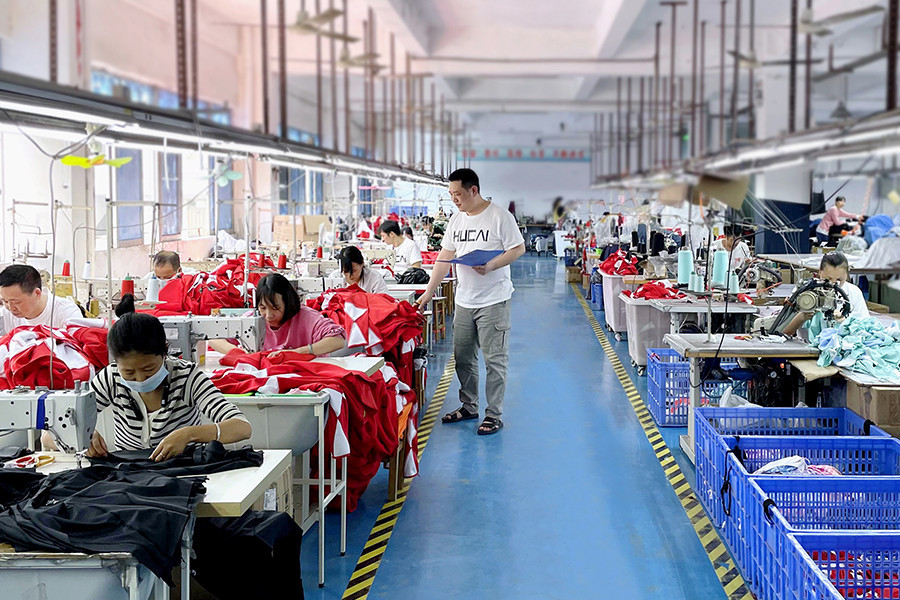
Running assortments have split into distinct construction families rather than one generic short. A 2-in-1 short with an integrated liner, a loose shell cut with more volume, and a high-leg split short solve different movement problems, and treating them as one product with different inseams tends to surface late. For brands developing custom running shorts as private label product, the expensive mistake is deciding length and pocket placement first, then discovering that liner tension, shell volume or leg-opening pressure does not match the run program the short is meant to serve. HUCAI Sportswear supports running and training brands through shorts development, and most of the rework we see is not a length problem. It is a construction mismatch that was already fixed into the design brief before the first sample was cut.
Quick Answer
Running-short construction should be selected from the run program and the movement requirement, because liner system, shell volume and leg opening decide comfort and function more than inseam does. A 2-in-1 design with an integrated liner suits continuous running and higher-mileage use; a loose shell with a separate brief suits training, hybrid and gym-to-run sessions where airflow and coverage matter more than compression; a high-leg split short suits speed work and warm conditions where leg-opening clearance drives the experience. Confirm the liner, the shell volume and the leg-opening before you request a sample, and the revision cycle is usually shorter.
Table of Contents
- Who This Article Is For
- Three Architectures, Three Different Jobs
- Matching Construction to the Run Program
- Liner Systems: Where Most Rework Starts
- Shell Volume, Hem and Side Split
- Waistband, Storage and Movement Interaction
- What to Confirm Before Bulk
- Decision Check
- Choosing the Development Path
- Manufacturer Insight
- FAQ
- Final Takeaway
Who This Article Is For
- Primary reader: running brands and growing activewear brands building or restructuring a shorts line
- Secondary reader: private label buyers adding performance shorts to an existing capsule
- Product stage: early product definition, before sample development begins
- Inputs you may already have: reference images, a current short that sells, target run distance, target market and climate
- Problem being solved: three construction architectures look almost identical in a reference image but behave differently in motion
- Who may not need this article: brands working only on pocket placement or anti-chafe detail, which is a separate topic from construction architecture
What you gain from this article: a construction-first way to choose between 2-in-1, loose-shell and high-leg designs; the liner, shell, hem and waistband variables that decide whether a short works in motion; and a confirmation list you can attach to a first sample request so the brief is complete before the pattern is cut.
Three Architectures, Three Different Jobs
The three architectures are often merchandised as one category with different inseams. In development terms they are separate products with separate risk profiles.
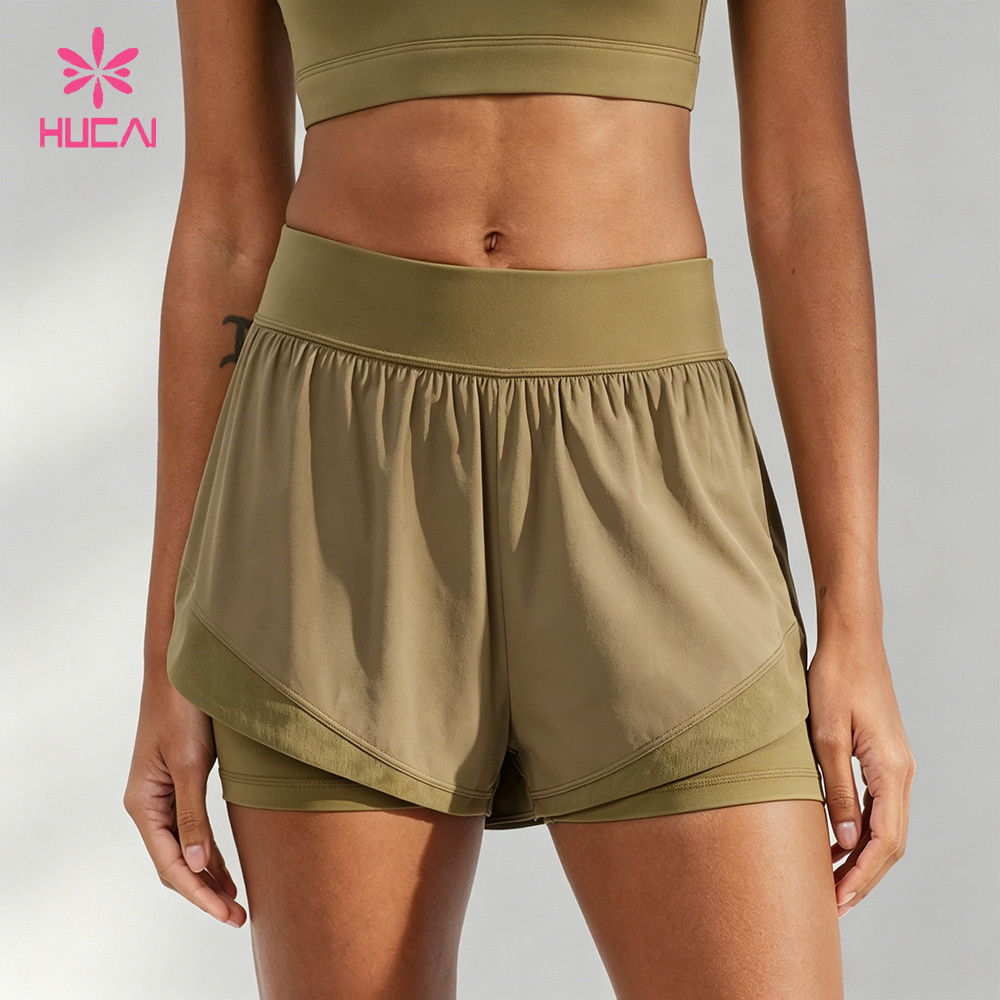
2-in-1 with an integrated liner
A shell and a liner are built as one garment. The liner carries coverage and reduces friction against the thigh, and the shell provides the outer silhouette. Because the two layers move together, the relationship between liner length, liner tension and shell volume is the central design decision. This architecture suits continuous running, where the garment stays in place over a long period and repeated contact is the main comfort risk.
Loose shell with a separate brief
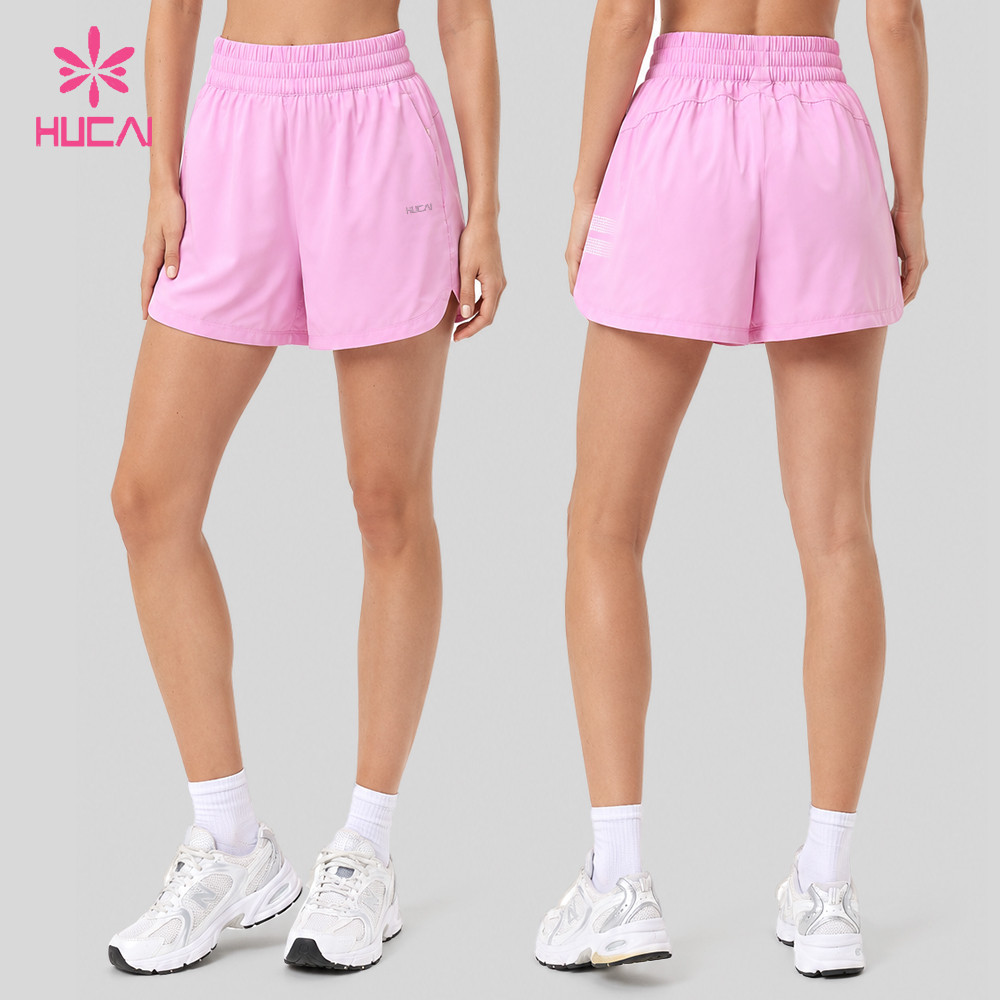
The shell is cut with more volume and greater thigh clearance, and the inner layer is either a separate brief or an independent inner short. Airflow and coverage improve, and compression pressure drops. This architecture suits training, hybrid and gym-to-run sessions where the short has to work across several activities, and it is often the easier first style for a brand entering running. The trade-off is that shell volume must still be controlled, because an over-cut shell swings, catches and reads as a different product category.
High-leg split short
The leg opening sits high with a side split, giving the stride the maximum clearance the fabric allows. There is little fabric to interfere with leg drive, which is why this architecture is common in speed work and warm conditions. It is also the least forgiving of pattern error: leg-opening pressure, split depth and hem finish are all felt immediately, and a small grading change can move the opening from comfortable to restrictive.
Matching Construction to the Run Program
Start from the run program, not from the silhouette. The program defines the movement, the duration and the climate, and those three factors decide the architecture.
| Run program | Construction that fits | What drives the decision |
|---|---|---|
| Daily and easy running, continuous 30 to 90 minutes | 2-in-1 with an integrated liner | Liner stability over time and friction control against the thigh |
| Speed work, intervals and track sessions | High-leg split | Leg-opening clearance and minimum fabric interference at stride |
| Hybrid training and gym-to-run crossover | Loose shell with a separate brief | Shell volume for airflow and coverage, low compression pressure |
| Long runs and higher-mileage programs | 2-in-1 with a liner | Chafing control and waistband stability under sustained load |
| Warm climate and travel use | Loose shell or high-leg | Airflow, quick handling and minimal layering |
| First running style for a new brand line | Loose shell or moderate high-leg | Fewer interdependent parts, simpler first sample |
A line can carry more than one architecture, but each one needs its own brief. When brands begin from reference images rather than a specification, ODM development is usually the practical route, because product direction, fabric and construction can be clarified in the same review instead of being guessed from a photograph.
Liner Systems: Where Most Rework Starts
The liner is the component with the tightest fit tolerance in the whole garment, and it is the most common source of revision.
Liner directions to review
- Compression brief liner: a knit liner with stretch, worn close to the body. Liner tension and leg-opening elasticity decide comfort.
- Mesh or woven brief liner: lighter and more open, with different recovery behaviour and a different hand feel against the skin.
- Inner short liner: a longer liner that covers part of the thigh, which changes where the shell hem can sit.
- Gusset and crotch construction: panel shape, seam direction and seam type determine friction behaviour rather than appearance.
Two questions should be answered before the first pattern is cut. First, how much tension the liner carries at rest, since a liner that reads as supportive in a static fitting can become restrictive over a long run. Second, how the liner and the shell move relative to each other, because the shell is loose and the liner is close-fitting, and the two do not travel together.
Seam and edge decisions
Flatlock seams sit flatter and are usually preferred where the liner contacts the thigh. Bonded edges remove seam bulk but change how the edge recovers after washing. Raw-edged liners reduce bulk further but depend heavily on the fabric, which is why liner fabric and liner edge should be reviewed as one decision rather than two. For the broader material logic behind that choice, see the fabric selection guide.
Shell Volume, Hem and Side Split
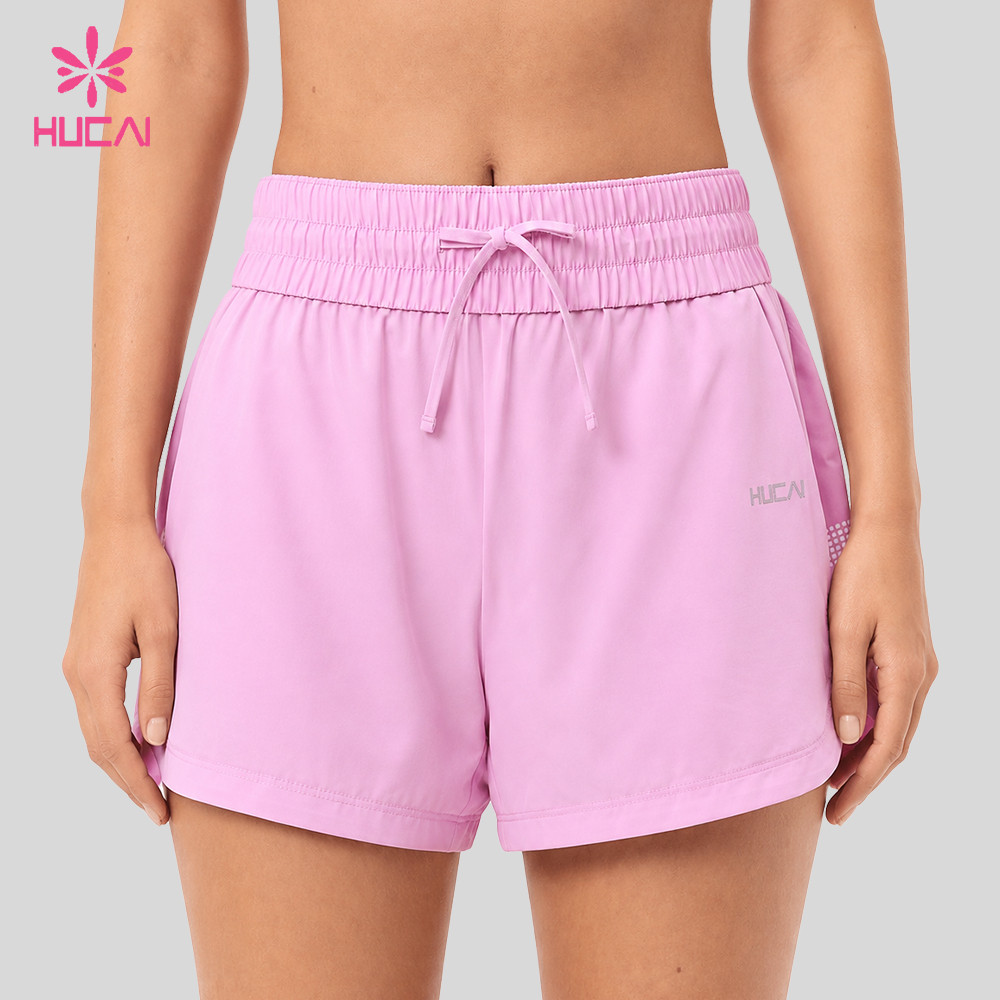
Shell behaviour is decided by three measurements that rarely appear on a reference image: shell volume, hem finish and split depth.
| Variable | What it controls | What to watch |
|---|---|---|
| Shell volume and taper | Airflow, thigh clearance and whether the short reads as performance or lounge | Over-cutting causes swing and a category mismatch |
| Hem finish | Weight, swing and how the edge holds after washing | A heavy hem pulls the shell hemline down in motion |
| Side split depth | Stride clearance and how much the shell opens at the side | Too deep and the shell flares and exposes the liner edge |
| Leg-opening pressure | Comfort at the thigh during repeated leg drive | Pressure is felt immediately and drives most first revisions |
| Fabric drape and recovery | Whether the shell falls cleanly or clings | Drape and recovery must be reviewed together, not separately |
Split depth deserves a specific caution. A split that looks restrained on a hanger opens considerably once the leg is in full extension, so split depth should be assessed in motion rather than flat. A measurement that reads as comfortable in a static review can produce an unstable hem at speed.
Waistband, Storage and Movement Interaction
Waistband and storage are usually treated as separate specifications. In practice they interact, and the interaction is what decides whether the short stays in place.
Waistband directions
- Flat elastic waistband: low bulk, sits close, and depends on elastic quality and stitch pattern to hold position.
- Wide waistband: distributes pressure across a larger area, which is often more comfortable over longer durations.
- Drawcord: adds adjustment range but introduces a second variable to control during production.
- Liner-to-waistband attachment: whether the liner is caught into the waistband seam or attached separately changes how the two layers behave when the body moves.
Storage changes shell behaviour
A phone pocket is not only a pocket. A phone is a concentrated mass, and once it is placed in a shell pocket it changes how that shell moves. Bounce is usually a relationship problem rather than a pocket problem: the same pocket performs differently depending on waistband stability, shell volume and where the pocket is anchored. Placing storage in the liner rather than the shell changes the behaviour again, because the liner is close-fitting and does not swing.
For a brand building a coordinated line, the shorts architecture also has to work with the rest of the capsule. If the same season includes tops, bras and matching sets, coordinate the fabric and colour decisions together rather than per style, as outlined in the approach to matching set development.
What to Confirm Before Bulk
Construction decisions only hold if they are verified in motion and then locked. A flat measurement review is not sufficient for a running short.
A movement fitting sequence that covers the real risks
- Easy run, continuous: confirms liner stability and waistband position over time rather than in a single pose.
- Stride and acceleration: confirms leg-opening clearance and whether the shell hem lifts or flares.
- Deep squat and step-up: confirms thigh clearance and shell volume at the point of maximum expansion.
- Seated and bending: confirms waistband pressure and how storage behaves when the body folds.
- Wash and dry review: confirms that liner edge, hem finish and fabric recovery hold after the first wash cycle.
Locking the standard
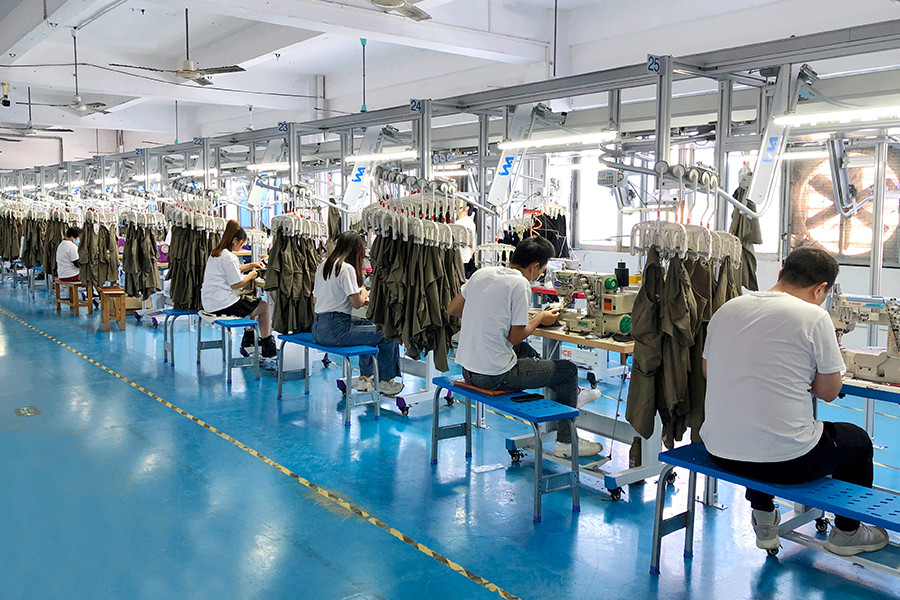
Once the sample is approved, the approved sample becomes the reference for the bulk order. Measurements, seam type, liner tension and hem finish should be recorded against that sample, and bulk quality control checks should verify those same points rather than only the visible silhouette. Sample-to-bulk consistency depends on confirmed standards, approved samples, material control and in-process review, so the more precisely the sample standard is written down, the fewer the assumptions in bulk.
Timing is usually the next question. Running-short sample development usually takes about 10-15 days, depending on style, fabric, liner, trim and revision requirements. Bulk production often takes about 25-30 days after pre-production details and approvals are confirmed, depending on project scope, materials, processes, quantity and scheduling. The full sequence and confirmation points are described in the sample policy.
Decision Check: Is This Running Short Construction Ready for Sampling?
Before requesting samples, confirm the following:
- Run program: the primary distance, pace and session type the short is being built for, stated in one line
- Liner decision: liner type, liner length and target liner tension, reviewed against the shell rather than in isolation
- Shell and leg opening: shell volume, hem finish, split depth and target leg-opening pressure
- Waistband and storage: waistband construction, storage position and how the two behave together under load
- Fabric direction: shell drape and recovery, liner hand feel and recovery, and the opacity requirement for the intended use
If three or more criteria are confirmed, the direction is ready for a structured sample request. If fewer than three are resolved, additional development planning will reduce sample revision cycles and control cost.
Choosing the Development Path
The right path depends on what you already have. If you hold a tech pack with measurements, construction details, liner specification and branding requirements, send those for OEM review so the specification is checked before a pattern is cut. If you are starting from reference images, a target run program and a rough idea of the liner direction, share the references, the intended distance and climate, and your sample priorities so the construction architecture can be clarified first. Either way, HUCAI Sportswear reviews the short as a system of shell, liner, waistband and leg opening rather than as a length and a colour.
Manufacturer Insight
A common failure pattern in running shorts is not the wrong length. It is a mismatch between liner tension and shell movement. The liner is close-fitting and the shell is loose, so the two layers travel differently during a run. When the liner is built slightly too tight and the shell is cut slightly too full, the inner rides up while the outer shell bunches, and both problems appear together even though they have different causes. Teams then revise the shell, which does not fix the liner behaviour.
The practical lesson is to fit the liner first and the shell second. Confirm liner tension and liner length against the actual movement, then set shell volume and hem so the outer layer clears the liner without swinging. Confirm waistband stability with storage in place, because a phone changes how the waistband carries load. This ordering typically reduces the number of revision rounds more than adjusting measurements after the fact, and it keeps the sample standard easier to write down for bulk.
FAQ
When should a running short use a built-in liner?
A built-in liner makes sense when the short is intended for continuous running and coverage or friction control is a primary requirement. It is less necessary for training and hybrid sessions where a separate brief or inner short gives the same function with simpler construction. The decision depends on the run program and on whether the brand wants one integrated garment or two independent layers.
What is the difference between 2-in-1 and loose-shell shorts?
A 2-in-1 short builds the shell and the liner as one garment, so the two layers are designed together. A loose-shell short is cut with more volume and uses a separate brief or inner short, which increases airflow and reduces compression pressure. In development terms the difference is how tightly the layers are coupled, not just how the short looks in a photograph.
Why do liners ride up?
A liner usually rides up when liner tension, liner length and leg-opening elasticity do not match the shell it sits inside. A liner that is too short or too tight under a full shell will move independently and climb during repeated leg drive. It can also happen when the liner is attached into the waistband in a way that transfers shell movement directly into the liner.
How much side split is useful?
Enough split to clear the stride without leaving the shell unstable. A restrained split of a few centimetres is often sufficient for training and daily running, while speed-focused styles can carry more. Split depth should be assessed with the leg in full extension, because a split that looks controlled flat can open considerably in motion and expose the liner edge.
Can a phone pocket be added without bounce?
A phone pocket can be added, but bounce depends on the relationship between the pocket, the waistband and the shell rather than on the pocket alone. A concentrated mass needs waistband stability and a shell that does not swing. Positioning storage in the liner rather than the shell is one way to reduce movement, because the liner is close-fitting and travels with the body.
What should be checked during a movement fitting?
At minimum: a continuous run for liner stability, a stride or acceleration phase for leg-opening clearance, a deep squat for thigh clearance, a seated position for waistband pressure with storage in place, and a wash cycle for liner edge, hem finish and recovery. Flat measurement review alone does not surface these points.
Should a running short liner and shell use the same fabric?
Not necessarily. The shell and the liner have different jobs, so they are usually reviewed against different requirements. The shell needs drape, recovery and the right opacity for the intended use; the liner needs hand feel against the skin, stretch and recovery at a closer tension. Using one fabric for both is possible, but the selection should follow the function rather than the convenience of a single material.
How do brands keep shorts consistent from sample to bulk?
By locking the approved sample as the reference and recording the points that matter: measurements, liner tension, seam type, hem finish and leg-opening behaviour. Bulk inspection then verifies those same points. The current public MOQ starts from 100 pcs per style, while final colour, size, fabric, trim and customization planning depends on the confirmed project, so the standard and the quantity plan should be confirmed together.
Final Takeaway
Choose the construction from the run program, then design the layers in the right order. Fit the liner first, set shell volume and leg opening second, and confirm waistband and storage behaviour with the phone in place. Treat the 2-in-1, the loose shell and the high-leg split as three different products with three different risk profiles, because that is how they behave on the body. HUCAI Sportswear reviews running shorts as a construction system rather than a length and a colour, and the brief is easier to complete when the architecture is chosen before the pattern is cut.
About HUCAI Sportswear
- Founded in 1998, specializing in women's activewear and sportswear manufacturing
- OEM and ODM development support for sports bras, leggings, shorts, tops, and matching sets
- Structured sample development and sample-to-bulk consistency control
- AQL 2.5-based inspection as part of the quality workflow
Current certification information can be reviewed during supplier evaluation based on the project and documentation requirements.