Activewear as the Everyday Uniform: What Changes When Performance Clothing Must Work All Day
- Share
- publisher
- HUCAI Sportswear
- Issue Time
- Sep 24,2026
Summary
Activewear is increasingly merchandised as everyday clothing. This guide explains what changes when performance clothing has to work all day: compression tolerance, waistband pressure, seam bulk, opacity, pocket function, handfeel, layering and wash frequency. It covers how to define the product role, where a training-led standard fails over long wear, and how a growing brand can plan an all-day capsule before sampling.
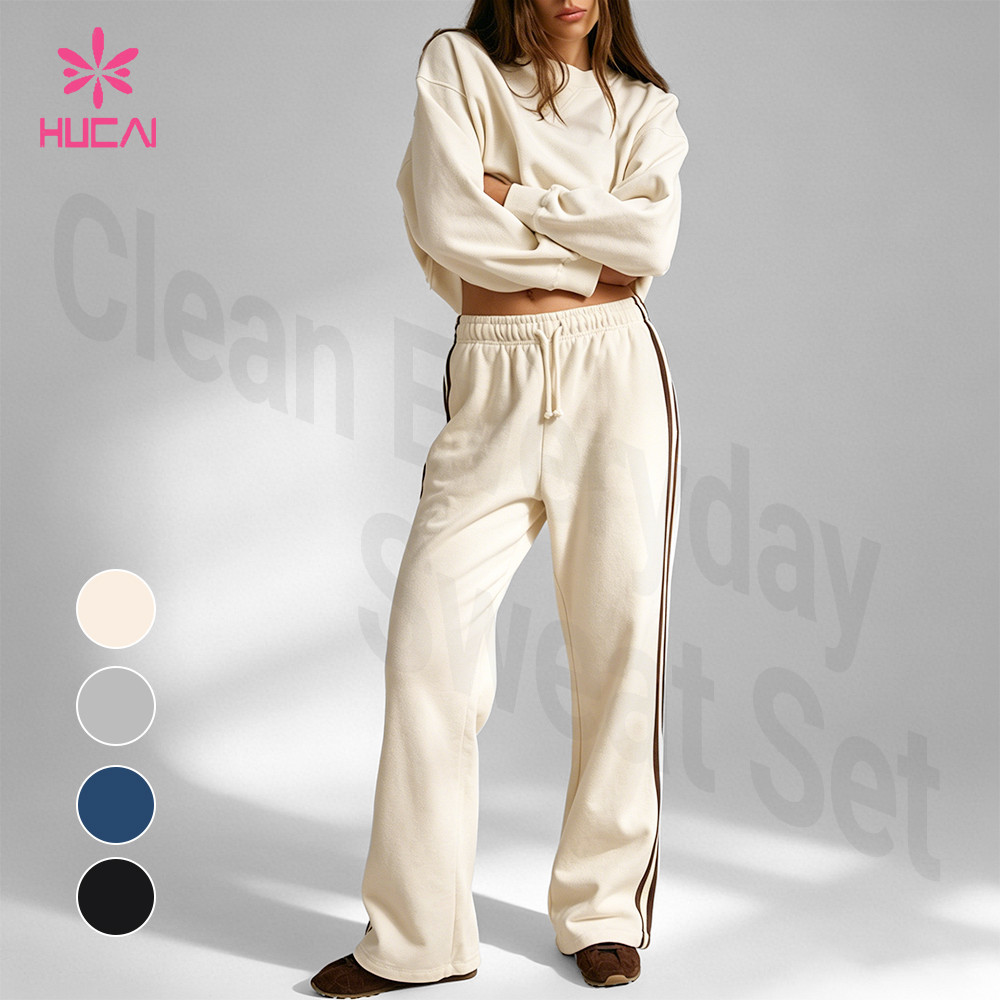
Activewear is being merchandised as everyday clothing, not only as workout kit. On the brand homepages we reviewed in September 2026, that shift is explicit rather than implied. Adanola leads its autumn merchandising with a “Transitioning everyday uniform” collection built from sweats, knit trousers and leggings. LSKD runs an urban all-day active collection alongside its training and running lines. Varley frames its range as a wardrobe for how you live and move, with elevated essentials intended to transition between moments of the day.
For growing brands and private label buyers, that repositioning changes the development brief. A legging worn for one session and then taken off is judged on different criteria than the same legging worn from a morning walk through a commute and into an evening. Compression tolerance, waistband pressure, seam bulk, pocket function, opacity, handfeel, layerability and wash frequency all move up the priority list, while peak-load output stops being the only standard.
The consequence is practical. A bottom specified only for short-session performance often comes back for revision once the brief changes to all-day wear, because the tension and structure that feel supportive for an hour behave differently over a working day. This guide explains which development standards change, and how HUCAI Sportswear approaches them during fabric review, fit sampling and capsule planning.
Quick Answer
When activewear is developed for all-day wear, comfort pressure, fabric handfeel, visual restraint and layering compatibility become as important as workout performance. The same style can serve training and daily wear, but only when compression direction, waistband construction, seam bulk, pocket placement and opacity target the longer wearing window instead of a single session. Buyers who already hold a defined specification usually fit an OEM route; buyers starting from a product role or reference images normally need ODM development to settle those variables before sampling begins.
Table of Contents
- Who This Article Is For
- What Everyday Uniform Means in Product Development Terms
- Where the Priorities Move Between a Training Standard and an All-Day Standard
- Fabric and Handfeel When Wear Time Increases
- Fit, Waistband Pressure and Opacity as Long-Wear Failure Points
- Pockets, Layering and Visual Restraint
- Planning an All-Day Capsule Instead of Isolated Styles
- Decision Check
- Founder's Technical Insight (Jean Yuan)
- FAQ
- Final Takeaway
Who This Article Is For
- Primary reader: growing women's activewear brands extending a training-led line into everyday and athleisure styles
- Secondary reader: private label buyers and product development teams sourcing leggings, tops, matching sets and relaxed active bottoms for all-day use
- Product stage: between line plan and first sample brief, before fabric and fit standards are locked
- Problem being solved: one style is being briefed for both training and daily wear without a decision about which standard leads
- Who may not need this article: brands developing competition or race kit where a short, high-intensity wearing window is the only intended use
What you gain from this article: a product-role checklist for all-day styles, the specific variables that drive sample revisions when a training standard is reused for everyday wear, and a clearer sequence for moving from an all-day product role to a sample brief that a factory can quote and develop.
What Everyday Uniform Means in Product Development Terms
Merchandising language and development language describe the same shift from different directions. When a brand organises a homepage around an everyday uniform, a transition wardrobe or an all-day active edit, the commercial intent is to sell one garment across more of the customer's day. The development translation is narrower and more concrete: a wearing-hours and use-context profile that the pattern, fabric and construction decisions have to answer.
That profile has four parts. The first is the primary wearing window, meaning the number of hours the garment is expected to stay on the body in normal use. The second is the intensity ceiling, meaning the highest output the style must tolerate without a fit or opacity problem. The third is the layering context, meaning whether the piece sits alone or under a layer. The fourth is wash frequency, meaning how often the garment is expected to return to the wash cycle within a week.
A training-led brief rarely states these numbers, because a training garment does not need them. An all-day brief cannot avoid them. Once the primary wearing window moves from roughly one hour to a full day, the binding constraint stops being whether the garment supports peak movement and becomes whether it stays comfortable and visually appropriate for hours of ordinary activity. Two styles can share one pattern block and one fabric family and still need different waistband tensions, because the standard that leads each style is different.
This is the reason an everyday uniform should be treated as a product role rather than a colour story. Colour and surface direction still matter, but they are chosen after the role is defined. Buyers building this direction can review the custom athleisure clothing development route as the category context for how these styles are positioned against training-led lines.
Where the Priorities Move Between a Training Standard and an All-Day Standard
The variables are not new. What changes is which value of each variable is specified, and which failures matter most when the garment is worn for hours.
| Development variable | Training-led standard | All-day standard |
|---|---|---|
| Compression direction | Set for support during peak movement | Set for a pressure the wearer tolerates across hours |
| Waistband pressure | Firm tension to hold position during movement | Reduced tension with stability maintained by band width and structure |
| Seam bulk | Tolerated where seams support the panel structure | Reduced where seams sit against the body for long periods |
| Opacity target | Checked at peak stretch positions | Checked at peak stretch positions and in seated or layered states |
| Pocket function | Optional, usually small or absent | Often required for phone, keys or card, with placement that does not add bulk under a layer |
| Surface handfeel | Second to stretch recovery and support | Weighted equally with stretch recovery, because touch is felt continuously |
| Visual restraint | Branding and colour blocking may lead | Restraint usually leads, so the piece reads as everyday clothing |
The failure pattern follows the same logic. In wear-test feedback that appears repeatedly across activewear communities such as r/activewear, the complaints attached to long wear are rarely about support during a workout. They describe waistbands that dig in after several hours, seams that become noticeable against the skin, or a fabric that reads as thinner once the wearer is sitting rather than standing. None of those issues are visible in a one-hour session, which is why they tend to surface after the first production run rather than during development.
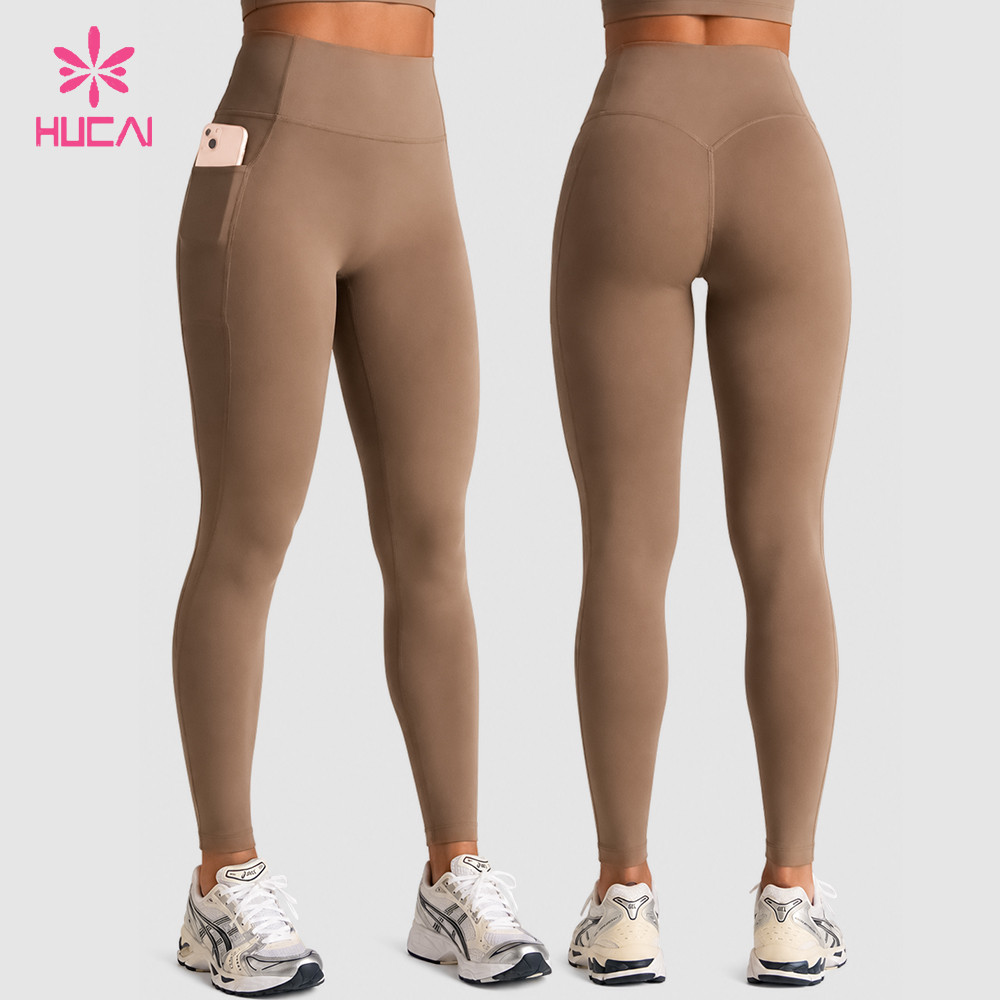
The cost of the mismatch is a revision cycle. When the standards are decided at the brief stage, the difference between a training legging and an all-day legging is usually one controlled change to waistband structure and one confirmed pressure value. When they are decided after sampling, the change often pulls fabric, pattern and grading with it. Leggings programmes that stay inside one fabric family are easier to re-specify, which is why buyers are often advised to review the custom leggings development options before locking a bottom standard across a range.
Fabric and Handfeel When Wear Time Increases
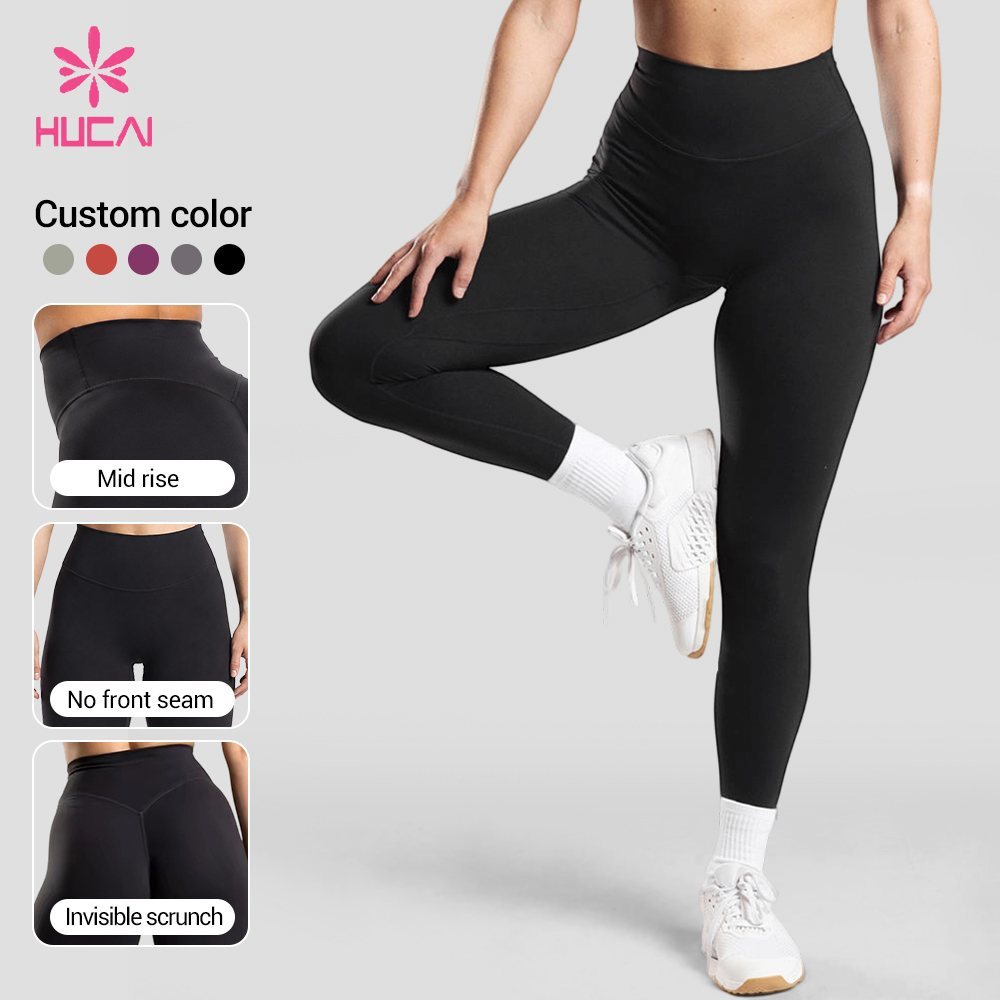
Fabric direction for an all-day style is usually decided with two questions in parallel: how the surface feels against skin for hours, and how the fabric recovers after repeated stretch cycles within a single wearing. The second question is the one that is most often missing from a training-led brief, because a short session does not accumulate the same number of stretch and recovery cycles as a full day of sitting, standing, walking and climbing stairs.
Four fabric decisions carry most of the weight:
- Stretch and recovery requirements: recovery after repeated low-load stretch is what keeps a garment from reading as loose at the end of a day, so recovery is specified as a requirement rather than assumed from the stretch percentage.
- Opacity requirements: opacity is specified as a target under stretch, then re-checked in seated and layered states rather than only at maximum extension.
- Surface handfeel direction: smooth, ribbed and brushed surfaces behave differently against skin and against a layer, and the direction should be agreed before swatch selection rather than after.
- Weight and thickness direction: a GSM band agreed with the fabric mill supports both opacity and drape, while a bare GSM number without a construction context is not enough to specify a fabric for long wear.
Testing for these properties sits inside recognised standard families. Stretch and recovery behaviour is commonly reviewed against methods such as ASTM D2594 for the stretch properties of low-power knitted fabrics, and colour behaviour after repeated home laundering against methods such as AATCC 61. These standards define how a property is measured; they do not tell a brand which result its own product needs, which is why the target still has to come from the wearing profile.
Ribbed surfaces deserve a specific note, because they are common in everyday activewear and behave differently from smooth knits. A ribbed structure changes how the surface reads across a day and can change how a panel recovers after stretch, so the rib direction, the stitch density and the panel placement have to be agreed together. In HUCAI Sportswear's development room, ribbed and smooth options are reviewed against the intended wearing window before a swatch is released for sampling, because a surface that feels appropriate for a short session can feel heavier or warmer once it is worn for a full day. Buyers comparing directions can start with the fabric selection guide, then confirm the specific fabric family against their own product role.
Fit, Waistband Pressure and Opacity as Long-Wear Failure Points
Three fit decisions cause most of the complaints that appear after an all-day style reaches production: waistband pressure, rise and band depth, and opacity behaviour in seated or layered positions.
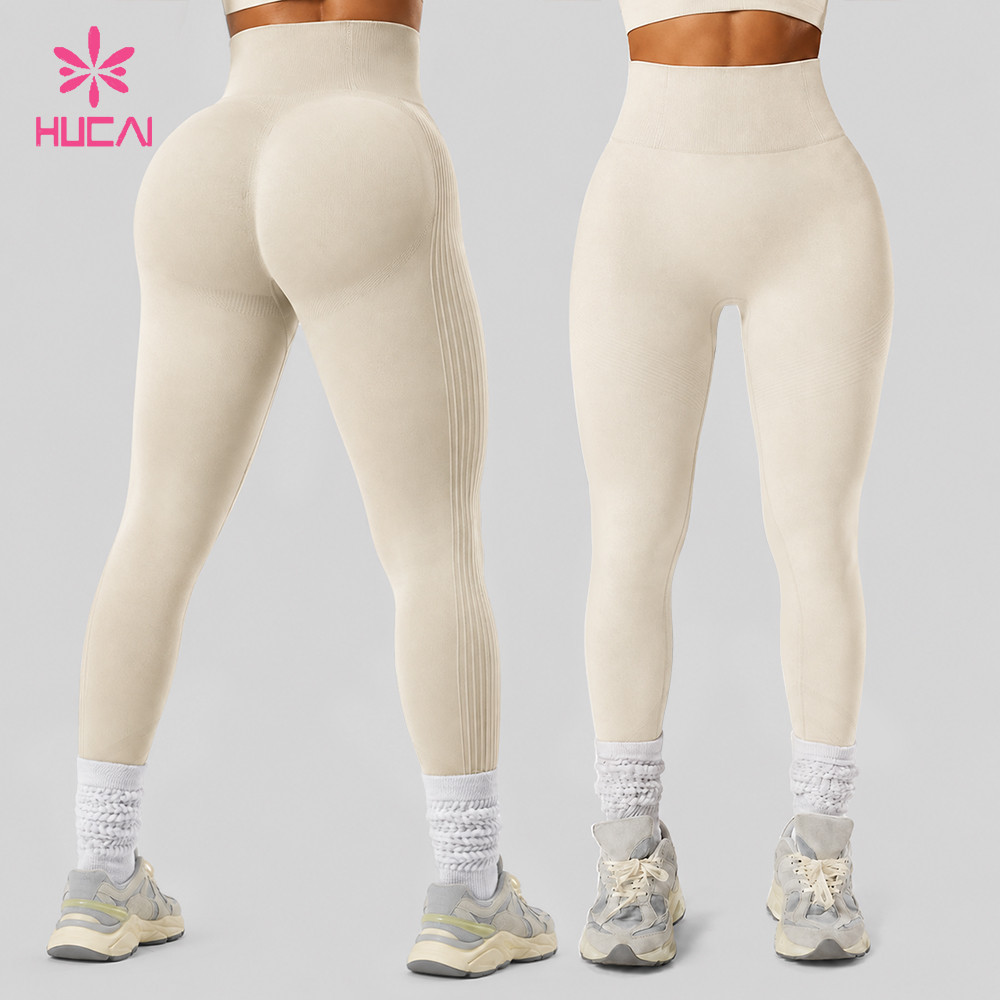
Waistband pressure is the first. A band tension that keeps a garment in place during a training session is not the same tension that remains comfortable at hour six. The practical answer is rarely to remove structure. It is to hold stability through band width, band depth and the internal construction, then reduce the tension value so the band stays in position without leaving a mark. Fold-over bands and wide elasticated bands distribute pressure differently, and the choice interacts with rise: a lower rise places the band on a different part of the body and changes how that pressure is felt.
Opacity is the second. A fabric can pass an opacity check at maximum stretch and still read thin when the wearer is seated, when the garment is layered under a looser piece, or under strong backlighting. For an all-day style, opacity is therefore confirmed as a target under stretch and re-checked in the positions the wearer actually holds for long periods.
Sample review is the third. Fit approval for an all-day style benefits from a wear-time review rather than a fit-picture review alone, because the variables in question only appear over time. HUCAI Sportswear treats waistband pressure and opacity as sample-stage review points and checks them with fit sessions and stretch checks across sizes, rather than assuming that a fabric which passed a stretch test will hold the same result after hours of wear. The supporting development sequence is described in the leggings development process, and the inspection side of the same workflow is covered under factory and production procedures.
Pockets, Layering and Visual Restraint
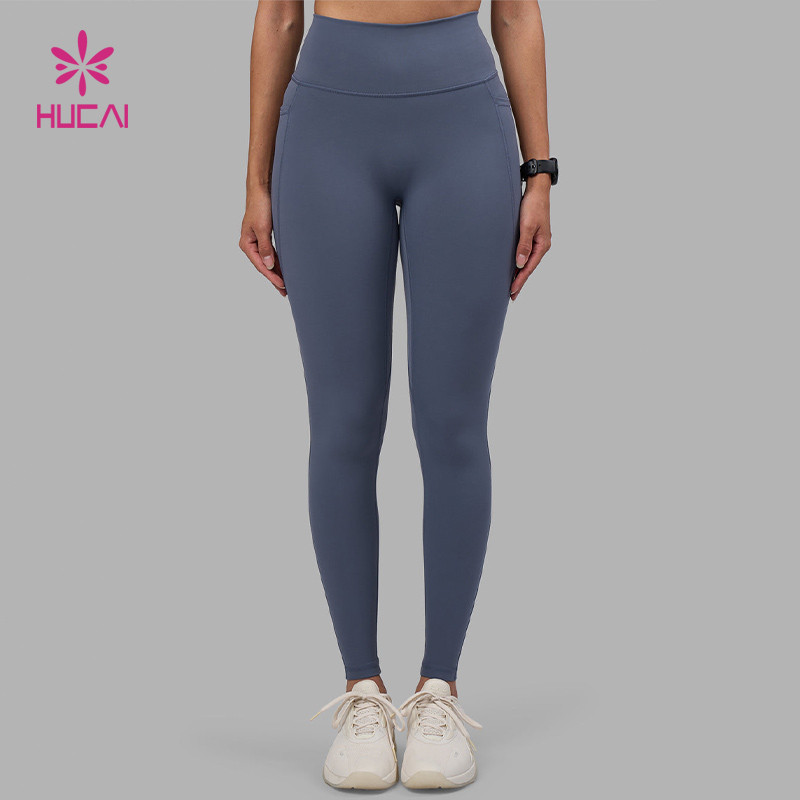
Pockets are the clearest example of a feature that is optional in a training brief and close to mandatory in an everyday one. A phone, a card and a key are part of the reason a customer wears the same bottom outside the gym, so pocket function has to be designed rather than added.
The development trade-offs are specific. A side pocket needs a pocket bag that holds its shape against a stretch fabric without pulling the panel line or reducing opacity where the bag meets the leg. A waistband pocket solves the bulk problem but limits what the pocket can hold. Pocket placement also interacts with layering: a pocket that sits comfortably under a loose top may create a visible bump under a fitted mid-layer. Whichever route is chosen, the pocket is a pattern decision that affects the seam plan, so it belongs in the first spec rather than in a revision.
Layering compatibility is the second part of everyday design. When a bottom and a top are sold as part of the same wardrobe, the hem position, the waistband depth and the layer volume have to work together. A cropped top over a high-rise waistband creates one line; the same top over a fold-over band creates another. Buyers developing coordinated pieces can review the everyday movement leggings collection direction to see how a bottom line is structured around daily wear rather than around a single activity.
Visual restraint is the third. An all-day garment is judged in places where a training garment is not, so surface finish, panel contrast and logo method carry more weight. A small tonal logo applied by heat transfer or a low-profile embroidered mark usually reads as everyday clothing, while a large or high-contrast application tends to read as gym kit. Restraint does not mean removing identity; it means deciding which detail the customer sees in a non-training setting.
Planning an All-Day Capsule Instead of Isolated Styles
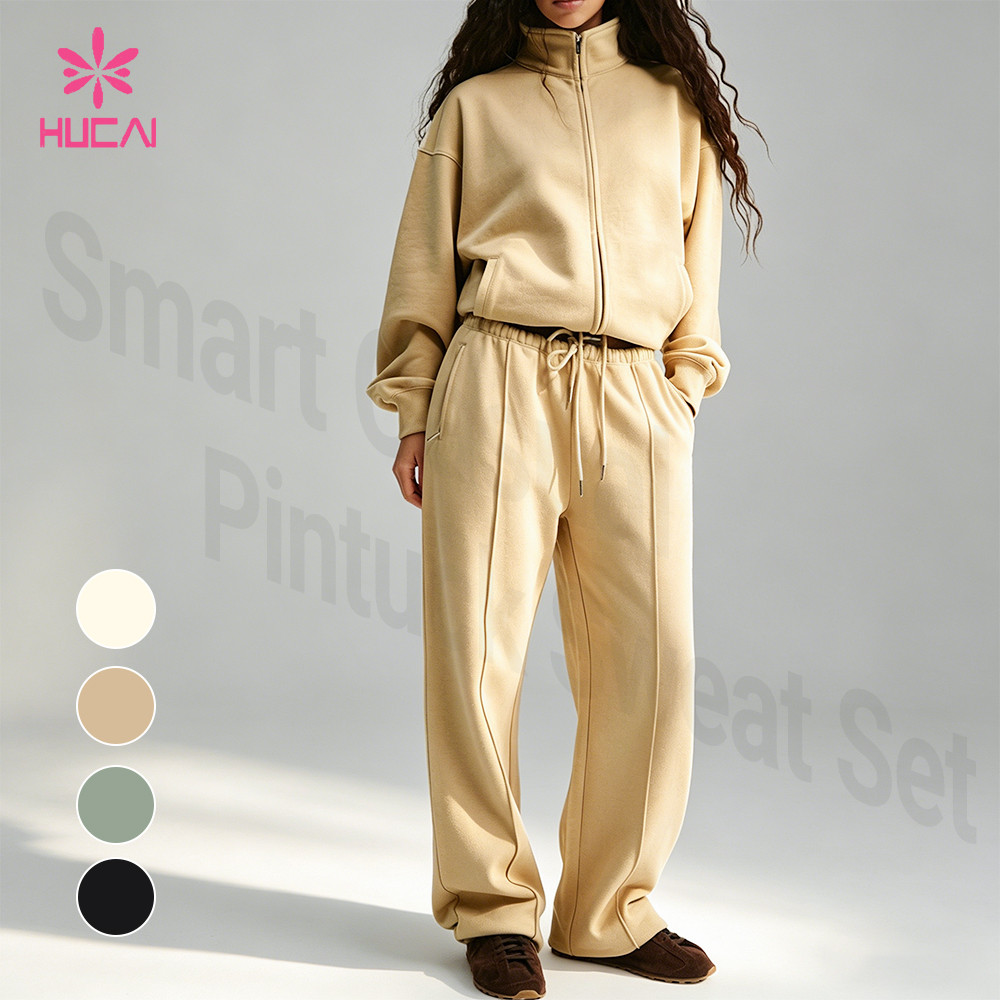
Once the product role is defined, the efficient next step is a capsule rather than a single style. An all-day capsule normally combines one or two bottoms, one or two tops and one light layer, developed from a shared fabric family and a shared colour standard so the pieces can be merchandised together or separately.
Capsule planning changes the development sequence in three useful ways. First, the fabric family is confirmed once across the group, which reduces the number of swatch rounds. Second, colour is planned as a standard rather than per style, which matters because shade consistency is one of the harder variables to correct after bulk fabric is ordered. Third, sample review is sequenced: the bottom is sampled and approved first, because the bottom carries the waistband and opacity risk, then the top is developed against the confirmed bottom, and the layer is developed last against both.
Quantity planning is part of the same decision. The current public MOQ starts from 200 pcs per style, while final colour, size, fabric, trim and customization planning depends on the confirmed project. A capsule spreads colour and size risk across a group instead of concentrating it in one style, which is one reason buyers planning a full wardrobe direction often start from a coordinated group rather than a single bottom. Coordinated development is described in more detail under the matching set development route.
Decision Check: All-Day Product Role Check
Before requesting samples for an everyday style, confirm the following:
- Wearing hours: the number of hours the garment is expected to stay on the body in normal use
- Intensity ceiling: the highest output the style must tolerate without a fit or opacity problem
- Compression tolerance: the pressure value the wearer accepts across those hours, not only during activity
- Pocket requirement: what the pocket must carry, and where it can sit without creating bulk
- Layering context: whether the piece is worn alone, under a layer, or both
- Wash frequency: how often the garment returns to the wash cycle in a normal week
If four or more criteria are resolved, the direction is ready for a structured sample request. If fewer are resolved, a short development review will usually reduce the number of sample revisions, because each unresolved point becomes a change request later in the process.
Turning the Product Role Into a Sample Brief
Have a tech pack? Send measurements, fabric requirements, construction details, branding specifications and sample priorities for OEM review. Working from a product role rather than a specification? Share the intended wearing window, intensity ceiling, pocket requirement and layering plan, and the two routes can be compared before sampling starts. The full development path for coordinated all-day groups is set out under ODM service, and specifications can be submitted through the contact and project review page.
Founder's Technical Insight: Jean Yuan's Development Note
When brands bring us an all-day direction, the breakdown we see most often in the sample room is not a design problem. It is a training legging spec that has been relabelled as an everyday legging.
The pattern is consistent. The bottom was developed for a training window, so the waistband tension and the negative ease were set to hold the garment in place during movement, and the side seam and pocket construction were set for stretch and support. Those values are reasonable for the job they were chosen for. Moved into a full day of wear, the same tension becomes a pressure point, the same seam sits against the body for hours instead of minutes, and the same leg line reads thinner once the wearer is seated rather than standing. Nothing in the garment is defective; the specification is answering a different question from the one the brief now asks.
In my experience, that mismatch is not solved by softening everything. Take tension out of a waistband without changing its structure and the garment begins to slide during movement, which is a worse outcome for the customer. The reliable fix is structural: keep the band wide enough and deep enough to hold position, reduce the tension value to what the longer wearing window tolerates, and then confirm the result in a wear trial rather than on the fit stand.
Three checks are worth running before any bulk fabric is cut for an all-day bottom. First, confirm the waistband extension value at the approved size and at the two sizes either side of it, because band behaviour changes as the body measurement changes. Second, check the seam and pocket construction against the inner surface of the garment, since that is the surface the wearer feels over hours. Third, re-check opacity with the garment seated and layered, not only at maximum stretch. When a brand brings a brief to HUCAI Sportswear, these three points are reviewed during sample development rather than after sample approval, because correcting them later usually means re-sampling the whole bottom and re-cutting the grading.
FAQ
What makes activewear suitable for all-day wear?
All-day suitability is set by the wearing window rather than by the activity. The garment needs a waistband pressure the wearer tolerates across hours, a surface that stays comfortable against skin, an opacity result that holds when the wearer is seated or layered, and a level of visual restraint that reads as everyday clothing. Those four points are usually specified before fabric and pattern are finalised.
Should all-day leggings use less compression?
Not less compression in general, but a different pressure value and a different way of holding stability. Training bottoms often rely on band tension to stay in position, while an all-day bottom usually keeps stability through band width, band depth and internal construction and then reduces the tension to a value that remains comfortable over a full day. Both are structured garments; the distribution of the load changes.
Which fabrics feel better for long wear?
Fabrics with stable recovery and a surface direction matched to the wearing window. Smooth knits and ribbed knits both work, but they behave differently against skin and against a layer, and ribbed structures have to be reviewed for direction and stitch density rather than selected on appearance. The practical test is whether the fabric still feels appropriate after several hours, which is why fabric direction should be agreed before swatch selection rather than after.
Are pockets more important for everyday styles?
They usually are, because a phone, a card and a key are part of why the customer wears the same bottom through a day. Pockets are a pattern decision rather than an add-on: a side pocket needs a bag that holds shape without pulling the panel or reducing opacity, a waistband pocket avoids bulk but limits capacity, and placement has to be checked under a fitted layer. Adding a pocket after sampling usually changes the seam plan.
How should athleisure be sampled differently from training wear?
The sample review should include a wear-time check, not only a fit check. For an all-day style, the points that decide approval are waistband pressure after several hours, seam and pocket feel against the inner surface, and opacity in seated and layered positions. Reviewing those points during sampling is cheaper than correcting them after bulk production, because they often pull pattern and grading with them.
Can one style serve both training and travel?
It can, when the brief names the leading standard. A style that has to serve a training session and a travel day is normally specified at the higher stability requirement for construction, then tuned to the lower pressure requirement for comfort, with pockets and opacity confirmed for the longer window. The limitation is usually intensity: the further the training requirement moves toward peak support, the harder it becomes to keep the same style comfortable across a full day.
What is the MOQ for an all-day capsule?
The current public MOQ starts from 200 pcs per style. Final colour, size, fabric, trim and customization planning depends on the confirmed project, so a capsule combining bottoms, tops and a layer is planned as a group: the shared fabric family and colour standard reduce the variables that would otherwise be quoted style by style.
How long do sampling and bulk production usually take?
Sample development usually takes about 10-15 days, depending on style, fabric, trim, logo, revision requirements and confirmed details. Bulk production often takes about 25-30 days after pre-production details and approvals are confirmed, depending on project scope, materials, processes, quantity and scheduling. Both ranges are confirmed against the specific project plan rather than fixed in advance.
Final Takeaway
The everyday uniform direction is a product-role decision before it is a design decision. Once the wearing window, intensity ceiling, compression tolerance, pocket requirement, layering context and wash frequency are agreed, the technical choices become specific: a waistband value that holds position without pressure, a fabric direction with stable recovery and the right surface, an opacity target checked in seated and layered positions, and a pocket built into the seam plan from the start.
Buyers who define those points before sampling usually need fewer sample rounds, because the revision conversation moves from redesign to confirmation. HUCAI Sportswear supports that sequence through fabric and trim review, sample development and sample-to-bulk coordination, with the goal of keeping the confirmed standard intact between the approved sample and the production run.
About HUCAI Sportswear
- Founded in 1998, HUCAI Sportswear is a women's activewear and sportswear manufacturer based in Humen, Dongguan, China
- OEM, ODM and private label development support for sports bras, leggings, tops, shorts, matching sets and athleisure programmes
- Development support across fabric, trim, pattern, CAD and sample review, with sample-to-bulk consistency control
- MES and ERP-supported tracking together with a hanging production system for scheduling, production visibility and order follow-up
- AQL 2.5-based inspection within a structured quality workflow, including pre-production review, in-process inspection and final inspection
The current public MOQ starts from 200 pcs per style, while final colour, size, fabric, trim and customization planning depends on the confirmed project. Recycled or certified material options can be reviewed based on project requirements and available documentation. Current certification information can be reviewed during supplier evaluation based on the project and documentation requirements.