Body Heat Distribution in Women's Activewear: Why Ventilation Should Follow the Body
- Share
- publisher
- 然
- Issue Time
- Apr 5,2026
Summary
Studies show heat and sweat during exercise are unevenly distributed across the female body. Designing women's activewear around body heat zones can significantly improve comfort and cooling performance.
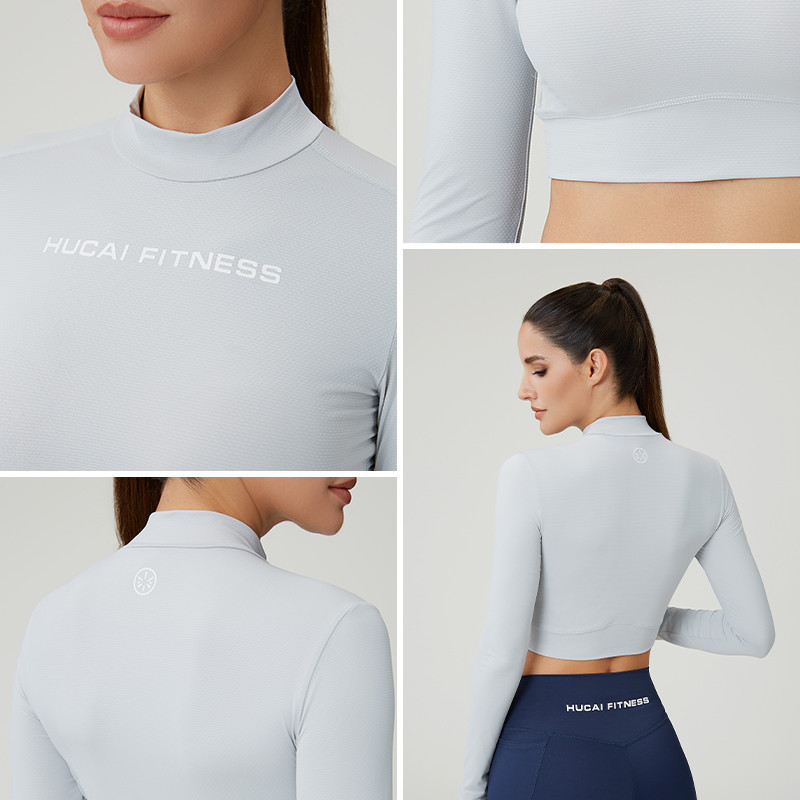
Heat Is Not Evenly Distributed Across the Body
When discussing cooling in women's activewear , many designs focus primarily on breathable fabrics or mesh panels. However, research in sports physiology shows that body heat during exercise is not evenly distributed across the body.
Instead, certain regions consistently generate or release more heat than others. Understanding this body heat distribution is critical when designing activewear for training, yoga, or fitness activities.
If ventilation and fabric structure are placed randomly or purely for aesthetic reasons, the garment may look technical but fail to manage heat effectively during exercise.
For this reason, modern women's activewear design increasingly considers heat-zone engineering, aligning garment ventilation with the body’s actual thermal behavior.
Where Women's Bodies Generate the Most Heat During Exercise
Research using infrared thermography and sweat distribution studies has identified several key heat zones during physical activity.
The upper back is one of the most significant areas for heat release, accounting for roughly 18–22% of total body heat dissipation during moderate to high-intensity exercise. This area contains large muscle groups and high blood flow, which increases metabolic heat production.
The chest and upper torso also contribute substantially, typically responsible for approximately 15–18% of heat release during activity.
Another major heat-producing region is the thigh muscles, which generate approximately 20–25% of total exercise heat due to their involvement in movements such as running, squatting, and cycling.
Sweat production follows a similar regional pattern. Studies show that underarm regions can account for roughly 15–20% of local sweat production, making them one of the highest sweat zones during exercise.
Together, these findings reveal that the body’s thermal behavior during exercise is highly regional rather than uniform.
Why Many Activewear Designs Miss These Heat Zones
Despite the availability of heat distribution research, many activewear garments still place ventilation features based on aesthetics rather than physiology.
For example, mesh panels are often positioned along the sides of a garment or near the waistline because these areas are visually subtle and easy to integrate into design patterns. However, these locations are not always the body's primary heat zones.
The result is that some garments appear highly breathable but do not significantly improve cooling during exercise. The most effective ventilation zones—such as the upper back and underarm areas—may receive less structural attention even though they play a much larger role in heat release.
This gap between design aesthetics and thermal physiology is one reason why many activewear products fail to deliver optimal cooling performance.
Manufacturing Challenges in Heat-Mapped Activewear Design
Even when brands understand body heat distribution, translating this concept into real products can be challenging during manufacturing.
One difficulty involves multi-zone fabric construction. Designing garments that use different fabric densities or knit structures across various heat zones requires careful coordination during pattern development and assembly. When fabrics with different stretch ratios are combined, uneven tension can distort the garment if production processes are not carefully controlled.
Another challenge lies in ventilation placement accuracy. Heat zones such as the upper back and underarms are also areas with large movement ranges. If ventilation panels or lightweight fabrics are not positioned precisely, they may stretch excessively during exercise and lose their intended structural function.
Because of these factors, some activewear products incorporate heat-zone concepts at the design stage but struggle to maintain stability during mass production.
How HUCAI Implements Heat-Zone Engineering in Women's Activewear
At HUCAI , developing women's performance apparel involves combining body heat mapping insights with practical manufacturing processes.
During product development, heat-generating regions such as the upper back and underarm zones are analyzed to determine where ventilation structures should be integrated. Knit structures with higher breathability or lighter yarn density can be introduced in these areas to improve airflow and moisture evaporation.
At the same time, regions that require structural stability—such as the torso and waist—maintain fabrics with balanced density and stretch recovery to ensure the garment retains its shape during movement.
In production, HUCAI uses automated cutting systems and intelligent hanging production lines to ensure precise alignment between different fabric zones. This helps maintain consistent stretch behavior and prevents distortion when multiple fabric structures are combined within the same garment.
By connecting heat distribution research, pattern engineering, and production control, HUCAI helps brands translate body heat mapping concepts into reliable women's activewear products.
Rethinking Cooling in Women's Activewear
Cooling in women's activewear should not rely solely on adding more breathable fabrics. Instead, effective cooling performance comes from aligning garment design with how the body actually produces and releases heat during exercise.
By understanding regional heat generation and sweat patterns, designers and manufacturers can place ventilation exactly where it is needed most. This approach allows activewear to manage heat more efficiently while maintaining garment stability and comfort during movement.
In the future, combining body heat mapping, fabric engineering, and precise manufacturing will likely play a key role in improving the performance of women's activewear .
How to contact us
➡️ Contact HUCAI today for your custom outerwear solution and connect with a team committed to premium quality and authenticity.