Cool-Weather Running Tops: High Necks, Long Sleeves and Ventilation Without Bulk
- Share
- publisher
- HUCAI Sportswear
- Issue Time
- Sep 17,2026
Summary
A cool-weather running top should add targeted coverage while preserving heat release and mobility, rather than simply increasing fabric weight. This guide covers the decisions that shape the garment: product role, fabric weight and thermal balance, neckline height and sleeve pattern, ventilation placement, layering ease, and sample movement and wash review. It closes with a six-point brief checklist and FAQ answers on MOQ and sampling.
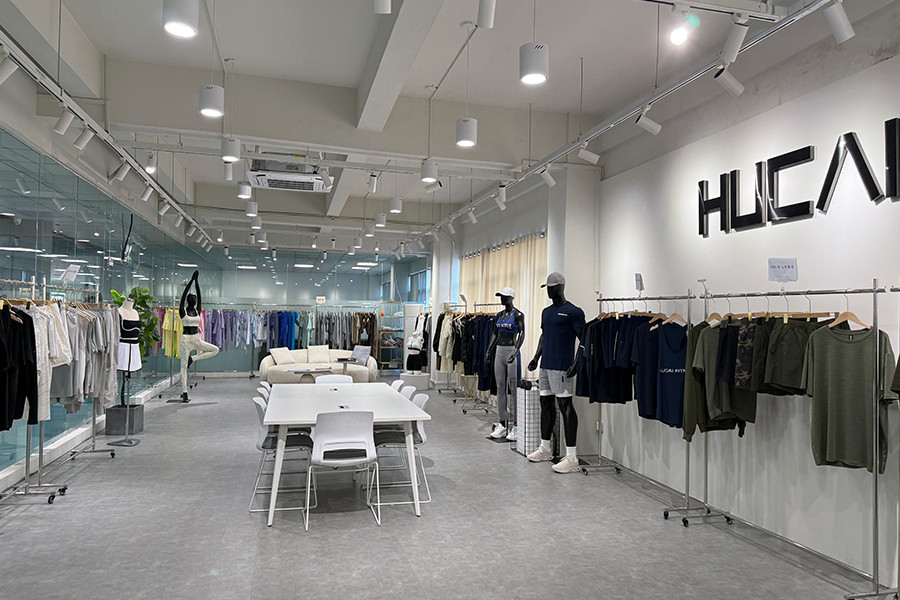
Cool-weather running tops are not winter layers. Across UK and Nordic transition-season assortments, running ranges increasingly use long sleeves, higher necklines and targeted ventilation to extend coverage without the weight of a thermal base layer. That shift changes the development brief for any brand sourcing private label running apparel or custom running tops.
HUCAI Sportswear works with running and training brands on technical top development, and the questions that decide whether a cool-weather top performs are rarely about thickness. They are about where coverage is added, how the neck and sleeve behave in motion, where heat can still escape, and how the piece sits over or under another layer.
This guide breaks down the development decisions behind a cool-weather running top: fabric weight and thermal balance, neckline and sleeve fit, ventilation placement, layering ease, and the sample checks that reveal problems before bulk production.
Quick Answer
A cool-weather running top should add targeted coverage while preserving heat release and mobility, rather than simply increasing fabric weight. Develop the piece around a defined temperature range, run intensity and base-layer use, then confirm neckline height, sleeve length, ventilation placement and hem behaviour on a moving fit model. Brands with a complete tech pack can route this through OEM development; brands starting from reference images or a category direction usually need ODM development to define the brief first.
Table of Contents
- Who This Article Is For
- Start With the Product Role, Not the Fabric Weight
- Fabric Weight and Thermal Balance
- Neckline Height and Sleeve Fit
- Ventilation Zones That Protect Fit Stability
- Layering Ease and Hem Behaviour
- Sample Movement and Wash Review
- Decision Check
- Manufacturer Insight
- FAQ
- Final Takeaway
Who This Article Is For
- Primary reader: Running and training brands developing a transition-season top for the first time or replacing an underperforming style.
- Secondary reader: Growing activewear brands extending an existing summer running range into cooler months.
- Product stage: Early product definition through sampling, before bulk production planning.
- Problem being solved: The current piece is either too heavy to run in or too light to wear once temperatures drop, and every revision adds cost.
- Who may not need this article: Brands already holding a fully validated tech pack with confirmed construction standards, or buyers looking for a winter thermal or base-layer programme.
What you gain from this article: A clearer definition of the coverage-versus-heat-release trade-off, a shortlist of the construction decisions that drive sample revisions, and a brief template you can hand to a development team so fabric, neckline, sleeve and ventilation choices are confirmed before the first sample is cut.
Start With the Product Role, Not the Fabric Weight
The first decision is not how heavy the fabric should be. It is what the garment is for. A cool-weather running top can sit in at least three different roles, and each one leads to a different construction.
- Single-layer transition piece: worn alone in mild conditions, usually between the end of summer and the first cold weeks. Coverage is added at the neck and forearm; the body stays light.
- Mid-layer under a light shell: the top is designed to sit under an outer layer, so sleeve and hem bulk matter more than surface coverage.
- Cross-over training piece: built for runs that start outdoors and finish indoors, which puts more pressure on ventilation and on how quickly the fabric manages moisture.
Writing the role into the brief first prevents the most common early mistake: over-building a transition piece until it stops being wearable during the run itself. A running capsule with several distinct roles is easier to plan than a single top expected to cover every condition. Brands building that structure often start from a defined light performance running capsule so each piece has one job.
Confirm before sampling: the temperature range the style is sold into, whether it is worn alone or layered, and whether the intended run intensity is easy, steady or fast.
Fabric Weight and Thermal Balance
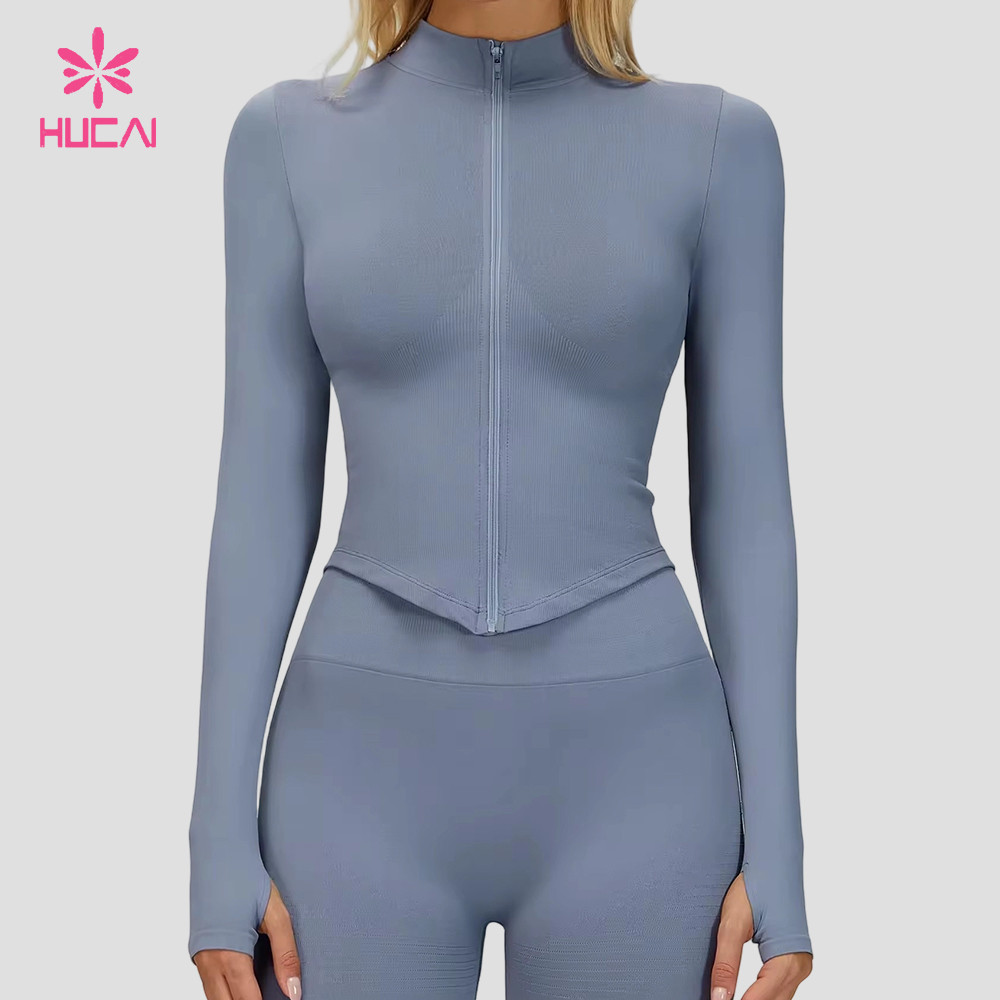
Fabric weight is one variable in thermal balance, not the whole answer. Two fabrics at the same weight can feel very different on a run depending on knit structure, stretch direction, surface finish and how quickly the material moves moisture away from the body.
When the brief reaches a development team, it is more useful to describe the behaviour you need than a single number:
- Coverage without weight: the top should feel substantial enough to wear in cooler air without restricting arm swing or shoulder rotation.
- Stretch and recovery: the fabric should return to shape after the run, particularly at the neckline and cuff, where lightweight knits can relax over time.
- Opacity: lighter weights are more exposed to transparency when the fabric is held under tension, which matters most across the chest, back and shoulder.
- Surface behaviour: smooth, low-friction surfaces reduce the chance of the top sticking to an outer layer.
- Drying behaviour: the fabric should manage sweat without holding it against the skin during a long run.
Because weight, recovery and opacity pull against each other, the fabric decision is normally reviewed together with the intended garment structure. A useful starting point is the site's fabric selection guidance, then narrow the options by the exact behaviour the style needs rather than by a target weight alone.
Confirm before sampling: the required stretch and recovery direction, the opacity expectation in a stretched state, and the fabric surface that will sit against the skin and against a shell.
Neckline Height and Sleeve Fit
Neckline and sleeve are where coverage is actually delivered, so they carry most of the perceived value of a cool-weather top. They are also where the fastest sample revisions come from, because both are easy to approve on a hanger and easy to fault in motion.
Neckline height
A higher neck adds warmth and wind protection across the chest, but height alone is not the decision. What matters is how the neckline behaves when the runner turns the head, breathes hard or changes pace.
- The neckline should sit close without pressing on the throat.
- Stretch and recovery in the neck area should be reviewed separately from the body fabric, since the neck is the most stressed edge on a lightweight top.
- A collar that stands correctly in a fitting room can still collapse or pull if neck circumference and edge finishing are not defined together.
- Any zip, placket or seam at the neck should be reviewed for how it sits when the head turns, not only when the garment is flat.
Sleeve length and sleeve pattern
Long sleeves change the pattern, not only the length. Sleeve pitch (the angle at which the sleeve is set into the armhole), elbow ease and cuff construction all affect how the top feels once the arms are in motion.
- Thumbholes: a thumbhole is a pattern decision. It fixes the position of the hand relative to the sleeve, and if the sleeve length or cuff opening is not adjusted with it, the wearer feels pull across the shoulder.
- Cuff fit: the cuff should hold a light, consistent tension. Too loose and it rides up; too tight and it marks the wrist and interferes with a watch.
- Articulation: a sleeve developed on a straight arm pattern can restrict forward reach and create tension lines across the back when the arms swing.
Confirm before sampling: neckline height and finished neck circumference, sleeve length measured in both relaxed and extended positions, and whether the cuff includes a thumbhole.
Ventilation Zones That Protect Fit Stability
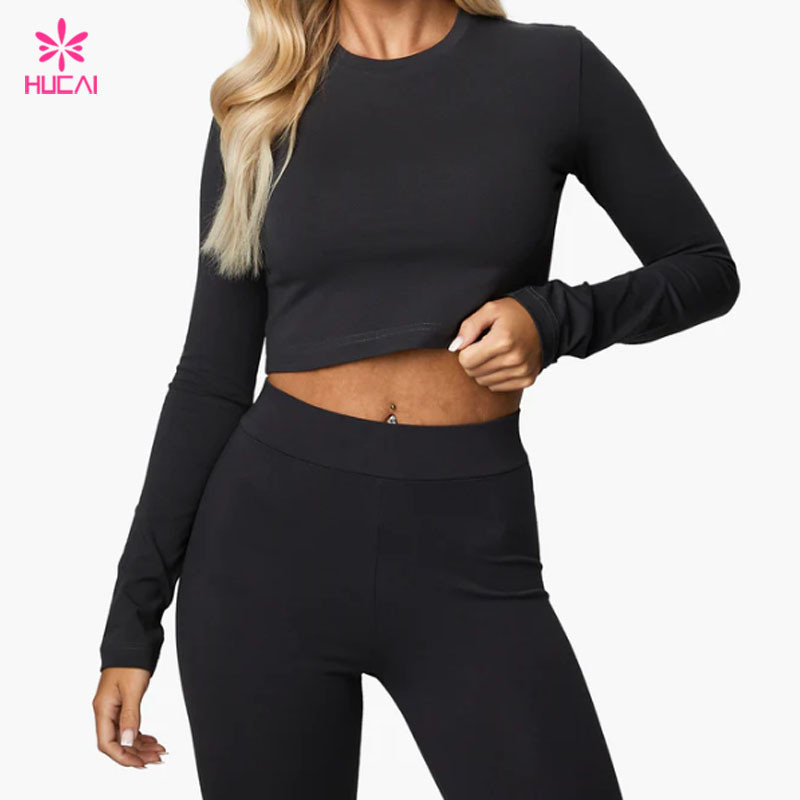
Ventilation is a construction decision. Airflow features only work when they are placed where heat actually builds and when the surrounding fabric can hold its shape around them.
For a running top, the highest-value zones are normally the upper back, between the shoulder blades, and the underarm or side panel. These areas release heat without exposing the chest or removing coverage where the runner needs it most.
The main options each carry a different development risk:
- Mesh panels: effective and easy to place, but the panel and the body fabric need compatible stretch and recovery, or the seam becomes visible and unstable under tension.
- Laser perforation: keeps the surface clean and continuous, but the pattern of the perforation affects how the fabric behaves when stretched, so perforation density should be reviewed on a moving sample.
- Open-back or keyhole structures: deliver strong heat release, but edges need reinforcement, and the opening can distort after repeated washing if the finishing is not defined.
- Lightweight knit zones: a quieter approach, using a fabric with higher air movement in a defined panel rather than a visible opening.
One point is often overlooked: ventilation placed purely for a photograph can behave differently once the garment is worn. A panel that looks well balanced flat can roll, gape or twist during a run if panel tension is not matched to the surrounding fabric.
Confirm before sampling: which ventilation method is used, exactly which body zone it covers, and how the panel and body fabric behave together under stretch.
Layering Ease and Hem Behaviour
A transition-season top spends part of its life over another layer and part of it under one. That dual use is the main reason layering ease needs to be written into the brief rather than left to the sample stage.
- Body length and hem drop: the hem should stay in place during a run without riding up, and it should not create a heavy fold when a shell is worn over it.
- Shoulder and armhole ease: enough room for a base layer underneath without adding bulk once the shell goes on.
- Surface friction: a smooth outer surface on the top lets an outer layer slide rather than grip.
- Layer order: deciding the intended order of the pieces - base layer, running top, light outer layer - clarifies how much ease each item needs.
This is where running tops and bottoms are usually planned together, because the length of the top interacts with the rise of the companion piece. Brands extending an existing range often review running shorts development or leggings at the same time, so the capsule reads as one system rather than a set of unrelated styles.
Confirm before sampling: the intended layer order, the hem length relative to the companion piece, and the amount of ease required at the shoulder for a base layer.
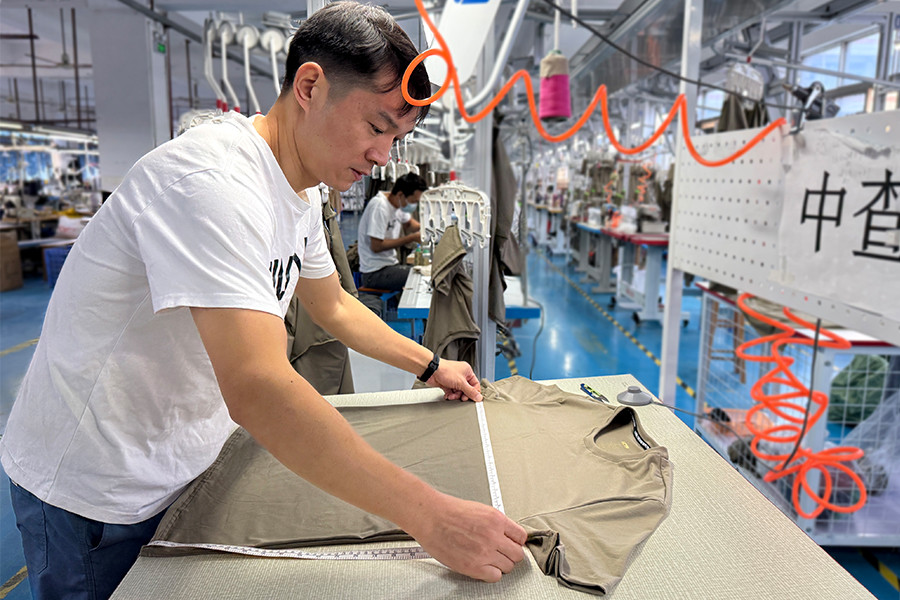

Sample Movement and Wash Review
A cool-weather top performs or fails in motion. The sample review is therefore a movement review, not a measurement review alone.
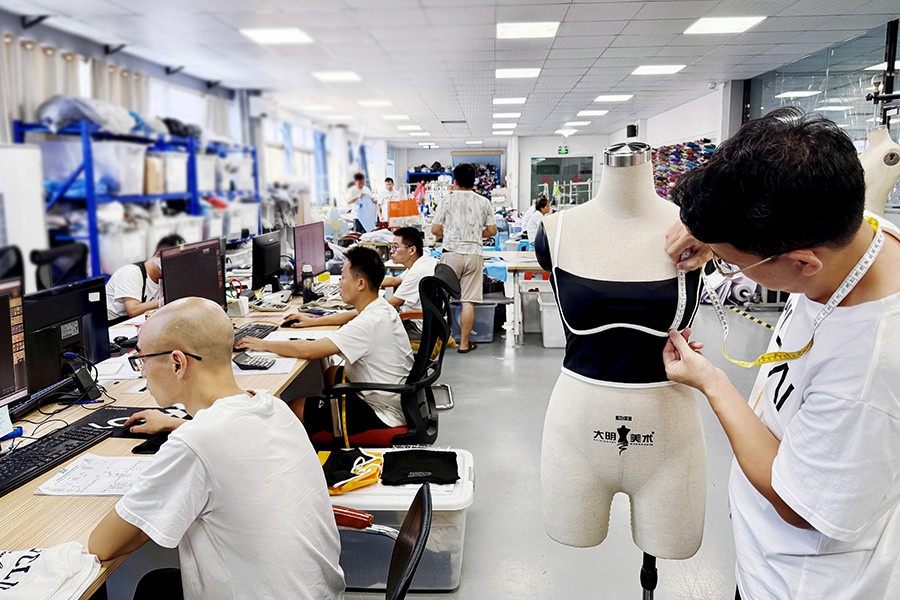
Sample development for a technical top of this type usually takes about 10-15 days, depending on style, fabric, trim, logo, revision requirements, and confirmed details. Before requesting it, it helps to know what the review should cover. HUCAI Sportswear structures technical top sampling around four checks:
- Static fit and measurements: confirms the garment matches the approved specification in a relaxed state.
- Movement fit: arms raised, forward reach, torso rotation and a short run to reveal neckline pull, sleeve restriction, hem lift and panel distortion.
- Layering fit: the top worn over a base layer and under a light shell, checking for bunching and shoulder pressure.
- Wash review: measured before and after laundering to see how the neckline, cuff and ventilation edges hold their shape.
Sending the sample through these four checks before approving revisions reduces the chance of a second round of changes. Where the movement review identifies a construction issue, the revision is normally faster and cheaper to resolve at sample stage than after bulk production planning has started.
Confirm before sampling: who performs the movement and layering checks, what measurements are taken before and after wash, and which single change would be made if only one revision round is available.
Decision Check: Is the Cool-Weather Top Brief Ready for Sampling?
Before requesting samples, confirm the following:
- Temperature range: the conditions the style is sold into, and whether it is designed as a single layer or a mid-layer.
- Run intensity: the pace and duration the top is expected to handle, which drives how much heat release the construction needs.
- Base layer use: whether the garment is worn directly on skin, over a base layer, or both.
- Neck preference: the target neckline height and finished neck circumference, tested for comfort when the head turns.
- Ventilation and reflective detail: the chosen ventilation method, its body zone, and whether any reflective or functional trim is included.
- Fabric weight direction: the required stretch, recovery, opacity and surface behaviour, not a weight number alone.
If four or more of these criteria are confirmed, the direction is ready for a structured sample request. If fewer are resolved, development planning will usually reduce sample revision cycles and control cost.
Mid-article next step: If you already hold a tech pack with confirmed measurements, construction details and branding specifications, send them for OEM review. If you are starting from reference images, a category direction or an early capsule idea, share those with the target market and the temperature range so the neckline, sleeve and ventilation brief can be defined through ODM development before any sample is cut.
Manufacturer Insight
Manufacturer Insight: the most common failure in cool-weather running tops is not the fabric weight. It is a neckline that was raised for coverage without adjusting stretch, recovery and finished neck circumference at the same time.
The pattern is consistent. A higher neck is requested, the neckline height is increased on the pattern, and the sample photographs well. Then, during a run, two problems appear: the collar presses against the throat when the runner breathes hard, or the neckline edge relaxes and the collar loses its shape after a few washes. In both cases the height was treated as a standalone change, when it is really one part of a three-part decision - height, edge finishing and fabric recovery at the neck.
The same logic applies to ventilation. An opening that reads clearly on a flat garment can roll or gape in motion if the panel tension is not matched to the body fabric. Both issues are visible at sample stage and both are easier to correct there than after bulk production planning has begun. This is why movement fitting, not flat-lay approval, is the review that carries the most weight for this category.
FAQ
How high should a running neckline be?
It should be high enough to protect the chest without pressing on the throat. There is no single correct height, because the answer depends on the temperature range, whether a base layer is worn underneath, and how much movement the runner makes. Confirm neckline height together with finished neck circumference, edge finishing and fabric recovery in the neck area, then verify comfort during a movement fitting rather than on a hanger.
What fabric weight works for cool-weather running tops?
Weight alone does not determine suitability. Two fabrics at the same weight can feel different depending on knit structure, stretch direction, surface finish and moisture behaviour. Define the behaviour you need instead: coverage without restriction, stretch and recovery at the neck and cuff, opacity under tension, and a surface that does not stick to an outer layer. Weight is then selected to support those requirements.
Do thumbholes affect the sleeve pattern?
Yes. A thumbhole fixes the position of the hand relative to the sleeve, so it is a pattern decision rather than a finishing detail added at the end. If sleeve length and cuff opening are not adjusted together with the thumbhole, the wearer usually feels tension across the shoulder or the cuff rides up the forearm. Confirm sleeve length in both relaxed and extended positions before approving the pattern.
Where should ventilation be placed on a running top?
The upper back between the shoulder blades and the underarm or side panel are usually the highest-value zones, because they release heat without removing coverage where the runner needs it. Whichever method is chosen, the ventilation panel and the surrounding fabric need compatible stretch and recovery, otherwise the area becomes unstable or visibly distorted during movement.
How much layering ease is needed?
Enough for the intended layer order. If the top is worn over a base layer and under a light shell, the shoulder and armhole need room for one layer underneath without creating a heavy fold when the outer piece goes on. The practical way to set this is to define the layer order first, then review the sample wearing both layers rather than the top alone.
What should be checked before bulk production?
Four things: the approved measurement specification, the construction standard for the neckline, cuff and ventilation edges, the confirmed fabric and colour reference, and the movement and layering behaviour of the approved sample. Bulk production often takes about 25-30 days after pre-production details and approvals are confirmed, depending on project scope, materials, processes, quantity, and scheduling. Confirming these items before that point reduces the chance of changes mid-production.
What is the MOQ for private label running tops?
The current public MOQ starts from 100 pcs / style, while final color, size, fabric, trim, and customization planning depends on the confirmed project. Garments that combine two fabric families, several colours, or multiple trim options are usually planned differently, because each additional variable affects how the order is scheduled and produced.
How long does sample development usually take?
Sample development usually takes about 10-15 days, depending on style, fabric, trim, logo, revision requirements, and confirmed details. Timelines are shorter when the brief is complete at the start, which is why confirming neckline, sleeve, ventilation and fabric direction before the first sample is requested has a direct effect on how quickly a style can move forward.
Final Takeaway
A cool-weather running top is a construction problem before it is a fabric problem. The styles that work in transition-season assortments add coverage exactly where the runner needs it, keep heat release and mobility intact, and treat the neckline, sleeve and ventilation as one connected system rather than three separate features.
The practical sequence follows from the thesis: define the product role and temperature range, set the fabric behaviour, then confirm neckline height, sleeve pattern and ventilation placement before the first sample is cut. Review the result in motion, over and under the intended layers, and measure it again after washing. That order is what keeps revision cycles down and moves a style toward bulk production planning with the decisions already settled.
Ready to develop: send your tech pack, measurements, fabric direction and construction details for OEM review. Need development guidance: share reference images, the target market and the temperature range for ODM development. Still evaluating: review the sample development policy and the quality control workflow before you prepare a brief, or contact HUCAI Sportswear with your questions.
About HUCAI Sportswear
- Founded in 1998, specializing in women's activewear and sportswear manufacturing
- OEM and ODM development support for sports bras, leggings, shorts, tops, and matching sets
- Structured sample development and sample-to-bulk consistency control
- AQL 2.5-based inspection as part of the quality workflow
Current certification information can be reviewed during supplier evaluation based on the project and documentation requirements.