Coverage Without Heavy Compression: How to Develop Lightweight Studio Leggings That Still Feel Secure
- Share
- publisher
- HUCAI Sportswear
- Issue Time
- Oct 26,2026
Summary
Coverage in lightweight studio leggings is a structure decision, not a compression setting. This guide separates coverage, support and compression, explains how knit density, mass and recovery determine opacity, and shows how gusset, rise, waistband and lining choices hold coverage in movement. It also sets out a sample validation protocol for light, squat and displacement checks, with MOQ, sample and bulk timing for OEM and ODM development.
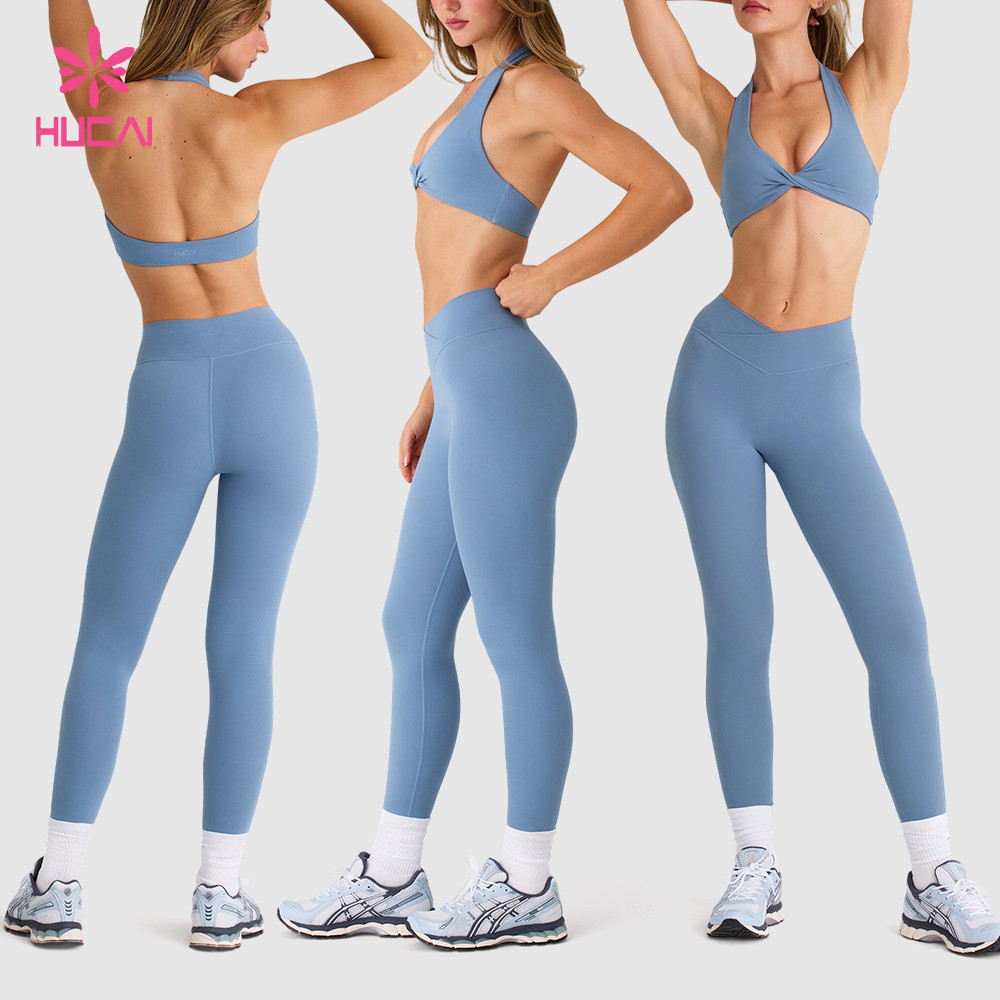
Lightweight studio leggings usually fail in the same place. The hand-feel is right, the weight feels comfortable, and the style still comes back from wear testing for sheerness at the seat or a waistband that rolls during a forward fold. The brief said soft, light, low compression. The sample that arrived is either too thin to cover or heavy enough to behave like a training tight.
For a brand building a studio capsule, this is a development problem rather than a fabric catalogue problem. Coverage, support and compression are three separate outcomes, and only one of them requires added weight. As a women's leggings manufacturer working from private label and OEM briefs, HUCAI Sportswear treats the low-compression studio legging as a structure decision: mass per square metre, knit density, recovery, gusset geometry and waistband construction. Define those before sampling and the product can stay light without becoming revealing.
Quick Answer
A lightweight studio legging can cover without heavy compression when coverage comes from knit density and mass per square metre rather than from elastane tension. In practice, brands should define four things before a sample is cut: fabric weight and density tested in the target colour, recovery so the garment returns to shape after movement, gusset and rise geometry so coverage holds in a deep squat, and a waistband that stays flat without gripping. Compression is a separate specification. Adding it is one way to hide a coverage problem, not the only way, and it changes the product's use case.
HUCAI Sportswear reviews those four points against the tech pack or reference images before sampling, because a coverage failure found at sample stage costs one revision cycle instead of a fabric commitment.
Table of Contents
- Who This Article Is For
- Coverage, Support and Compression Are Three Specifications
- Fabric Weight and Knit Density: Where Coverage Comes From
- Recovery and Modulus: The Under-Specified Half of the Brief
- Gusset, Rise and Panel Geometry
- Waistband and Lining: Where Extra Weight Is Justified
- Sample Validation: Light Test, Squat Test, Displacement
- Decision Check
- Founder's Technical Insight (Jean Yuan)
- FAQ
- Final Takeaway
Who This Article Is For
- Primary reader: growing brands developing a first or second studio legging style, working from a tech pack or a small set of reference images.
- Secondary reader: established brands adding a low-compression line next to an existing compression range.
- Product stage: fabric and structure definition, immediately before sampling.
- Problem being solved: the product must feel light and unrestrictive in yoga, Pilates and barre, but must not go sheer at the seat or roll at the waistband.
- Who may not need this article: brands developing high-support training tights where compression is the intended product benefit, or purely fashion lounge pants where coverage is not a wear-test criterion.
What you gain from this article: a specification checklist that turns "light but not see-through" into decisions you can write into a tech pack, test on a sample, and carry into bulk inspection instead of re-arguing them at every revision.
Coverage, Support and Compression Are Three Specifications
Most briefs collapse three different requirements into one word. Coverage is optical: how much of the body reads through the fabric under a given stretch and light condition. Support is mechanical: how much the garment holds the body in place during movement. Compression is pressure: the circumferential force the garment applies at rest.
A legging can be high-coverage and low-compression at the same time. It can also be high-compression and still sheer, if the knit structure is open and the garment is stretched hard at the seat. That second case is why "add more elastane" is an unreliable answer to a sheerness complaint: it raises pressure, changes the hand-feel, and may not close the optical gap at all.
Market observation supports the split. Studio-oriented ranges from established activewear brands tend to keep garment weight low and rely on dense, matte surfaces, panel placement and rise geometry rather than circumferential pressure. The design language reads as soft and unrestrictive, while the coverage comes from the fabric surface and the pattern, not from grip.
The practical translation is a three-line specification in the tech pack: an opacity requirement stated with its test condition, a support level described by activity, and a compression level described as a feeling (none, light, moderate). Once those are separate, the fabric and pattern conversation becomes specific. Brands positioning this way often build the style inside a soft-support yoga and athleisure collection rather than inside a compression range, because the two lines need different fabric bases and different grading assumptions.
Fabric Weight and Knit Density: Where Coverage Comes From
Two circular knits at the same 220 gsm can behave very differently in a squat. Mass per square metre describes how much material sits in a square metre; density describes how tightly that material is packed. An open stitch with a heavier yarn can weigh the same as a tight stitch with a finer yarn and still show more through the surface when extended.
Three variables move coverage at a given weight. Stitch density and gauge determine the cover factor of the surface. Yarn type and count determine how much the loop opens when stretched. Elastane percentage determines how far the structure travels under load, and therefore how thin the fabric becomes at the point of maximum extension.

Colour is part of the specification, not a styling afterthought. Light colours, optic whites and pale heathers show through earlier than deep tones at the same construction, which means a fabric approved on a black swatch is not automatically approved for a bone or powder pink. If a capsule carries four colours, the coverage check belongs on the lightest one.
| Specification point | What it controls | Reference method |
|---|---|---|
| Mass per unit area | Base weight and hand-feel | ASTM D3776 |
| Stretch and growth | How far the knit travels and returns | ASTM D2594 |
| Dimensional change after laundering | Shrinkage and torque after wash | AATCC 135 |
| Colour and lighting condition | Optical behaviour of the finished garment | In-house light check, documented per colour |
The last row matters because there is no single laboratory number that describes sheerness across all colours and all body positions. The honest approach is a documented in-house protocol applied to the actual colour and the actual extension, which is what a development room can repeat at sample and at bulk.
HUCAI Sportswear keeps candidate qualities in a fabric library with their measured mass, density and recovery recorded, so a low-compression brief starts from qualities already known to hold their surface under extension. That shortens the swatch round, and it also prevents the most expensive version of this mistake: approving a fabric on a flat card, then discovering the optical behaviour only after the yardage is ordered. Fabric options and how they are narrowed are covered in the fabric selection guide.
Recovery and Modulus: The Under-Specified Half of the Brief
Low compression is often read as low recovery. Those are different properties. Compression is pressure at rest; recovery is the ability to return to the original dimensions after extension. A soft, low-pressure knit with weak recovery will grow at the seat and knee during a class, and a fabric that has grown is a fabric that has become thinner and more transparent at exactly the point the wearer is most exposed.
Modulus describes how much force is needed to stretch the fabric. A low-modulus knit feels easy to move in, which is the point of the studio product. Push modulus too low without supporting recovery and the garment loses its shape after twenty minutes of movement, then reads as both baggy and sheer.
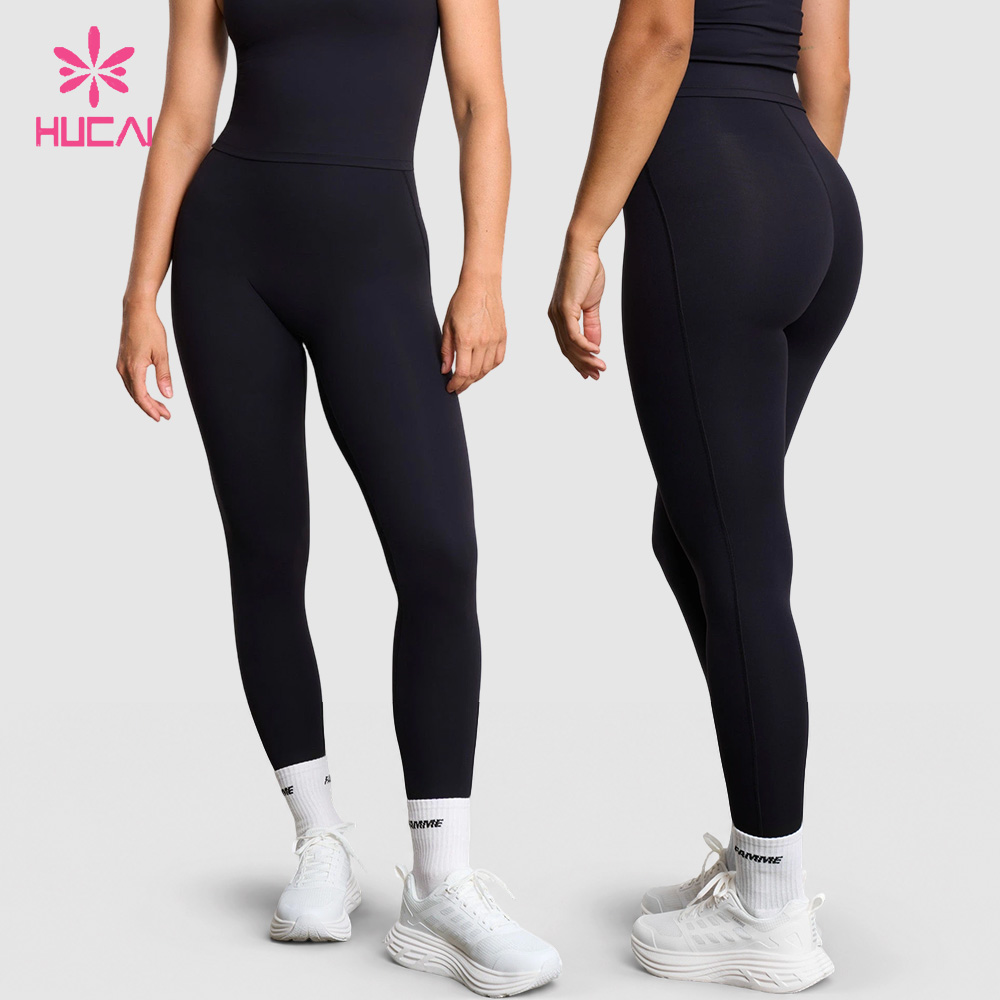
The development consequence is a recovery target written into the specification, not assumed from the hand-feel. Practical checks include cyclic extension followed by measurement of growth, a wash cycle followed by re-measurement, and a visual check for spiral twist, where the leg seam rotates after laundering because the fabric torque was not balanced.
For buyers, the useful framing is that recovery protects coverage. A legging that holds its dimensions holds its density. Once that is understood, the fabric conversation stops being a search for a heavier quality and becomes a search for a balanced one, which is usually lighter than the first instinct. The full sequence from reference to approved sample is set out in the leggings development process.
If you are about to request studio legging samples: send the target activity, the colour range, the compression level you do not want, and one reference image of the coverage you are aiming for. HUCAI Sportswear's development team can then propose fabric qualities with measured density and recovery instead of quoting a single weight, which reduces the number of sample rounds needed to reach a wearable surface.
Gusset, Rise and Panel Geometry: Coverage Is Also a Pattern Decision
Coverage fails at specific places: the seat in a deep squat, the front rise in a fold, and the inner thigh in a wide stance. Each of those is a pattern condition before it is a fabric condition, because each involves the fabric being stretched furthest from its relaxed state.
The gusset is the first control. A shaped gusset moves the crotch seam away from the highest-stress point and distributes extension across a larger area. Diamond and oval shapes behave differently: a diamond gusset follows the leg line with fewer wrinkles, while an oval gusset gives a smoother front but needs more careful placement to avoid pulling. Stitch type matters as much as shape, since a flatlock seam that is correctly tensioned lies flat under extension while an over-tensioned seam puckers and creates a visible ridge.

Rise is the second control. A higher rise moves the waistband above the fold line, which is why high-rise styles read as more secure in studio movement. Rise alone is not sufficient: if the crotch depth is short for the intended body, the garment pulls down at the front as soon as the wearer moves, and the fabric at the seat stretches further than the pattern intended.
Panel layout is the third. Fewer seams across the seat reduce the number of places where a seam can grin open under load, but panels also add structure and can carry a second layer where it is needed. The right answer depends on the target body range and the activity, not on a house style. This is also the stage where grading has to be checked, because a construction that covers at size S can behave differently at size XL where the same fabric is extended further. Pattern and construction decisions for this category are summarised on the custom leggings manufacturing page.
Waistband and Lining: Where Extra Weight Is Justified
Two places in a lightweight legging can legitimately carry more material: the waistband and a targeted lining. Everywhere else, added weight is usually a substitute for a decision that has not been made.
Waistband roll-down is rarely solved by making the band tighter. It usually comes from a mismatch between the band's elastic modulus and the shell's, a band that is too narrow for the rise, or a bonded construction that does not recover at the same rate as the body fabric. A wider band with a controlled, lower-modulus elastic and a clean bonded edge holds position with less pressure, which is exactly what a low-compression brief needs. Stitched bands tolerate more adjustment during sampling; bonded bands give a cleaner edge but demand tighter process control on temperature, pressure and dwell time.
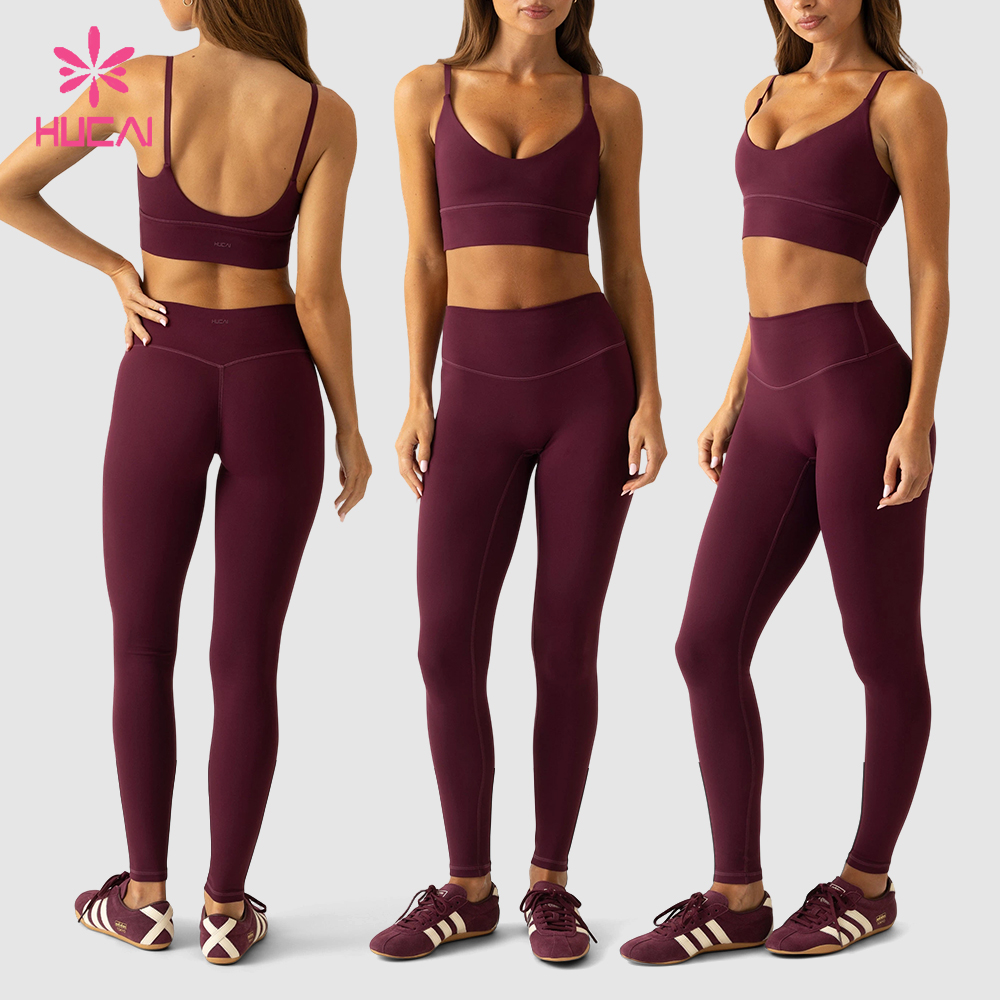
Lining is the honest answer when a specific zone cannot reach the coverage target without pushing the whole garment heavier. A partial seat panel or a front lining adds a defined amount of material where it is needed and leaves the rest of the leg light. The failure mode to watch is differential shrinkage: if the lining and the shell shrink at different rates in laundering, the garment puckers at the join and the seam line becomes visible through the outer layer. Lining selection therefore belongs with fabric selection, not after it.
Brands developing this structure with reference images rather than a full tech pack usually route through an ODM development service, where the band, lining and shell are proposed together as one construction rather than sourced separately.
Sample Validation: Light Test, Squat Test, Displacement
A coverage claim that cannot be repeated is not a specification. Three checks turn the brief into something a sample room and a bulk inspection team can both apply.
Light test. Place the sample on a form or a wearer, stretch it to the extension it will see at the seat, and view it against a controlled backlight at a fixed distance. Record the colour, the extension and the result. Judging sheerness from a photograph under unknown lighting is the most common source of disagreement between brand and factory, because the light source and the camera settings influence the outcome more than the fabric does.
Squat test. Assess at several depths and on more than one body type, and repeat at the largest size in the range. A sample that covers at size S in a half squat says very little about size XL in a full squat, where the same knit is extended further.
Displacement check. Mark the waistband and gusset position before a movement sequence and measure drift afterwards. A band that has travelled upwards or a gusset that has rotated indicates a pattern or band-tension problem that will read as a coverage problem in wear.

Add a wash cycle before the final judgement. Recovery and opacity after laundering are what the customer experiences, and a fabric that passes dry can still change after the first home wash. In HUCAI Sportswear's sample review these checks are recorded per colour and per size, and the approved sample becomes the reference for the corresponding checkpoints in bulk inspection, which is why the sample policy treats sample approval as a specification handover rather than a formality.
Decision Check: Is This Studio Legging Brief Ready for Sampling?
Before requesting samples, confirm the following:
- Opacity requirement is written with its condition: the target colour, the lighting condition and the stretch state are stated, not implied.
- Fabric is approved on a physical swatch: mass, density and recovery have been assessed on the actual quality, not on a digital card or a competitor garment.
- Recovery target and test method are agreed: growth after cyclic extension and after laundering is defined, with a pass threshold.
- Gusset, rise and seam layout are signed off across the size range: the construction has been checked at the smallest and largest size, not only at the middle.
- Waistband and lining decisions are fixed: band height, construction type and whether lining is partial or full are confirmed before cutting.
If three or more criteria are confirmed, the direction is ready for a structured sample request. If fewer than three are resolved, additional development planning will reduce sample revision cycles and control cost.
Founder's Technical Insight: Jean Yuan's Development Note
When brands bring us a reference legging for a lightweight studio style, the most frequent breakdown I see in the sample room is not a bad fabric choice. It is a fabric judged in the wrong state.
A hand-feel assessment happens on a flat swatch, at rest. Coverage happens under extension. A knit that feels substantial on the table at 180 gsm can lose a large part of its cover factor at the seat, where the same fabric is stretched hard in a squat. The sample feels right in the hand and fails in wear, and everyone assumes the fabric was too light. Often the weight was acceptable; the open stitch and the low recovery were the problem, and neither shows up in a flat-lay photo.
The second failure is quieter. When we bond a wide band or add a seat lining, the shell and the added component must shrink at the same rate in the same wash. If they do not, the join puckers, the seam line becomes visible through the outer layer, and the garment twists slightly after the first wash. The customer reads that as poor quality, and it is; but it started as a shrinkage mismatch rather than a sewing fault.
What I ask the team to verify before we cut a lightweight studio sample:
- Stretch the candidate swatch to the extension it will see at the seat and look at it against a backlight, in the exact colour being quoted.
- Measure growth after repeated extension, and again after one wash cycle, and record both numbers on the spec sheet.
- Wash the shell, the band elastic and the lining together at the same temperature before approving the combination.
- Set stitch tension on the actual machine with the actual thread, then re-check it on the finished seam under stretch rather than on a flat sample.
- Check the largest size in the range, where the same pattern and fabric are extended furthest.
At HUCAI Sportswear we keep these results with the style record, so bulk production is checked against a measured sample instead of a verbal description of it. That is the difference between a light legging that covers and a light legging that generates returns.
FAQ
What is the minimum order quantity for a custom lightweight studio legging?
MOQ is from 200 pcs per style. Colour and size breakdowns are confirmed at quotation stage, because a very light colour usually needs a different fabric approval than a dark one, and that affects how the order is split.
How long does sample development usually take?
Samples usually take about 10-15 days after the specification and fabric are confirmed. The clock starts once mass, density, colour and construction are agreed; if the fabric still has to be sourced, that stage runs before the sample schedule.
How long does bulk production take?
Bulk production often takes about 25-30 days after sample approval and material confirmation. Fabric availability for the approved colour is the variable that most often moves this window.
Can a legging cover without heavy compression?
Yes. Coverage is primarily an optical outcome of knit density, mass and recovery, while compression is a pressure specification. A low-compression legging covers when the fabric surface is dense, the garment returns to its dimensions after movement, and the rise and gusset keep the areas of highest stress away from the thinnest part of the fabric.
What fabric weight should we specify for studio leggings?
There is no universal number, because two qualities at the same mass can differ in density and recovery. The reliable approach is to set the weight range from the activity and hand-feel you want, then approve the actual quality in the lightest colour of the range using a documented light test at the extension the garment will see in wear.
Do we need a gusset, and which shape?
A gusset is a construction decision that distributes extension at the crotch and reduces seam stress in deep movement. Diamond and oval shapes suit different front treatments and different seam plans. The choice should be made with the pattern maker against the target body range, not copied from a reference garment without checking how it grades.
How do you check sheerness before bulk production?
With a documented light test: the sample on a form or wearer, stretched to the relevant extension, viewed against a controlled backlight in the exact colour, with the result recorded per size. Photographs taken under unknown lighting are not a substitute, because the light source and camera settings change the result more than the fabric does.
Should a first studio style use OEM or ODM development?
If you have a tech pack with measurements, fabric requirements and construction details, OEM review is the direct route. If you are working from reference images and a positioning idea, ODM development lets the fabric, band and gusset be proposed as one construction. Both paths end in a specification that can be sampled and inspected consistently.
Final Takeaway
Lightweight studio leggings cover when the development work is done in the right order: separate coverage from support and compression, choose fabric by density and recovery rather than weight alone, settle gusset and rise geometry across the size range, and use the waistband and a targeted lining as the only justified places to add material. Then prove the result with a light test, a squat test and a displacement check that a factory and a brand can both repeat.
HUCAI Sportswear develops these styles with the coverage requirement written into the spec sheet, so the sample that gets approved is the same construction that goes into bulk inspection. If you are planning a studio capsule, the contact page is the place to start with your reference, colour range and target activity.
About HUCAI Sportswear
- Founded in 1998, specializing in women's activewear and sportswear manufacturing
- OEM and ODM development support for sports bras, leggings, shorts, tops, and matching sets
- Structured sample development and sample-to-bulk consistency control
- AQL 2.5-based inspection as part of the quality workflow
Current certification information can be reviewed during supplier evaluation based on the project and documentation requirements.
Recycled or certified material options can be reviewed based on project requirements.