Designing Functional Pockets for Women's Activewear: What Brands Overlook Before Sampling
- Share
- publisher
- HUCAI Sportswear
- Issue Time
- Aug 17,2026
Summary
A B2B development guide for growing brands on designing functional pockets for women's activewear before sampling. Covers pocket placement, construction, fabric and seam interactions, common pre-sampling mistakes, and OEM/ODM paths from HUCAI Sportswear.
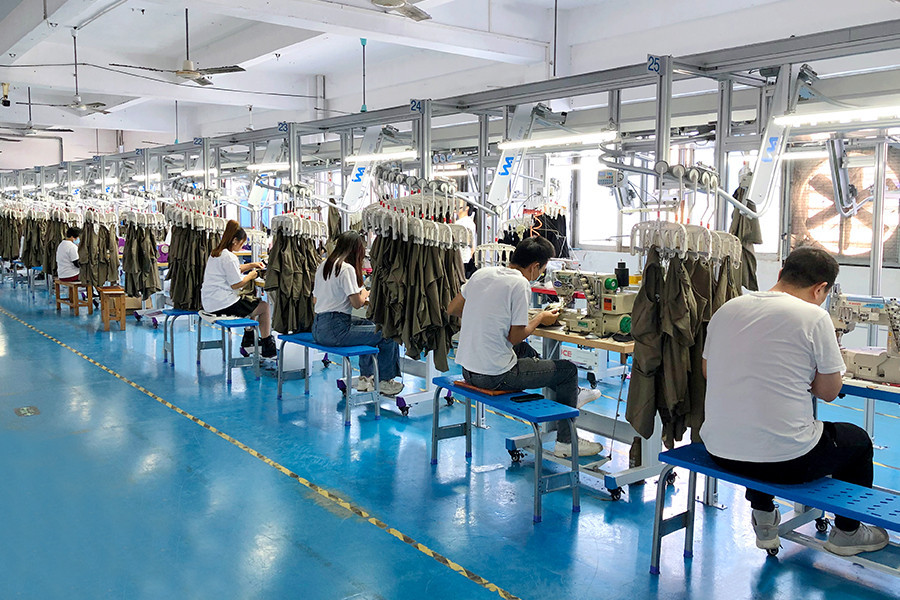
Functional pockets are no longer a finishing touch on women's activewear. For growing brands, pocket design has become a development decision that affects fabric choice, panel layout, seam structure, sample revision cycles, and how the garment actually performs during running, training, and studio use. Brands that treat pockets as a last-minute detail often discover the consequences only when the first sample arrives, or worse, when the bulk run has already gone into production.
This article walks through what growing brands commonly overlook when designing functional pockets for women's activewear, from a manufacturer's process point of view. It explains why pocket planning now sits at the front of the development brief, where pockets actually get used on leggings, shorts, and layering pieces, how pocket construction interacts with fabric and seam stability, the most common pre-sampling mistakes, and what to review during sample rounds when pockets are part of the spec. The aim is to help buyers avoid the sample revision loops and bulk inconsistencies that come from under-planning pocket design.
Quick Answer
Functional pockets for women's activewear should be defined before sampling through four development decisions: pocket type and role, placement on the garment, construction method, and how the pocket interacts with fabric, waistband, and seam structure. Growing brands often skip these decisions and treat pockets as a detail to add later, which leads to pocket openings failing pull tests, fabric distortion around pocket entries, panel seams shifting, and inconsistent bulk output. Pocket design is a development decision, not a finishing detail, and it should be reviewed through the same sample-stage gate as fit, support, and fabric.
Table of Contents
- Who This Article Is For
- Why Functional Pockets Are Now a Development Decision
- Pocket Placement: Where Pockets Actually Get Used
- Pocket Construction: How the Pocket Is Built
- Fabric, Waistband, and Seam Interactions
- Common Pre-Sampling Mistakes Brands Make With Pockets
- Sample-Stage Review Points and OEM/ODM Path
- Decision Check
- Manufacturer Insight
- FAQ
- Final Takeaway
Who This Article Is For
- Primary reader: Growing brand founders and product development leads planning women's activewear lines with functional pocket features, leggings, shorts, or layered pieces.
- Secondary reader: Sourcing managers and private label buyers evaluating whether a base supplier can support pocket-led development.
- Product stage: Early product definition or pre-sampling review, when pocket placement and construction are still open design choices.
- Problem being solved: How to plan pocket design early enough to avoid repeated sample revisions, fabric distortion, and bulk inconsistencies.
- Who may not need this article: Buyers with a fully confirmed tech pack that already specifies pocket type, placement, construction, and stitching, or readers looking for consumer styling advice.
What you gain from this article: A clearer framework for planning pocket design before sampling, a way to identify the construction decisions that cause the most sample revisions, and a sample-stage review checklist that protects pocket stability from sample to bulk.
Why Functional Pockets Are Now a Development Decision
Fifteen years ago, most women's activewear pockets were decorative or limited to a small hidden waistband pocket. The market has shifted. Women's running leggings now routinely carry a phone pocket large enough for current smartphone sizes, training shorts include side pockets for keys or cards, and outer layers are being designed around phone, key, and earbud storage. Buyers increasingly treat pocket design as a core feature, not a finishing detail.
For growing brands, the shift has a practical consequence: pocket design affects the entire sample-round conversation. It changes fabric choice around the pocket area, panel layout, seam placement, waistband construction, and the type of elastic or binding used at pocket openings. A pocket that is added after fit and fabric are locked in almost always creates a downstream issue, from puckering at the entry to insufficient stretch recovery at the pocket mouth.
Treating pockets as a development decision means including pocket type, placement, intended load, and construction method in the first brief, not in the second or third sample round. It also means linking the pocket spec to the relevant production choices, such as stitch type, binding, lining, and reinforcement, so each decision can be reviewed against the next.
For brands that have not yet redesigned their pocket approach, the practical first step is to separate pockets from the finishing spec and move them into the development spec, alongside fit, fabric, and support direction. For brands that already have a pocket-led product, the next step is to record the construction in a way that can be reproduced from sample to bulk.
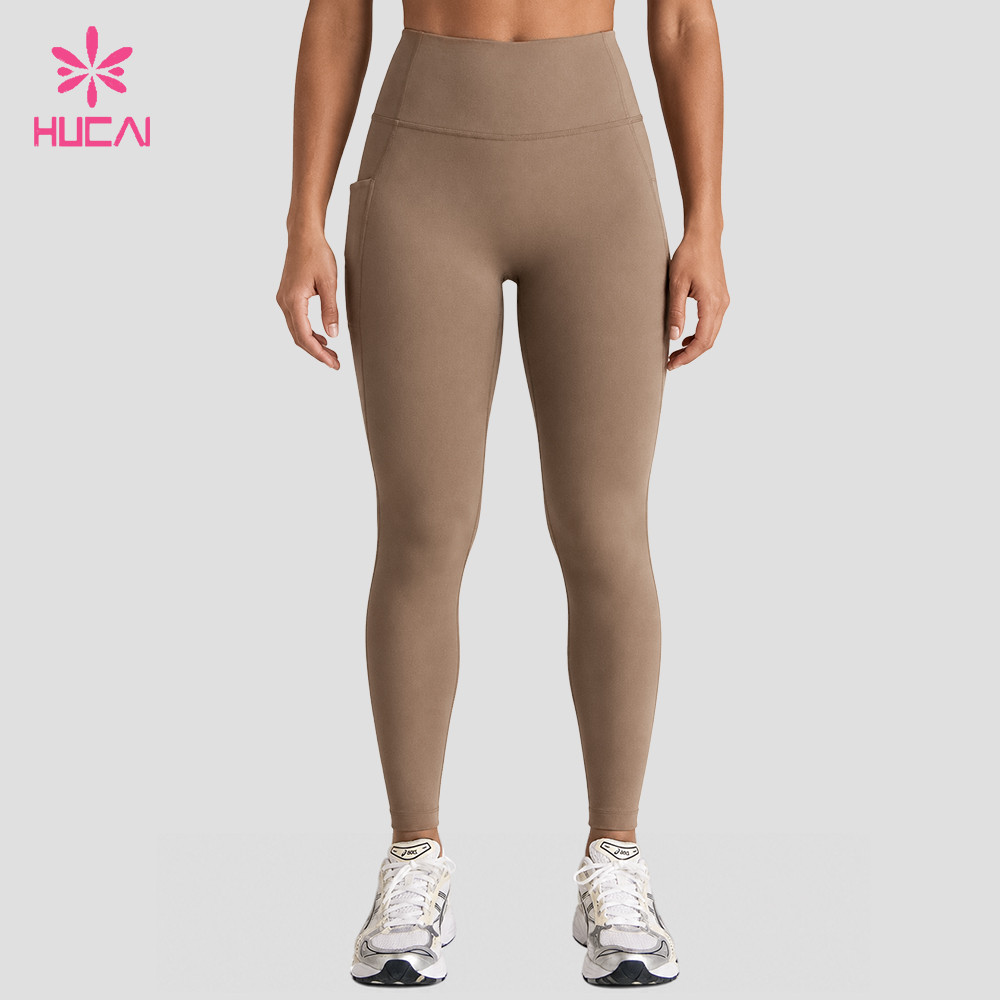
Pocket Placement: Where Pockets Actually Get Used
Pocket placement is the first decision that interacts with garment design. The same leggings can carry pockets in several locations, and each placement has different consequences for structure, stability, and user behavior.
Front waistband pocket. A small pocket on the front center of the waistband is common for keys or a small card. It does not interfere with the leggings' compression panel design, but it requires a stable waistband construction and a covered or bound entry to prevent the contents from showing through the fabric. The entry is usually narrow, so the user treats it as a secure pocket rather than a primary carry pocket.
Side waistband pocket. A side pocket integrated into the waistband seam is often used for keys or a small phone. The placement works for studio and yoga categories but creates stress at the side seam if the pocket is loaded during running or HIIT. The pocket must be planned with the waistband seam allowance, otherwise the entry can fail after repeated load cycles.
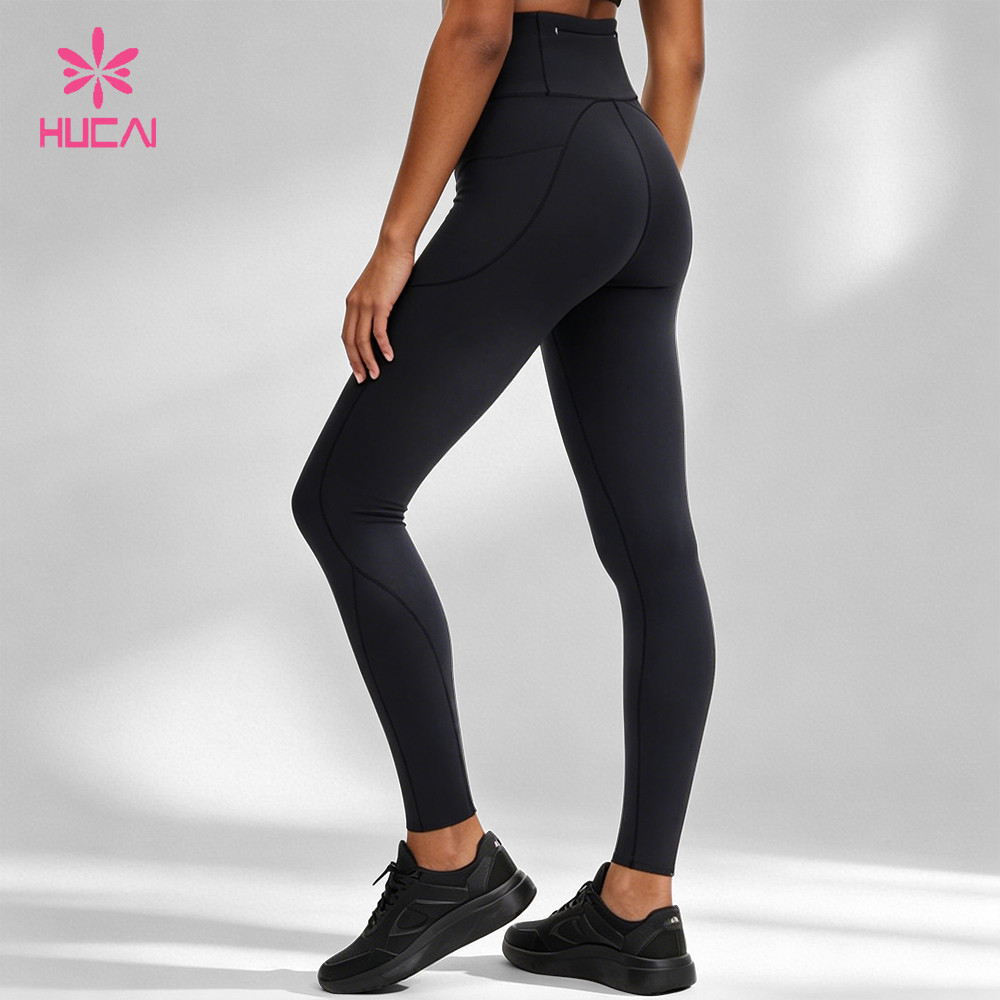
Side thigh pocket (hidden or visible). A pocket on the outer thigh, either hidden inside a panel or visible as a bonded patch, is standard for running leggings and outdoor shorts. This placement accepts a full-size smartphone and is the most common phone pocket on women's activewear. It interacts with the panel layout, so the panel must be planned to allow the pocket to lie flat without distorting the fabric.
Back waistband pocket. A back-center pocket, often used for gels, cards, or a small phone, is more common on running and outdoor products. It requires a higher-rise waistband for stability and a clean finish against the back panel. The back panel must be wide enough to support the pocket without pulling the waistband down.
Inner short pocket. Many running shorts and skorts include a pocket inside a built-in inner short. The pocket is usually for a phone or key, and it must be planned alongside the inner short construction, including the leg hem and the layering between the inner short and the outer shell.
The placement decision should be made against the intended activity. A studio leggings does not need a side thigh pocket, but a running leggings almost always does. A training short usually requires a side pocket for a phone, while a tennis skort may prioritize inner short storage. Without an activity-based placement decision, pocket design tends to drift between feature categories and produces inconsistent sample results.
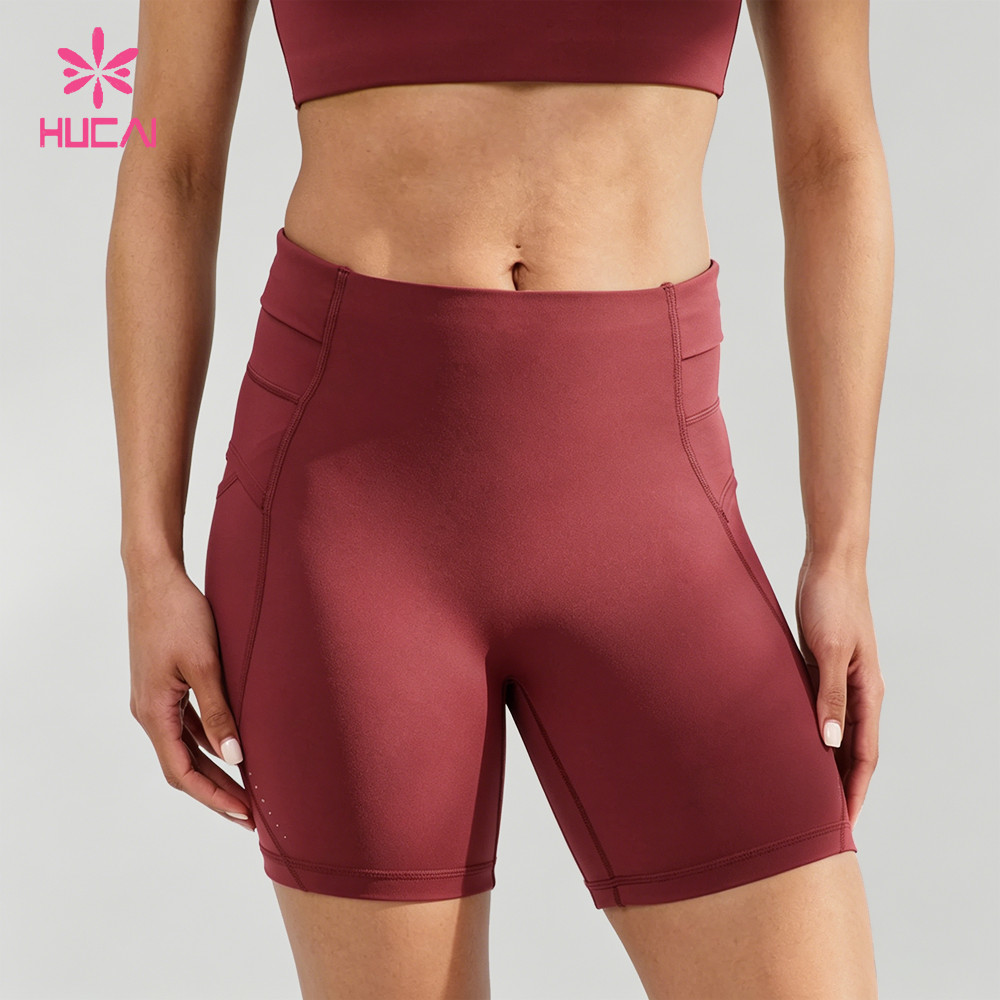
Pocket Construction: How the Pocket Is Built
After placement, the next decision is how the pocket is constructed. Construction method affects pocket capacity, stretch recovery, seam stability, and the visual appearance of the finished garment.
Cut-and-sew pocket. The pocket bag is a separate piece of fabric, cut and sewn into the panel seam. This is the most common construction for side and back pockets. It allows the pocket to use a different fabric from the body if needed, and it provides a clean finish. The risk is that the pocket bag fabric may pull or distort if it has a different recovery rate than the body fabric.
Bound pocket opening. The pocket entry is finished with binding or a separate facing strip, which reinforces the opening and prevents fraying. Bound openings are common on running leggings and shorts. The binding must stretch with the body fabric; otherwise the entry becomes rigid and can fail at the seam under load.
Welded or bonded pocket. The pocket is attached without traditional stitching, using heat-bonded or ultrasonic seams. This method reduces seam bulk and is common on performance running tops and outerwear. It requires specialized equipment and fabric compatibility checks, and it is not a default construction for most growing brands.
Envelope or flap pocket. A pocket closed with a flap or envelope fold, usually on outerwear or light layers. This is less common on innerwear such as leggings and shorts, but it is standard on athleisure jackets and light outer layers where secure storage matters more than stretch.
Hidden waistband pocket. A pocket integrated into the waistband construction, with the entry hidden inside the waistband fold. This is common for studio and yoga categories. It requires a stable waistband with a clean interior finish and is usually lined with a self-fabric or lightweight lining material.
The construction decision should be reviewed against the intended load, the activity, and the fabric. A side thigh pocket for a full-size phone should use a cut-and-sew construction with a bound opening. A waistband pocket for a key or card can use a hidden construction. A running jacket pocket should use a bonded or envelope construction for weather resistance. The match between construction and use case is one of the most common pre-sampling decisions, and it is one of the most frequently missed.
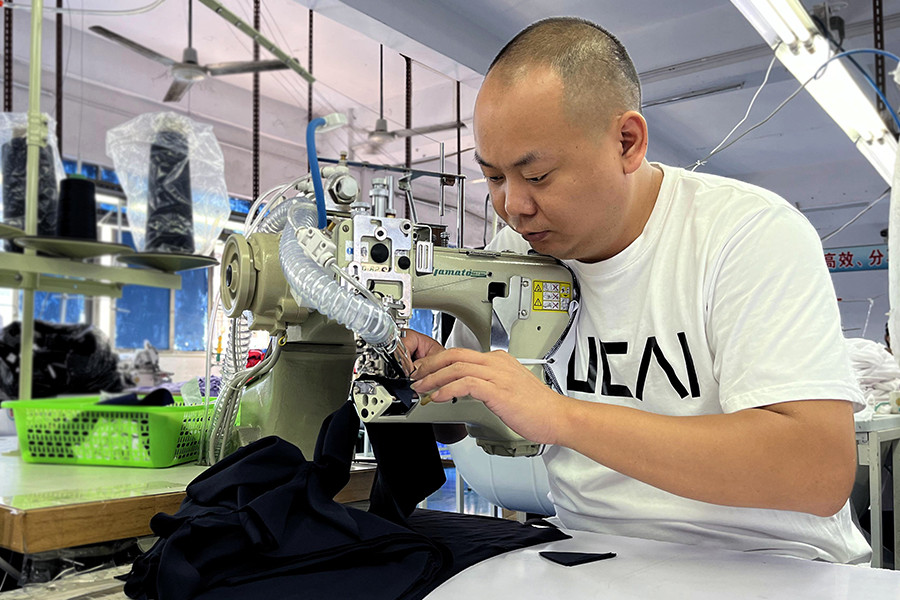
Fabric, Waistband, and Seam Interactions
A pocket does not sit alone on the garment. It interacts with the fabric around it, the waistband or panel structure above it, and the seams that frame it. When these interactions are not planned together, pockets become a source of sample revision.
Fabric recovery. The fabric around the pocket entry must recover after the hand or phone is removed. If the body fabric has low recovery, the pocket entry will stay stretched after the first few uses. This is especially visible on lighter-weight jersey knits used for studio leggings. The fabric grade should be tested for recovery at the pocket entry, not just at the main panel.
Fabric thickness at the pocket area. Adding a pocket layer increases local fabric thickness. On a slim-fit leggings, this can create a visible step or a slight bubble at the pocket area. The bag fabric should be matched to the body fabric in weight and recovery, or the seam should be planned to absorb the thickness without distorting the silhouette.
Waistband interaction. A pocket integrated into the waistband must be planned with the waistband construction. The waistband elastic, fold structure, and topstitching all interact with the pocket entry. If the waistband is changed after the pocket is locked in, the pocket opening positions may shift, or the pocket may no longer fit inside the waistband fold.
Seam interaction. Pocket openings are usually framed by side seams, panel seams, or waistband seams. The seam type, stitch length, and seam allowance all affect how the pocket entry behaves under load. A flatlock seam sits flatter, but it provides less strength at the pocket entry. A coverstitch seam is more durable but adds bulk. The seam choice should be planned together with the pocket construction, not after.
Stretch direction. Pockets on stretch garments should be planned with the fabric's stretch direction. If the pocket entry runs across the stretch axis, the entry will stretch and may fail. The entry should run along the stretch direction so that the surrounding fabric supports the load rather than the pocket edge.
These interactions are not visible in a flat sketch. They become visible in the first sample. Brands that do not flag fabric, waistband, and seam interactions before sampling usually see at least one of these issues appear in the first round, and the sample revision cycle grows accordingly.
Common Pre-Sampling Mistakes Brands Make With Pockets
From a manufacturer's process perspective, the most common errors around pockets are not exotic. They are predictable planning gaps that surface in the first sample.
Mistake 1: Pockets specified as a single line in the tech pack. A tech pack that says side pocket, phone size, no further detail leaves the construction method, seam type, and binding to the supplier's interpretation. The first sample often returns with a different pocket interpretation than the brand intended, and the revision cycle starts before the construction question is even discussed.
Mistake 2: Pocket placement added after the panel layout is locked. Adding a side thigh pocket after the front and back panels have been confirmed forces the pocket into a panel that was not designed for it. The pocket may not sit flat, or the panel seam may land in the wrong position relative to the entry. The fix is to bring pocket placement into the same conversation as panel layout, not treat it as a finishing detail.
Mistake 3: Pocket fabric selected without reference to the body fabric. Choosing a pocket bag fabric that has lower recovery than the body fabric creates a pocket that pulls the body fabric out of shape. Choosing a pocket bag fabric that is heavier than the body fabric creates bulk. The pocket bag should be matched to the body in weight and recovery, even if the color is different.
Mistake 4: Pocket entry not tested under load. A pocket that looks fine in the sample review may fail after a few real-use cycles. The hand or phone stretches the entry, the seam loosens, and the pocket begins to sag. A pull test on the sample, before bulk production, helps catch this before the bulk run goes into production.
Mistake 5: No construction record between samples and bulk. Once a pocket construction is approved, it must be documented in the construction file, not just the approval sample. Without a written record, the next sample round or the bulk run may use a slightly different pocket construction, and the inconsistency shows up in the finished garment.
These mistakes are common because pocket design sits at the intersection of fit, fabric, construction, and use case. Brands that plan pocket design early, with the same discipline as fit and fabric, avoid most of them.
Sample-Stage Review Points and OEM/ODM Path
The right sample-stage review for pockets depends on the development path the buyer is on.
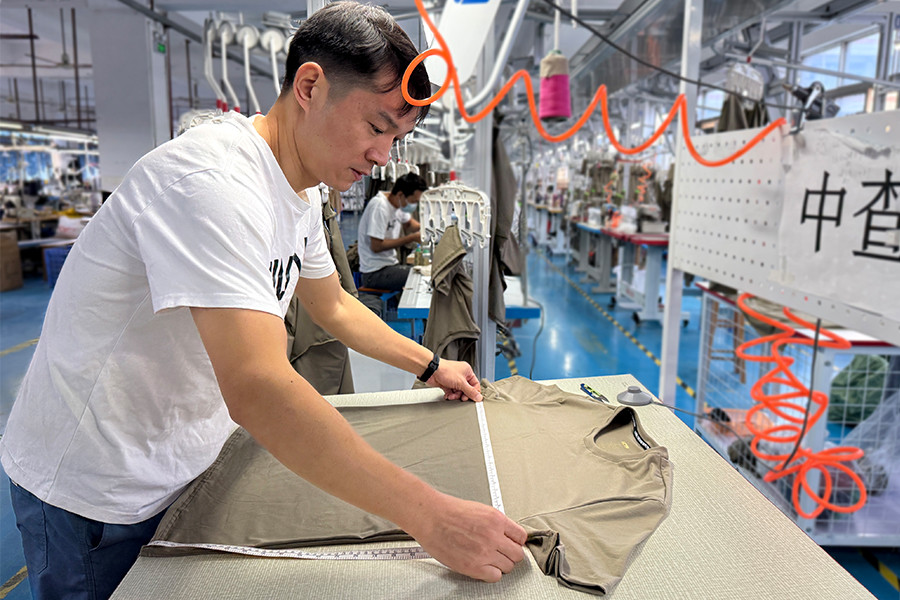
OEM path. Buyers with a tech pack or confirmed specification that already includes pocket type, placement, construction, binding, and stitching should review the sample against that specification. The sample should match the pocket construction in the spec, including the stitch type, the binding width, and the seam allowance around the pocket. The pocket should be loaded in the sample review to confirm that the entry holds under the intended use case. If the tech pack does not specify pocket construction, the OEM review should flag this as a gap before sampling, not after.
ODM path. Buyers starting from reference images, an early product concept, or a capsule theme usually need pocket direction support before sampling. The supplier reviews the reference, proposes a pocket type and placement, and confirms the construction through a first sample. The first sample should be reviewed for pocket stability, not only for the overall garment look.
At HUCAI Sportswear, both paths are supported. Reviews for OEM projects cover pocket type, placement, construction, binding, seam type, and reinforcement against the tech pack. Reviews for ODM projects cover reference-image review, pocket direction clarification, fabric and trim review, and sample priorities based on the confirmed scope.
Sample development usually takes about 10-15 days, depending on style, fabric, trim, logo, revision requirements, and confirmed details. Bulk production often takes about 25-30 days after pre-production details and approvals are confirmed, depending on project scope, materials, processes, quantity, and scheduling.
Decision Check: Is the Pocket Design Ready for Sampling?
Before requesting samples, confirm the following:
- Pocket role is defined: What the pocket is expected to carry, such as a phone, key, card, or gel, and in which activity the pocket will be used.
- Pocket placement is selected: A specific location on the garment, planned against the panel layout and the activity target.
- Pocket construction is chosen: Cut-and-sew, bound, hidden, bonded, or envelope, with the binding and seam type noted.
- Pocket bag fabric is matched: Pocket bag weight and recovery aligned with the body fabric, not just selected for color.
- Waistband and seam interactions are reviewed: Waistband construction, seam type, and stretch direction compatible with the pocket entry.
If four or five criteria are confirmed, the pocket design is ready for a structured sample request. If fewer than four are resolved, additional pocket planning will reduce sample revision cycles and protect bulk consistency.
Ready to move from pocket planning to sampling? Buyers with a tech pack that already specifies pocket type, placement, construction, and stitching can share the specification for OEM review. Buyers starting from reference images or an early pocket concept can discuss pocket direction and sample priorities with HUCAI Sportswear before the first sample round.
Manufacturer Insight
A common early-stage issue in pocket design is that brands describe the pocket in a single line, such as add side phone pocket, without specifying construction, binding, seam type, or intended load. The supplier then proposes a generic pocket construction, and the sample returns with a pocket that looks correct in a flat photograph but opens up after the first real-use cycle. Pocket design is more effectively resolved before sampling by specifying pocket type, placement, construction, binding, intended load, and waistband and seam interaction in the same document. When the pocket is documented with the same depth as fit and fabric, the sample conversation stays focused and bulk consistency improves.
FAQ
Why should functional pockets be planned before sampling?
Functional pockets interact with fabric, panel layout, seam structure, and waistband construction. When pockets are planned before sampling, the panel layout can be designed around the pocket, the pocket bag fabric can be matched to the body fabric, and the seam type can support the pocket entry. When pockets are added after the panel layout is locked, the sample usually requires revisions to fit the pocket into the existing structure.
What is the most common pocket placement for women's running leggings?
The side thigh pocket is the most common placement for women's running leggings, sized to carry a full-size smartphone. Back waistband pockets are also used for gels or smaller items, and front waistband pockets are used for keys or cards. The placement should match the activity and the intended load.
How does pocket construction affect bulk consistency?
Pocket construction affects how the pocket bag fabric is attached, how the entry is finished, and how the seam allowance is managed. If the construction is not recorded between samples and bulk, the bulk run may use a slightly different construction, leading to visible inconsistency in the finished garment. A written construction file protects pocket consistency from sample to bulk.
Should pocket bag fabric match the body fabric?
The pocket bag fabric should be matched to the body fabric in weight and recovery, even if the color is different. A pocket bag fabric with lower recovery than the body fabric will pull the body fabric out of shape. A pocket bag fabric that is heavier than the body fabric will create visible bulk at the pocket area. The match is about behavior, not appearance.
What is the difference between a bound pocket and a hidden pocket?
A bound pocket has its opening finished with binding or a facing strip, which reinforces the entry and prevents fraying. A hidden pocket is integrated into the waistband construction, with the entry concealed inside the waistband fold. Bound pockets are common on running leggings and shorts, while hidden pockets are common on studio and yoga leggings.
How should pocket entry be tested during sampling?
Pocket entry should be tested under load during sampling, not only inspected in a flat photograph. The intended item, such as a phone or key, should be inserted and removed several times, and the entry should be checked for stretch, distortion, or seam loosening. A pull test on the sample helps identify bulk-run risks before bulk production begins.
What is the MOQ for women's activewear with functional pockets?
The current public MOQ starts from 100 pcs per style. Final color, size, fabric, trim, pocket construction, and packaging planning depends on the confirmed project.
Should a buyer send a tech pack or reference images for pocket design?
Buyers with a tech pack that already specifies pocket type, placement, construction, and stitching are usually better suited to OEM review. Buyers starting from reference images or an early pocket concept usually benefit from ODM support, where the supplier proposes a pocket direction before sampling.
Final Takeaway
Functional pockets for women's activewear are a development decision, not a finishing detail. They are resolved by defining pocket role and load, choosing placement against the panel layout, selecting a construction method, matching the pocket bag fabric to the body fabric, and reviewing the waistband and seam interactions before sampling. When the pocket is documented with the same depth as fit and fabric, sample revision cycles shrink and bulk consistency improves.
For buyers with a confirmed tech pack, OEM review covers pocket construction, seam type, binding, and reinforcement against the specification. For buyers with reference images or an early pocket concept, ODM support covers pocket direction clarification, fabric and trim review, and sample priorities based on the confirmed scope. Either path benefits from a pocket brief that treats pocket design as part of the development spec.
About HUCAI Sportswear
- Founded in 1998, specializing in women's activewear and sportswear manufacturing
- OEM and ODM development support for sports bras, leggings, shorts, tops, and matching sets
- Structured sample development and sample-to-bulk consistency control
- AQL 2.5-based inspection as part of the quality workflow
Current certification information can be reviewed during supplier evaluation based on the project and documentation requirements.
Recycled or certified material options can be reviewed based on project requirements and available documentation.