How Activewear Brands Should Develop a Track Jacket and Matching Shorts Set
- Share
- publisher
- HUCAI Sportswear
- Issue Time
- May 28,2026
Summary
Learn how activewear brands can develop a custom track jacket and matching shorts set with clearer fabric, fit, trim, color, pocket, sample, and OEM / ODM planning logic.
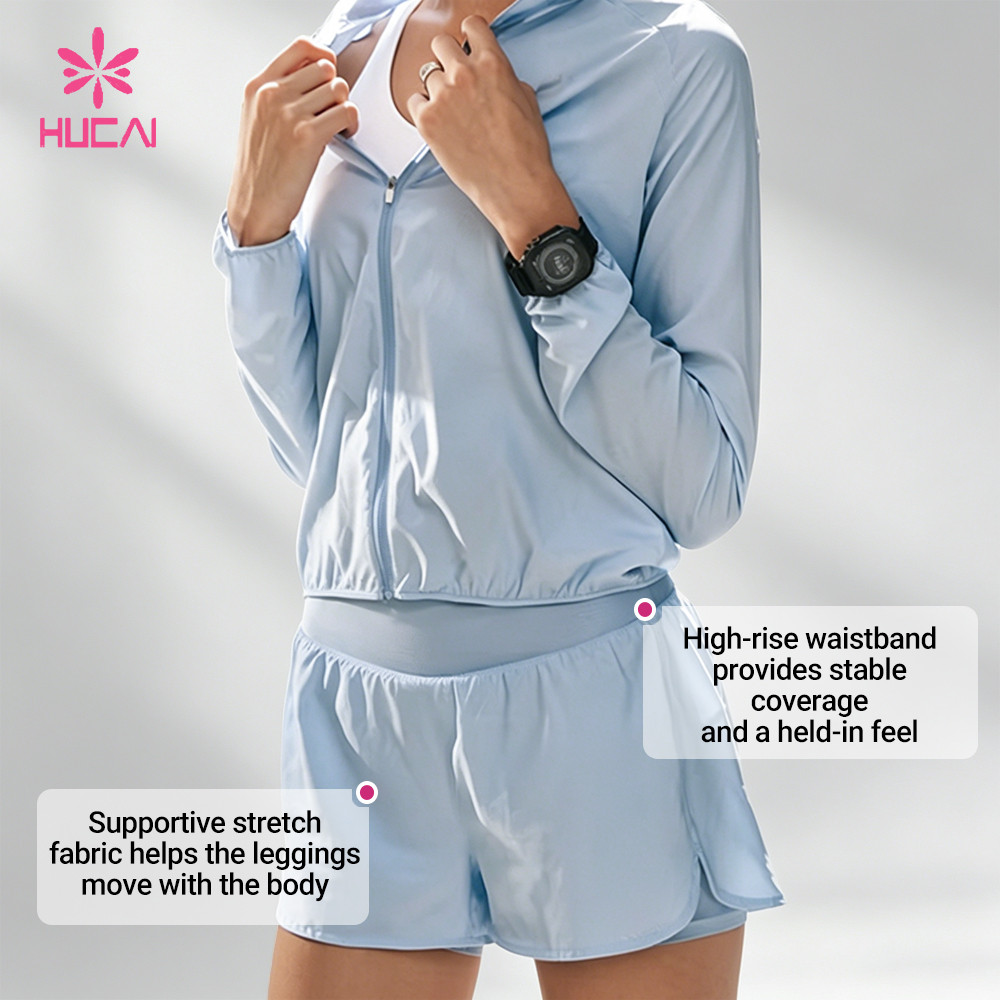
A track jacket and matching shorts set can be a strong private label activewear direction when it is developed as a coordinated product system, not just two pieces in the same color. For custom women's activewear brands, OEM / ODM development, sample planning, and bulk planning should consider shell fabric, zipper structure, waistband stability, pocket placement, trim consistency, logo position, and how the set moves from warm-up to active living.
As a women's activewear manufacturer, hucai sportswear helps brands review this type of set before the first sample round becomes too visual and not functional enough. The goal is to make the jacket and shorts feel connected in fabric, fit, color, trims, and wearing scenario while still allowing each piece to perform its own job.
Quick Answer
A track jacket and matching shorts set is a lightweight activewear set built around a functional outer layer and a warm-weather bottom. It is usually suitable for warm-up, gym-to-street styling, travel, commute, outdoor movement, and active living capsules.
For activewear brands, the key development question is not only whether the jacket and shorts match visually. The stronger question is whether the shell fabric, zipper, collar, cuffs, hem, waistband, pocket design, logo method, and color standard work together as one commercial product story.
Why Track Jacket and Shorts Sets Matter for Activewear Brands
Track jacket and matching shorts sets are useful because they give activewear brands a lighter alternative to sweat sets and a more complete product story than standalone shorts. They can work for warm-up, light running, travel, gym-to-street styling, commute, and seasonal active living.
For many growing brands, this direction also helps expand beyond sports bras and leggings without moving into heavy outerwear. A lightweight jacket adds layering value, while matching shorts keep the capsule easy to wear in warmer weather.
The development challenge is that the set must feel intentional. If the jacket looks technical but the shorts feel too casual, the set can look disconnected. If the jacket fabric and shorts fabric behave differently, the set may match in color but not in wearing experience.
This is why brands should treat the set as a coordinated activewear system before sampling begins.
Who This Article Is For
This article is mainly for growing activewear brands and private label buyers planning a lightweight jacket and shorts set for women's sportswear, athleisure, or active living collections.
- Brands expanding from bras, leggings, and shorts into light layers.
- Private label buyers developing a warm-weather or travel-ready activewear set.
- Startup brands looking for a focused set direction instead of a wide first collection.
- Brands with reference images that need ODM support before tech packs are complete.
- Established brands reviewing fabric, trim, color, and sample-to-bulk consistency for set production.
It is less suitable for buyers only looking for low-price stock tracksuits or purely visual fashion sets with no attention to movement, fit, fabric behavior, or bulk consistency.
What This Guide Helps You Decide
Set Positioning
Decide whether the set should feel like warm-up wear, gym-to-street activewear, travel-ready movement, light running, or active living.
Product Structure
Understand which jacket and shorts details should be confirmed before sampling, including zipper, collar, cuffs, hem, waistband, pockets, and lining.
Development Path
Know whether your project is ready for OEM execution with tech packs or needs ODM support to clarify fabric, trim, color, and product roles first.
1. How This Set Differs From Sweat Sets and Running-Only Sets
A track jacket and matching shorts set sits between several categories. It is lighter than a fleece sweat set, more structured than a simple lounge set, and usually more lifestyle-flexible than a technical running set.
A sweat set often focuses on comfort, warmth, and off-duty wear. A running set may focus on lightweight performance, breathability, and movement function. A track jacket and shorts set can combine elements of both, but it should not become unclear.
Before development, brands should decide which direction is dominant:
- Warm-up set: focused on light layering before or after training.
- Gym-to-street set: focused on activewear that can move into daily styling.
- Travel-ready set: focused on light packing, easy comfort, and practical pockets.
- Running-inspired set: focused on movement, breathability, and lightweight structure.
- Active living set: focused on wearable function without becoming too technical.
When the set role is clear, the fabric, trim, pocket, fit, and sample review decisions become easier to control.
2. Track Jacket Development Logic
The jacket usually defines the first impression of the set. It controls whether the product feels sporty, technical, clean, relaxed, or travel-ready.
Brands should confirm the jacket structure before choosing too many visual details.
Shell Fabric
The shell fabric should match the intended set role. A light running-inspired jacket may need breathable, quick-drying, or wind-resistant fabric. A gym-to-street jacket may need a smoother handfeel and cleaner drape. A travel-ready jacket may need low-bulk structure and wrinkle resistance.
If the jacket is too stiff, the set may feel closer to outerwear. If it is too soft, it may lose shape and feel less active.
Zipper, Collar, and Hood
Zipper quality and placement affect both function and appearance. A full-zip jacket feels easier for layering, while a half-zip pullover can feel more sporty or casual.
Collar and hood choices also change the story. A stand collar can look cleaner and more training-focused. A hood can make the set feel more travel-ready or outdoor-active.
Cuffs, Hem, and Fit
Cuffs and hem structure help control volume. Elastic cuffs, thumbhole cuffs, adjustable hems, cropped hems, and relaxed hems all create different wearing experiences.
The jacket fit should also match the shorts. A very oversized jacket with a very fitted short can work, but it should be a deliberate styling decision, not an accident from unrelated references.
Brands planning this product direction can review related category options through custom track jacket and light layer development.
3. Matching Shorts Development Logic
The shorts should not be treated as a simple add-on. In a jacket and shorts set, the shorts decide how wearable the set feels in real movement.
The key is to decide whether the shorts are designed for warm-up, travel, training, running-inspired movement, or active living.
Waistband Stability
A stable waistband helps the short feel secure without becoming uncomfortable. Elastic width, drawcord type, rise, waistband pocket, and seam finishing all affect how the short performs during walking, training, or light running.
Inseam and Leg Opening
Inseam length changes both function and styling. A shorter inseam can feel more running-inspired, while a longer inseam can feel more covered, travel-ready, or training-focused.
Leg opening shape, side split, curved hem, or straight hem should match the set role. A running-inspired set may need more leg freedom, while an active living set may need a cleaner and less technical silhouette.
Pockets and Lining
Pockets can add practical value, but they should not break the silhouette. Side pockets, back zip pockets, waistband pockets, and inner pockets all solve different storage problems.
If the shorts include a liner, the fabric and construction should reduce friction and provide coverage without feeling too compressive for the set's intended use.
For brands developing the bottom part of this set, custom activewear shorts can provide a stronger product path for waistband, pocket, liner, and shell fabric decisions.
4. Fabric, Trim, Color, and Logo Consistency
A matching set should feel coordinated in more than color. The jacket and shorts should also make sense in fabric behavior, trim choice, logo placement, and sample-to-bulk control.
Fabric Compatibility
The jacket and shorts do not always need the exact same fabric. In many cases, the jacket may need a smoother shell fabric, while the shorts need more stretch, recovery, or lining support.
The better question is whether the fabrics are compatible. They should support the same wearing scenario, color direction, and brand positioning.
Trim Consistency
Zippers, drawcords, elastic, stoppers, snaps, pocket details, and logo methods should be reviewed as one trim system. If the jacket uses a premium zipper but the shorts use a different trim language, the set may feel inconsistent.
Color and Finish
Color matching can become more complex when different fabric bases are used. Texture, shine, dye behavior, and handfeel can make two pieces look different even if they are developed under the same color direction.
Brands comparing fabric and color direction can review fabric selection for activewear before approving the first sample direction.
Logo Position
The logo should support the set story. A small reflective logo can feel more performance-led. A tonal logo can feel cleaner. A larger logo may work for street-active styling, but it can overpower the set if the product direction is quiet and functional.
If the set is part of a wider capsule, custom matching sets can help connect jacket, shorts, tops, bras, and leggings into a clearer product system.
Decision Check Before the First Sample
Before sampling a track jacket and matching shorts set, brands should confirm the following points. These decisions help reduce unclear revisions and prevent the set from becoming only a visual match.
- Set Role: Is the set for warm-up, gym-to-street, travel, light running, or active living?
- Jacket Fabric: Should the jacket be quick-dry, wind-resistant, lightweight woven, stretch knit, or soft performance fabric?
- Shorts Structure: Should the shorts use a liner, pocket system, side split, drawcord, or clean waistband?
- Fit Balance: Should the jacket be cropped, relaxed, oversized, or fitted compared with the shorts?
- Trim System: Are zipper, drawcord, elastic, pocket details, and logo method aligned?
- Color Standard: Are jacket and shorts using the same fabric base or compatible fabric bases?
- Development Path: Is the project ready for OEM execution, or does it need ODM planning from references first?
Planning a Track Jacket and Shorts Set?
If you are developing a lightweight jacket and matching shorts set from reference images, product ideas, or tech packs, start by clarifying the set role before adding more design details.
Share your target use case, jacket structure, shorts direction, fabric preference, trim details, logo placement, color plan, MOQ questions, or sample goals. hucai sportswear can help review whether your project is better suited for ODM development support or OEM activewear manufacturing.
Manufacturer Insight: Matching Color Is Not Enough
A common early-stage issue is treating a jacket and shorts set as two separate products that only need to share the same color. The first sample may look visually coordinated, but the wearing experience can still feel disconnected.
For example, the jacket may use a fabric that feels crisp and technical, while the shorts feel soft and casual. The zipper puller may feel premium, but the shorts drawcord may look unrelated. The logo position may work on the jacket but feel too strong on the shorts.
At hucai sportswear, sample-to-bulk coordination starts from approved product details. For a track jacket and shorts set, that means the fabric, trim, measurements, color standard, logo method, and construction comments should be aligned before moving into larger bulk planning.
AQL 2.5-based quality checkpoints and MES / ERP-supported follow-up can help improve coordination after sample approval, but they do not replace early development decisions. The clearer the set logic is before sampling, the easier it is to control the approved direction later.
FAQ: Track Jacket and Matching Shorts Set Development
1. What is a track jacket and matching shorts set?
A track jacket and matching shorts set is a coordinated activewear set that combines a lightweight zip or pullover layer with matching shorts. It is usually developed for warm-up, gym-to-street styling, travel, light running, or active living. The set should be planned around fabric compatibility, trim consistency, fit balance, and wearing scenario, not only matching color.
2. Should the jacket and shorts use the same fabric?
Not always. Some sets work well with the same fabric, especially when the brand wants a very clean and uniform look. Other sets need compatible fabrics instead. For example, the jacket may need a lightweight shell fabric, while the shorts may need more stretch, liner support, or waistband recovery. The key is to keep the fabrics aligned in handfeel, color direction, and intended use.
3. What details matter most in a custom track jacket?
The most important details are shell fabric, zipper type, collar or hood structure, cuff finish, hem control, pocket design, and fit proportion. These details decide whether the jacket feels like warm-up wear, running-inspired layering, travel-ready activewear, or casual athleisure. Brands should confirm these details before sampling so the jacket does not become visually nice but functionally unclear.
4. What details matter most in matching shorts?
Matching shorts should be reviewed for waistband stability, inseam length, leg opening, pocket function, liner structure, shell fabric, and movement comfort. A short that looks clean in a flat photo may still shift, ride up, or lose shape during movement. The shorts should support the same set story as the jacket, whether the direction is warm-up, active living, or running-inspired.
5. What is the MOQ for a track jacket and shorts set?
The current public-facing MOQ is from 100 pcs / style. For a jacket and shorts set, final order planning depends on whether the jacket and shorts are ordered as separate styles, how many colors and sizes are included, fabric choices, trims, logo method, and packaging requirements. A focused first set is usually easier to sample and evaluate than a wide multi-color launch.
6. Is this set better for OEM or ODM development?
OEM is better when the brand already has tech packs, measurements, fabric specifications, trim details, and construction requirements. ODM is better when the brand has reference images or a set direction but still needs help defining jacket structure, shorts function, fabric compatibility, trim direction, and sample priorities. Many growing brands start with ODM planning before moving into OEM-style execution.
7. What should brands prepare before sampling this set?
Brands should prepare reference images, target use case, jacket fit direction, shorts inseam, pocket requirements, preferred fabric handfeel, color plan, logo placement, size range, and estimated quantity. If the brand has tech packs, they can support OEM execution. If only references are available, ODM discussion can help clarify the set structure before sampling.
8. What should be checked during sample fitting?
Sample fitting should check jacket movement, zipper comfort, sleeve length, cuff tension, hem control, shorts waistband stability, leg opening, pocket placement, liner comfort, and overall set balance. The sample should not only be judged by color and front-view appearance. The key question is whether the jacket and shorts feel like one coordinated activewear system.
Final Takeaway
A track jacket and matching shorts set should be developed as a coordinated activewear system, not only two pieces in the same color.
The strongest sets usually come from clear decisions around jacket fabric, zipper structure, cuff and hem control, shorts waistband, inseam, pocket function, fabric compatibility, trim consistency, logo placement, and sample review priorities. When these details are confirmed early, brands can reduce avoidable revisions and build a more commercially useful light activewear set.