How Activewear Brands Should Plan Inclusive Size Architecture Before Sample Development
- Share
- publisher
- HUCAI Sportswear
- Issue Time
- Aug 20,2026
Summary
A B2B development guide for established women's activewear brands planning inclusive size architecture before sampling. Covers base size, grade rules, fit blocks, construction adjustments across the size curve, and per-size MOQ planning from HUCAI Sportswear.
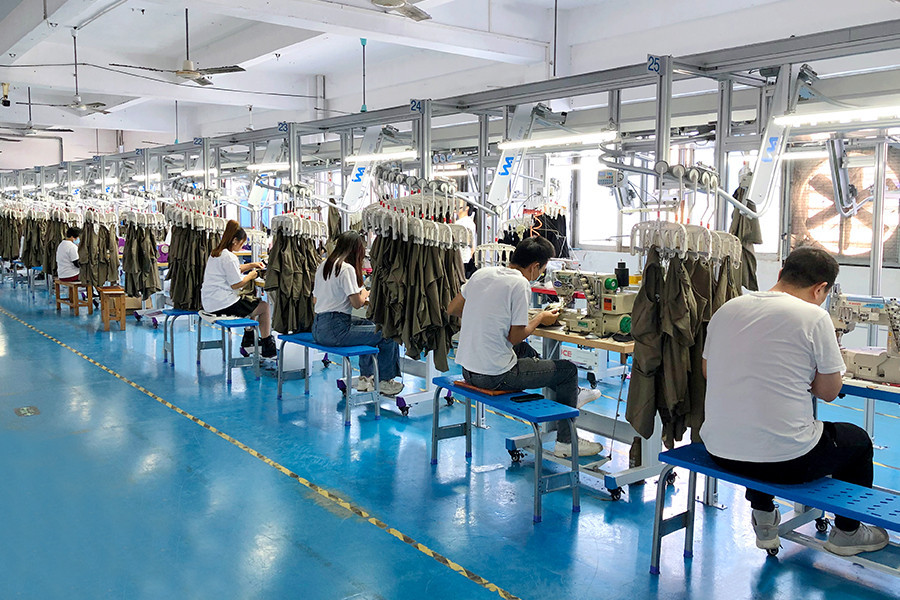
Inclusive sizing has moved from a niche request to a standard expectation for women's activewear brands across North America and Australia-New Zealand. But for an established brand planning a private label, OEM, or ODM program, "inclusive sizing" is not simply a longer size list. It is a grading and fit-architecture decision that should be locked before the first sample is cut.
When a brand adds extended sizes to an existing range without a deliberate grade rule, the result is usually the same: distortion at the upper and lower ends of the curve, rising sample-revision cycles, and inconsistent bulk. This article from HUCAI Sportswear explains how to plan size architecture before sample development so the range performs consistently from the smallest to the largest size.
Quick Answer
Inclusive size architecture means defining a base size, a size range, a grade rule for each measurement point, and a fit-block strategy before sampling. The main variables are grade increments, fit models, construction adjustments at the extremes, and per-size color and MOQ planning. Brands with a complete measurement chart and grade rules are better suited to OEM, while brands starting from a market direction may need ODM support to define the size architecture first.
Table of Contents
- Who This Article Is For
- Why Inclusive Sizing Is a Grading Decision
- Base Size and Fit Block Strategy
- Construction Adjustments Across the Size Curve
- Fabric, Marker Efficiency, and Per-Size MOQ
- OEM and ODM Implications for Size Architecture
- Sample-Stage Size Review and Bulk Consistency
- Decision Check
- Manufacturer Insight
- FAQ
- Final Takeaway
Who This Article Is For
- Primary reader: Established brands with an existing size range they plan to expand, or brands building an inclusive range from the start
- Secondary reader: Sourcing and product-development teams preparing a women's activewear program
- Product stage: Pre-sampling, before a size range, grade rule, or fit block is finalized
- Problem being solved: Avoiding fit distortion at extended sizes, high revision cycles, and inconsistent bulk across a wide size range
- Who may not need this article: Brands already working with a locked grade rule and validated fit blocks, or brands with a narrow single-fit-model range
What you gain from this article: A clear pre-sampling checklist for size architecture, covering base size, grade rule, fit-block strategy, construction adjustments, and per-size MOQ, so the inclusive range is defined before development cost accumulates.
Why Inclusive Sizing Is a Grading Decision, Not a Size Extension
The most common mistake in inclusive sizing is treating it as an extension of the size list. A brand that currently runs XS-XL decides to add 2XL-3XL and assumes the pattern team can simply "add a size." The result is rarely a clean fit because a garment is not scaled by one uniform factor.
Grading is the set of increments applied between sizes at each measurement point: bust, waist, hip, rise, inseam, underband, and strap length, among others. These points do not all grow at the same rate. If only the body width is scaled while the rise, strap, or cup is left unchanged, the garment loses its proportion at the extremes of the curve.
For a women's activewear program, this matters most in custom leggings development, where waistband, rise, and hip grading must stay coordinated, and in custom sports bra development, where cup, underband, and strap grading affect support and coverage. A deliberate grade rule keeps these points in balance instead of stretching a single pattern beyond its intended range.
Base Size and Fit Block Strategy
A base size is the size the pattern is drafted in, and the reference from which every other size is graded up and down. Most brands choose a mid-range size such as M as the base, because it sits closest to the center of the intended customer curve and reduces cumulative grading error at the ends.
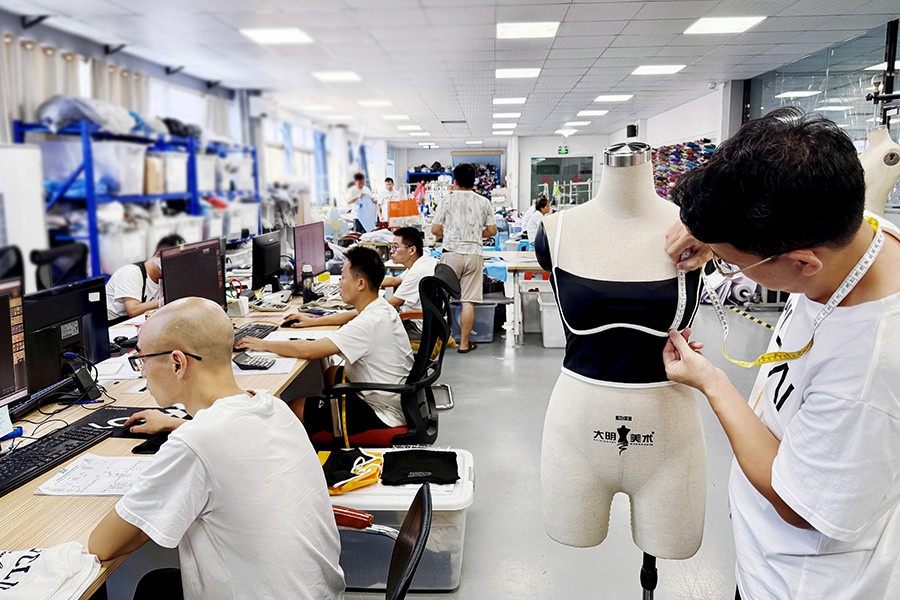
The fit block is the underlying body standard the range is graded against. A single fit model may validate the mid-range, but a wide range such as XS-4X usually requires more than one fit model to cover the curve. Established brands often use a small-to-mid fit model plus a dedicated plus-size fit model so the upper sizes are reviewed against a realistic body shape rather than an extrapolation.
Documenting the fit block before sampling prevents a common failure pattern: approving the base size on one body, then discovering the extended sizes drift away from the intended fit. When the fit block is defined in writing, the factory and the brand review against the same standard.

Construction Adjustments Across the Size Curve
Inclusive sizing is not only about measurements; it is also about how construction changes along the curve. Waistband height and width, rise depth, strap length and width, cup scaling, underband structure, gusset width, and panel proportions may all need deliberate adjustment rather than a fixed increment.
At larger sizes, details such as waistband stability and rise depth often need to be reviewed during sampling. Fabric recovery also behaves differently across the curve, so a fabric that holds shape at a smaller size should be confirmed at the larger end before bulk planning. These points cannot be judged from a reference image; they are confirmed through fit sessions and flat measurement checks.
Where a smooth appearance is part of the design direction, a fabric selection review helps align stretch, recovery, and surface hand feel with the size range. The goal is construction that stays consistent from the smallest to the largest size, not a single pattern scaled past its limit.

Fabric, Marker Efficiency, and Per-Size MOQ
Inclusive sizing changes the commercial plan as well as the fit plan. Larger sizes consume more fabric, which affects marker efficiency and per-size cost. When a brand spreads a style across many sizes and colors, the per-color and per-size quantities can become uneven, which affects production planning.
The public MOQ starts from 100 pcs per style, while final color, size, fabric, trim, and customization planning depends on the confirmed project. A wide size range with many colors can push individual size-color combinations below comfortable production levels, so the size spread and the color spread should be planned together.
Sampling also follows this logic. Rather than sampling every size, most programs sample the base size plus the two extremes to validate the full grade, then use the approved grade rule to control the sizes in between. This keeps sample cost and revision time controlled while still checking the ends of the curve.

OEM and ODM Implications for Size Architecture
The development path depends on how complete the size information is before the project starts.
For OEM, the buyer provides a measurement chart, grade rules, and a tech pack, and the manufacturer validates them against the fit block before sampling. This path suits established brands that already own a proven size architecture and want it reproduced consistently.
For ODM, the buyer may start with reference images, a target market, and a capsule direction. The manufacturer then proposes a size range, base size, grade rule, and fit-block approach for the buyer to review. This path suits brands that know the market direction but have not yet built the size architecture themselves.
For coordinated capsules, a matching set development review helps keep the top and bottom graded on the same body standard, so a bra and legging set stays proportionate across the range instead of drifting apart at the ends.
Sample-Stage Size Review and Bulk Consistency
Once the size architecture is defined, sampling confirms it. The base size is developed first for fit, construction, and finishing. The smallest and largest sizes are then sampled to verify that the grade rule does not distort proportions at the ends. Flat measurements, measurement charts, and fit sessions are reviewed together.
This review reduces the risk of a common issue: a base size that fits well while the extended sizes return from the factory with a different rise, a tighter waistband, or an underband that no longer aligns with the cup. Catching these at sample stage is far less costly than correcting them in bulk.
For bulk, sample-to-bulk consistency depends on confirmed standards, approved samples, material control, in-process review, and final inspection. A quality control process aligned with AQL 2.5-based inspection supports consistent size accuracy across the production run.

Decision Check: Is the Inclusive Size Architecture Ready for Sampling?
Before requesting samples, confirm the following:
- Base size and grade rule are defined: The base size is chosen and the increment for each measurement point is documented.
- Size range and grade increments are locked: The minimum and maximum size, and the step between sizes, are confirmed in writing.
- Fit-block strategy is set: The number of fit models and the body standard for each part of the curve are agreed.
- Construction adjustments are identified: The details that change at the extremes, such as rise, waistband, strap, and cup, are listed for review.
- Per-size and per-color MOQ are planned: The size spread, color spread, and sample plan are aligned with the public MOQ from 100 pcs per style.
If three or more criteria are confirmed, the direction is ready for a structured sample request. If fewer than three are resolved, additional development planning will reduce sample revision cycles and control cost.
Ready to move forward? If you have a measurement chart and grade rules, share them for OEM review. If you are starting from reference images and a market direction, discuss how to define the size architecture before sampling through the inquiry form.
Manufacturer Insight
A common early-stage issue in inclusive sizing is approving the base size on a single fit model and treating the extended sizes as an afterthought. The base size passes, the order moves toward sampling, and only later do the larger or smaller sizes reveal a distorted rise, a mismatched underband, or a waistband that no longer sits correctly. By that point, the grade rule is already embedded in the patterns, and fixing it means re-grading rather than a small adjustment.
The more reliable sequence is to define the grade rule per measurement point first, sample the base size and the two extremes, and review the ends of the curve before committing the full range to bulk. This front-loads the grading work and removes the largest source of revision cycles, which is why HUCAI Sportswear confirms size architecture during development review rather than after the first samples return.
FAQ
What does inclusive size architecture mean in activewear development?
It means defining a base size, a size range, a grade rule for each measurement point, and a fit-block strategy before sampling, so the range fits consistently from the smallest to the largest size instead of scaling a single pattern past its limit.
What is a base size and why does it matter?
A base size is the size the pattern is drafted in and the reference from which every other size is graded. Choosing a mid-range size such as M reduces cumulative grading error at the ends of the curve.
What is a grade rule or grading increment?
A grade rule is the set of increments applied between sizes at each measurement point, such as bust, waist, hip, rise, underband, and strap length. These points do not all grow at the same rate, so the rule is defined per point rather than as one uniform scale.
How many fit models should an established brand use for an expanded size range?
It depends on the width of the range. A single fit model may cover a narrow range, but a wide range such as XS-4X usually benefits from two or three fit models so the upper sizes are reviewed against a realistic body shape rather than an extrapolation.
How does inclusive sizing affect MOQ and per-color planning?
The public MOQ starts from 100 pcs per style. A wide size range combined with many colors can push individual size-color combinations below comfortable production levels, so the size spread and color spread should be planned together.
Which sizes should be sampled first for an inclusive range?
Most programs sample the base size first, then the smallest and largest sizes to verify the grade rule does not distort proportions at the ends. The approved grade rule then controls the sizes in between.
Should I use OEM or ODM for an inclusive size program?
Use OEM when you already have a measurement chart, grade rules, and a tech pack. Use ODM when you are starting from reference images and a market direction and need the size architecture proposed before sampling.
How does the size range affect sample-to-bulk consistency?
Sample-to-bulk consistency depends on confirmed standards, approved samples, material control, in-process review, and final inspection. A locked grade rule and fit block give the factory a clear standard to reproduce across the full size range.
Final Takeaway
Inclusive sizing succeeds when it is treated as a grading decision made before sampling, not a size-list extension added after the fact. Define the base size, lock the grade rule per measurement point, set the fit-block strategy, identify the construction adjustments at the extremes, and plan per-size color and MOQ together. With that foundation in place, the range can move from sample to bulk with fewer revisions and more consistent fit across every size.
About HUCAI Sportswear
- Founded in 1998, specializing in women's activewear and sportswear manufacturing
- OEM and ODM development support for sports bras, leggings, shorts, tops, and matching sets
- Structured sample development and sample-to-bulk consistency control
- AQL 2.5-based inspection as part of the quality workflow
Current certification information can be reviewed during supplier evaluation based on the project and documentation requirements.