How Retail Fit Language Becomes a Real Activewear Development Spec Before Sampling
- Share
- Issue Time
- Sep 2,2026
Summary
A manufacturer-led guide on translating retail fit language into a measurable activewear development spec. Explains how soft, held-in, and compressive become fabric, pattern, and sample-approval criteria before sampling, and how brands can build a reusable sample acceptance sheet with a women's activewear manufacturer.

Growing activewear brands usually brief their manufacturer with language they know from the consumer side: buttery soft, held-in, barely there, second skin, firm compression. These words describe a feeling, but they do not tell a fabric supplier or a sample developer what to measure, what to test, or when to approve. A sourcing advisor sees the same pattern repeatedly: both sides agree on the words, then discover during sampling that their definitions were different. The buyer's "soft" meant a brushed surface; the factory's "soft" meant a low-weight knit. The result is revision rounds that a clearer development spec could have prevented. This article explains how retail fit language can be translated into measurable fabric, fit, construction, and sample-approval criteria, and what brands should prepare before sampling with a women's activewear manufacturer such as HUCAI Sportswear.
Quick Answer
Consumer fit words only become useful in manufacturing when they are translated into measurable criteria. "Buttery soft" needs to become a handfeel direction plus a fabric weight range, surface finish, and stretch target. "Held-in" needs to become a compression direction, waistband construction, and pressure requirement. "Barely there" needs to become an opacity target, seam placement, and recovery expectation. Before the first sample, define the fabric variables, the fit variables, and the acceptance points for each. Brands that skip this translation usually pay for it in sample revisions and longer development timelines.
Table of Contents
- Who This Article Is For
- Why Retail Fit Language Is Not a Production Spec
- Translating Common Fit Words Into Development Questions
- Fabric Variables That Turn Adjectives Into Specifications
- Pattern and Construction Variables
- Building a Sample Acceptance Sheet
- Comparing Revisions Objectively
- Decision Check
- Manufacturer Insight
- FAQ
- Final Takeaway
Who This Article Is For
- Primary reader: Growing brands preparing their first or second activewear development brief and relying on retail-style language to communicate with a manufacturer.
- Secondary reader: Private label buyers who need a structured way to approve fabric handfeel, compression, and fit before bulk production.
- Product stage: Pre-inquiry planning through sample development and approval; before bulk production.
- Problem being solved: Converting consumer fit words into a development spec that a manufacturer can execute without guessing.
- Who may not need this article: Brands with a complete tech pack, confirmed measurements, and approved fabric references that only need OEM production of an existing style.
What you gain from this article: A translation framework for common fit words, the fabric and pattern variables to define before sampling, a sample acceptance sheet you can reuse across styles, and a revision comparison method that keeps approval decisions objective.
Why Retail Fit Language Is Not a Production Spec
Retail fit language is written to create a feeling in a shopper. Production language is written to create a repeatable result in a factory. The two serve different purposes, and mixing them up is one of the most common causes of confusion between a brand and its activewear manufacturer.
A phrase like "firm compression" does not tell anyone how firm, in which direction, over which part of the body, or how much the fabric should recover after stretch. "Buttery soft" does not say whether the softness comes from a brushed surface, a fine yarn, a low-weight knit, or a specific finish. When the buyer and the supplier each fill in these gaps with their own assumptions, the first sample becomes a test of interpretation rather than a test of the product.
There is a second consequence. When a sample fails to match the expectation, neither side can point to a clear standard. The buyer says it is "not soft enough." The factory does not know whether to change the fabric, the finish, or the handfeel reference. Without a written spec, every revision starts from the same vague starting point, which is why adjective-led projects often need more sample rounds than spec-led projects.
The practical fix is to treat retail words as starting directions, then translate each one into development questions. That translation is the core of a sourcing advisor's role, and it is also the fastest way for a brand to reduce its own development risk.
Translating Common Fit Words Into Development Questions
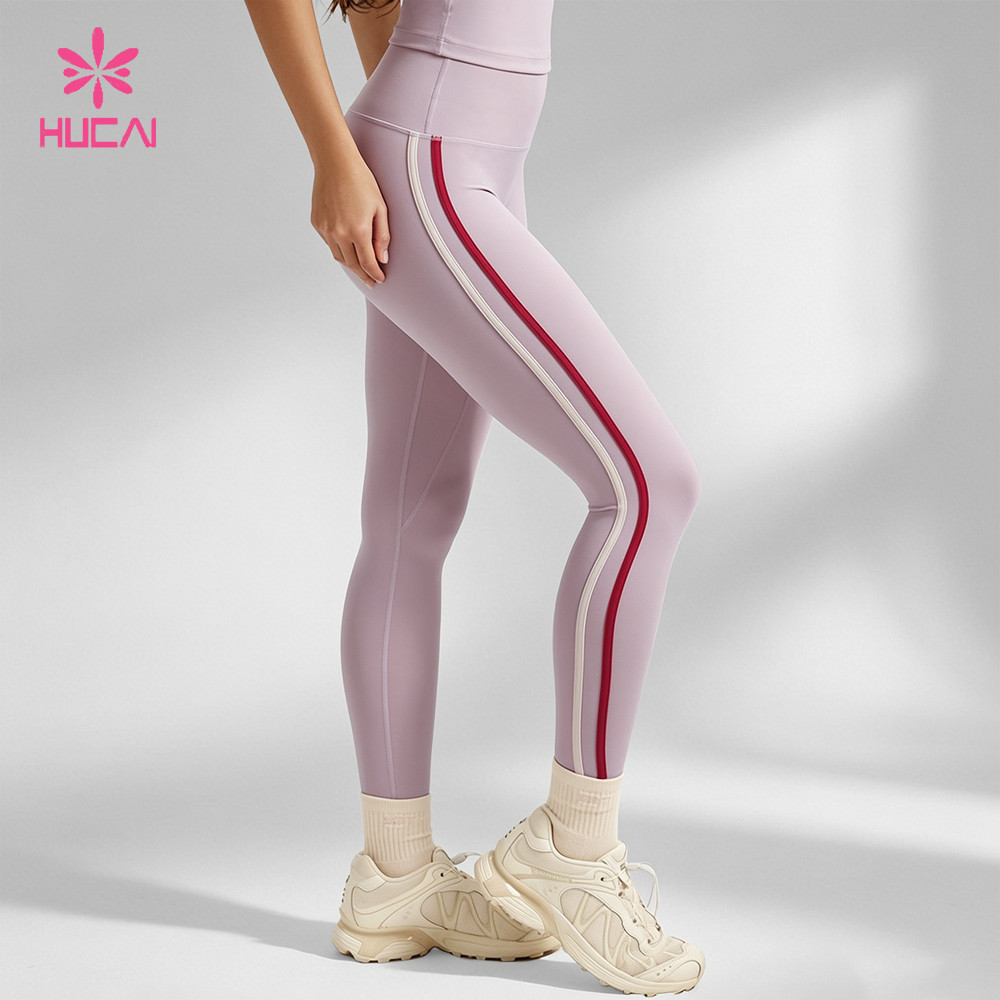
Each retail word maps to a set of development questions. The goal is not to find one industry-wide numeric definition for every word, because the same word can mean different things in different products. The goal is to convert the word into questions the manufacturer can answer with fabric, pattern, and sample decisions.
| Retail word | Development questions | Sample-stage check |
|---|---|---|
| Buttery soft | Is the softness from the yarn, the knit structure, or a surface finish? What fabric weight range is acceptable? How should the handfeel be compared? | Handfeel review against a reference swatch in relaxed and stretched states. |
| Held-in | Which direction should the compression run? How much hold is needed at the waistband and across the body? What recovery is required after movement? | Fit test measuring waistband behavior and pressure during movement. |
| Barely there / second skin | What opacity level is required at maximum stretch? How light should the fabric be? Where should seams sit to stay unobtrusive? | Opacity check in stretched state plus seam and edge review. |
| Firm / compressive | What fabric modulus and stretch ratio support the hold? Does the construction add pressure at the waistband or hem? What fit ease should remain? | Compression review on the garment, not only on the fabric swatch. |
This table is a starting point, not a fixed dictionary. A private label leggings project and a sports bra project will translate the same word differently, because the body coverage, support direction, and construction are different. The important habit is asking the questions before the first sample, so both sides work from the same development target.
Fabric Variables That Turn Adjectives Into Specifications
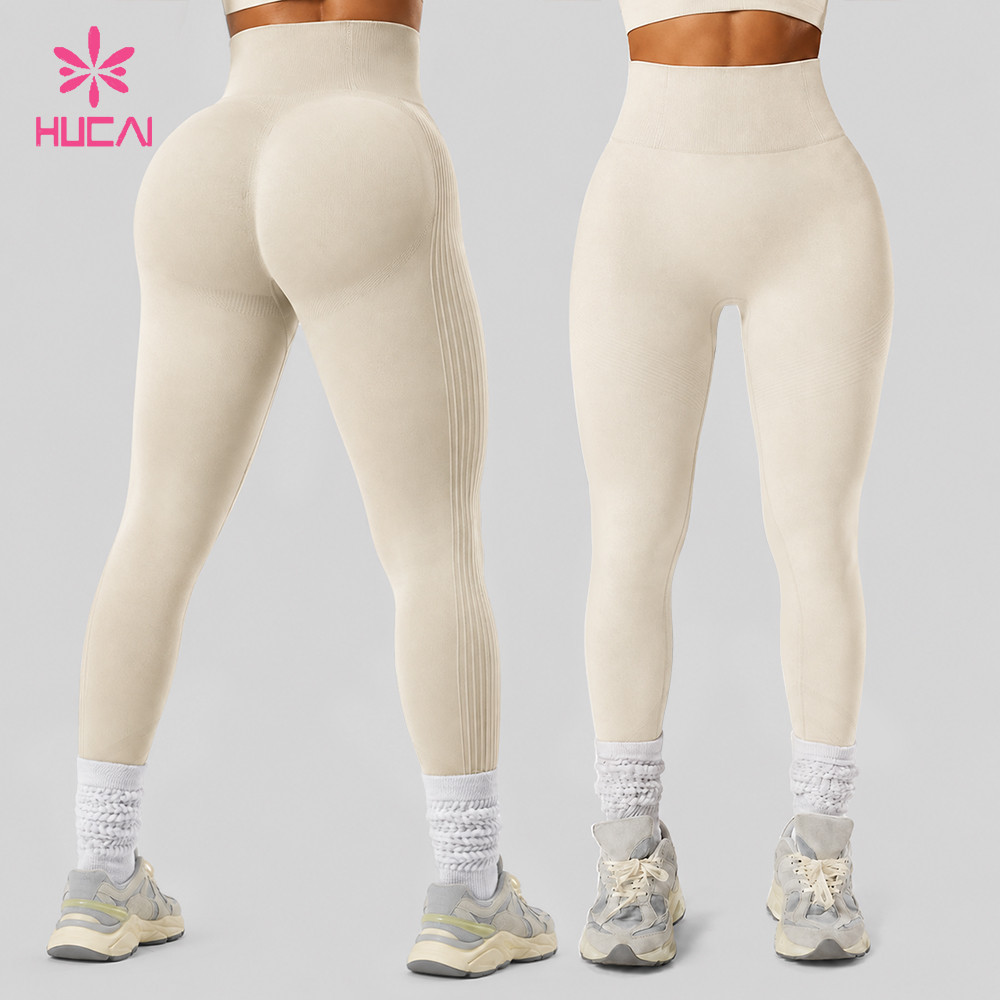
Fabric is where most fit words become testable. A small set of fabric variables covers most of what "soft", "held-in", and "barely there" actually depend on. Defining these before sampling gives the fabric supplier and the sample team a concrete direction.
- Fabric weight range: the target weight band for the garment, selected by category and use scenario. Weight alone does not define feel, but it sets the starting frame.
- Composition and knit structure: the fiber direction and construction that determine how the fabric drapes, holds, and recovers.
- Stretch and recovery: how far the fabric stretches and how completely it returns. Recovery is what keeps a "held-in" garment from bagging out during wear.
- Opacity: the coverage level at maximum stretch. This is a sample-stage check, because flat fabric and stretched garment behave differently.
- Surface finish and handfeel: brushed, smooth, matte, or subtle-sheen directions, confirmed with a reference swatch the buyer approves.
- Shrinkage and wash behavior: how the fabric behaves after washing, which affects the approved sample and later bulk consistency.
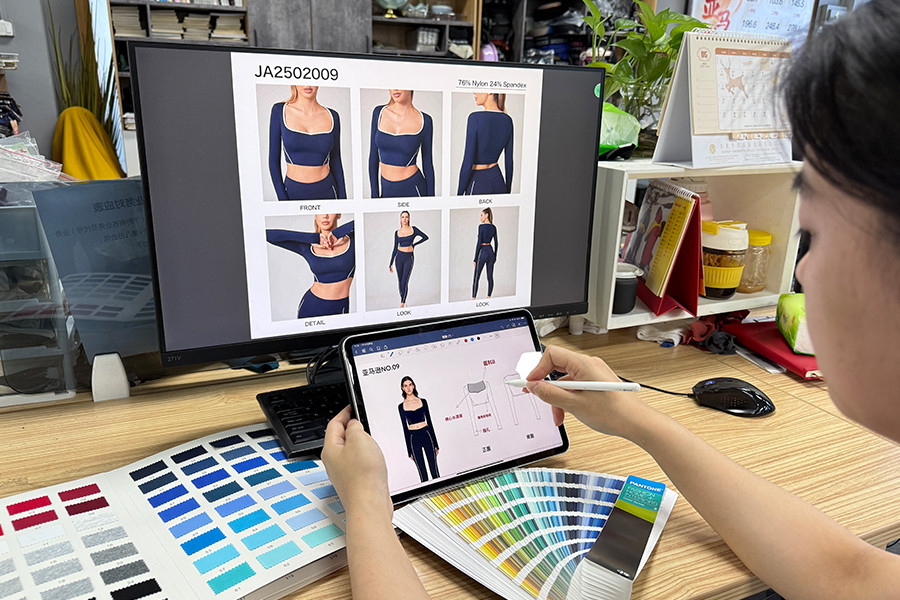
HUCAI Sportswear works from standardized fabric and trim resources and reviews fabric direction against the intended product structure before cutting a sample. When a brand defines its handfeel target, weight range, and recovery requirement, the development workflow can match those requirements to a suitable fabric option instead of guessing from an adjective. Recycled or certified material options can also be reviewed based on project requirements and available documentation.
Pattern and Construction Variables
Fabric provides the material behavior, but pattern and construction decide where that behavior is used. Two garments cut from the same fabric can feel completely different if the ease, seams, and waistband are handled differently.
The pattern variables that matter for fit words include ease allowance, rise height and coverage, waistband position and pressure, compression direction through panel placement, and seam positioning relative to movement zones. The construction variables include waistband elastic or binding choice, underband structure for bras, hem and opening finishes, and how trims interact with the fabric's stretch.
Fabric recovery and pattern ease work together. Recovery is the fabric's ability to return to its original dimensions after stretch; ease is the room the pattern adds beyond body measurements. If recovery is low and ease is tight, the garment will stretch out during wear. If recovery is high and ease is generous, the garment may feel loose even in a "compressive" fabric. Defining both together is what turns "held-in" into a workable fit direction.
For leggings specifically, the waistband is the most common point where a fit word fails. A "firm but not digging" waistband requires a defined pressure target, an elastic or binding choice, and a rise position that matches the target customer. These are construction decisions that cannot be resolved by describing the feeling.
Building a Sample Acceptance Sheet
A sample acceptance sheet is the practical output of the translation work. It is a written standard that both the brand and the manufacturer use to evaluate the first sample and every revision. Without it, approval becomes a conversation about adjectives again.
- Measurements: the key measurement points for the garment, with agreed tolerance where relevant.
- Fabric checks: weight, stretch, recovery, opacity, and surface finish compared against the approved direction.
- Handfeel: reviewed against the approved reference swatch, in both relaxed and stretched states.
- Compression or hold: waistband, rise, and pressure points reviewed during movement, not only standing.
- Fit and movement: the specific movements of the target activity tested on the sample.
- Trims and branding: elastic, binding, logo placement, and label behavior on the actual garment.
- Approval decision: approve, approve with changes, or revise, with clear reasons attached to each item.
Each row of the sheet should point back to a development question from the translation table. That keeps the whole process consistent: the retail word becomes a question, the question becomes a check, and the check becomes an approval decision. The same sheet can be reused across styles, which makes later capsule development faster.
Comparing Revisions Objectively
Most activewear projects go through at least one revision, and some go through several. The difference between an efficient revision process and a frustrating one is whether each round produces clear information.
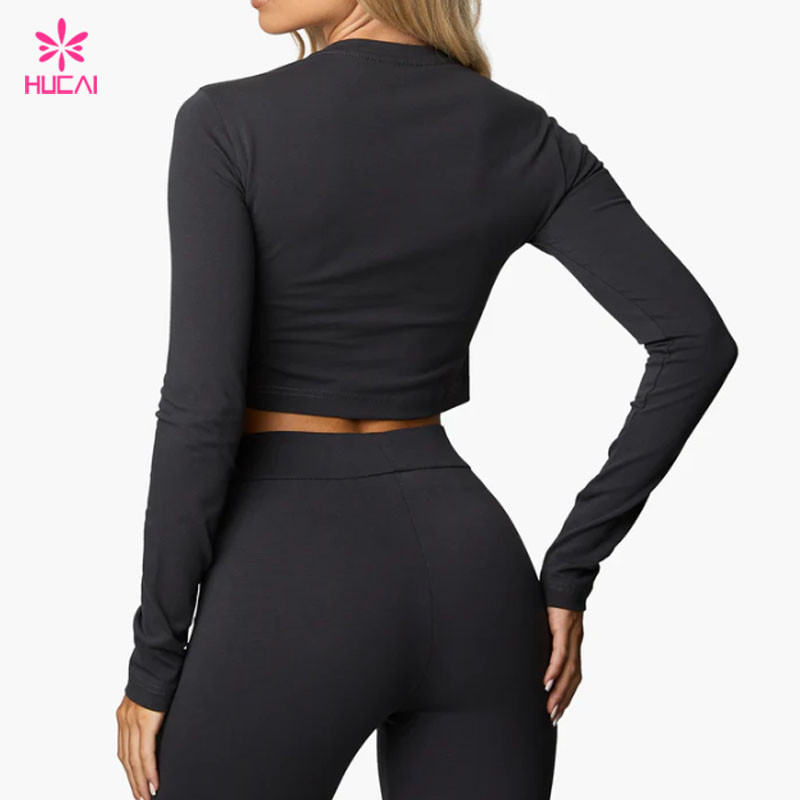
When a revision is requested, record what changed against the acceptance sheet: which measurements moved, which fabric properties were adjusted, which construction details were updated, and which checks are still open. Photograph the sample in the relevant states where useful. This gives both sides a shared record of the development history.
Decide approve or revise against the sheet rather than against a general feeling. If the handfeel target is met but the waistband pressure is still too high, the next revision should focus on the waistband, not rework the whole garment. Targeted revisions resolve issues faster because each round tests a specific change instead of starting from scratch.
Sample development usually takes about 10-15 days, depending on style, fabric, trim, logo, revision requirements, and confirmed details. A clear acceptance sheet keeps most of that time focused on real product decisions rather than on interpreting vague feedback.
Decision Check: Is Your Fit Language Ready to Become a Spec?
Before requesting samples, confirm the following:
- Fabric weight and composition: A target weight range and fabric direction are stated for the style.
- Stretch and recovery: The stretch ratio and recovery expectation are defined for the garment's use.
- Opacity and surface finish: The coverage level and handfeel direction are confirmed, ideally with a reference swatch.
- Compression or hold direction: Where the garment should hold, and in which direction, is specified.
- Waistband and construction: The waistband, seams, and openings are decided for the target fit.
- Sample acceptance points: The checks and approval criteria are written into an acceptance sheet.
If three or more criteria are confirmed, the direction is ready for a structured sample request. If fewer than three are resolved, additional development planning will reduce sample revision cycles and control cost.
Ready to move the brief forward? If the project is still starting from reference images and retail-style descriptions, share your product direction for ODM development so the fit language can be translated into a sample-ready spec. If the key measurements and fabric direction are already confirmed, send your specifications for OEM review. Fabric questions can also be checked against the fabric selection guide before sampling.
Manufacturer Insight
The problem in adjective-led projects is usually not that the supplier failed to understand English. The problem is that the same marketing word carries no shared technical definition between the two sides. "Soft" is a direction, not a standard; "compressive" is an intention, not a measurement. The more the first sample relies on adjectives, the more likely revision rounds will increase, because each side is filling the gaps with its own assumptions. The practical answer is to put the words into development questions first, then let the sample test those questions. That is how a fit word becomes a spec, and how a spec becomes an approved sample.
FAQ
What does buttery-soft mean in activewear manufacturing?
In manufacturing terms, buttery-soft is a handfeel direction, not a specification. To make it actionable, define whether the softness comes from the yarn, the knit structure, or a surface finish, set a fabric weight range, and approve a reference swatch. The sample is then compared against that swatch in relaxed and stretched states.
How is compression specified before sampling?
Compression is specified by direction, placement, and pressure target: where the garment should hold, how firm the hold should be, and how the fabric's stretch and recovery support it. Waistband construction and fit ease also affect how compression feels on the body, so the garment fit test is part of the review.
Is GSM enough to define fabric feel?
No. Fabric weight is one variable, but composition, knit structure, surface finish, stretch, and recovery all affect how a fabric feels and behaves. Two fabrics with the same GSM can feel completely different. GSM should be part of the spec, not the whole spec.
How can a brand approve handfeel consistently?
Approve a physical reference swatch under defined conditions: relaxed, stretched, and after washing where relevant. Describe the surface direction and weight range in writing, then compare every sample against the same reference. This keeps handfeel approval repeatable across styles and production runs.
What should be included in a sample evaluation sheet?
A useful sheet covers measurements, fabric checks, handfeel against the reference swatch, compression or hold behavior, fit and movement tests, trims and branding, and a clear approval decision for each item. Every check should link back to a development question from the translation table.
How do fabric recovery and pattern ease work together?
Recovery is the fabric's ability to return to its original dimensions after stretch, while ease is the room the pattern adds beyond body measurements. Low recovery with tight ease stretches out during wear; high recovery with generous ease feels loose. Defining both together turns a fit word into a workable fit direction.
How long does sample development usually take?
Sample development usually takes about 10-15 days, depending on style, fabric, trim, logo, revision requirements, and confirmed details. A clear development spec shortens the review cycle because each sample round tests defined points instead of interpreting vague feedback.
What is the MOQ for private label activewear development?
The current public MOQ starts from 100 pcs per style, while final color, size, fabric, trim, and customization planning depends on the confirmed project. For a first capsule, planning styles and colors together with the manufacturer helps consolidate MOQ and keeps the development scope practical.
Final Takeaway
Retail fit language describes an intention; a development spec describes a testable standard. The brands that develop faster are the ones that translate "soft", "held-in", and "barely there" into fabric variables, pattern decisions, and sample acceptance criteria before the first sample is cut. The translation does not need to be fully resolved on the first attempt, but it does need to start early. Define the weight range, stretch and recovery, opacity and finish, compression direction, waistband construction, and approval points. That short investment turns every sample round into useful information, and it is the difference between a capsule that develops in a few focused rounds and one that spends the season correcting interpretations.
About HUCAI Sportswear
- Founded in 1998, specializing in women's activewear and sportswear manufacturing
- OEM and ODM development support for sports bras, leggings, shorts, tops, and matching sets
- Standardized fabric and trim resources with sample development and sample-to-bulk coordination
- AQL 2.5-based inspection as part of the quality workflow
Current certification information can be reviewed during supplier evaluation based on the project and documentation requirements.