How a Longline or Contour Jacket Changes the Architecture of a Matching Activewear Set
- Share
- publisher
- HUCAI Sportswear
- Issue Time
- Sep 23,2026
Summary
Adding a longline or contour jacket changes a matching activewear set from a two-piece look into a three-piece system. This guide explains how jacket hem position, legging rise, fabric family, color standard, layering ease and sample sequence interact, and what growing brands and private label buyers should confirm before requesting samples.
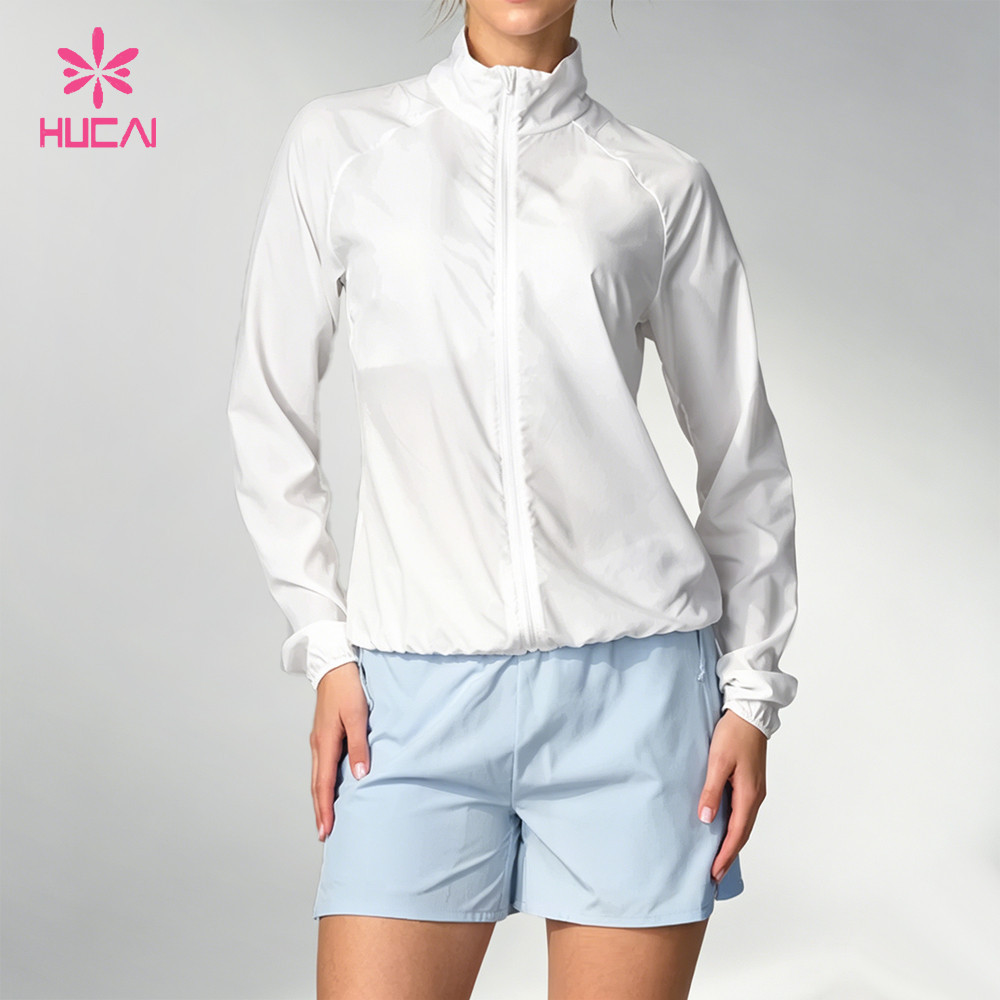
A matching set used to mean two pieces: a sports bra and a legging. Current women's activewear line-ups in the Australian and UK markets have moved past that. Bra and legging programmes now sit alongside coordinated jackets, longline zip layers and contour outer pieces that are merchandised as part of the same set rather than as an unrelated outerwear add-on.
For growing brands and ODM buyers, this is an attractive commercial direction. It also changes something most development briefs do not account for. As soon as a longline or contour jacket joins the set, the product stops being two pieces sharing a color and becomes a three-piece system. Jacket hem position, waistband placement, legging rise, top length, zip line, fabric weight and layering ease all start to interact, and a brief that treats the jacket as a separate style usually shows the problem only when the finished pieces are worn together.
HUCAI Sportswear works with women's activewear brands on matching set programmes that include coordinated outer layers, and the same questions come up early in most of those projects: which piece leads the proportions, whether all three pieces should share one fabric, and how a color standard holds across fabrics that behave differently. This article works through those decisions before sampling begins.
Quick Answer
Adding a longline or contour jacket turns a matching activewear set from a two-piece look into a three-piece system, so hem position, leg rise, fabric weight, color standard and sample sequence have to be planned together rather than designed as separate styles. A brand with an approved two-piece set and confirmed measurements can usually continue along an OEM path, while a brand still defining proportion, layer order and capsule structure will normally need ODM development support before sampling.
Table of Contents
- Who This Article Is For
- From Two-Piece Set to Three-Piece System
- Proportion and Length: Where the Jacket Hem Lands
- Fabric Strategy: One Fabric Family or Two?
- Color and Trim Coordination Across Three Pieces
- Layering Ease, Zips and Fit Interaction
- MOQ, Color Planning and Sample Sequence
- Decision Check
- Manufacturer Insight
- FAQ
- Final Takeaway
Who This Article Is For
- Primary reader: growing activewear brands that already sell a bra and legging set and are deciding how to add a coordinated outer layer
- Secondary reader: private label and ODM buyers building a capsule around matching sets rather than single styles
- Product stage: set architecture and capsule planning, before sample development begins
- Problem being solved: the jacket is developed as an isolated style and the three finished pieces do not work together in proportion, fabric behaviour, color or layering
- Who may not need this article: brands that only need a single jacket developed against a complete tech pack and already have confirmed set measurements will find more direct value on the OEM service page
What you gain from this article: a clearer way to plan a three-piece set so the jacket hem, legging rise, fabric family, color standard and sample order are decided together. That reduces revision rounds caused by proportion conflicts, and it gives you a structured brief you can send for development review instead of a folder of reference images.
From Two-Piece Set to Three-Piece System
The practical shift is not that a jacket has been added. It is that the set now has a third role to fill. In a two-piece set the bra and the legging divide the work between support and lower-body coverage, and proportion is comparatively forgiving because there is only one horizontal seam zone to reconcile: the waistband.
Once a jacket is introduced, that changes. The jacket hem creates a second horizontal line, and it sits somewhere between the bra hem and the waistband. The bra hem carries its own length and coverage, which also interacts with the jacket hem. Layer order, closure direction, visible logo placement and how much of the set reads underneath the jacket then become part of product architecture rather than styling decisions.
This is why a three-piece set should be briefed by role rather than by style count. Before anything else, the brand needs to decide which piece leads the proportion. In most programmes it is the legging, because rise and waistband position are fixed early in fit development and are the hardest to move later.
Proportion and Length: Where the Jacket Hem Lands
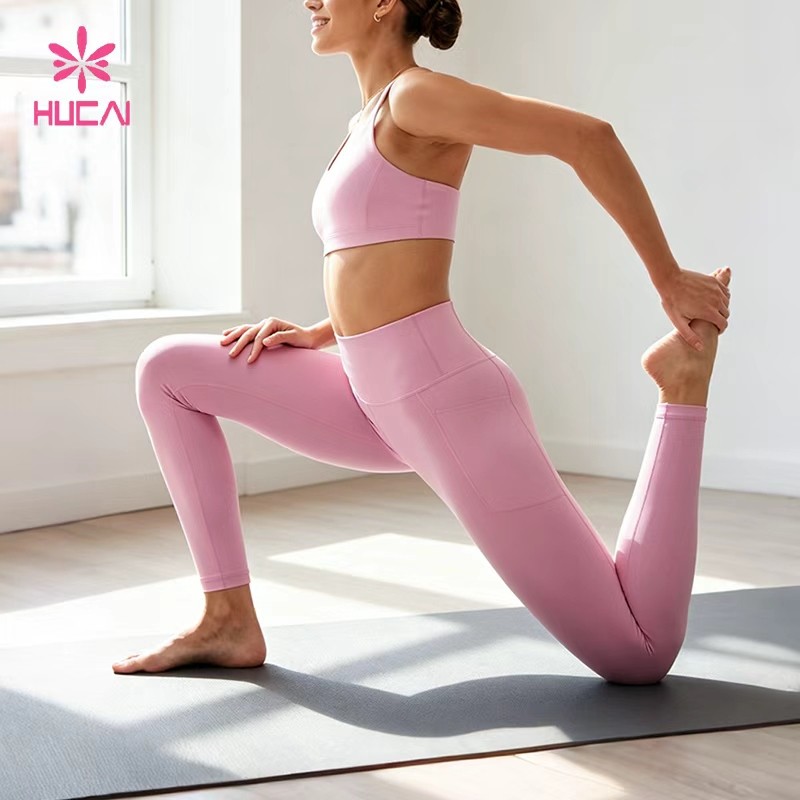
Jacket length is usually chosen visually, and that is where the first avoidable problem appears. A hem that reads well on a hanger can land directly on the widest part of the hip once worn over a legging, which breaks the vertical line the set was designed around and can create bulk at exactly the point where the waistband and jacket hem stack.
Three hem zones tend to behave differently. A hip-length hem sits below the waistband and leaves the rise visible, so it reads as a layer over the set. A waist-length hem lands at or near the waistband, which is the most sensitive zone because jacket hem, waistband and any drawcord or contrast trim compete for the same band of space. A cropped or longline hem sits above the waistband and keeps the set proportions visible, but it places more visual weight on the legging rise and the bra hem.
Because of that, hem position should be reviewed against the approved legging rise and bra length rather than against the jacket pattern alone. When a brand asks what causes a three-piece set to look unbalanced even though each piece passed its own review, this stacking of horizontal lines is the most common answer.
Fabric Strategy: One Fabric Family or Two?
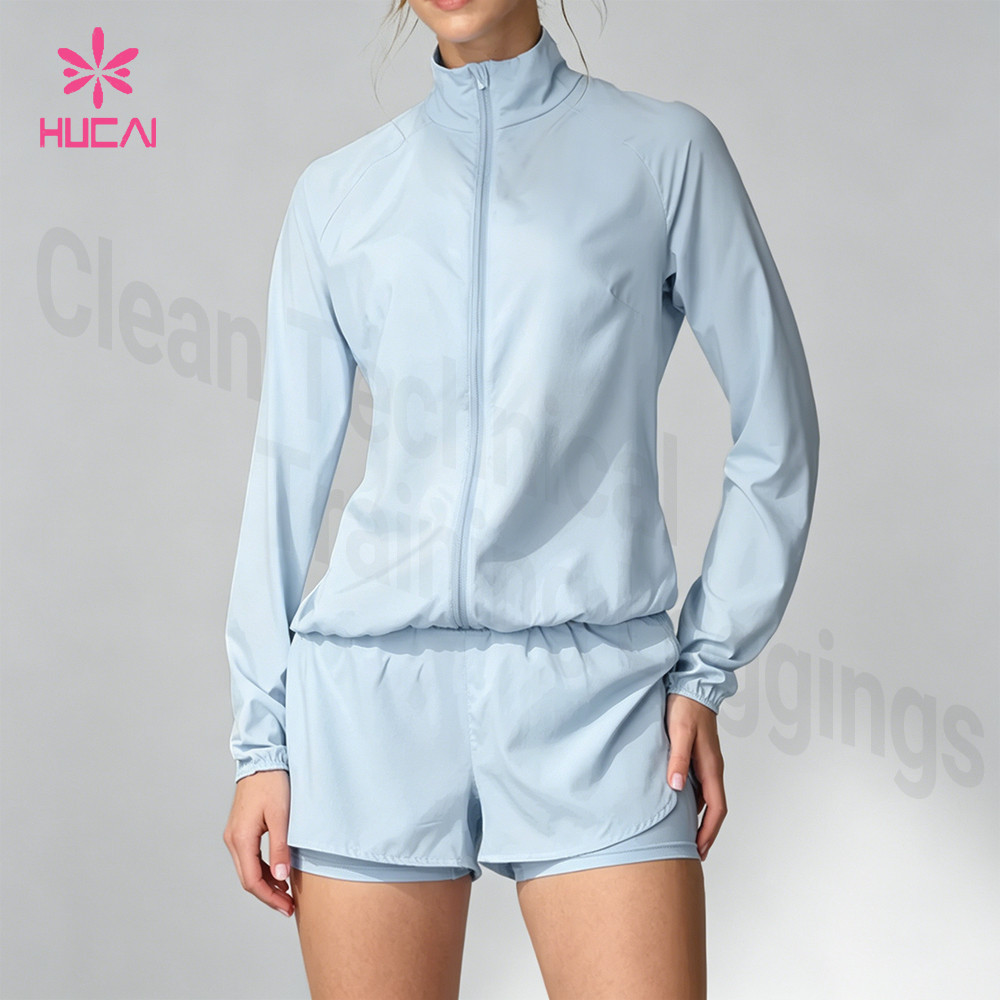
The second structural decision is whether all three pieces share a fabric family or whether the jacket moves to a different material direction. Sharing one fabric family keeps color matching simpler and usually consolidates fabric ordering, which matters when a set is planned across several colors. It also limits the jacket, because a legging knit is developed for stretch recovery, opacity and waistband stability rather than for the way a jacket body should move and drape.
Moving the jacket to a different direction typically gives better drape and a cleaner surface across a larger pattern area, but it introduces a matching problem: two fabrics with different construction respond differently to the same dye recipe, so a single color reference can read as two slightly different shades once the pieces sit next to each other.
A workable middle position is to keep the legging and the top or bra on the same family and treat the jacket as a linked but separate direction, with its own confirmed handfeel, weight and surface requirement. Fabric direction, weight, stretch and recovery requirements should be confirmed during development for each piece rather than assumed from the set color.
Color and Trim Coordination Across Three Pieces
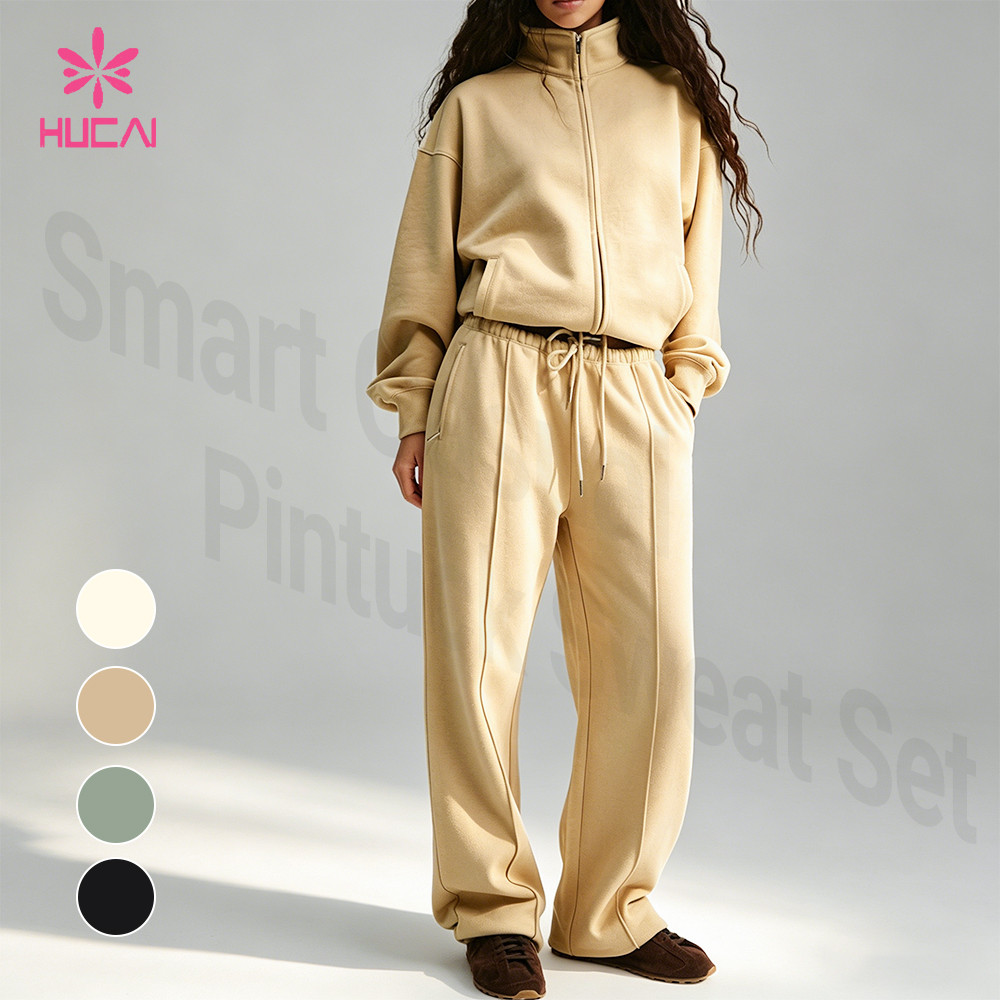
Color is where a three-piece set becomes more demanding than a two-piece one. With two pieces, a slight difference between the bra and the legging is easy to miss. With three, the jacket sits alongside both, and any contrast or trim that was used to define one piece now has to be placed deliberately across all three.
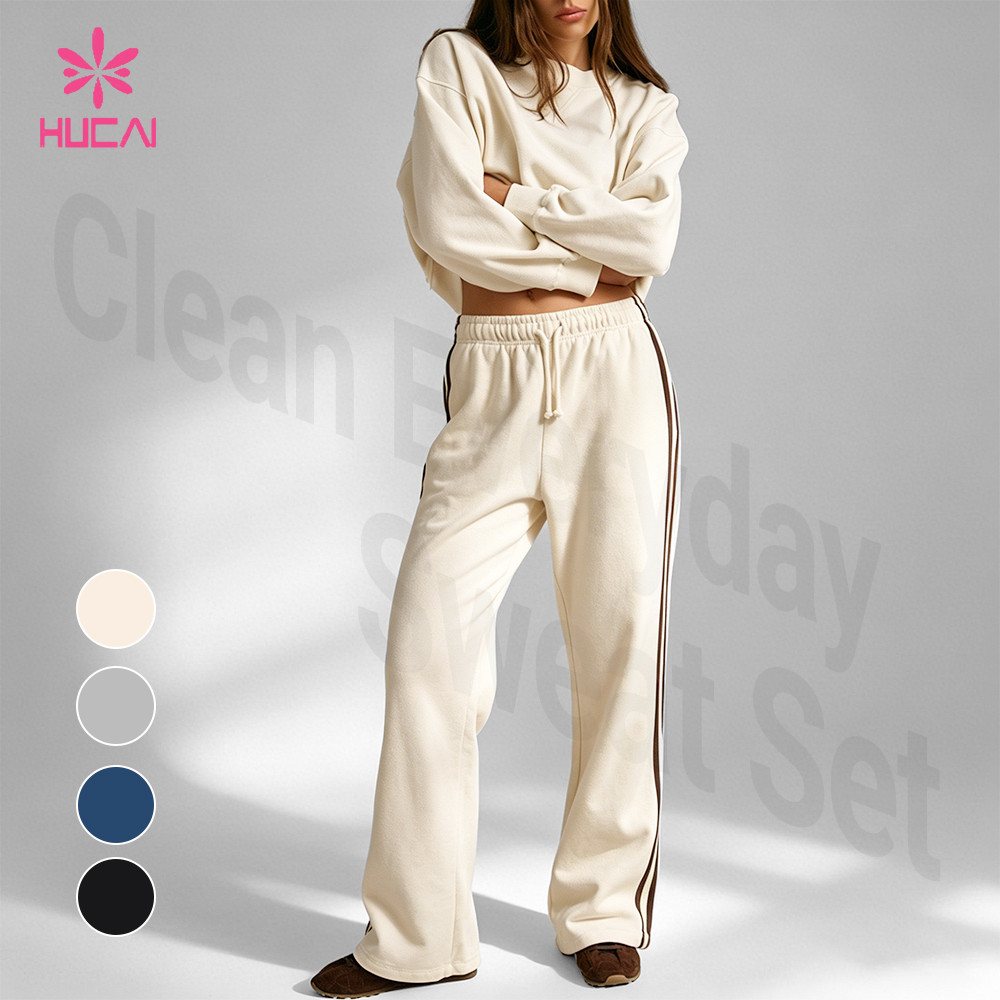
Trim decisions follow the same logic. Contrast binding, piping, a side stripe or a colored zip pull can unify the three pieces, but each has a different stretch behaviour and a different tolerance for seam alignment. A contrast stripe that runs continuously from jacket to legging requires the two garments to share a seam path and a matching tolerance; a contrasting zip tape only has to agree with the jacket body. Keeping contrast elements to one or two placements across the set is usually easier to control in bulk than distributing them across every piece.
Where a set is planned in several colors, the color standard should be defined per material and reviewed as assembled pieces under the same lighting, rather than as separate swatches. Color approval criteria for a three-piece set should be written into the sample brief so the review covers the assembled set.
Layering Ease, Zips and Fit Interaction
The third piece has to work over the other two, which means layering ease becomes part of fit development rather than an afterthought. Two points usually decide whether the set works in wear: whether the jacket can be closed comfortably over the bra or top without pulling, and whether the jacket hem sits over the waistband rather than pushing into it.
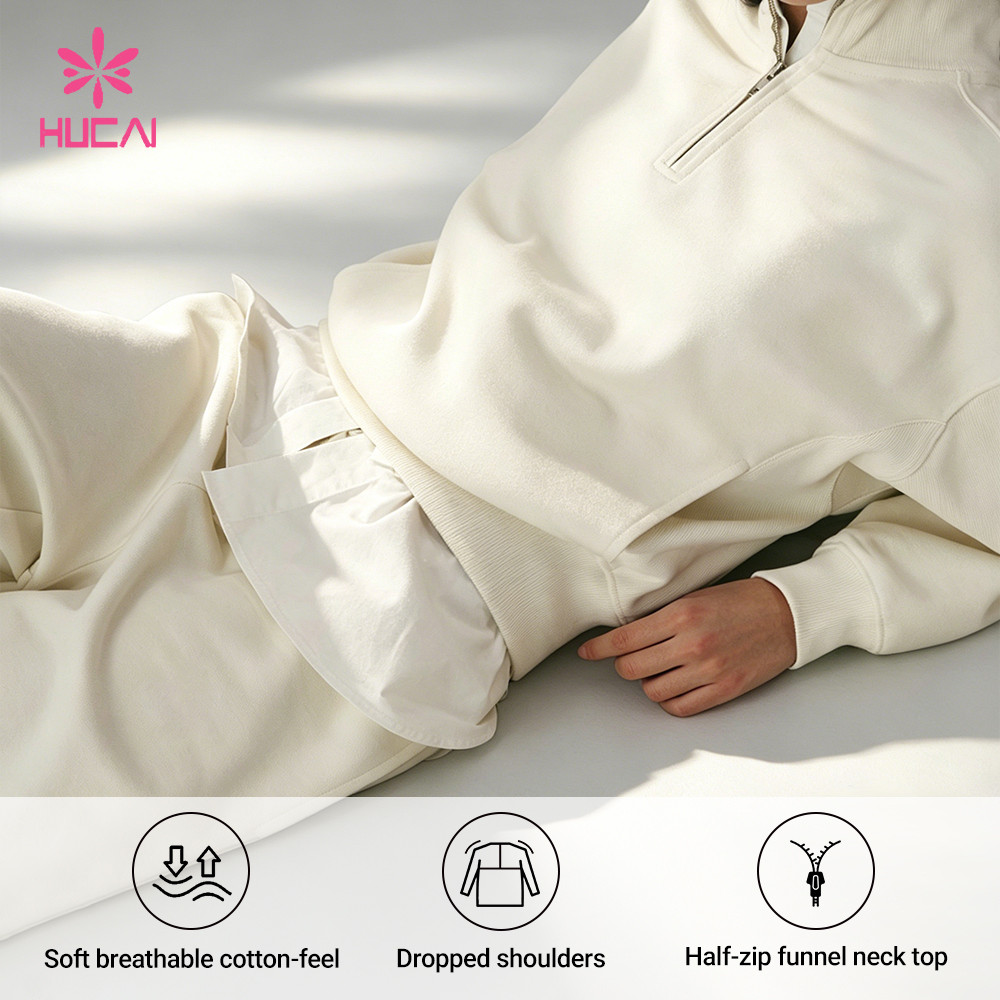
Closure choice affects this directly. A full zip lets the jacket be worn open or closed and changes the front line depending on how the set is styled, but the zip length has to be planned against the bra neckline so the closure does not end at an awkward point. A half zip or funnel neck keeps the chest area stable and puts the visible detail higher, which is often easier to control across a size range. Either way, neckline depth and zip length should be confirmed as a pair.
Sleeve and armhole ease also matters more in a layered set. Because the jacket is worn over another garment rather than against the body, the armhole, shoulder and sleeve should be reviewed with the base layer on. Movement checks at the shoulder and overhead reach usually reveal whether the layering allowance is sufficient before bulk planning starts.
MOQ, Color Planning and Sample Sequence
A three-piece set changes quantity planning because MOQ is normally assessed per style, and a jacket is a separate style from the legging and the bra. The current public MOQ starts from 200 pcs per style, while color, size, fabric, trim and customisation planning depends on the confirmed project. A set planned across several colors therefore multiplies the units a brand needs to commit to across three styles rather than two.
Consolidation is the usual answer. Keeping the three pieces inside a small number of colors, and keeping trims and labels consistent across them, reduces the number of material and trim items that need their own minimum. Where a jacket uses a separate fabric direction, that direction also carries its own color and ordering implications.
Sample sequence should follow the same logic. The legging is normally developed first because rise and waistband position set the proportion zone, followed by the bra or top so the hem relationship can be reviewed, with the jacket sampled last against both. Developing the jacket first tends to produce a piece that passes on its own and then needs proportion changes once the lower body is finalised. Sample development usually takes about 10-15 days, and bulk production often takes about 25-30 days after pre-production details and approvals are confirmed, depending on project scope, materials, processes, quantity and scheduling.
Decision Check: Three-Piece Set Planning
Before requesting samples for a set that includes a jacket, confirm the following:
- Hero piece: which piece sets the proportion, and which pieces follow it
- Hem and rise relationship: where the jacket hem sits relative to the waistband and the bra hem
- Fabric strategy: whether the jacket shares the set fabric family or moves to a separate confirmed direction
- Color and trim standard: how many colors, and which contrast elements repeat across pieces
- Layer order and closure: how the jacket closes over the base layer, and how the set is worn
- Sample sequence and MOQ: which piece is sampled first, and how color count affects the units committed per style
If four or more of these points are resolved, the direction is ready for a structured sample request. If fewer are resolved, the set is usually better served by a development review of proportion, fabric and color planning before sampling, because proportion conflicts are the most expensive problems to correct after a sample has been made.
Where to go next: if you already have confirmed measurements for an existing two-piece set, send your tech pack, the approved measurements, fabric direction and branding requirements for OEM review. If the jacket is still an idea and the set proportions are not fixed, share reference images, target market, color count and intended layer order for ODM development, and the proportion and fabric questions can be worked through before a sample is cut.
Manufacturer Insight
A common early-stage issue in three-piece set development is that the jacket is approved as an isolated style. The jacket sample arrives, the fit and finish are accepted, and the set is signed off piece by piece. The conflict appears later, when the three approved pieces are worn together and the jacket hem lands exactly on the waistband zone, so the set reads as two garments competing for the same horizontal line rather than as one coordinated product.
The cause is usually not the jacket pattern. It is that the jacket was developed before the legging rise and bra length were locked, so the hem was positioned against a body block rather than against the finished lower pieces. Leaving the jacket to the end of the sample sequence and reviewing it over the approved legging and bra removes most of this risk, because the hem can be positioned against real garment edges. HUCAI Sportswear coordinates this order within a single development workflow, so proportion, fabric and color decisions for all three pieces are reviewed as one set rather than as three separate jobs, and the same standard carries into pre-production review.
FAQ
Should all three pieces use the same fabric?
Not necessarily, and the answer depends on what each piece has to do. A shared fabric family keeps color matching and fabric ordering simpler, but a legging knit is developed around stretch recovery, opacity and waistband stability rather than a jacket body's drape. Many programmes keep the legging and the bra or top on one family and treat the jacket as a linked but separate direction with its own confirmed handfeel, weight and surface requirement.
How should jacket length relate to legging rise?
The jacket hem should be positioned against the approved legging rise rather than against a body block. A hem that lands at the waistband competes with the waistband, drawcord and any contrast trim in the same band of space, while a hem above the waistband keeps the rise visible and a hem below it reads as a layer over the set. Confirming the rise first and reviewing the hem against the finished legging removes most proportion conflicts.
Can one color standard work across different fabrics?
One color reference can be applied across different fabrics, but the result should be reviewed as assembled pieces rather than as separate swatches. Fabrics with different construction or fibre direction respond differently to the same dye recipe, so a single standard can read as two slightly different shades once the jacket and the legging sit next to each other. Defining the standard per material and approving it under the same lighting is the more reliable approach.
Which piece should be sampled first?
In most three-piece set programmes the legging is sampled first, because rise and waistband position set the proportion zone that the other pieces reference. The bra or top follows so the hem relationship can be reviewed, and the jacket is sampled last against both. Developing the jacket first often produces a piece that passes on its own and then needs proportion changes once the lower body is finalised.
How should MOQ be planned for a three-piece set?
MOQ is normally assessed per style, and a jacket is a separate style from the legging and the bra, so a three-piece set carries three style minimums rather than two. The current public MOQ starts from 200 pcs per style, while color, size, fabric, trim and customisation planning depends on the confirmed project. Keeping the set inside a small number of colors and reusing trims and labels across pieces keeps the number of separately ordered items lower.
What causes set colors to look different once the pieces are worn together?
Usually the difference comes from material behaviour rather than from the color reference itself. Different fabric constructions, weights or surface finishes absorb dye differently and reflect light differently, so contrast between pieces becomes more visible in a larger pattern area such as a jacket body. The practical response is to approve color on assembled pieces, and to keep contrast trim placements to one or two positions the set can carry consistently.
Does adding a jacket change the bra and legging specifications?
It can, mainly through layering. The jacket is worn over the base layer rather than against the body, so armhole, shoulder and sleeve ease should be reviewed with the base layer on, and the jacket hem should be checked against the waistband. Bra neckline depth may also need to be reviewed against the jacket closure so the zip does not end at an awkward point. These are review points rather than automatic specification changes.
How should a three-piece set be approved before bulk?
The assembled set should be reviewed together rather than piece by piece, with proportion, color under the same lighting, layering ease and closure behaviour all checked in the same session. Confirmed measurements, workmanship standards, approved samples and material control then carry into pre-production review. The quality workflow also includes in-process checkpoints and final inspection, with AQL 2.5-based inspection as part of that structure rather than as a substitute for it.
Final Takeaway
A longline or contour jacket does not simply extend a matching set; it changes the set's architecture. The decision that carries the most weight is which piece leads the proportion, because rise and waistband position set the horizontal line that the jacket hem, bra hem and any contrast trim all have to work against. Confirming that order, the fabric strategy and the color standard before sampling keeps a three-piece set from becoming three approved styles that do not assemble into one product.
Ready to develop: send your tech pack, approved measurements and branding requirements for OEM review, or share reference images and target layer order for ODM development.
Need development guidance: review fabric direction and the sample policy before finalising the set brief.
Still evaluating: compare confirmed set programmes in the custom matching sets range, or start from the matching set manufacturing overview.
About HUCAI Sportswear
- Founded in 1998, supporting women's activewear and sportswear brands with OEM, ODM and private label development
- Category coverage across sports bras, leggings, shorts, tops, jackets and matching sets
- Structured sample development and sample-to-bulk consistency control
- MES and ERP-supported tracking together with a hanging production system for scheduling and order follow-up
- AQL 2.5-based inspection within a quality workflow that includes pre-production review and final inspection
Current certification information can be reviewed during supplier evaluation based on the project and documentation requirements.