How to Define Sports Bra Support Level Before Sampling
- Share
- publisher
- HUCAI Activewear
- Issue Time
- Jun 28,2026
Summary
Learn how private label activewear brands should define sports bra support level before sampling, including fabric behavior, underband tension, strap structure, coverage, padding, fit review, and bulk consistency.
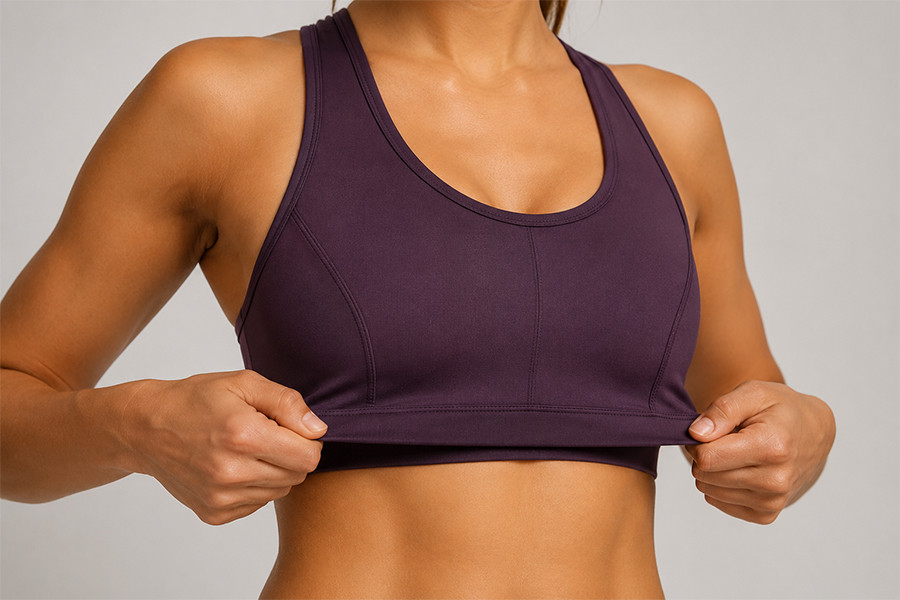
For custom sports bra development, private label sports bra projects, and OEM / ODM activewear production, support level should be defined before sampling starts. A sports bra manufacturer cannot judge support only from the front shape or visual design. Low, medium, and high support bras need different fabric behavior, underband tension, strap structure, neckline coverage, padding direction, fit review, and sample-to-bulk control. At hucai sportswear, sports bra support direction is reviewed as a development decision, not only a style description.
Quick Answer
Sports bra support level should be defined before sampling because low, medium, and high support bras require different fabric behavior, underband tension, strap structure, neckline coverage, padding direction, fit review, and sample-to-bulk control. Brands should first decide the target activity and support role, then align fabric, construction, fit, and sample standards around that role.
Table of Contents
- Why support level should be defined before sampling
- Low support sports bras: comfort, softness and light movement
- Medium support sports bras: balanced hold for training and daily activewear
- High support sports bras: structure, coverage and recovery
- Why support is not decided by fabric alone
- Underband, straps, neckline and padding decisions
- Decision check before sample request
- FAQ
- Next steps
Why Support Level Should Be Defined Before Sampling
```Many sports bra projects begin with a reference photo: a square neckline, a longline shape, a racerback, a crossback, or an adjustable strap style. These visual references are useful, but they do not define the support level by themselves.
A low-support yoga bra, a medium-support training bra, and a high-support running bra may look similar in a product image, but they need different development logic. The real difference is found in fabric recovery, underband hold, strap width, back structure, neckline coverage, cup direction, size range, and how the bra behaves during movement.
This is why brands should define the support role before starting a sports bra sample. For a clearer category reference, brands can review sports bra support-level collection planning, where low, medium, and high support styles are organized around activity needs, body coverage, fabric structure, and fit comfort.
Support level should follow the activity scenario, not only the visual design or trend reference.
Underband, straps, back structure, neckline and padding all influence support and wearing comfort.
A sample can only be reviewed clearly when the expected support level is already defined.
Without a clear support target, sample feedback becomes vague. A buyer may say the bra is "not supportive enough," "too tight," "uncomfortable," or "not secure," but the development team still needs to know whether the issue comes from fabric, underband, strap, neckline, pad, cup, or fit balance.
```Low Support Sports Bras: Comfort, Softness and Light Movement
```Low support sports bras are usually designed for yoga, Pilates, barre, stretching, studio movement, lounging, or light daily wear. The priority is not maximum hold. The priority is comfort, flexible movement, smooth coverage, and easy wear.
However, low support does not mean weak development. A soft sports bra still needs shape stability, fabric recovery, underband comfort, and enough coverage for the intended customer.
Key Development Focus
- Soft handfeel against the skin
- Comfortable stretch and recovery
- Light underband hold without pressure
- Smooth neckline and coverage balance
- Comfortable strap placement
- Pad or no-pad direction based on customer preference
Common Sample Risk
The most common risk is making a low-support bra feel too weak. If the fabric has poor recovery, the underband is too loose, or the neckline coverage is not stable, the bra may feel comfortable at first but lack wearing confidence.
Low support bras are often suitable for brands building studio, yoga, soft-support, or athleisure collections. They can also work well as part of a matching set when coordinated with leggings or shorts.
```Medium Support Sports Bras: Balanced Hold for Training and Daily Activewear
```Medium support sports bras are often the strongest commercial core for many women's activewear brands. They can serve gym training, strength sessions, studio-to-gym movement, daily activewear, and matching set programs. They need more support than yoga bras but should not feel as rigid as high-impact bras.
For many growing brands, medium support is the most practical first sports bra direction because it balances comfort, support, versatility, and commercial wearability.
| Medium Support Requirement | Development Focus | Sample Review Point |
|---|---|---|
| Balanced hold | Fabric recovery, underband tension, and strap structure | Check whether the bra feels secure without excessive pressure. |
| Training comfort | Movement stability, neckline coverage, and skin comfort | Review stretch, bend, lifting, and repeated movement positions. |
| Commercial versatility | Works across gym, studio, daily activewear, and matching sets | Confirm whether the style is too soft or too structured for the target market. |
| Bulk repeatability | Underband, strap, pad, and fabric consistency | Set clear approved sample standards before production. |
Medium support bras often use racerback, crossback, longline, or wider-strap structures. The right choice depends on the intended activity and the brand's product positioning.
```High Support Sports Bras: Structure, Coverage and Recovery
```High support sports bras are built for more demanding movement scenarios, such as running, higher-impact training, or more support-led activewear programs. They require stronger structure, better coverage, more controlled fabric recovery, and more careful sample review.
A high support bra should not simply feel tighter. Stronger support should come from a system: underband control, strap structure, neckline coverage, back design, fabric recovery, cup or padding direction, and fit balance.
Key Development Focus
- Stable underband hold
- Stronger fabric recovery
- Wider or adjustable strap structure
- Higher neckline or stronger front coverage where needed
- Back structure that supports movement stability
- Pad, cup, or lining direction that matches the support target
- More careful fit review across sizes
Common Sample Risk
The biggest risk is confusing pressure with support. A sports bra can feel tight but still fail to support well if the pressure is not distributed correctly. Underband tightness, strap pulling, neckline gaping, cup shifting, and back discomfort are all signs that the support system needs review.
High support projects usually require clearer briefs and more careful sampling. For startup brands, it may be more practical to begin with low or medium support before developing a full high-impact bra program.
```Why Support Is Not Decided by Fabric Alone
```Fabric is important, but it does not decide support alone. A strong fabric can still fail if the underband is weak. A soft fabric can still work for low support if the construction is balanced. A medium-compression fabric can perform differently depending on strap width, back design, neckline depth, and cup direction.
This is why support level should be reviewed as a system. Fabric behavior, construction, pattern, elastic, trim, and sample standards all work together.
| Support Factor | What It Controls | Common Development Risk |
|---|---|---|
| Fabric recovery | Hold, shape stability, and movement response | Soft fabric may stretch out; firm fabric may feel restrictive. |
| Underband tension | Base support and wearing security | Too loose feels unstable; too tight creates discomfort. |
| Strap structure | Pressure balance, shoulder comfort, and movement stability | Narrow or misplaced straps may dig, shift, or fail to support. |
| Neckline and coverage | Confidence, containment, and activity suitability | Too low or open may not match the intended support level. |
| Padding / cup direction | Shape, modesty, support feel, and sample evaluation | Pads may shift, create uneven shape, or conflict with fit. |
| Size grading | Support consistency across body sizes | One sample size may not represent the full size range. |
If a brand is still comparing sportswear fabrics, a broader sportswear fabric selection review can help clarify whether the project needs soft support, balanced recovery, or stronger structure before sampling.
```Underband, Straps, Neckline and Padding Decisions
```Sports bra support becomes clearer when the main construction decisions are reviewed together. If one part is changed without reviewing the others, the sample may solve one issue but create another.
Underband Direction
The underband is one of the most important areas in sports bra development. It provides the base of support. Brands should decide whether the underband should feel soft, balanced, secure, or performance-led. Underband width, elastic quality, tension, stitching, and fabric interaction all affect comfort.
Strap Structure
Straps influence pressure balance, shoulder comfort, and support stability. Wider straps, racerback structures, crossback designs, adjustable straps, and minimal straps all create different wearing experiences. The strap should match the support level, not only the visual style.
Neckline and Coverage
Neckline depth and front coverage affect wearing confidence and activity suitability. A low-support yoga bra may use a softer neckline, while a training or running bra may need more coverage and stability.
Padding and Cup Direction
Brands should confirm whether the project needs removable pads, fixed pads, molded cups, lining support, or a cleaner no-pad direction. This affects shape, modesty, support feel, washing behavior, and sample evaluation.
Back Design
Back construction affects movement, support distribution, and visual positioning. A racerback can improve athletic hold, while a crossback may support both function and design appeal. A minimal back may look cleaner but may not fit higher-support goals.
For projects where the sports bra will be sold with leggings or shorts, brands can also review custom matching activewear set development so support level, fabric, color, and set coordination are planned together.
```Decision Check: Is Your Sports Bra Support Level Ready for Sampling?
Before requesting a sports bra sample, review these questions:
- Is the bra intended for yoga, studio, training, running, daily activewear, or matching set use?
- Should the support level be low, medium, or high?
- Does the fabric need to prioritize softness, recovery, compression, breathability, or structure?
- What underband feel is expected: soft, balanced, secure, or performance-led?
- What strap structure is needed for the intended activity?
- Does the neckline provide enough coverage for the support level?
- Does the project need removable pads, fixed pads, molded cups, lining, or no pads?
- Will the bra be sold alone or as part of a matching activewear set?
- Do you already have a tech pack, or do you need help turning reference images into a support-level brief?
- How will the approved sample standard be controlled before bulk production?
Manufacturer Insight: Support Problems Often Start From Unclear Product Role
Many sports bra sample revisions happen because the brand starts with a visual reference but does not define the support role clearly. A square-neck bra, longline bra, racerback bra, or crossback bra can be developed for very different support levels depending on fabric, underband, strap, neckline, coverage, and padding direction.
At hucai sportswear, support level is reviewed before sampling so the development team can connect fabric behavior, construction, fit, and sample review standards. This helps brands move from general comments such as "not supportive enough" toward clearer actions such as adjusting underband tension, strap width, coverage, padding, fabric recovery, or size grading.
Planning a Sports Bra Sample?
If your brand is developing a low, medium, or high support sports bra, share your target activity, reference images, tech pack if available, desired support level, fabric handfeel, underband direction, strap structure, padding preference, color plan, and quantity range with hucai sportswear. We can help review whether your project is closer to OEM execution or ODM development support.
Who This Article Is For
```This guide is written for brands that want to develop sports bras with clearer support logic before sampling starts.
- Growing activewear brands: best fit if you are building a sports bra line and need to organize low, medium, and high support directions.
- Private label buyers: useful if you need to prepare support level, fabric, strap, underband, pad, and MOQ information before inquiry.
- Startup brands: useful if you are preparing your first sports bra sample and need to avoid starting with an overcomplicated structure.
- Established brands: useful if you already have tech packs but want to review whether the support logic is clear enough before bulk execution.
This article is less suitable for buyers who only want ready-stock bras, lowest-price logo application, or random single-style sourcing without support-level planning.
```Trust Notes for Buyers
```hucai sportswear helps brands review support direction through activity use, fabric behavior, underband, strap, coverage, and padding.
Brands can start from tech packs, reference samples, or early sports bra ideas, then choose the right OEM or ODM development path.
Sports bra samples should be reviewed for support feel, underband comfort, strap stability, coverage balance, and bulk repeatability.
FAQ: Sports Bra Support Level Before Sampling
```How should brands define sports bra support level before sampling?
Brands should define sports bra support level by activity use first. A yoga bra, studio bra, training bra, and running bra need different support targets. After the use scenario is clear, the brand can align fabric, underband, strap structure, neckline coverage, padding, and sample review standards.
What is the difference between low, medium, and high support sports bras?
Low support bras usually prioritize softness, comfort, and light movement. Medium support bras need balanced hold for training and daily activewear. High support bras require stronger structure, coverage, recovery, and underband control for higher-impact movement. Each level needs different development logic.
Can sports bra support be decided by fabric alone?
No. Fabric is important, but support also depends on underband tension, strap structure, neckline coverage, back design, padding direction, pattern balance, and size grading. A strong fabric can still fail if the construction does not match the intended support level.
Why is underband control important in sports bra development?
The underband provides the base of support. If it is too loose, the bra may feel unstable. If it is too tight, it may create discomfort or pressure. Underband width, elastic behavior, stitching, fabric interaction, and size grading should be reviewed before the sample is approved.
How do straps affect sports bra support?
Straps affect pressure balance, shoulder comfort, support stability, and movement control. Wider straps, racerback structures, crossback designs, adjustable straps, and minimal straps all perform differently. The strap structure should match the intended support level and activity scenario.
Should padding be confirmed before sampling?
Yes. Padding direction affects shape, modesty, support feel, washing behavior, and sample evaluation. Brands should confirm whether they need removable pads, fixed pads, molded cups, lining support, or no pads before sample development starts.
Should startup brands begin with high support sports bras?
Not always. High support bras are more complex because they require stronger structure, coverage, fabric recovery, underband control, and fit review. Many startup brands may find it more practical to begin with low or medium support styles, then expand into higher support once the brand's fit and customer feedback are clearer.
What should be prepared before requesting a sports bra sample?
Brands should prepare the target use scenario, support level, reference images or tech pack, preferred neckline, strap direction, underband feel, fabric handfeel, padding preference, color direction, size range, branding details, and estimated quantity. These details help the manufacturer review whether the project is closer to OEM or ODM development.
Final Takeaway
```Sports bra support level should be defined before sampling, not after the first sample feels wrong. Low, medium, and high support bras require different decisions in fabric, underband, strap structure, neckline coverage, padding, fit, and bulk consistency.
For private label activewear brands, clear support-level planning helps reduce vague sample feedback and avoid repeated revisions. It also helps the manufacturer understand what the bra should do in real movement, not only how it should look in a product photo.
A better sports bra program starts with support role first, then moves into fabric, structure, sampling, fit review, and production planning.
```Next Steps for Your Sports Bra Development Plan
If you have tech packs: send your specifications, measurements, support target, fabric details, strap structure, underband direction, and size range for OEM review.
If you have reference images: share your target activity, expected support level, fabric handfeel, neckline, back design, padding preference, and quantity range for ODM development review.
If you are still choosing your first sports bra direction: start by deciding whether your brand should begin with low support, medium support, or a more structured high support style.
Contact hucai sportswear to discuss your sports bra support-level plan