How to Develop Sports Bras by Support Level for Different Training Scenarios
- Share
- Issue Time
- Apr 16,2026
Summary
Learn how to develop women's sports bras by support level for different training scenarios. This B2B guide explains how brands can define low-, medium-, and high-support directions before sampling, and how support logic affects underband structure, straps, fabric response, cup options, and sample revisions. It is written for activewear brands planning OEM or ODM sports bra development with a clearer path from concept to bulk production.
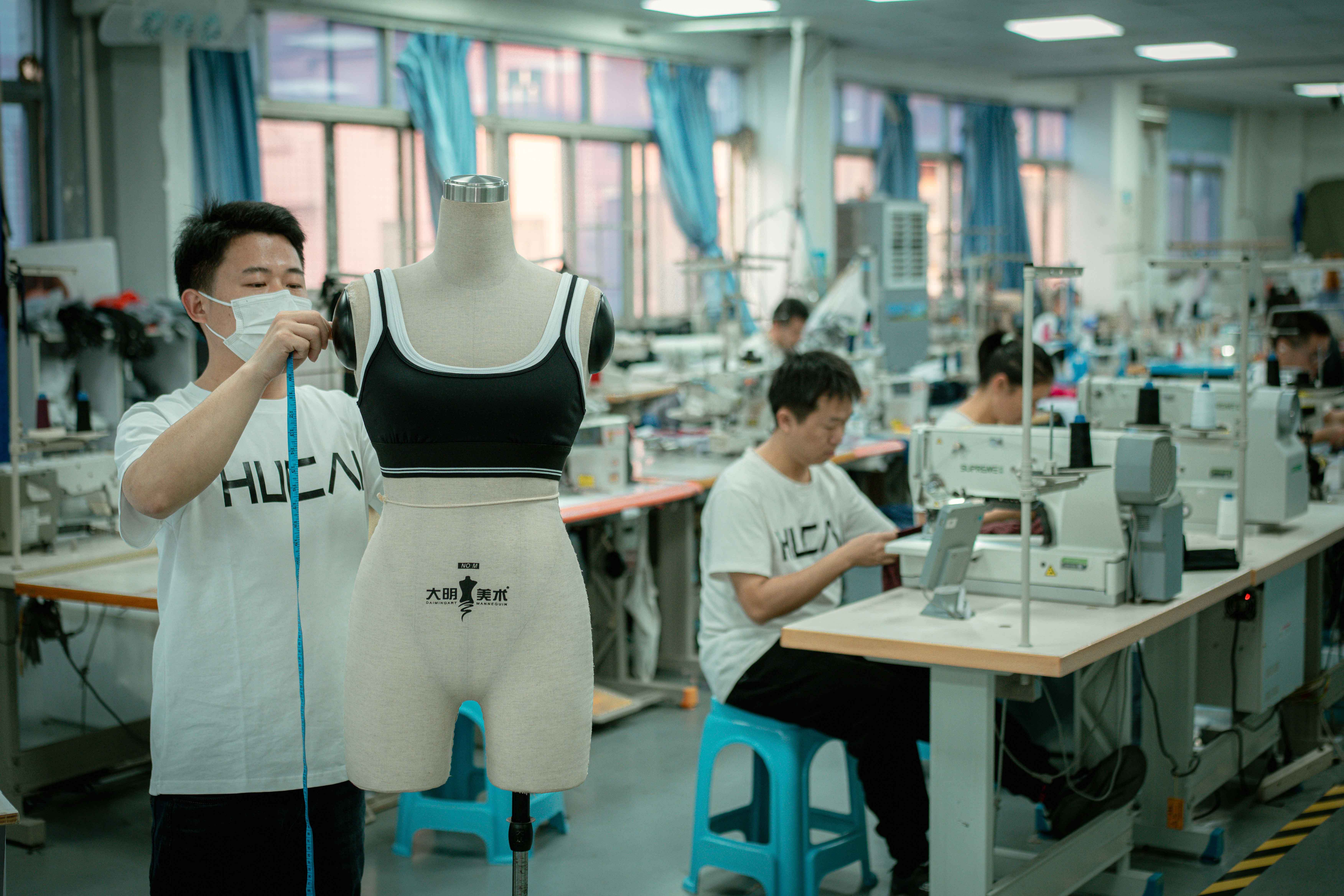
In custom sports bra development, support level should be defined before style details are finalized. That matters even more for brands working with a women’s sports bra manufacturer, planning OEM production or ODM development, and trying to move from reference images to sample and bulk planning with fewer avoidable revisions. At hucai sportswear, an integrated activewear manufacturer with its own factory and in-house development support, sports bra projects usually become clearer once the team defines the real training scenario first rather than starting with neckline, back design, or trend-driven naming alone.
A bra meant for light studio use should not be developed with the same logic as one intended for moderate training or more performance-led movement. Once the product role changes, the right direction for underband feel, strap structure, coverage balance, fabric response, cup choice, and sample review priorities changes with it.
Quick Answer
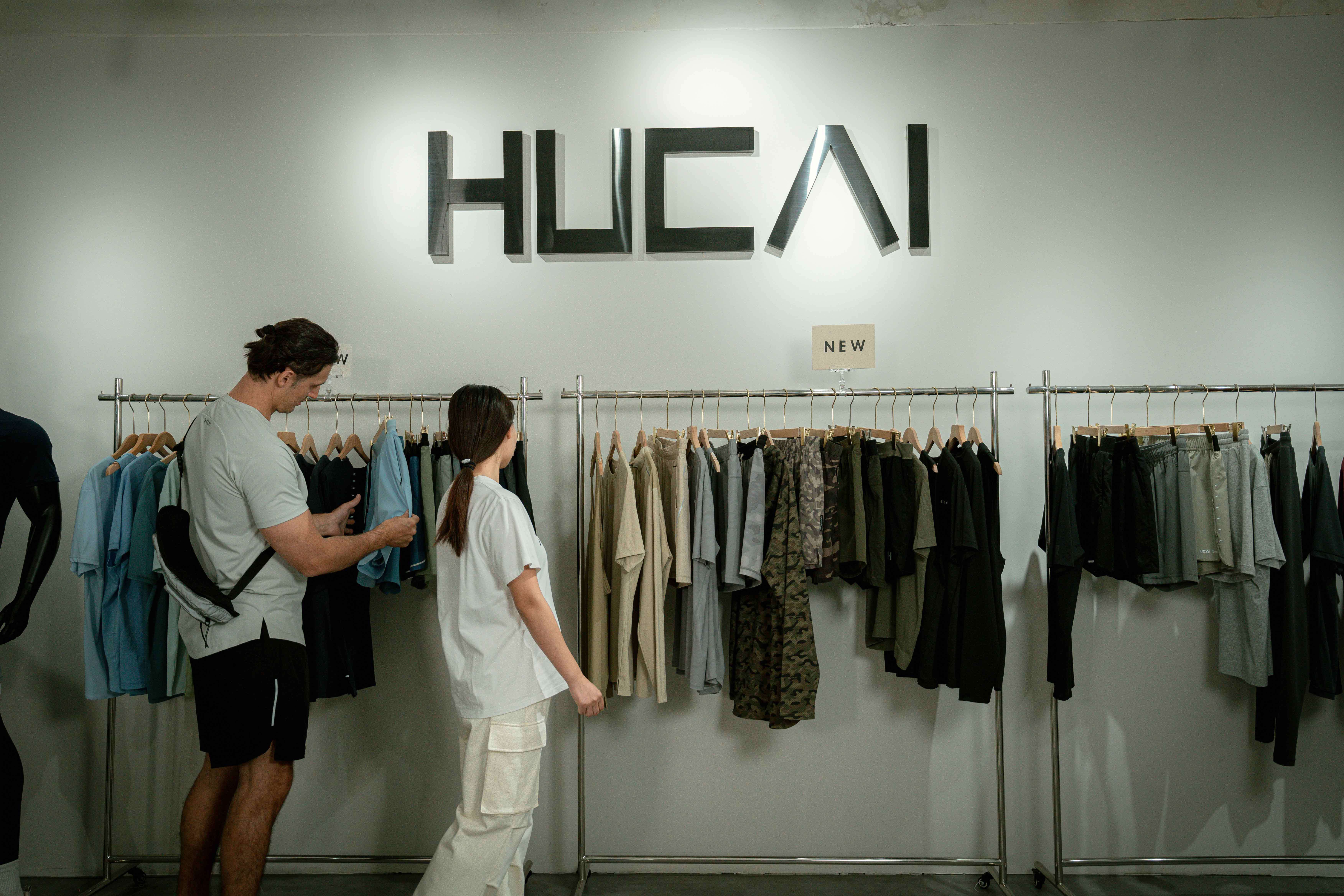
The most reliable way to develop a women’s sports bra line is to define support level by training scenario first, then build structure, fabric, and fit details around that role. Low-, medium-, and high-support bras should not be treated as only visual variations of the same product, because their development priorities are different from the start.
Table of Contents
- Who This Article Is For
- What Brands Usually Need at This Stage
- Why Support Level Should Come Before Style Naming
- How to Split Sports Bras by Training Scenario
- What Changes When Support Changes
- What Brands Should Confirm Before Sampling
- When to Start Through OEM and When to Start Through ODM
- How Better Support Clarity Improves Sample-to-Bulk Consistency
- Manufacturer Insight
- FAQ
- Final Takeaway
Who This Article Is For
This article is most useful for growing activewear brands that are building or refining a women’s sports bra line and need a clearer way to define support direction before sampling. It is also useful for established brands that already have references or tech packs but want better control over fit decisions, structure logic, and revision efficiency.
It is less useful for buyers who only want a fast price before clarifying product direction. In sports bra development, unclear support targets usually create more back-and-forth later, not less.
What Brands Usually Need at This Stage
Clearer support segmentation
So the line is built around real use scenarios rather than only visual variation.
Fewer avoidable revisions
Especially around underband feel, strap response, coverage balance, and cup decisions.
A smoother path to bulk
Because approved samples are easier to repeat when the product role was defined correctly from the start.
Why Support Level Should Come Before Style Naming
A common early-stage mistake is treating a sports bra as a style-first item. A team starts with “longline,” “square neck,” “cross-back,” or “minimal look,” then tries to add support logic afterward. In practice, that order often creates friction. The visual direction may still work, but the project starts fighting itself once wear feel, movement response, and sampling priorities need to be tested.
A stronger starting point is to define the product role first. Is the bra meant for low-impact studio use, moderate training, or more performance-led movement? Once that is clear, the right direction for coverage, strap setup, fabric recovery, and cup choice becomes much easier to align.
This is also why a dedicated sports bra development page is more useful than relying only on a broad style gallery. Style references can help show direction, but development decisions are what move the project forward.
How to Split Sports Bras by Training Scenario
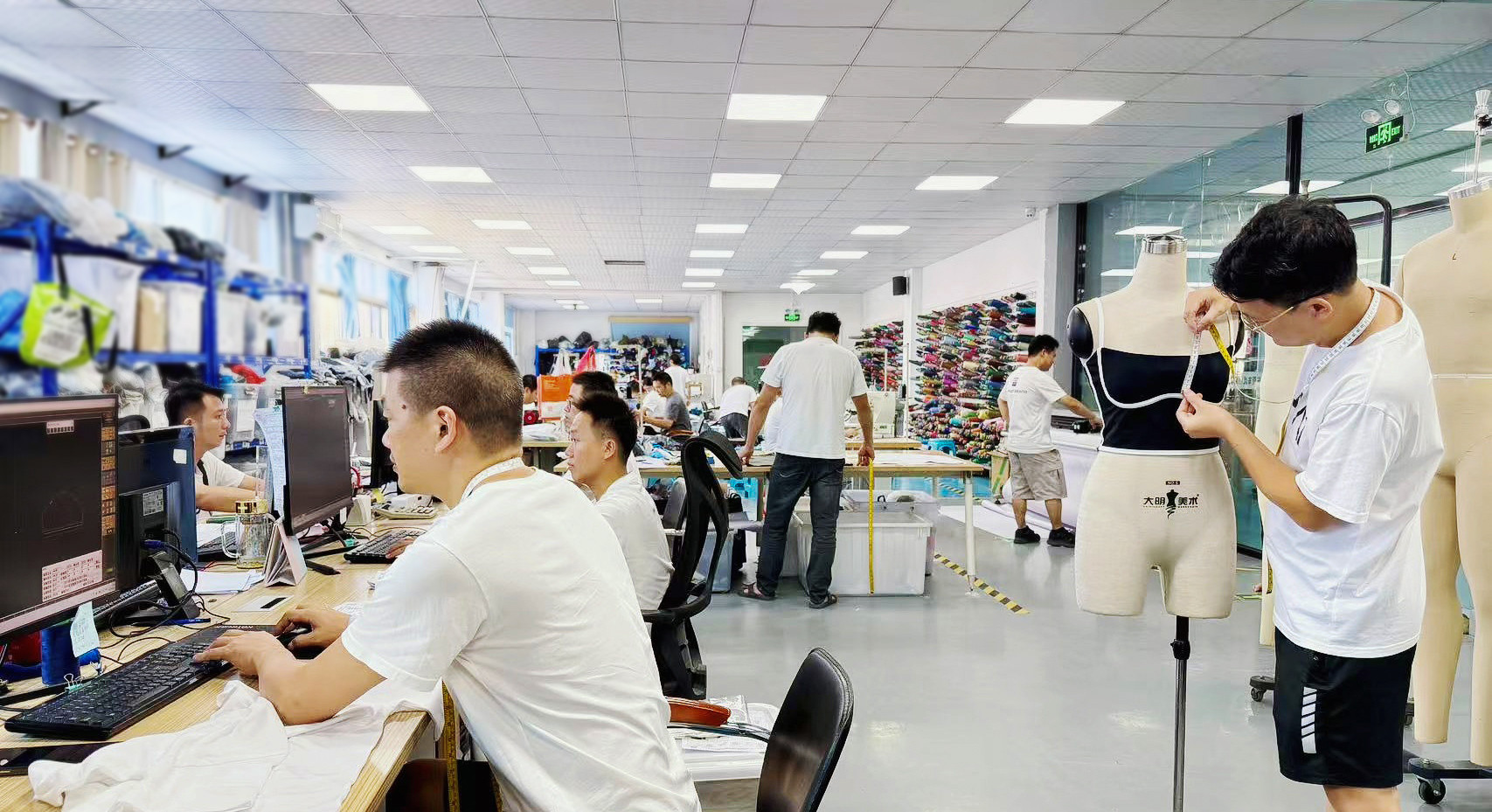
The simplest workable framework is to segment sports bras by training scenario first, then refine style and structure inside each group.
Low Support
Best suited to studio, yoga, light movement, and comfort-led all-day wear. The priority is usually smoother body feel, balanced light hold, and a cleaner visual line rather than stronger containment.
Medium Support
Often the most commercially flexible category. It works for studio-plus-training use, moderate movement, and many brands’ core bra programs. This is usually where comfort and hold need the most careful balance.
High Support
More performance-led projects need stronger stability, more deliberate construction choices, and clearer expectations around movement response. This is usually where support and fit decisions need tighter control.
Not every line needs all three from day one. Many brands are better off starting with one strong medium-support direction, then adding a low-support studio option or a more technical high-support option after the first round of development proves stable.
This also helps brands decide whether the project is mainly a product extension or part of a broader collection plan. In many women’s activewear ranges, the sports bra is not a standalone idea. It often needs to sit next to leggings, shorts, or a broader matching set direction.
What Changes When Support Changes
Once support level changes, multiple parts of the development logic change with it. That is why support should not be treated as a marketing label added at the end.
- Underband logic: The feel, tension, and recovery expectation change depending on whether the bra is intended for lighter comfort-led wear or more active support response.
- Strap direction: Strap width, placement, adjustability, and back construction all respond differently once the movement target changes.
- Coverage and containment: A low-support bra can often prioritize line and ease, while medium- and high-support directions usually need more deliberate containment thinking.
- Fabric response: Soft-touch appeal and support-led behavior do not always come from the same material logic. Brands often need to decide which feel should lead.
- Pad and cup decisions: Removable cups, integrated shaping, or lighter internal setups each create different sample questions once the support target is clear.
- Revision priorities: Different categories fail for different reasons. The more clearly the role is defined, the easier it becomes to spot the real issue during sampling.
What Brands Should Confirm Before Sampling
Before sample requests start, it helps to define the project in a way that reduces avoidable back-and-forth. That does not mean every detail must be finished. It means the key decisions should be clear enough that the first development round has a real target.
- Target training scenario: Studio, training, performance, or mixed-use. This is the first filter for support logic.
- Support priority: Light comfort, balanced hold, or stronger control. One of these usually needs to lead.
- Core silhouette direction: Longline, classic bra length, square neck, racerback, cross-back, or other shape cues.
- Fabric expectation: Soft-touch appeal, compression feel, technical recovery, or a balanced middle ground.
- Cup and inside construction: Removable cup, lighter internal setup, or more support-led inside logic.
- Sample goal: Are you testing visual direction, fit direction, support behavior, or all three together?
If the brief is still taking shape, it helps to review the available sample development options first. At hucai sportswear, brands often move faster once reference images, support targets, and sample goals are aligned before a quote discussion becomes the main focus.
When to Start Through OEM and When to Start Through ODM
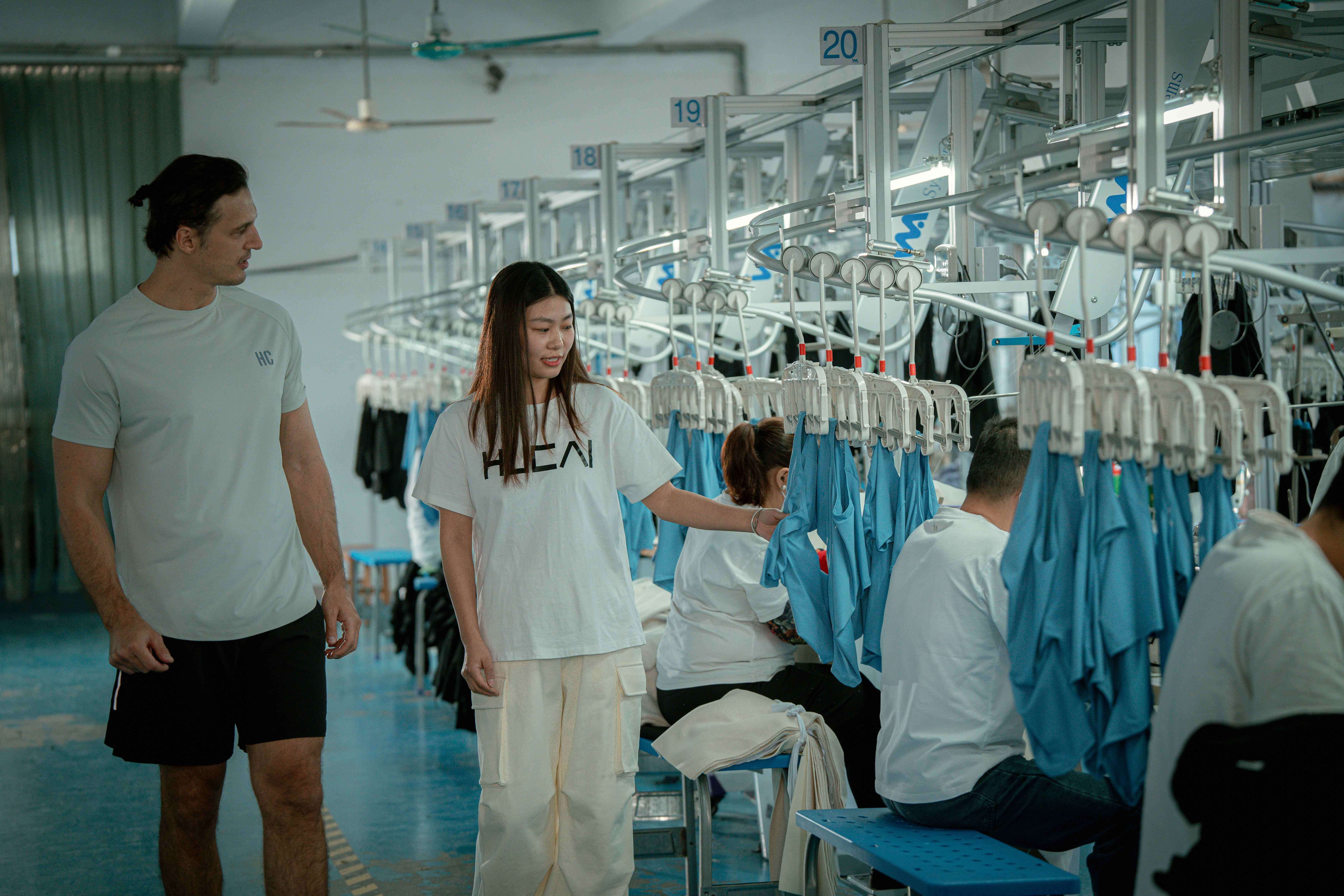
Not every sports bra project should begin the same way. The right path usually depends on how clearly your support direction, measurements, construction choices, and category role have already been defined.
You are closer to an OEM path if...
- You already have a clear support target and intended training scenario.
- You have tech packs, measurements, or established structure references.
- You mainly need controlled execution, sample confirmation, and bulk follow-through.
- You already know how the bra should sit inside your range or season plan.
You should consider an ODM-led start if...
- You have reference images but not yet a firm support-level structure.
- You are still deciding between soft-touch, balanced-hold, or performance-led fabric behavior.
- You are not fully sure which bra category should lead your launch or capsule.
- You need help turning a broad concept into a workable development brief.
Need help turning your support direction into a workable development brief?
If your team has visual references but still needs clearer category logic, structure guidance, or a more organized sample path, start from the product role first rather than only the silhouette.
View the sports bra development page | Start your project discussion
How Better Support Clarity Improves Sample-to-Bulk Consistency
Better support clarity is not only a design advantage. It is also a production advantage. When the intended product role has been defined early, sample comments become more specific, approvals become more meaningful, and bulk execution usually has a more stable reference point.
At hucai sportswear, this stage is not treated as a loose handoff between sample and factory. For support-led women’s categories such as sports bras and leggings, sample-to-bulk coordination works better when development, pre-production review, and follow-up are connected. That is also where practical quality discipline matters. AQL 2.5 checkpoints, pre-production review, and clearer approval standards help reduce confusion once the project moves beyond the first sample.
Progress visibility matters too. When a project reaches bulk planning, clearer coordination across production stages is usually more valuable than broad promises. Hucai sportswear’s digital production setup includes MES and ERP-based tracking on the manufacturing side, which supports better production visibility and follow-up once sample approval and bulk details are aligned. That does not replace good product definition at the start, but it helps the project stay more organized after approval.
If needed, you can also review the broader sample-to-bulk production process and the main pricing factors that usually affect development and bulk planning.
Manufacturer Insight
A common failure pattern we see in sports bra development is not that the style cannot be made. The bigger issue is that the support target was never defined clearly enough in the first place.
When that happens, the first sample may look close to the reference, but the project keeps looping through revisions because underband feel, strap response, coverage balance, or cup direction were never aligned to one real product role. In many early-stage projects, solving that confusion earlier is more valuable than adding more style options too soon.
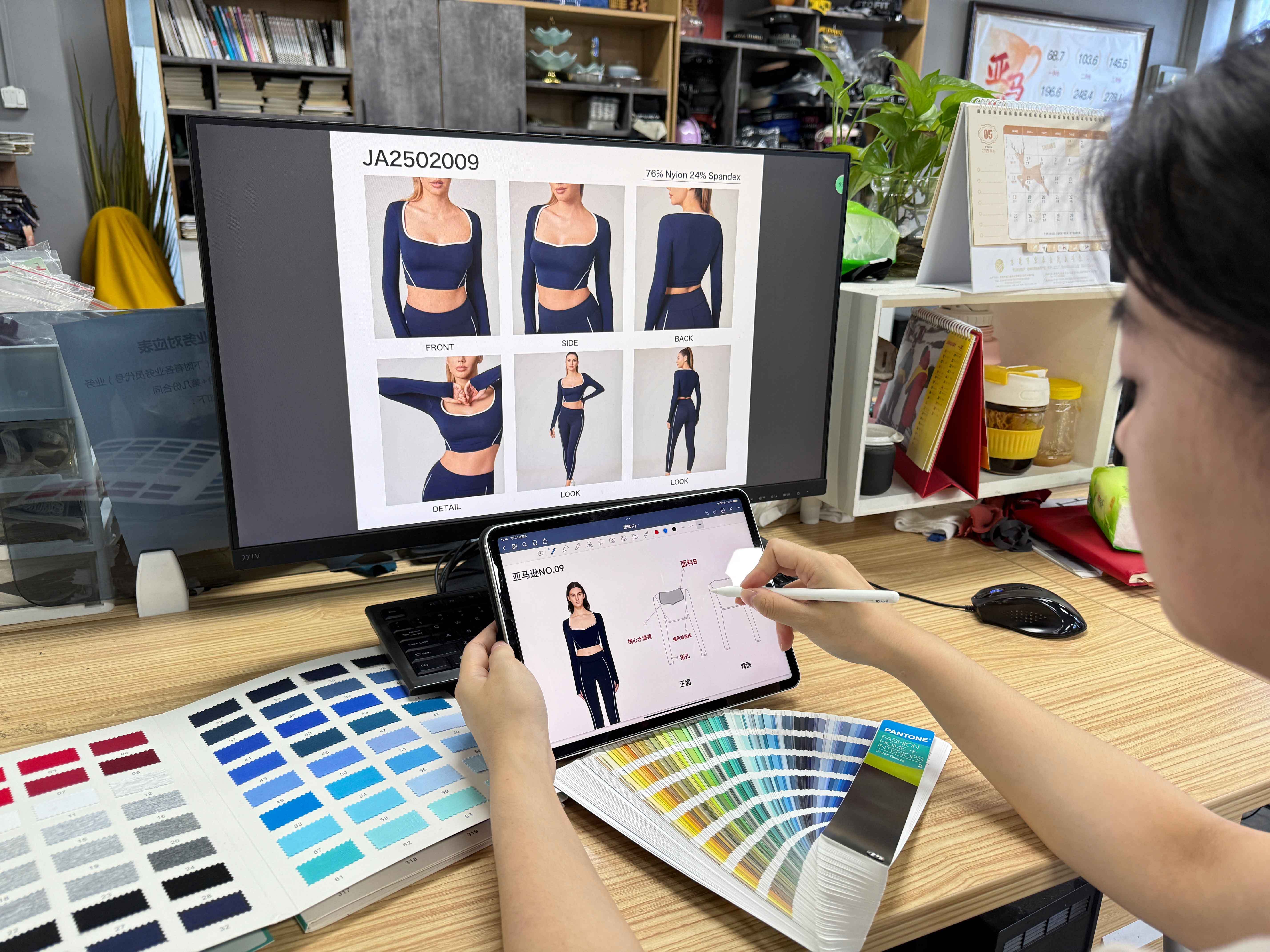 A Sports Bra Is Often Not a Standalone Decision
For many women’s activewear brands, a sports bra is not developed as an isolated item. It often needs to sit next to leggings, shorts, or a broader set program. That affects how the bra should be merchandised, how the fabric direction should be evaluated, and how visual consistency should be maintained across the range.
If your project includes a coordinated range strategy, it can help to review how bra development may fit inside a broader matching set direction or how it may connect with a more complete leggings development path. The goal is not to make every piece identical. It is to make each piece perform its role clearly inside the range.
For visual reference only, a broader sports bra style library can still be useful. But the development logic should come first.
FAQ
What is the difference between low-, medium-, and high-support sports bra development?
The difference is not only how the bra looks. Each support direction usually changes the expected body feel, structure balance, fabric response, and sample review priorities. A low-support studio bra should not be developed with the same assumptions as a more performance-led bra.
Which training scenarios usually need medium-high support instead of full high support?
Many core training programs sit in the middle zone rather than at the extreme end. That is why medium- to medium-high support is often commercially important. It can cover broader wear cases while still giving clearer hold than a comfort-led studio bra.
Can you help if we only have reference images and not a complete tech pack?
In many cases, yes. Brands that already have visual references but still need category logic, structure direction, or sample planning are often better suited to an ODM-led start before the project moves into a more execution-focused OEM path.
How should we think about underband tension in development?
Underband direction should be reviewed as part of the support target, comfort expectation, and movement scenario. It is usually better to define what the bra should feel like in wear rather than treating underband detail as a late-stage technical fix.
Do soft-touch bras and support-led bras need different fabric logic?
In many cases, yes. A bra built around softer handfeel and one built around more deliberate support behavior may not perform well if they are developed as if fabric response is secondary. The fabric direction should support the intended role of the bra, not work against it.
What usually causes repeated sample revisions in a sports bra project?
One common reason is that the product role was not clear enough at the start. The sample then ends up being judged against changing expectations. Strap feel, coverage, cup setup, or support response may all be revised repeatedly because the original brief did not define one clear target.
What should be confirmed before MOQ or pricing discussions become the main focus?
It helps to confirm the training scenario, support target, silhouette direction, fabric expectation, and sample goal first. MOQ and pricing discussions usually become more useful once the bra category is clearer.
How does better process control help after sample approval?
Once a project moves toward bulk, clearer pre-production review, quality checkpoints, and better production visibility usually help more than broad promises. The stronger the sample approval logic is, the easier it becomes to follow the project through bulk execution with fewer avoidable surprises.
Final Takeaway
The strongest sports bra programs are usually not built by starting with style names alone. They are built by deciding what the bra is supposed to do, where it is supposed to be worn, and how that role should shape support, structure, and sample decisions.
If you define support level by training scenario first, you create a stronger foundation for fabric selection, fit control, revision efficiency, and bulk repeatability. That does not make the process more complicated. It makes the project easier to guide from the beginning.
Ready to move the project forward?
Choose the next step based on how clear your sports bra brief already is.
- Go to OEM Service if your support target, measurements, and construction direction are already defined.
- Go to ODM Service if you still need support-level planning, development guidance, or a more structured start.
- Contact hucai sportswear if you want to discuss your sports bra program directly.
Trust Note
This article is written from a manufacturer and product-development perspective. The goal is not to overstate what a sports bra should be in every case, but to help brands make better early decisions about support, structure, sampling, quality control, and project follow-up.
Hucai sportswear is not presented here as only a brand name, but as a working company structure behind the project: an integrated manufacturer with its own factory, over 20 years of garment experience, in-house development support, women’s category experience in sports bras and leggings, and a more connected path from sampling to bulk execution. Final choices still depend on your product direction, approvals, and confirmed details, but a clearer starting brief usually creates a better project.