How to Develop a Sports Bra for Different Bust Needs Without Creating a Completely Separate Collection
- Share
- publisher
- HUCAI Sportswear
- Issue Time
- Oct 21,2026
Summary
A development guide for brands deciding whether to answer bust-fit feedback with a second collection or with modules inside one block: fixed base geometry, underband configurations, cup and lining layers, strap and closure adjustability, a band-by-bust spec matrix, and the sample checks that show whether one block held together.
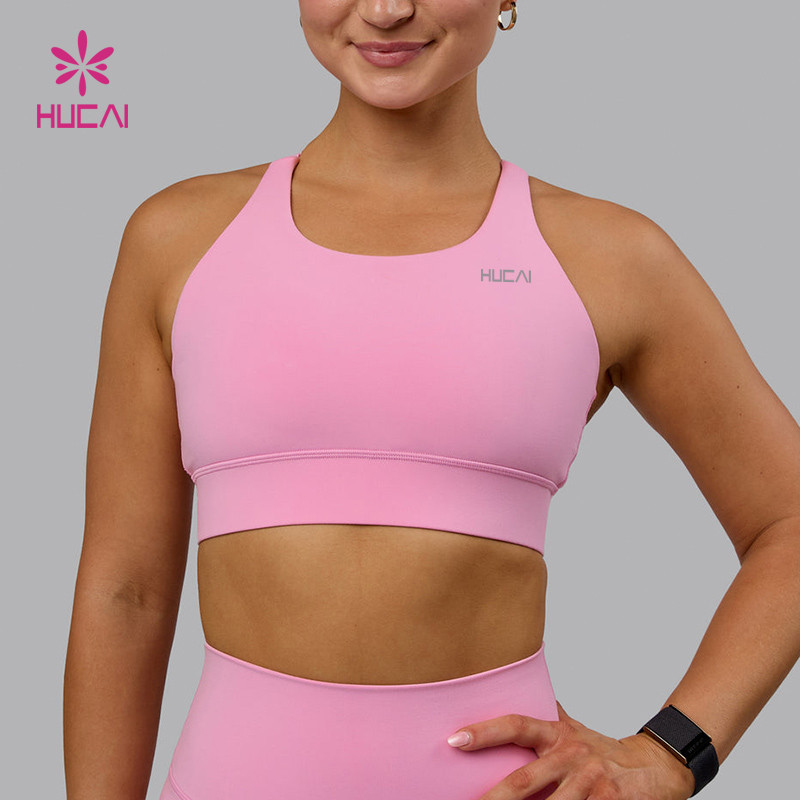
Sports bras are often the first category where a growing brand's size range stops matching its customers. Two or three fit complaints arrive, the team decides the pattern is too narrow for the market, and a second, fuller-bust collection gets planned as a separate line. That decision looks simple in a planning meeting and becomes expensive in development: another base block, another set of grade rules, another sample round, and a MOQ that has to be met twice. There is a different path. Most bust-related fit problems sit in four components that can be treated as modules: the underband, the cup and lining layer, the straps and closure, and the way the base block is graded. This guide explains how HUCAI Sportswear plans that modular structure with brands, and which specification decisions should be locked before sampling starts.
Quick Answer
You can cover several bust needs inside one sports bra collection by keeping the base block, neckline, armhole and band line fixed, then varying four modules: underband height and tension, cup and lining layer, strap width and closure, and cup-volume grade rules. A separate collection is usually only justified when the activity class, the support target or the price architecture changes, because each new block repeats pattern work, sampling and MOQ commitments.
Table of Contents
- Who This Article Is For
- Why a Second Collection Is Usually the Wrong First Answer
- The Shared Base Block: What Should Stay Fixed
- Underband: The Module That Carries Most of the Fit Load
- Cup and Lining Layers: The Part Buyers Under-Specify
- Straps, Back and Closures: Adjustability Without a New Pattern
- The Spec Matrix and the Sample Plan
- Decision Check
- Founder's Technical Insight (Jean Yuan)
- FAQ
- Final Takeaway
Who This Article Is For
- Primary reader: growing women's activewear brands already selling one or two sports bra styles and receiving fit feedback across a wider bust range.
- Secondary reader: established brands reviewing an existing bra line before a seasonal extension, and product developers building a first bra programme from reference images.
- Product stage: direction defined, base silhouette chosen, specification and grading not yet locked.
- Problem being solved: whether to answer bust-fit feedback by opening a second collection or by re-engineering one collection with modular components.
- Who may not need this article: brands that have not chosen a bra silhouette at all, or buyers sourcing finished stock rather than developing a private label programme.
What you gain from this article: a component map for one bra block, a way to decide which band and cup combinations actually need to be developed, the measurement points worth locking before sampling, and the sample and bulk checks that show whether the modular approach held together.
Why a Second Collection Is Usually the Wrong First Answer
A sports bra programme carries three cost layers that a second collection duplicates at once: pattern development and grading, sample rounds, and bulk minimums. Splitting one bra family into two blocks means two grade sets to maintain, two fit approval sequences, and colour commitments split across both. When the public MOQ baseline is 200 pcs per style, a second line also divides a launch budget that was sized for one.
The commercial risk is not only cost. Two blocks usually drift: neckline depth, band height and strap attachment shift by a few millimetres between teams and seasons, and the brand ends up with a range that no longer looks like one family on a product page or a wholesale line sheet.
Market benchmarks point the other way. Established activewear brands tend to keep one bra family per support class and vary the components inside it, adding adjusters, changing band depth or offering a fuller cup within the same silhouette rather than launching a parallel size-specific line. Community forums reinforce the same reading: most fit complaints cluster around band rise, strap pressure and cup gap, which are component problems rather than proof that a size range is missing.
A second block is still right in specific cases. If the new range changes activity class and support target, such as moving from studio support to running, the internal architecture usually changes too. The same applies when the price architecture needs different fabric and trim tiers, or when a retail partner requires a separate size system. Those are product decisions; reacting to four fit emails is not.
The useful first move is to audit the existing block before adding anything. The sports bra support-level collection shows how support direction is planned as a separate axis from bust fit, which is why most bust-fit requests can be answered inside one support class.
The Shared Base Block: What Should Stay Fixed
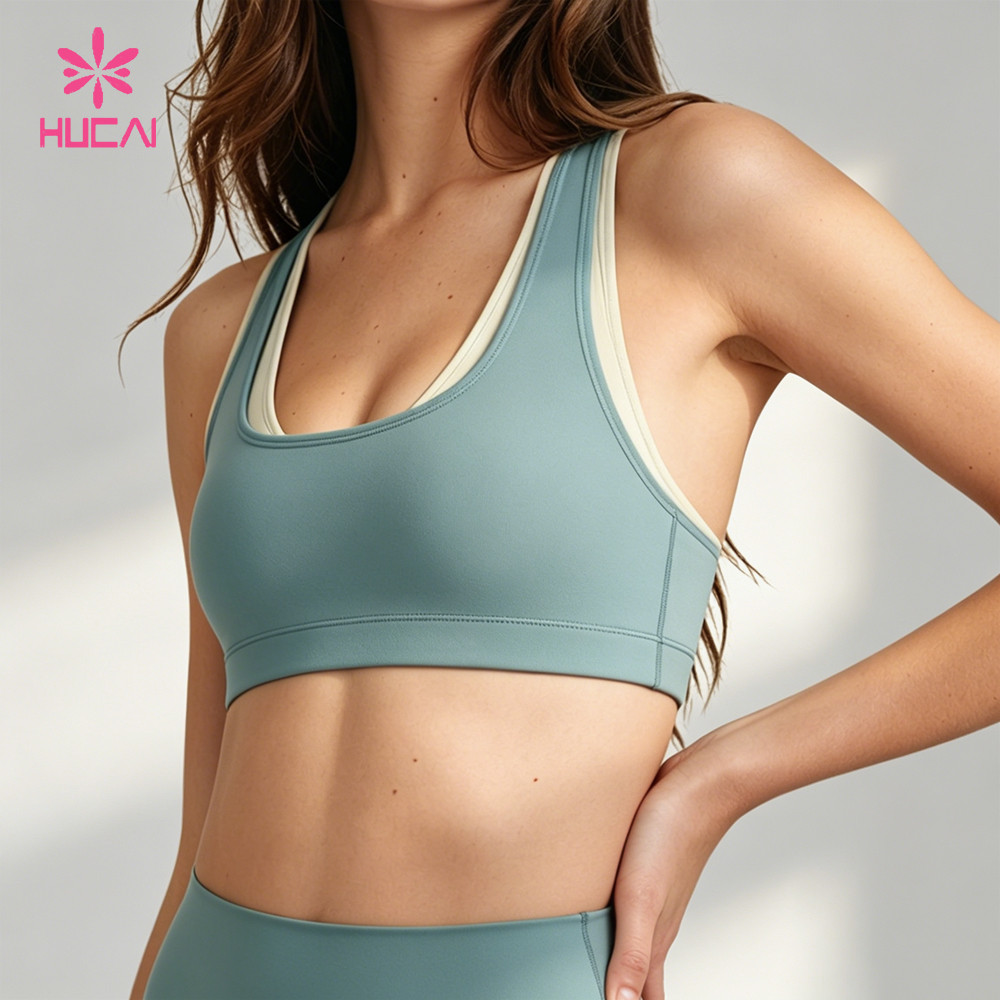
A base block is the pattern geometry that does not change when a component changes. In sports bras it usually covers the front body panel, neckline depth, armhole curve, the band line where the underband attaches, and the seam positions that carry shape. Once these are fixed and documented, a brand can vary components without reopening the whole pattern.
The value of fixing them is comparison. A fit revision is only readable if one variable moved. When neckline, band line and cup layer all change between two samples, the sample room cannot tell which change reduced the armhole gap or caused the band to lift at the back.
Documentation matters as much as the pattern itself. A workable block record includes the pattern card with seam allowances, a measurement chart with tolerances per point, grade rules per component, and a note on which fabric direction the block was developed against. HUCAI Sportswear keeps these records per block so a component change can be traced back to the sample it was approved on.
Some components look structural but behave as modules. Underband depth, cup layer, strap width, strap attachment point and closure type can move within the fixed geometry, provided the attachment points were planned with enough allowance. The mistake is discovering at sample stage that a wider strap needs a different armhole, or that a hook closure needs a back panel extension the block never had.
The development sequence that avoids this is straightforward: fix the block, list the components, then decide which components are allowed to vary by market. The sports bra development process sets that order before any pattern is cut.
Underband: The Module That Carries Most of the Fit Load
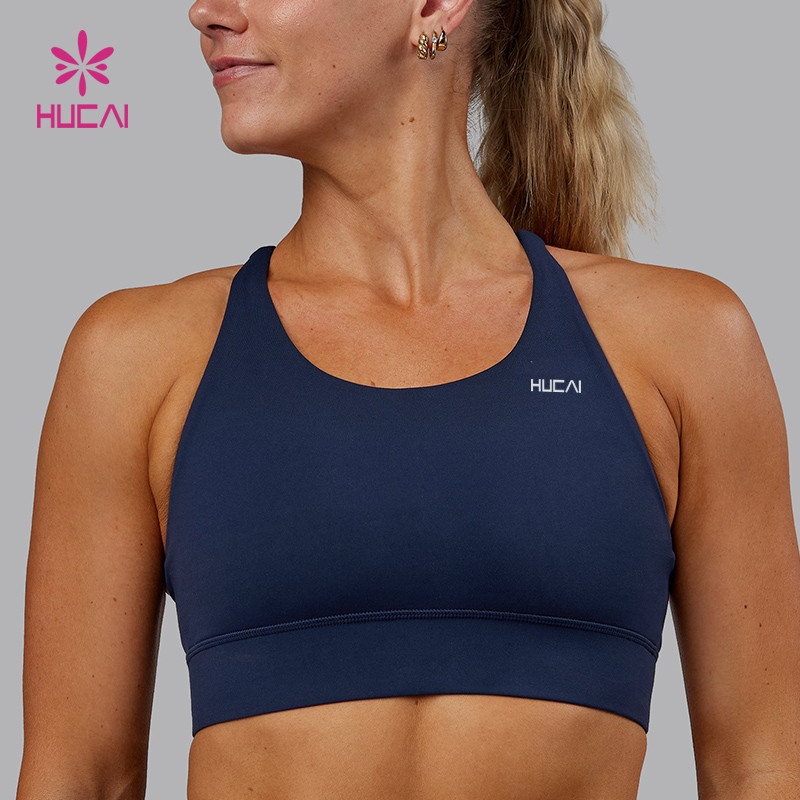
Most bust-fit complaints that reach a sample room are band complaints wearing a cup costume. A band that rides up at the back is usually too loose for the cup volume it is holding. A band that digs under the bust is usually tensioned up to compensate for a cup that does not contain the bust, so the elastic does the work the cup should do.
Treating the underband as a module means separating two variables that are often changed together: circumference and tension. Circumference follows the body measurement chart. Tension is a function of elastic type, elastic width, band depth and how the band is attached. A double-layer band with a firm elastic at moderate extension behaves differently from a single-layer band with a softer elastic stretched harder, even when both measure the same relaxed length.
Three band configurations cover most of the variance a growing brand needs. A standard band supports the core range. A deeper band extends band depth by a defined amount without moving the band line, adding stability for larger cup volumes. A double-layer band with an internal elastic adds structure where the cup layer works harder. None require a new body block, but all require the attachment line to be planned in advance.
Specification should be written in measurable terms. Band depth in millimetres, elastic width, elastic type, attachment method, and a tension reading at a stated extension. Constant-rate extension testing is the common language here; many laboratories reference ASTM D4964 for elastic tension and elongation, and the same method gives a brand a comparable number between two suppliers.
One caution belongs in every brief. A band that is tightened to fix cup containment will pass a static fit check and fail after twenty minutes of movement, because the elastic relaxes and the cup gap returns. The underband and the cup layer have to be resolved as a pair. The fabric and trim selection stage is where elastic and shell behaviour should be reviewed together rather than in separate conversations.
Cup and Lining Layers: The Part Buyers Under-Specify
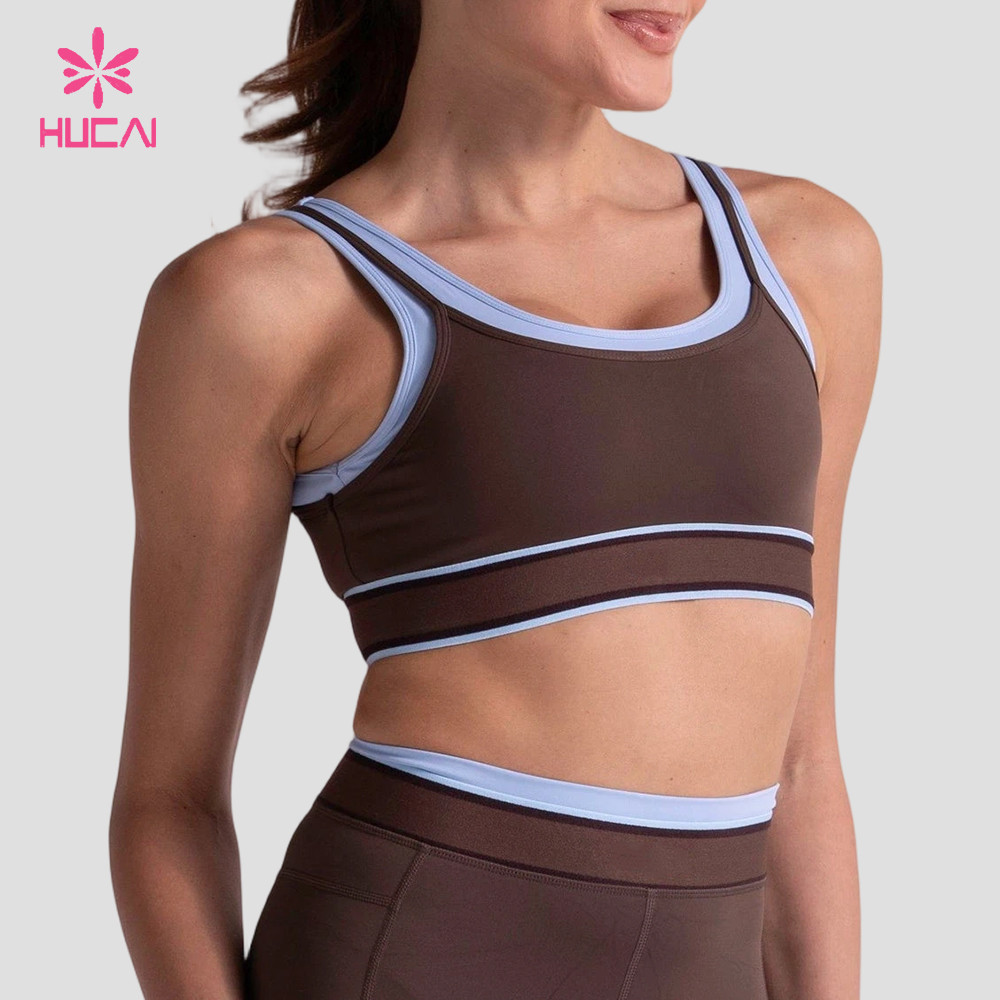
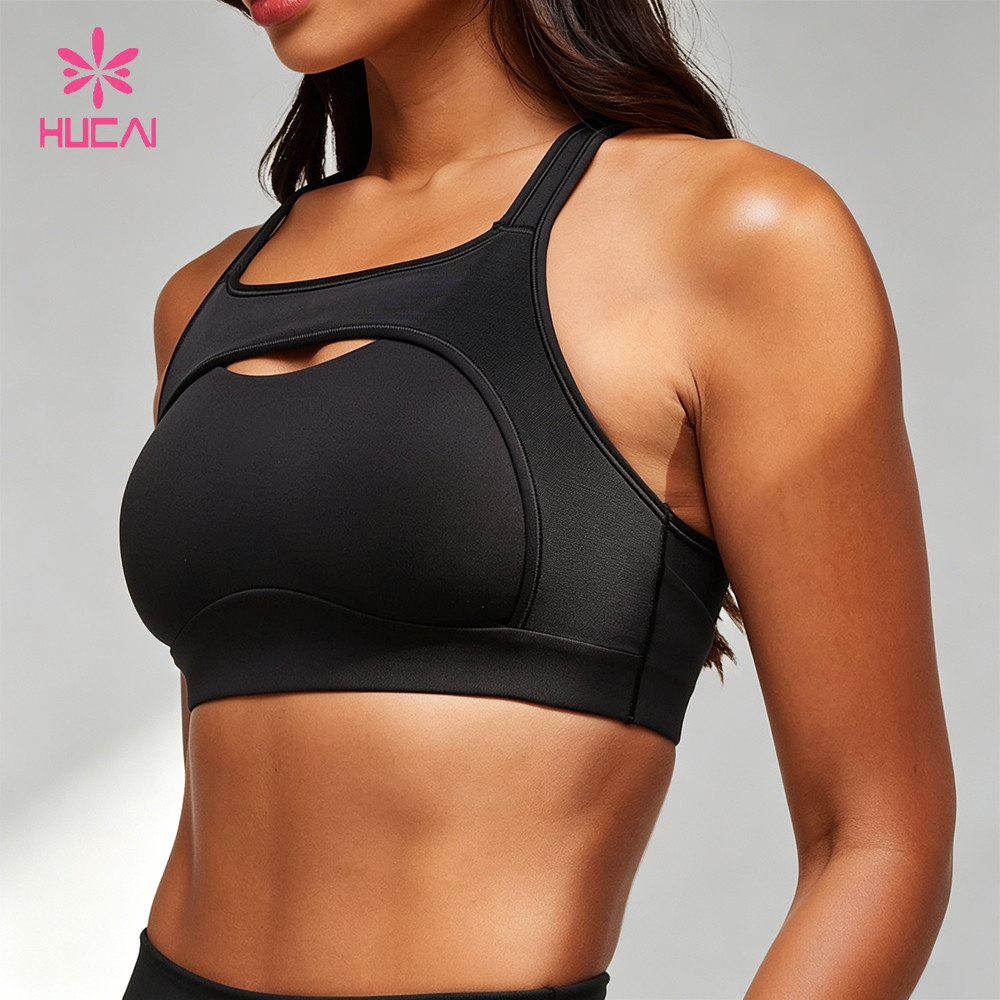
Cup structure is where a modular bra plan is won or lost, and it is usually the least documented part of a brief. Four directions account for most developments: a fixed moulded cup, a removable pad in a pocketed layer, a double-layer shell without a moulded cup, and an inner sling or support panel behind the front panel. Each changes the fit behaviour across the size range in a different way.
A fixed moulded cup gives the most consistent shape, but it locks cup volume into the mould; covering several bust needs with one mould means grading the cup and accepting compromises at the extremes. A removable pad is more forgiving, but the pocket opening, pad thickness and pad retention become specification points, and a pad that shifts during wear reads as a fit failure.
A double-layer shell is the most flexible option for a modular range, because shape comes from seam geometry rather than a mould. It puts more demand on fabric and seam execution: stretch and recovery, opacity and seam behaviour under load all become visible in the fit. An inner sling adds containment without changing the outer silhouette, which makes it the cheapest way to extend a range upward without a new body block.
Lining decisions should be written against the support target rather than described as a feature: one layer or two at the front panel, bonded or stitched, where the cup seam sits, and how the lining should behave after washing. Those four answers determine whether one block can serve the small and large ends of a band range without the cup collapsing at one end and gapping at the other.
HUCAI Sportswear reviews cup and lining options against the intended support target and the band range before sampling, because the same cup decision that works for a studio bra will fail in a training bra built on the same block. The custom sports bra manufacturing overview shows how those construction choices are grouped by development direction.
Straps, Back and Closures: Adjustability Without a New Pattern
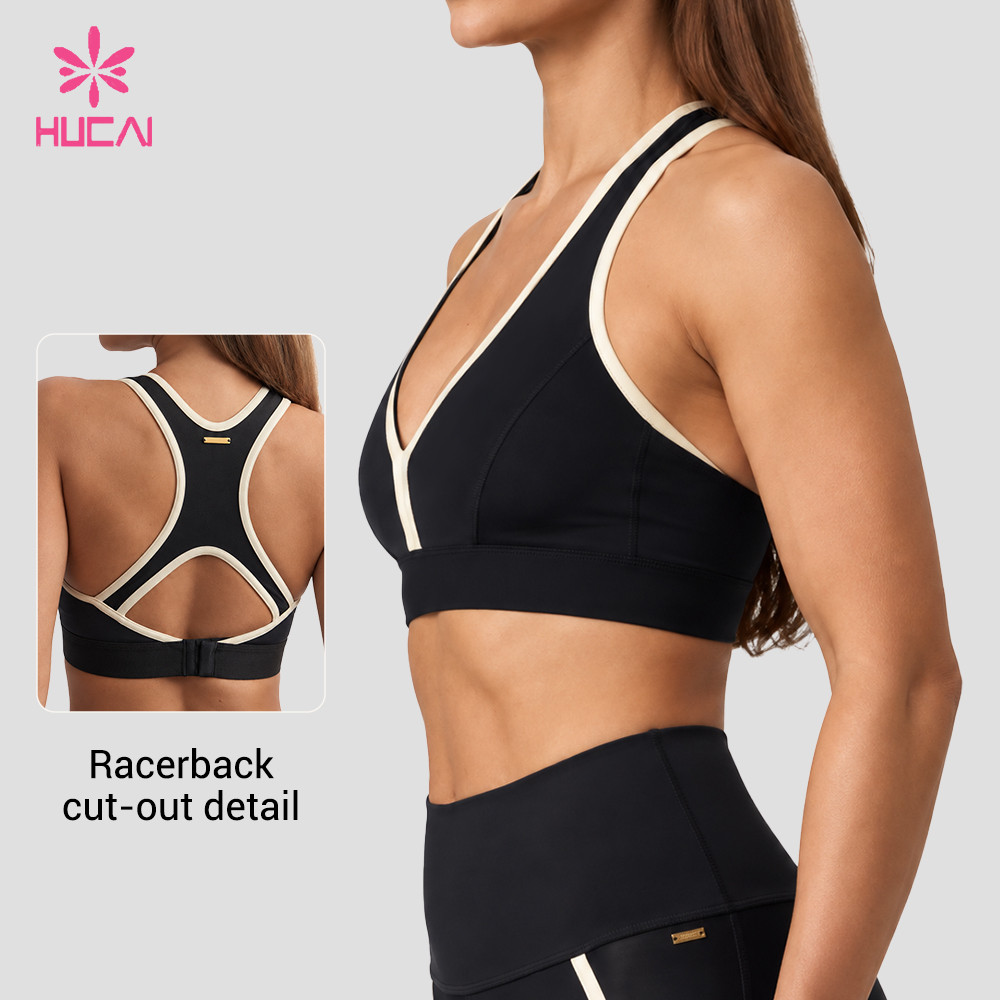
Adjustability is often the cheapest answer to a bust-fit request, and it is frequently overlooked because it lives in trims rather than in the pattern. A strap that can be lengthened, a hook that allows two band positions, or a front zip that opens the whole front changes the fit window of one garment without adding a second block.
Strap width and attachment are the first variables. A wider strap spreads load, but it needs enough allowance at the armhole and a length that still clears the shoulder when the band sits lower. A cross-back distributes pressure differently from a racerback, and a front-adjusting strap behaves differently from a back-adjusting one, because the adjuster position changes where load concentrates.
Closures introduce their own risk list. A hook-and-eye needs a back panel extension, a stabilised edge and a hardware test for cycle life. A front zip needs a zip guard, a puller that sits flat against the body and a stitch plan that keeps the tape from rolling. Both add hard components to a garment that otherwise flexes, so the stress moves to the surrounding seam and to the fabric immediately next to the hardware.
The commercial argument for adjustability is simple. One style with a two-position hook covers a wider band range than one fixed band, and it does so without a second grade set. What it does require is a hardware specification and a trim consistency check, which belongs in the OEM specification review rather than in a separate design exercise.
The Spec Matrix and the Sample Plan
The practical tool is a spec matrix: band size on one axis, bust-need level on the other, and a decision in each cell. The decision is not whether to develop every combination, but which combinations the collection will cover, which are served by an adjustable component, and which are excluded on purpose.
| Band range | Bust-need level | Coverage decision |
|---|---|---|
| Core band range | Standard cup volume | Base block, standard band |
| Core band range | Larger cup volume | Same block, deeper band plus sling or double-layer cup |
| Extended band range | Standard cup volume | Same block, extended grade with hook closure |
| Extended band range | Larger cup volume | Review case by case; may need a dedicated block |
Writing the matrix before sampling prevents two common failures. The first is a sample set that tests only the middle of the range, which passes easily and proves nothing. The second is a sample set that tests the extremes without a baseline, which produces feedback nobody can act on because there is no reference garment.
A workable sample plan uses three garments per block: the base size, one size at the top of the planned band range, and one with the most demanding component combination. Fit review then follows the same sequence every time: static band fit, movement check for band displacement, strap pressure, coverage at neckline and armhole, then a repeat check after the elastic has had time to relax.
Bulk planning follows the same logic. The approved sample defines the standard, grade rules stay locked, and trim is checked against the approved hardware rather than a similar-looking part. Sample development usually takes about 10-15 days depending on style, fabric, trim and revision requirements, and bulk production often takes about 25-30 days after pre-production details are approved. The sample development policy sets out how those rounds are scheduled and reviewed.
Decision Check: Is One Block Enough for Your Bust Range?
Before requesting samples, confirm the following:
- Support class is unchanged: the new bust need sits inside the same activity and support target as the existing style.
- Base block is documented: neckline, armhole, band line and seam positions are recorded with tolerances, not held in a pattern maker's memory.
- Modules are named: underband, cup layer, strap and closure are each assigned a fixed or variable status.
- Coverage cells are decided: the spec matrix marks which band and cup combinations are developed, adjusted or excluded.
- Fit review is sequenced: the same measurement and movement checks will be used on every sample in the round.
If three or more criteria are confirmed, the direction is ready for a structured sample request. If fewer than three are resolved, the gap is usually documentation rather than capability, and closing it before sampling avoids a revision round. A practical preparation list is set out in this guide on what to prepare before requesting a custom sports bra sample.
Working from reference images rather than a tech pack? HUCAI Sportswear can translate bra references into a component brief covering block geometry, band configuration, cup layer, strap and closure, and the sample priorities for each cell of the matrix. Start with ODM development support and mark which components you expect to vary across the range.
Founder's Technical Insight: Jean Yuan's Development Note
When brands bring us a bra block they want to stretch across a wider bust range, the failure we see most often is not in the cup pattern. It is in the grade rule that pushes the whole pattern outward at the same rate.
A sports bra has two grading systems running at once. Band circumference grows in small, fairly linear steps. Cup volume does not. When one rule scales the front panel, cup depth and band length together, the ratio between cup volume and band length drifts as sizes go up. At the top of the range the cup is too shallow for the volume it holds while the band has grown faster than the body it wraps. On a hanger the garment looks correct; on a body the band lifts at the back and the neckline gaps at the armhole, and the team concludes the block is wrong when the grade rule is.
The fix is to separate the two systems. Band grading follows the body measurement chart. Cup volume grading follows its own rule, applied to cup depth, cup width and the position of the cup seam, and it is verified on a fit model at the top of the range before the middle sizes are approved. In the HUCAI Sportswear sample room we check the extreme size first for this reason: if the grade rule is wrong, the extreme shows it and the middle hides it.
The second issue is shrinkage. When the shell and cup lining are different materials, they rarely shrink at the same rate after the first wash. A cup that is flat at sample approval can pucker along the seam after laundering, and the brand reads that as a workmanship defect. We ask for shrinkage behaviour on both before cutting; where the gap is material we change the lining direction or adjust the seam allowance so the finished cup has somewhere to move.
Before approving bulk for a multi-size block, our checklist is short: the grade rule is split into band and cup systems; the extreme size has been fitted on a body, not only measured flat; shell and lining shrinkage has been checked on the same wash protocol; band tension is read at the top of the range, not only at the base size; and trim is tied to approved hardware rather than a similar part. Four of those five cost nothing but discipline, and they remove the revision round that most often delays a bra launch.
FAQ
Can one sports bra pattern really cover several bust needs?
Yes, within limits. One base block can cover several bust needs when the neckline, armhole and band line stay fixed and the underband, cup layer, strap and closure are treated as modules. The limit is set by support class: once the activity or support target changes, the internal architecture usually has to change with it, and a second block becomes the more honest answer.
How many samples are needed to validate a multi-size bra block?
Three garments per block is a workable minimum: the base size, one size at the top of the planned band range, and one garment with the most demanding component combination. Reviewing the extreme size first exposes grade-rule errors that the middle sizes hide. A larger sample set is useful only when each extra garment tests a different cell of the spec matrix.
When is a separate full-bust collection justified?
A separate collection is justified when the support target or activity class changes, when the price architecture requires a different fabric and trim tier, or when a retail partner needs its own size system. It is rarely justified by fit feedback alone, because band tension, cup containment and strap pressure can usually be corrected inside the existing block.
Does adding a second cup structure to one style change the MOQ?
It can. The current public MOQ starts from 200 pcs per style, and final planning depends on colour, size range, fabric, trims, logo and the number of component variants. A second cup structure on the same block is a variant rather than a new style in pattern terms, but it still consumes its own cutting and bundling time, so it should be discussed as part of the quantity plan rather than assumed to be free.
How long does sports bra sample development take?
Sample development usually takes about 10-15 days, depending on style, fabric, trim, logo, revision requirements and confirmed details. Bulk production often takes about 25-30 days after pre-production details and approvals are confirmed. Both figures move with the number of components being tested in a round, which is why the spec matrix is agreed before sampling starts.
Which measurements matter most when grading a bra across sizes?
Band circumference and band depth, cup depth, cup width, the position of the cup seam, neckline width, armhole depth and strap length are the points that change fit behaviour most. The critical discipline is grading band and cup separately, then verifying the top of the range on a body so that the ratio between cup volume and band length stays realistic.
Should we use fixed cups or removable pads across the range?
Fixed moulded cups give the most consistent shape and the fewest piece-to-piece differences, but they lock cup volume into the mould. Removable pads are more forgiving across a size range and simplify coverage, yet the pocket opening, pad thickness and pad retention all become specification points. Some brands combine both, using a fixed cup in the core range and a padded double layer at the edges.
What should we send with the first bra development request?
Send the silhouette direction, reference images or a tech pack, the intended band and size range, the support target, the cup direction you are considering, and the trims you want to test. Also state which components you expect to vary, because that single answer decides whether the project is a component extension of an existing block or a new development.
Final Takeaway
The decision is not whether your brand can serve more bust needs, but whether you serve them with a second block or with modules inside one. Fixing the base geometry, naming the four components, writing a spec matrix and reviewing the extreme size first answers most fit requests without doubling pattern work, sampling and MOQ commitments. A second collection remains right when the support class or price architecture genuinely changes, and that is a decision worth making deliberately.
Ready to plan the range? Send the band range, support target and the components you expect to vary, and HUCAI Sportswear will map them against one block before sampling. With a tech pack, start with sports bra manufacturing options; with reference images only, the component brief can be built from the references.
About HUCAI Sportswear
- Founded in 1998, manufacturing women's activewear and sportswear in Humen, Dongguan, China
- OEM and ODM development support for sports bras, leggings, shorts, tops and matching sets
- Structured sample development with sample-to-bulk consistency control and approved-sample references
- Quality control aligned with AQL 2.5 inspection principles across in-process and final checkpoints
Current certification information can be reviewed during supplier evaluation based on the project and documentation requirements.