Leggings by Use Scenario: Yoga, Training, Running, Everyday and Matching Set Bottoms
- Share
- publisher
- HUCAI Activewear
- Issue Time
- Jun 24,2026
Summary
Learn how private label activewear brands should plan leggings by use scenario, including yoga, training, running, everyday, sculpting, and matching set bottoms before sampling and bulk production.
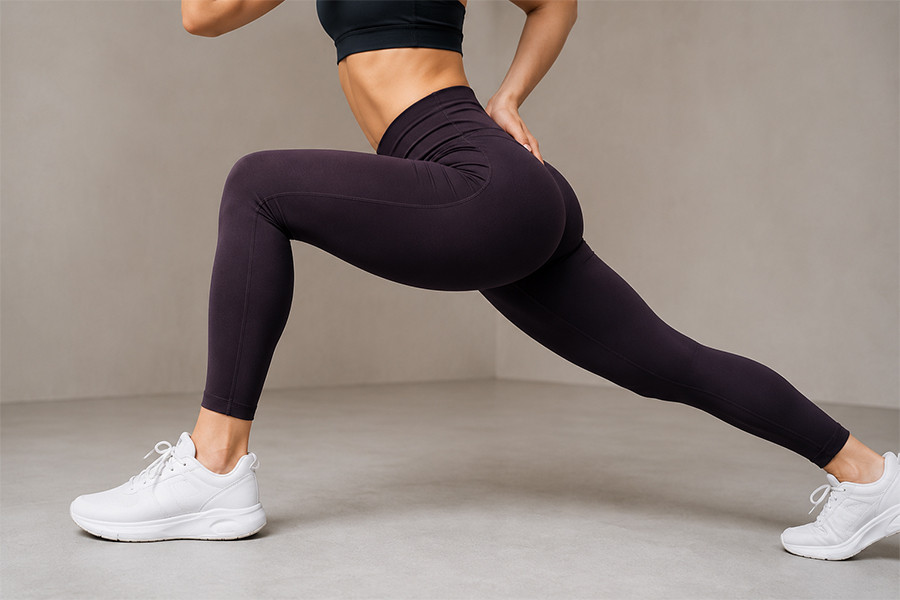
For private label leggings, custom women's activewear, and OEM / ODM development, one leggings style should not be forced to serve every use scenario. Yoga leggings, training leggings, running leggings, everyday leggings, sculpting leggings, and matching set bottoms need different fabric behavior, waistband logic, compression level, opacity review, functional details, and sample approval standards. At hucai sportswear, leggings development starts by defining the product role first, so the fabric, fit, structure, and bulk production plan can support the right use case.
Quick Answer
A strong leggings line should be planned by use scenario first. Yoga, training, running, everyday, sculpting, and matching-set leggings should not all use the same fabric, waistband, compression, pocket, and opacity logic. Before sampling, brands should define where the leggings will be worn, how much support they need, what comfort level is expected, and how the product will fit into the wider collection.
Table of Contents
- Why leggings should be planned by use scenario
- Yoga and studio leggings: softness and movement comfort
- Training leggings: support, recovery and opacity
- Running leggings: waistband security, pocket stability and sweat comfort
- Everyday leggings: comfort, clean look and wearability
- Matching set bottoms: fabric and color coordination
- How brands should choose the first 2-3 leggings types
- Decision check before sampling
- FAQ
- Next steps
Why Leggings Should Be Planned by Use Scenario
```Many activewear brands start leggings development by choosing a silhouette: high waist, 7/8 length, flare, no-front-seam, pocket, sculpting, or soft-touch. These style decisions matter, but they should not come before the product role.
The product role answers a more important question: what should this legging actually do for the customer and for the brand's collection?
A yoga legging needs comfort, flexibility, soft handfeel, and easy movement. A training legging needs stronger recovery, support, and stable opacity. A running legging may need waistband security, sweat comfort, and pocket stability. An everyday legging needs clean appearance and long-wear comfort. A matching set bottom needs fabric and color coordination with the sports bra or top.
That is why custom leggings development should be planned by use scenario before fabric and construction are finalized.
The intended use controls fabric, fit, waistband, compression, opacity, pocket, and sample review.
Yoga, training, running, everyday, and matching-set leggings should not be approved by one single fit standard.
Use scenario helps brands choose the first 2-3 leggings styles instead of developing too many similar products.
For private label brands, this approach reduces wasted sampling. Instead of developing five leggings that compete with each other, a brand can build a clearer line: one soft studio legging, one training legging, and one matching-set bottom, for example.
```Yoga and Studio Leggings: Softness and Movement Comfort
```Yoga and studio leggings usually need a softer and more flexible development direction. The wearer may be stretching, sitting, bending, or moving through controlled poses. Comfort, skin feel, gusset placement, seam comfort, and waistband pressure are often more important than strong compression.
For yoga leggings, the fabric should support movement without feeling restrictive. A soft handfeel can be important, but softness alone is not enough. The fabric still needs recovery, opacity, and enough structure to avoid becoming loose after repeated wear.
Key Development Focus
- Soft handfeel and smooth skin contact
- Flexible stretch for studio movement
- Comfortable waistband pressure
- Gusset and seam placement for mobility
- Opacity under bend and stretch
- Recovery after repeated movement
Common Sample Risk
The most common risk is that the legging feels soft at first but becomes loose after wear. Another risk is that the waistband feels comfortable when standing but shifts during bending or floor movement.
For yoga and studio leggings, sample review should include stretching, bending, sitting, and repeated movement, not only mirror fitting.
```Training Leggings: Support, Recovery and Opacity
```Training leggings usually need stronger support than yoga leggings. The wearer may be lifting, squatting, jumping, stretching, or doing hybrid workouts. This means fabric recovery, compression, opacity, waistband hold, and size grading become more important.
A training legging should feel stable during movement without becoming too restrictive. The balance is important. Too little support can make the garment feel loose. Too much compression can make the product uncomfortable or difficult to wear.
| Training Requirement | Development Focus | Sample Review Point |
|---|---|---|
| Squat coverage | Opacity, fabric density, color, and stretch behavior | Check coverage under stretch, not only on a flat sample. |
| Stable compression | Fabric power, pattern tension, and size grading | Review whether compression feels supportive without being too tight. |
| Waistband hold | Waistband height, pressure, rise balance, and fabric recovery | Test during squat, bend, and higher-movement positions. |
| Shape retention | Recovery after repeated stretch and wear | Check whether knees, hips, and waistband recover after movement. |
Training leggings are often where fabric choice becomes more technical. Brands may need to review medium compression, stronger recovery, higher opacity, and better waistband structure. For fabric-side planning, a sportswear fabric selection review can help clarify whether the product needs soft comfort, support, or sculpting performance.
```Running Leggings: Waistband Security, Pocket Stability and Sweat Comfort
```Running leggings have different development needs from yoga or basic training leggings. The garment must stay stable during repeated movement. Waistband security, pocket placement, sweat comfort, inseam choice, and fabric recovery all matter.
A running legging can look clean in a product photo but still fail if the pocket bounces, the waistband shifts, the fabric feels too warm, or the seams create discomfort during distance movement.
Key Development Focus
- Secure waistband that stays in place during repeated motion
- Side pocket, back pocket, or hidden pocket stability
- Breathable or quick-dry fabric direction
- Comfortable inseam and seam placement
- Reflective trim if the project requires it
- Stretch recovery after repeated leg movement
| Running Detail | Why It Matters | What to Review |
|---|---|---|
| Phone pocket | A clean pocket can still bounce during running. | Pocket depth, opening angle, fabric recovery, and placement. |
| Waistband | Repeated motion can expose slipping or rolling. | Waistband height, pressure, drawcord option, and rise balance. |
| Fabric comfort | Running creates heat and sweat. | Moisture behavior, breathability, surface feel, and drying direction. |
| Seam placement | Repeated movement can create friction. | Flat seam, gusset, inner thigh comfort, and hem position. |
Running leggings do not need to become overly complicated, but the brand should decide early whether the running direction is light-performance, hybrid training, or more casual active living. Each one needs a slightly different development balance.
```Everyday Leggings: Comfort, Clean Look and Wearability
```Everyday leggings are often underestimated because they appear simple. But simplicity does not mean fewer development decisions. In everyday leggings, the product must feel comfortable, look clean, and remain wearable across different daily situations.
The target customer may wear the leggings for errands, travel, light studio movement, home office, walking, or as part of an athleisure outfit. This means handfeel, color, opacity, waistband comfort, low-bulk seams, and visual smoothness become important.
Key Development Focus
- Comfortable handfeel for long wear
- Clean front appearance
- Moderate support without heavy compression
- Stable opacity for daily movement
- Low-bulk seams and comfortable waistband
- Color direction that supports wardrobe use
The main risk is that everyday leggings become too basic. If the fabric feels ordinary, the waistband is not comfortable, or the color story is weak, the product may not support a premium private label positioning.
On the other hand, everyday leggings should not be over-engineered. Too much compression, too many seams, or overly technical details may make the product less suitable for daily wear.
```Matching Set Bottoms: Fabric and Color Coordination
```When leggings are developed as part of a matching set, they need to be reviewed as both a bottom garment and a collection component. The leggings should coordinate with the sports bra, tank, short sleeve top, or light layer in fabric, color, support level, and brand presentation.
For matching set bottoms, the biggest issue is not only fit. It is coordination. If the sports bra uses a different fabric handfeel, the color does not match, or the support level feels inconsistent, the set may look connected in photos but feel disconnected when worn.
Brands developing leggings as part of a set can review custom matching activewear set development to plan bras, leggings, shorts, tops, and light layers together.
| Matching Set Requirement | Development Focus | Sample Review Point |
|---|---|---|
| Color consistency | Lab dip, fabric batch, top-bottom color match | Review color under different lighting and fabric stretch. |
| Fabric consistency | Same fabric or coordinated fabric family | Check whether bra and leggings feel balanced when worn together. |
| Support balance | Sports bra support and leggings compression should not conflict. | Review set comfort during movement, not only visual matching. |
| Branding details | Logo placement, label, trim, and packaging coordination | Confirm private label details across the full set. |
If the matching set includes a sports bra, brands may also need to review custom sports bra development so support level, strap structure, underband, and fabric direction are aligned with the leggings.
```How Brands Should Choose the First 2-3 Leggings Types
```One common mistake is trying to develop too many leggings styles in the first capsule. A growing brand may want yoga leggings, training leggings, running leggings, flare leggings, pocket leggings, sculpting leggings, and matching set bottoms at the same time. This often creates sampling pressure, fabric confusion, and SKU overlap.
A better path is to choose 2-3 clear product roles first. This helps the brand test the market, control sampling cost, and build a more focused leggings line.
| Brand Goal | Recommended First Leggings Mix | Why It Works |
|---|---|---|
| Studio / yoga-led brand | Soft yoga legging + everyday legging + matching set bottom | Builds comfort, daily wear, and set coordination without overcomplication. |
| Gym / training-led brand | Training legging + sculpting legging + pocket legging | Focuses on support, recovery, opacity, and functional performance. |
| Active living brand | Everyday legging + running-inspired legging + light matching set bottom | Balances movement, lifestyle, and capsule styling. |
| Premium capsule brand | N66-led legging + clean matching set bottom + soft studio legging | Creates a stronger fabric story while keeping product roles clear. |
For brands starting from reference images instead of finished tech packs, ODM activewear development support may be useful. For brands with confirmed specifications, measurements, and fabric details, OEM service may be more suitable.
```Decision Check: Which Leggings Scenario Should You Develop First?
Before sampling, review these questions:
- Is this legging mainly for yoga, training, running, everyday wear, sculpting, or a matching set?
- What level of compression should the garment provide?
- Should the fabric feel soft, supportive, cool, brushed, compact, or smooth?
- How important is opacity under squat or stretch?
- Does the waistband need soft comfort or strong hold?
- Will the style need pockets, reflective trim, drawcord, or other functional details?
- Will the leggings be sold alone or as part of a sports bra set?
- How many leggings roles can your first MOQ and sample budget realistically support?
- Do you have a tech pack, or do you need help turning product direction into a sample brief?
- How will the approved sample standard be controlled before bulk production?
Manufacturer Insight: Use Scenario Reduces Repeated Sample Changes
Many leggings sample revisions happen because the product role was not clear at the beginning. A brand may ask for a softer handfeel, then stronger support, then better opacity, then a cleaner waistband. Each request may be reasonable, but together they can pull the product in different directions.
At hucai sportswear, leggings development is reviewed through product role first. This helps the brand and manufacturer decide whether the sample should prioritize yoga comfort, training support, running stability, everyday wearability, sculpting effect, or matching set coordination before fabric and pattern details are locked.
Planning a Leggings Line by Use Scenario?
If you are deciding whether your first leggings capsule should focus on yoga, training, running, everyday wear, sculpting, or matching set bottoms, share your target customer, reference images, fabric direction, compression expectation, color plan, and quantity range with hucai sportswear. We can help review whether your project is closer to OEM execution or ODM development support.
Who This Article Is For
```This guide is written for brands that want to develop leggings as a structured product line, not as several similar styles with different colors.
- Growing activewear brands: best fit if you are expanding your leggings category and need clearer product roles.
- Startup brands: useful if you are choosing the first 2-3 leggings styles for a private label capsule.
- Private label buyers: useful if you need to prepare use scenario, fabric, compression, and MOQ information before inquiry.
- Established brands: useful if you have tech packs but want to review whether each style has a clear use-case position.
This article is less suitable for buyers who only want ready-stock leggings, one-off trend copying, or the lowest possible style without product development planning.
```Trust Notes for Buyers
```hucai sportswear helps brands review leggings by product role, including yoga, training, running, everyday, sculpting, and matching-set directions.
Fabric direction, waistband logic, compression, opacity, pocket, and sample standards should match the real use scenario.
Brands can start with tech packs, reference images, or product direction, then decide whether OEM or ODM is more suitable.
FAQ: Leggings by Use Scenario
```Why should leggings be planned by use scenario?
Leggings should be planned by use scenario because yoga, training, running, everyday, sculpting, and matching-set styles need different fabric behavior, waistband support, compression level, opacity review, and sample standards. Without a clear use scenario, the sample may look correct but fail during real movement or wear.
What is the main difference between yoga leggings and training leggings?
Yoga leggings usually prioritize softness, flexibility, seam comfort, and movement ease. Training leggings usually need stronger recovery, support, compression, and opacity under squat or high movement. The fabric, waistband, and sample review standards should be different for each product role.
What should brands review for running leggings?
Running leggings should be reviewed for waistband security, pocket stability, sweat comfort, seam placement, stretch recovery, and movement stability. A running legging may need functional details such as side pockets, hidden pockets, drawcord, reflective trim, or quick-dry fabric direction depending on the project.
Are everyday leggings easier to develop?
Not necessarily. Everyday leggings may look simple, but they still need comfortable handfeel, clean appearance, stable opacity, low-bulk seams, waistband comfort, and color direction. The challenge is to make the product feel easy to wear without making it look too basic or over-engineered.
How should brands choose the first leggings styles for a capsule?
Brands should choose the first leggings styles based on product role and target customer. A focused capsule may start with one studio legging, one training legging, and one matching set bottom. This is often more practical than developing many similar leggings without clear differences.
Can one fabric be used for several leggings scenarios?
Sometimes one fabric family can support several leggings scenarios, but the structure and review standards may still need adjustment. For example, the same fabric direction may need different waistband pressure, compression target, pocket design, or opacity review depending on whether the style is for yoga, training, or matching sets.
What should be reviewed for leggings as matching set bottoms?
Matching set bottoms should be reviewed for color consistency, fabric coordination, support balance, logo placement, and how they work with the sports bra, tank top, or light layer. The leggings should not be treated as an isolated bottom if they are part of a coordinated activewear set.
Should use scenario be confirmed before MOQ discussion?
Yes. Use scenario should be confirmed before MOQ and sampling decisions because it affects fabric, color, size range, construction, branding, and sample complexity. On hcsportswear.com, the current public-facing MOQ baseline is usually from 100 pcs / style, but final planning still depends on the confirmed project details.
Final Takeaway
```A strong leggings line should not be built by changing only colors or waistbands across similar styles. It should be built around clear use scenarios. Yoga, training, running, everyday, sculpting, and matching-set leggings each require different development priorities.
For private label activewear brands, use-scenario planning helps reduce sample confusion, control SKU overlap, and make the first development round more focused. It also helps the manufacturer understand which fabric, waistband, compression, opacity, and construction details should be reviewed first.
When the product role is clear, the leggings project becomes easier to sample, easier to evaluate, and easier to move toward bulk production with a clearer approved standard.
```Next Steps for Your Leggings Development Plan
If you have tech packs: send your specifications, measurements, fabric details, waistband direction, and use scenario for OEM review.
If you have reference images: share your target customer, intended activity, fabric feel, compression expectation, color plan, and quantity range for ODM development review.
If you are still choosing your first leggings capsule: start by selecting 2-3 product roles instead of developing too many similar leggings at once.
Contact hucai sportswear to discuss your leggings development plan