OEM vs ODM Sportswear : Who Controls Product Authority?
- Share
- publisher
- ran
- Issue Time
- Mar 4,2026
Summary
In premium women’s activewear, structural ownership—not trend speed—builds long-term brand equity and manufacturing resilience.
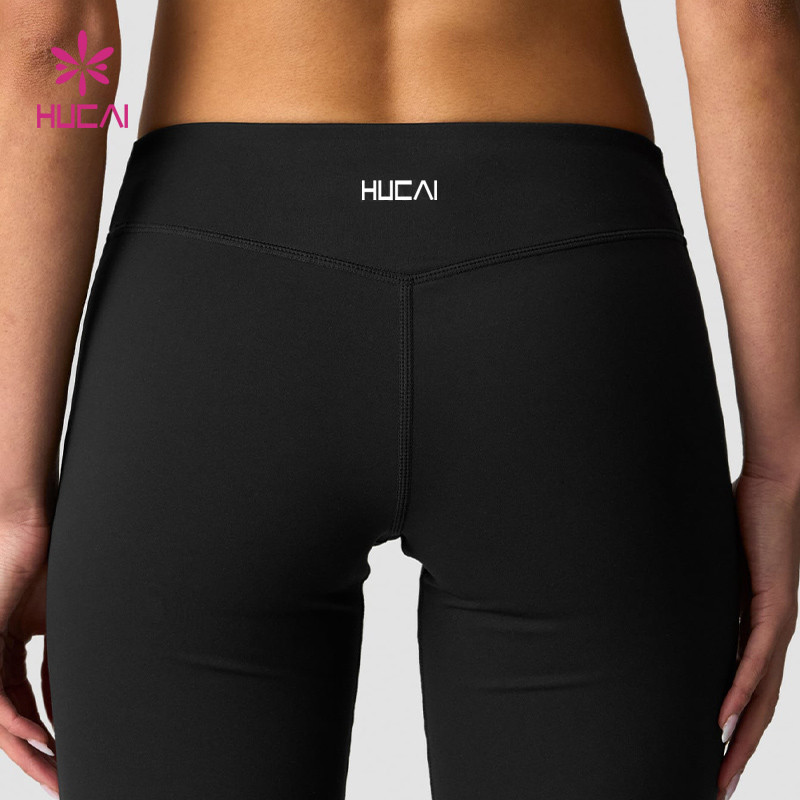
In women's sportswear manufacturing, the choice between OEM and ODM is more than a development preference—it defines who ultimately controls product structure and long-term brand authority. At HUCAI , where custom women’s activewear production is supported by digital tracking systems and disciplined quality standards, we see clearly how structural ownership influences repeatability, consistency, and premium positioning.
Structural Identity Defines Premium Positioning
In women's performance sportswear, visual differentiation is no longer enough. Premium positioning is increasingly built on repeatable structure—how a legging holds compression after months of wear, how a sports bra maintains support across washes, how a layering top preserves silhouette without distortion.
When fit consistency becomes recognizable, it turns into brand memory. That memory becomes an asset. Product authority means the brand controls its fit blocks, compression mapping, and material behavior rather than adapting pre-developed templates. In the premium segment, structural reliability communicates more value than seasonal novelty.
Shared Development Dilutes Long-Term Differentiation
ODM models accelerate entry but naturally limit structural ownership. In women's collections —where proportion, stretch response, and grading precision are critical—shared development frameworks can gradually blur identity. Subtle differences in waistband construction or fabric recovery may not be visible in sampling, yet over multiple restocks they influence how customers perceive consistency.
For brands positioned in higher price tiers, this drift carries strategic risk. Authority depends on control over pattern engineering, fabric specification, and size grading logic. Without that control, differentiation relies more on marketing than on product substance.
Manufacturing as Brand Infrastructure
For women's performance lines, OEM collaboration becomes infrastructure rather than execution. Infrastructure means documented recovery performance, stable fabric platforms across categories, and inspection standards aligned with premium expectations. It also means development processes that anticipate replenishment, not just launch.
At HUCAI , digital production tracking and disciplined quality systems are designed to protect structural alignment from sampling through bulk production. In premium women’s activewear, the real competitive advantage is not speed—it is the ability to reproduce structure without erosion.
Trends attract attention.
Structural ownership sustains equity.
How to contact us
➡️ Contact HUCAI today for your custom outerwear solution and connect with a team committed to premium quality and authenticity.