Scaling Premium Women’s Sportswear: Why Quality Consistency Defines Successful Leggings and Yoga Set Production
- Share
- publisher
- ran
- Issue Time
- Jan 19,2026
Summary
Why quality consistency matters when scaling leggings and yoga set production for premium brands
When Scaling Tests the Development System
For premium women’s sportswear brands, growth rarely slows because of demand. More often, it reveals whether existing development systems can support expansion without losing control. As leggings and yoga sets evolve from seasonal successes into long-term programs, consistency becomes a structural requirement rather than a secondary concern.
At this stage, development is no longer about refining individual styles. It becomes about maintaining stability across volumes, timelines, and collections while preserving the brand’s positioning.
Why Leggings and Yoga Sets Expose Inconsistency First
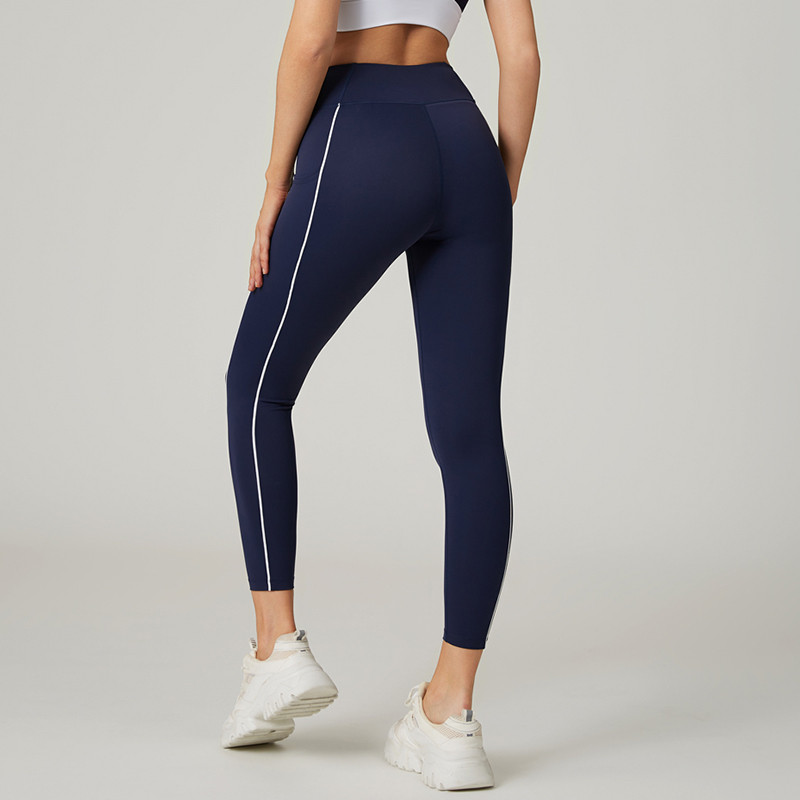
Leggings and yoga sets sit at the core of most women’s sportswear collections. They are repeated across seasons, extended into multiple colorways, and expected to deliver the same wearing experience over time.
Because these styles are worn close to the body, even subtle changes in fabric hand feel, recovery, or silhouette become noticeable once production scales. These issues rarely stem from design intent. They more often emerge when early development decisions are not aligned with long-term production realities.
At scale, inconsistency shifts from a quality issue to a brand risk.
When Cost Stops Being the Primary Driver
As collections grow, short-term cost savings begin to lose relevance. Delays, revisions, and corrective actions consume time and internal resources, often affecting multiple styles at once.
For premium brands, the greater cost is strategic. When leggings and yoga sets no longer feel cohesive across collections, brand expression weakens. At that point, lower unit prices provide little protection against erosion of customer trust and long-term value.
This is why consistency increasingly defines success as brands scale.
Consistency as a Development Discipline
Quality consistency is not achieved through inspection alone. It requires a development process designed for repetition.
When sample approval is treated as a scale-readiness checkpoint rather than a visual formality, potential risks are addressed before production expands. Fabric performance, silhouette stability, and construction decisions are evaluated with future volumes in mind. This allows bulk production to follow development smoothly instead of correcting it.
For core categories like leggings and yoga sets, this discipline becomes essential.
The OEM Partner’s Role at Scale
As brands grow, the role of an OEM partner extends beyond execution. What matters is whether development decisions are aligned with long-term production outcomes.
A development-focused partner understands that leggings and yoga sets are ongoing programs, not isolated styles. By prioritizing consistency across batches and seasons, such partnerships help brands maintain control as collections expand, reducing disruption and supporting clearer planning.
Scaling Without Diluting Brand Identity
Successful scaling in premium women’s sportswear is defined by control, not speed. Brands that preserve fit, feel, and visual consistency gain the confidence to grow deliberately rather than reactively.
When core categories remain stable, collections scale with clarity. Consistency becomes a strategic advantage that supports sustainable growth rather than a constraint.
A Development Partner for Brands Scaling with Intention
For brands navigating growth, scaling is not simply about increasing output. It is about protecting what makes the collection recognizable as volumes and seasons expand.
At Hucai, we work with premium women’s sportswear brands that are building long-term stability into core categories such as leggings and yoga sets. Our development approach focuses on consistency at scale, treating each approved sample as a reference for repeatability rather than a one-time result.
If your brand is evaluating how today’s development decisions will shape future collections, we invite you to explore how a development-focused manufacturing partnership can support more controlled, confident growth.