Sculptural Activewear Silhouettes: What Pattern and Fabric Decisions Come Before Sampling
- Share
- publisher
- HUCAI Sportswear
- Issue Time
- Sep 15,2026
Summary
A manufacturer-led guide to sculpted activewear development: how contour is created by pattern shaping, held by fabric recovery, expressed through panel and seam direction, and protected by grading review, with a pre-sampling decision checklist for brands preparing a private label sculpting set or custom contour leggings with HUCAI Sportswear.
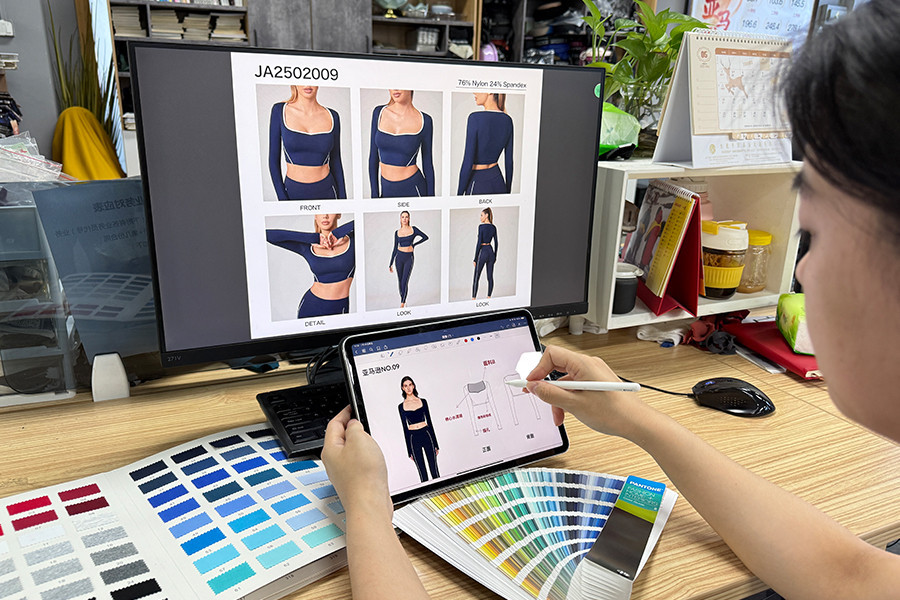
Sculpted activewear looks like a design decision. In production, it is a pattern and fabric decision. Brands often send a reference image with a visible contour line and expect the sample to look the same, but that line only holds its shape when pattern shaping, fabric recovery, panel direction and seam placement are defined together.
For a design-led growing brand developing a private label sculpting set, custom contour leggings or a sculpted sports bra, the gap usually appears at the first fitting. The line is present, but the garment body does not hold it. HUCAI Sportswear supports women's activewear brands with CAD work, pattern development, sample revision and grading review, so this article sets out what should be confirmed before a sculpted style reaches the sample room, and which decisions should not be left to the first sample.
Quick Answer
Sculpted or contour activewear is produced by pattern shaping, fabric recovery and controlled panel tension, not by adding decorative seam lines. Before sampling, a brand should confirm the visual line, what that line is meant to do, the stretch and recovery behaviour of the fabric, where seam stress will sit, and how the shape will grade from the smallest to the largest size. When those four decisions are made together, sample review becomes refinement. When they are separated, the first sample reopens the fit question instead of answering it.
Table of Contents
- Who This Article Is For
- What Sculptural Actually Means in Manufacturing
- Pattern Shaping: Where the Contour Comes From
- Fabric Recovery and Drape: The Other Half of the Shape
- Seam and Panel Direction: Making the Line Hold
- Movement Fit: Where Contour Is Actually Tested
- Sample Review and Grading Across Sizes
- Decision Check
- Manufacturer Insight
- FAQ
- Final Takeaway
Who This Article Is For
- Primary reader: design-led growing brands building a signature sculpted silhouette across leggings, sports bras or coordinated sets.
- Secondary reader: ODM buyers who already have reference styles and image direction but no defined pattern or fabric logic.
- Product stage: direction is chosen, reference images are collected, and the first sample brief is being prepared.
- Problem being solved: the contour reads well on a mood board or reference photo, but the development brief does not yet describe how the shape should be created or controlled.
- Who may not need this article: brands that only need an existing approved block repeated in new colours, with no change to shape or panel layout.
What you gain from this article: a clearer separation between the visual line and the engineering behind it, a list of decisions to settle before a sample is requested, and a review method for checking contour across sizes instead of on one sample only.
What Sculptural Actually Means in Manufacturing
In retail language, sculpted describes how a garment looks on a body. In development language, it describes a relationship between three things: the shape built into the pattern, the way the fabric behaves when stretched, and the direction the panels and seams travel across the body.
None of these can carry the design alone. A pattern can be shaped precisely and still look flat if the fabric has limited recovery. A fabric can have strong compression direction and still fail to create a contour if the panels run in the wrong direction. A seam line can be drawn exactly where the reference image shows it and still disappear in wear if it has no structural role.
This is why sculpted development should begin with a definition step rather than a sampling step. The useful question is not "can you make this shape?" but "which of pattern, fabric and construction is creating this shape, and in what proportion?" That answer decides the whole development plan.
A practical way to frame it is to sort every visible line into one of three groups: lines that change the shape of the garment, lines that control tension or stability, and lines that exist only for visual rhythm. The third group is legitimate, but it should be the smallest group on a sculpted style, because a purely decorative line that is not supported by pattern or fabric will not read consistently in wear.
Pattern Shaping: Where the Contour Comes From
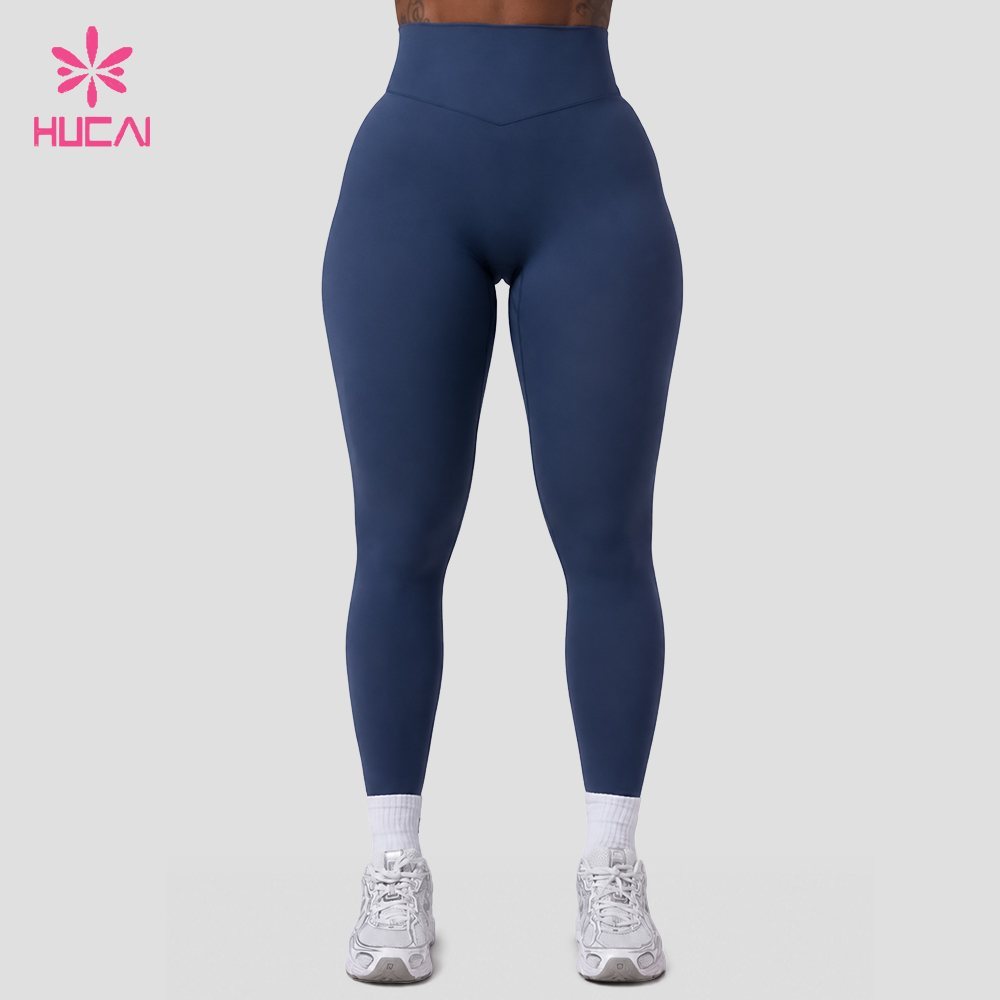
Contour is created by the shape of the pattern pieces, not by stitching on top of a standard block. If a brand wants a defined waist transition, a supported underband area or a specific hip-to-thigh line, that volume has to be removed from or added to the pattern itself.
Before pattern work starts, three pattern decisions should be settled with the technical team.
- Where the shape changes: identify the exact areas where the silhouette should shift, such as underband to ribcage, waist to hip, or knee to calf. A sculpted effect normally comes from two or three controlled areas, not from the whole garment being tighter.
- How much ease remains: ease is the difference between body measurement and garment measurement. Removing ease everywhere produces pressure; removing it selectively produces contour. The team should agree which zones keep comfort allowance and which zones are shaped.
- How the panels are divided: the number and position of pattern panels determines how many controlled lines the style can support. More panels can create a stronger line, but each additional seam adds a stress point and a place where tension must be balanced.
Pattern shaping also needs a reference standard. A brand that supplies a fit sample from an existing product, or a clear measurement chart with target stretch values, gives the pattern team a physical or numeric target. A brand that supplies only a photograph leaves the shape open to interpretation, which is one of the most common causes of revision rounds.
For projects moving from image direction into pattern development, an ODM development path usually starts by converting the reference into panel structure, measurement targets and fabric requirements before any sample is cut.
Fabric Recovery and Drape: The Other Half of the Shape
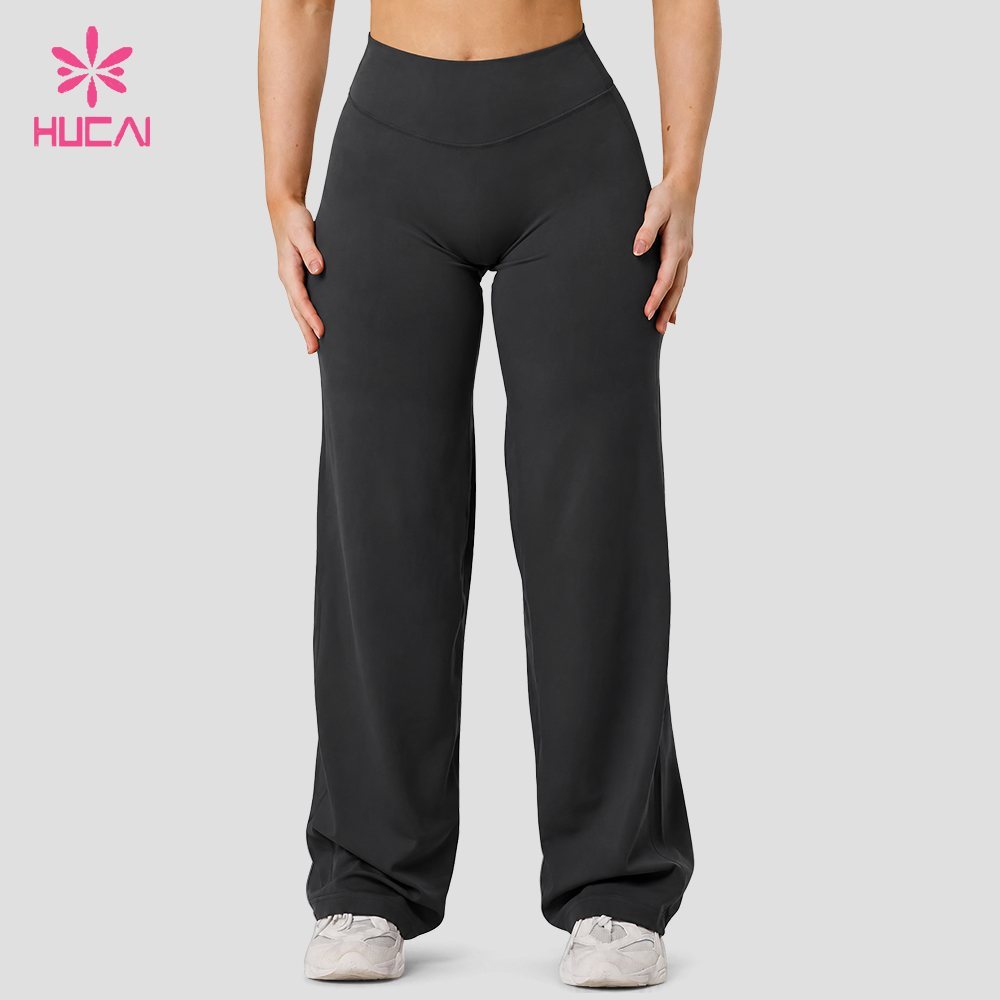
A sculpted garment holds its line because the fabric returns to its original position after being stretched. That property is recovery, and it is more important to contour than thickness or weight.
A fabric with strong stretch but weak recovery stretches easily and stays stretched, so knee areas, waistbands and underband zones begin to look slack after wear. A fabric with balanced stretch and recovery returns to shape, which is what keeps a contour line reading the same after movement.
Four fabric questions should be answered before a sculpted sample is requested.
- Stretch direction: whether the fabric stretches mainly across the width, mainly along the length, or in both directions. This determines how panels must be oriented and how the piece is cut from the roll.
- Recovery behaviour: how completely the fabric returns after stretch, and how that changes after repeated wear and washing.
- Opacity requirement: how much coverage the fabric must provide in the areas under the most tension. Opacity is a development target confirmed with the selected fabric, not a property that can be read from a photograph.
- Surface and drape direction: how the fabric falls over the seams and whether a matte or a light sheen surface better supports the intended visual line.
This is also where a common planning mistake appears. Brands sometimes assume a heavier or thicker fabric will produce a stronger contour. Weight alone does not create shape; it can flatten a curve if the recovery and compression direction do not match the pattern. The fabric decision should follow the pattern decision, not replace it.
For a full comparison of how surface and structure affect product behaviour, the fabric selection guide explains how fibre direction, stretch and handfeel are reviewed before sampling.
Seam and Panel Direction: Making the Line Hold
Once the pattern and fabric are defined, seam direction decides whether the contour is stable or decorative. Two garments can use the same number of seams and read completely differently, because the direction of the seams relative to the stretch line changes how the tension distributes.
Three points should be confirmed at this stage.
- Seam path relative to stretch: a seam that runs across the stretch direction behaves differently from one that runs along it. The seam path should be chosen to support the shape, not simply to match a drawing.
- Where stress accumulates: the underband, the top of the waistband, the side of the knee and the armhole edge are typical high-stress zones on sculpted styles. These points should be identified before sampling so they can be reviewed deliberately.
- Which seams are structural and which are visual: structural seams carry the shape and must be positioned precisely. Visual seams add rhythm and can accept more tolerance. Mixing the two without labelling them causes disagreement during sample review.
Panel count has a commercial consequence as well. Each panel adds cutting, matching and sewing operations, which affects production planning and unit cost, and also creates an additional point where colour and tension must match in bulk. A brand should be able to state which panels are necessary for the shape and which are optional.
When the design brief is already complete, an OEM development route with a defined specification keeps the approved panel layout and construction unchanged through production, which reduces the risk of the contour drifting between the approved sample and bulk.
Movement Fit: Where Contour Is Actually Tested
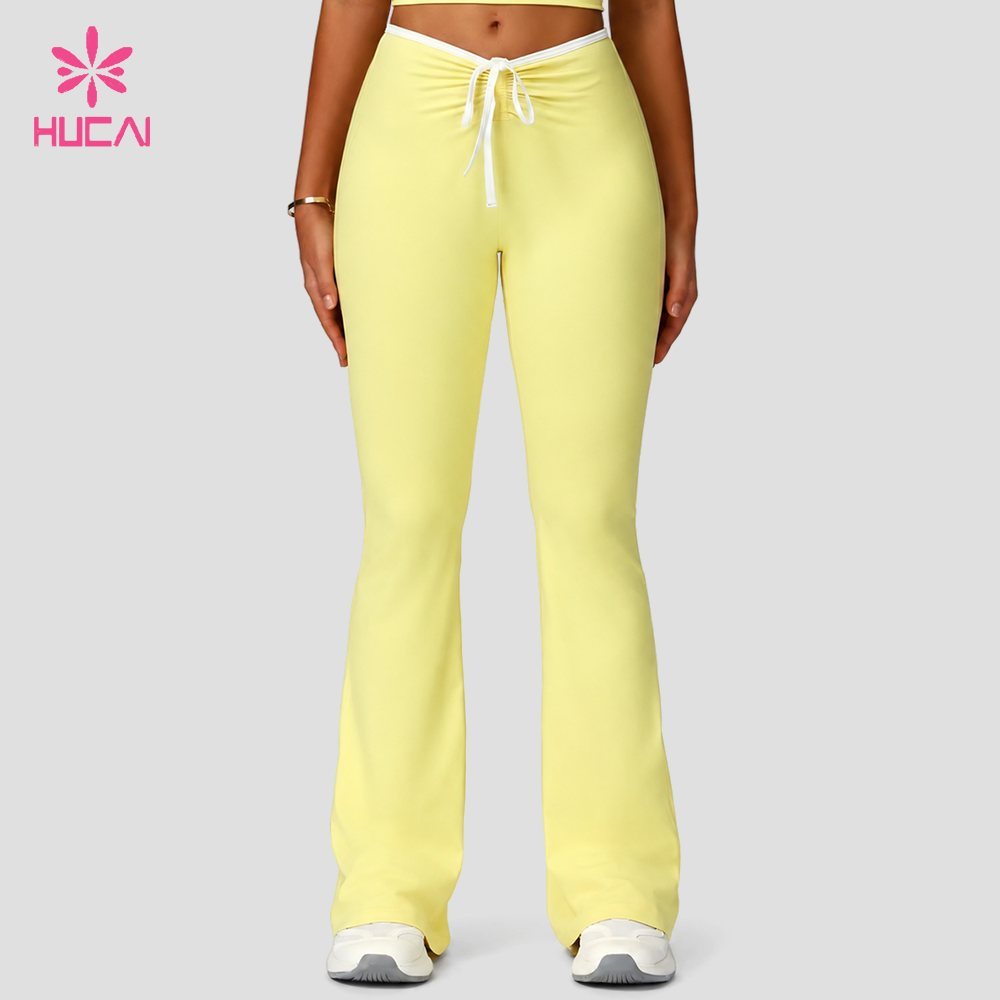
Sculpted designs are usually approved on a static fitting. That is not where they fail. Contour is tested when the body moves, because movement redistributes tension across the panels.
A structured movement review should cover the actions the product is developed for, and should record what happens at each zone rather than only judging overall appearance.
- Squat and lunge: observe whether the waistband stays in position, whether the rise pulls at the back, and whether the shaped areas hold their line or flatten under load.
- Arm raise and overhead reach: observe whether the armhole edge gaps, whether the underband shifts upward, and whether the neckline distorts.
- Trunk rotation and bend: observe whether side panels twist, whether seam lines migrate, and whether the contour becomes asymmetric on one side.
- Extended wear: observe pressure and comfort after longer periods in the garment, since a compression level that is acceptable for a short session may not be comfortable for standing, sitting or all-day use.
This stage is not only about comfort. Movement review is also where the defined contour is validated, because a shape that only exists in a static photograph is not a shape the end customer will experience. Recording these observations in writing, with the zone noted for each point, gives the development team something concrete to correct rather than a general comment that the fit feels wrong.
Sample Review and Grading Across Sizes
A sculpted style can pass review in one size and lose its effect in the rest of the range. Grading is the step where the pattern is scaled across sizes, and it is where many contour projects quietly break.
The reason is straightforward. Contour is created by the relationship between the shaped zone and the surrounding area. If a size range is graded evenly across all points, that relationship can change: the smallest size may lose the intended shape, and the largest size may develop more tension than the pattern intended.
Three controls help keep the contour consistent.
- Check the extreme sizes first: review the smallest and largest sizes in the range before signing off the middle. If the shape reads correctly at both ends, the intermediate sizes are usually stable.
- Confirm measurement standards with tension context: a measurement chart alone does not describe how a sculpted panel behaves. The approved sample becomes the reference for tension as well as for size.
- Define what may vary and what may not: state which dimensions can shift within tolerance and which control the shape, so bulk production has a clear standard to follow.
Sample development usually takes about 10-15 days, depending on style, fabric, trim, logo, revision requirements and confirmed details. When the contour is not yet defined, that period is typically spent resolving the shape rather than refining it, which is the main reason sculpted projects run through more revision rounds than their complexity suggests.
Once a sample is approved, sample-to-bulk quality control is what protects the approved silhouette, because the approved sample and the confirmed measurement standards become the reference for bulk. The sample request process explains how sample scope and priorities are set before the first round begins.
Decision Check: Is a Sculpted Direction Ready for Sampling?
Before requesting a sculpted sample, confirm the following:
- Visual line: the exact areas where the silhouette should change are marked, not described only in words or shown only on a reference photograph.
- Functional purpose: each seam is labelled as structural, tension-controlling or visual, so the review has a stated purpose for every line.
- Stretch and direction: the fabric direction is agreed, including how panels will be cut relative to the stretch line.
- Seam stress zones: the high-stress points such as underband, waistband edge, knee side and armhole edge are identified before cutting.
- Grading and reproducibility: the smallest and largest sizes have been considered, and the approved sample is defined as the tension and measurement reference for bulk.
If three or more criteria are confirmed, the direction is ready for a structured sample request. If fewer than three are resolved, additional development planning will reduce sample revision cycles and control cost.
Working from reference images? Share the images, the product category, the target activity and the support or compression target you have in mind, and the pattern and fabric questions above can be reviewed before a sample brief is written. If a defined specification already exists, send the measurement chart, panel layout, fabric requirements and branding details for ODM sample development or OEM review, and note which zones are intended to be shaped.
Manufacturer Insight
Manufacturer Insight: the most common failure pattern in sculpted development is not a wrong seam line. It is a seam line that works on one sample and then disappears after grading.
A single sample is cut and reviewed as one unit. Once the pattern is graded, the same contour has to work on a larger and a smaller body, and the tension around the shaped zone changes with every size step. If the grading rules were copied from a standard block without rechecking tension and proportion around the sculpted area, the smallest size can look slack and the largest size can look over-compressed, even though both were generated from an approved sample.
The practical answer is to review the extreme sizes before approving the middle of the range, and to treat the approved sample as a record of both measurement and tension. In the projects HUCAI Sportswear supports, this usually means the pattern discussion covers size range behaviour at the same time as the first sample, rather than as a later correction.
FAQ
What actually makes activewear look sculpted?
Pattern shaping and fabric recovery create the effect; seam lines only express it. A defined contour comes from removing or adding volume in specific pattern areas and from a fabric that returns to shape after stretching. Decorative seams placed on an unchanged block can suggest a contour in a photograph, but they usually do not hold it in movement.
Are contour seams only decorative?
Not necessarily, and the distinction matters for sampling. Some contour seams are structural and carry the shape of the garment; others only control tension; and some exist purely for visual rhythm. Each type should be labelled in the development brief, because a structural seam requires precise positioning while a visual seam can accept more tolerance. Treating all of them as decoration is a frequent cause of repeated revisions.
How does fabric recovery affect the shape?
Recovery determines whether the shape survives wear. A fabric with good stretch but limited recovery stretches under movement and stays stretched, so waistbands, underband areas and knee zones start to look slack. A fabric with balanced stretch and recovery returns to position, which keeps the contour reading the same after activity. Recovery should therefore be confirmed together with stretch direction, not separately.
Can one fabric be used across a whole sculpted range?
It can, when the pattern is developed around that fabric's stretch and recovery behaviour. The difficulty appears when the same fabric is asked to create the same contour in a sports bra, a legging and a long-sleeve top, because each product applies different tension to the material. A shared fabric family is practical, but the panel structure and tension targets usually need to be reviewed per product rather than assumed.
Can contour designs scale across sizes?
Yes, when grading is checked rather than assumed. Contour depends on the relationship between the shaped zone and the surrounding area, and that relationship can shift when a pattern is graded evenly across the range. Reviewing the smallest and largest sizes first, and confirming which measurements control the shape, keeps the effect consistent across the range.
What movements should a sculpted sample be tested in?
Test the actions the product is developed for, and record the zone where something changes rather than only an overall impression. A practical set includes squat or lunge, arm raise or overhead reach, trunk rotation, and a longer wear period to check pressure and comfort. Static fitting alone rarely reveals where tension will move during activity.
How can bulk consistency be reviewed for a sculpted style?
Bulk consistency depends on confirmed standards, the approved sample as a tension and measurement reference, material control, in-process review and final inspection. The approved sample should be kept as the practical reference for how the contour should behave, and the measurement chart should identify which dimensions control the shape. HUCAI Sportswear uses AQL 2.5-based inspection as part of the quality workflow, which supports this review rather than replacing it.
What is the MOQ for a sculpted style, and how long does it take?
The current public MOQ starts from 100 pcs per style, while final colour, size, fabric, trim and customisation planning depends on the confirmed project. Sample development usually takes about 10-15 days, depending on style, fabric, trim, logo, revision requirements and confirmed details. Bulk production often takes about 25-30 days after pre-production details and approvals are confirmed, depending on project scope, materials, processes, quantity and scheduling.
Final Takeaway
Sculpted activewear is a development decision before it is a design decision. The shape is built by pattern shaping, held by fabric recovery, expressed by panel and seam direction, and protected by consistent grading. When those four elements are confirmed before sampling, the first sample answers a fit question instead of reopening it.
The next practical step is preparation rather than production. Mark the zones where the silhouette should change, label each seam with its purpose, agree the fabric stretch and recovery direction, identify the high-stress points, and decide how the shape should behave at the smallest and largest size. Bring those points to the development conversation, and the sample round becomes a refinement stage rather than a search for the design.
If the direction is still forming, it is worth discussing the panel structure and fabric behaviour before a sample brief is written. If the specification is already defined, the same decisions can move straight into ODM sample development or OEM review, and the sample can be planned against a stated silhouette target.
About HUCAI Sportswear
- Founded in 1998, specialising in women's activewear and sportswear manufacturing
- OEM and ODM development support for sports bras, leggings, shorts, tops and matching sets
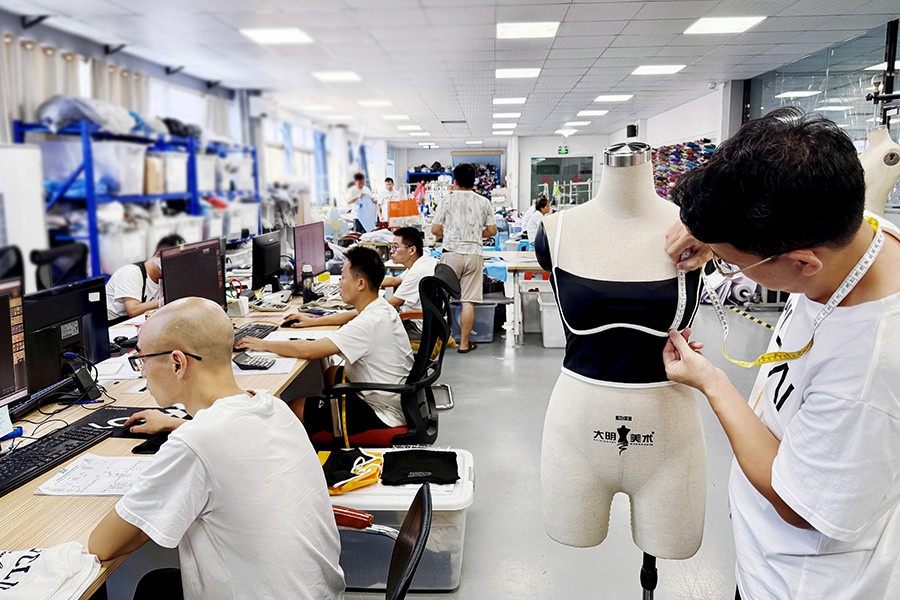
- CAD, pattern and sample development support, including sample revision before bulk planning
- Structured sample development and sample-to-bulk consistency control
- AQL 2.5-based inspection as part of the quality workflow
Current certification information can be reviewed during supplier evaluation based on the project and documentation requirements. To discuss a sculpted direction, share the reference images or specification and the zones you intend to shape through the contact page.