Seam-Free Front Leggings: What Changes in Gusset, Rise and Fit Stability?
- Share
- publisher
- HUCAI Sportswear
- Issue Time
- Oct 15,2026
Summary
A development guide for women's activewear brands building leggings with a smooth, seam-free front panel: how gusset shape and placement, the drafted front rise, panel stretch direction and waistband tension decide fit stability, plus the sample-stage and after-wash checks that define a pass and the grading controls that keep the approved fit repeatable.
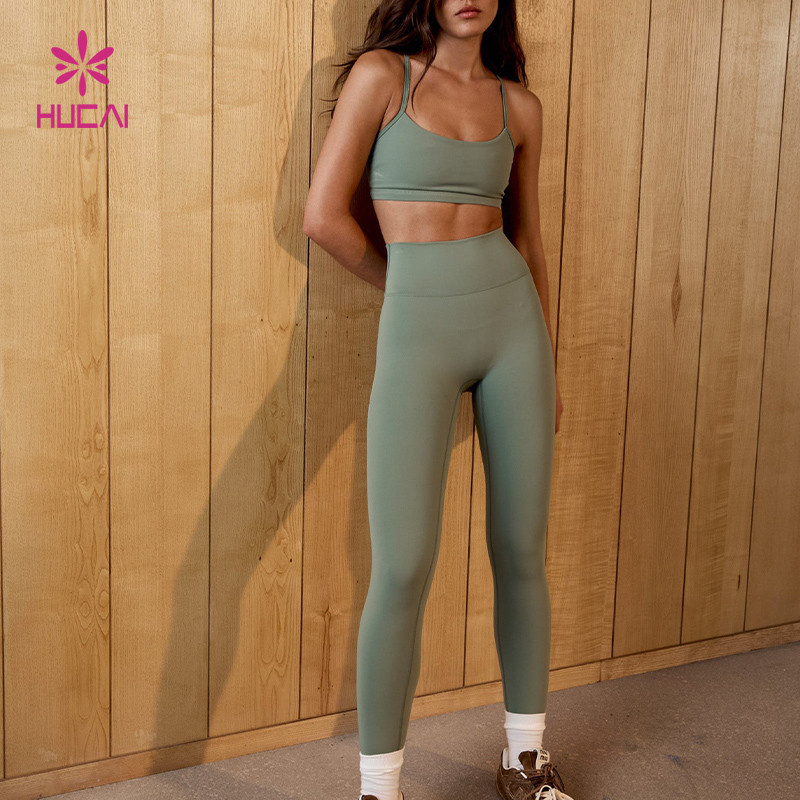
When a leggings brief carries a smooth, uninterrupted front panel, the change looks like a pattern decision. In practice it moves the load path through the whole garment. Removing the front seam does not remove the work that seam was doing: it changes how the gusset closes, where the rise sits over the abdomen, and how the waistband, front panel and leg panels share tension during movement. For private label activewear and custom women's activewear programs, that shift often surfaces later — a waistband that rolls under a bend, a front panel that rides down over a long training session, or a rise line that measures correctly on the sample table and sits differently on the body. In HUCAI Sportswear's development room, seam-free front leggings are treated as a structural brief rather than a cosmetic one, because the specifications that decide fit stability are set before the first sample is cut.
Quick Answer
A seam-free front leggings brief is a structural decision, not a cosmetic one. Without a vertical front seam, the gusset must close and reinforce the crotch area on its own, the front rise is set by the pattern rather than corrected along a seam line, and the front panel and waistband share tension so the garment resists roll-down and displacement. Lock gusset shape and placement, front rise and coverage, panel stretch direction, and waistband tension before sampling.
Table of Contents
- Who This Article Is For
- What a Seam-Free Front Panel Changes in the Garment
- Gusset Construction: What the Panel Has to Do Without a Front Seam
- Rise, Coverage and the Front-Section Line
- Pressure Distribution, Displacement and Roll-Down Control
- Sample-Stage Validation: What to Check on the Body and After Wash
- From Approved Sample to Bulk: Panel Placement, Grading and Consistency
- Decision Check
- Founder's Technical Insight (Jean Yuan)
- FAQ
- Final Takeaway
Who This Article Is For
- Primary reader: Growing women's activewear brands developing leggings with a smooth, seam-free front panel.
- Secondary reader: Established brands reviewing gusset, rise and waistband specifications on an existing leggings line.
- Product stage: Structure definition and pattern review, before the first fit sample is cut.
- Problem being solved: Holding coverage, rise position and fit stability when the front seam is removed from the pattern.
- Who may not need this article: Brands with an approved fit sample, a locked pattern and a confirmed measurement chart — that project needs pre-production confirmation and bulk execution rather than a structure decision.
What you gain from this article: a structural checklist for seam-free front leggings that connects gusset construction, front rise, panel stretch direction and waistband tension to the on-body and after-wash checks that decide whether the fit holds — plus the sample-stage review points and the bulk controls that keep the approved fit repeatable.
What a Seam-Free Front Panel Changes in the Garment
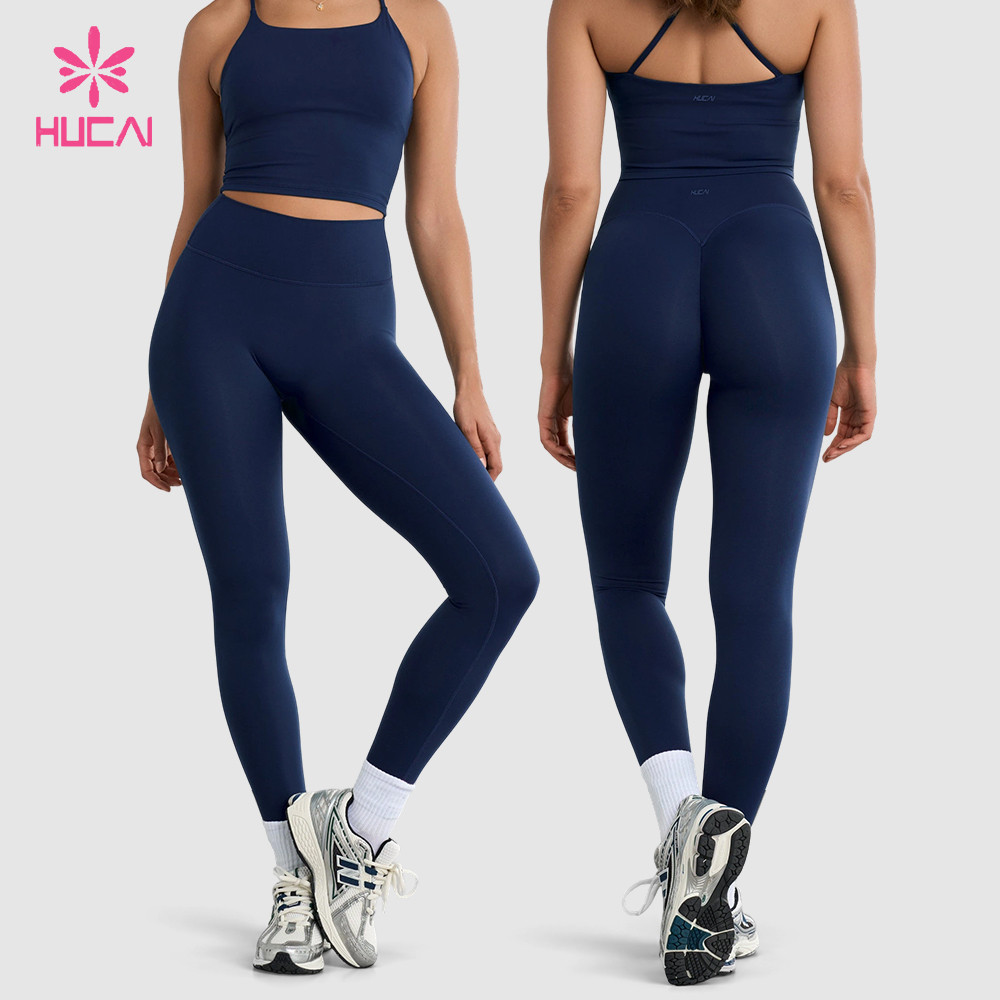
A conventional leggings front is built from two panels joined by a vertical seam that runs from the crotch to the waistband. That seam carries three jobs at once: it closes the front, it shapes the panel into the body's curve, and it gives the pattern maker a line along which fit corrections can be made. When the front panel is cut as one continuous piece, all three jobs move elsewhere — into the gusset, the rise line, the waistband and the stretch direction of the fabric itself.
This is why a brief that says only "no front seam" is incomplete. The visible outcome the brand is buying is a clean, uninterrupted front. The development outcome is a different tension map across the pelvis. The front panel now has to follow the body's curvature through fabric behaviour rather than through a seam allowance, and its recovery has to be even across the whole width, because there is no seam line to interrupt a running distortion.
The practical consequence is that pattern, fabric and waistband can no longer be specified in isolation. A panel that is soft enough to sit smoothly may be too soft to hold the rise in place; a fabric with strong recovery in one direction may pull the panel out of alignment in the other. The same considerations that shape leggings development for any construction apply here, but the tolerance for an unspecified variable is smaller, because there is no seam to absorb it.
Gusset Construction: What the Panel Has to Do Without a Front Seam
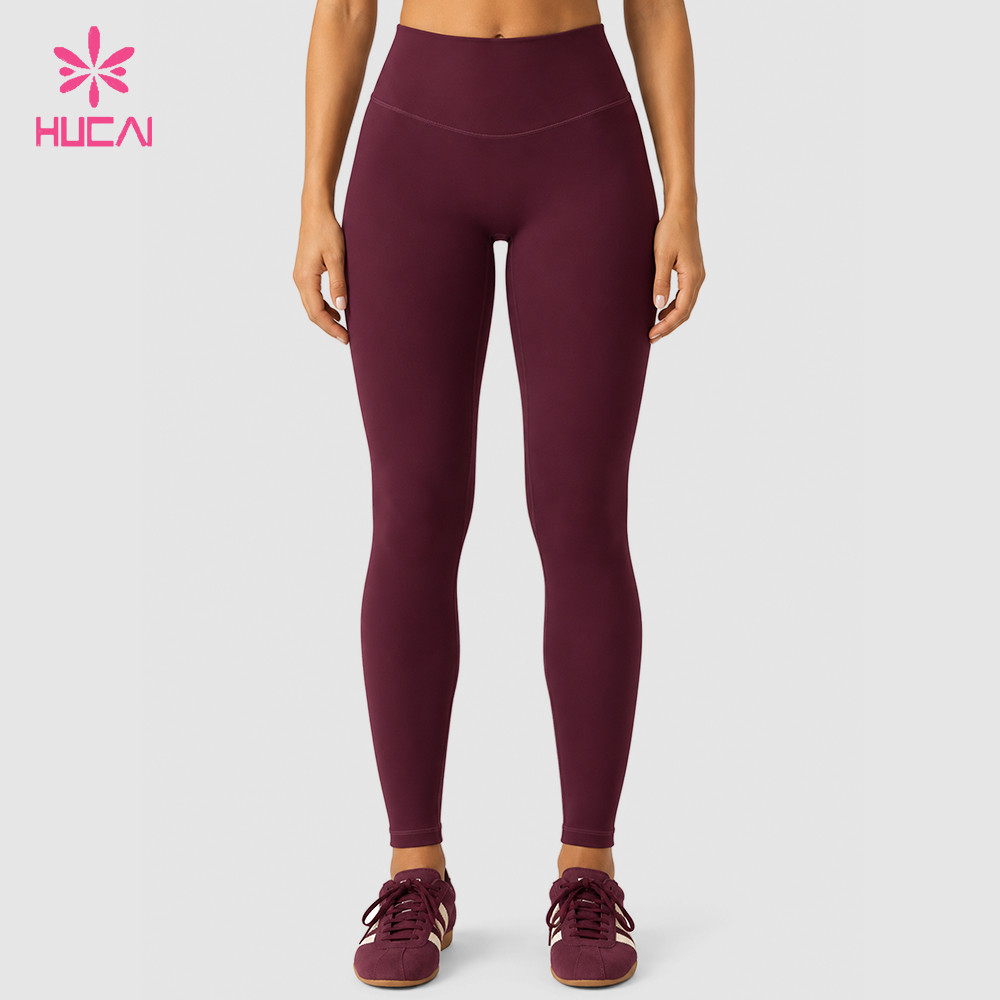
The gusset is the shaped piece inserted at the crotch to give the garment room to move and to reduce stress on a single seam. On a leggings pattern with a front seam, the gusset works alongside that seam. On a seam-free front, the gusset becomes the main structural feature in the crotch area, and the way it is shaped, positioned and joined decides how the whole front behaves.
Three gusset variables should be written into the brief rather than left to the sample room. The first is shape: a gusset can be cut as a diamond, a wide oval, or a shaped panel that extends further up the front. A shape that is too narrow concentrates stress at the points where the panels meet; a shape that is too wide changes the way the front panel lies across the pelvic area. The second is placement, because moving the gusset up or down changes both the rise and the point at which the garment starts to pull. The third is the joining method, since a stitched seam and a bonded or folded finish behave differently under repeated stretch, and the finish has to match the panel thickness and the fabric's elongation.
Under-movement behaviour is where the gusset decision shows up. When a wearer squats, steps or bends, the fabric at the crotch is pulled in several directions at once. A gusset that is correctly shaped distributes that pull; one that is not concentrates it on a short line of stitching or on a single point of the panel. In HUCAI Sportswear's sample room, gusset placement is reviewed against the movement positions the leggings are built for, rather than only against the flat pattern, because a gusset that looks correct on the table can still pull or twist on the body.
Rise, Coverage and the Front-Section Line
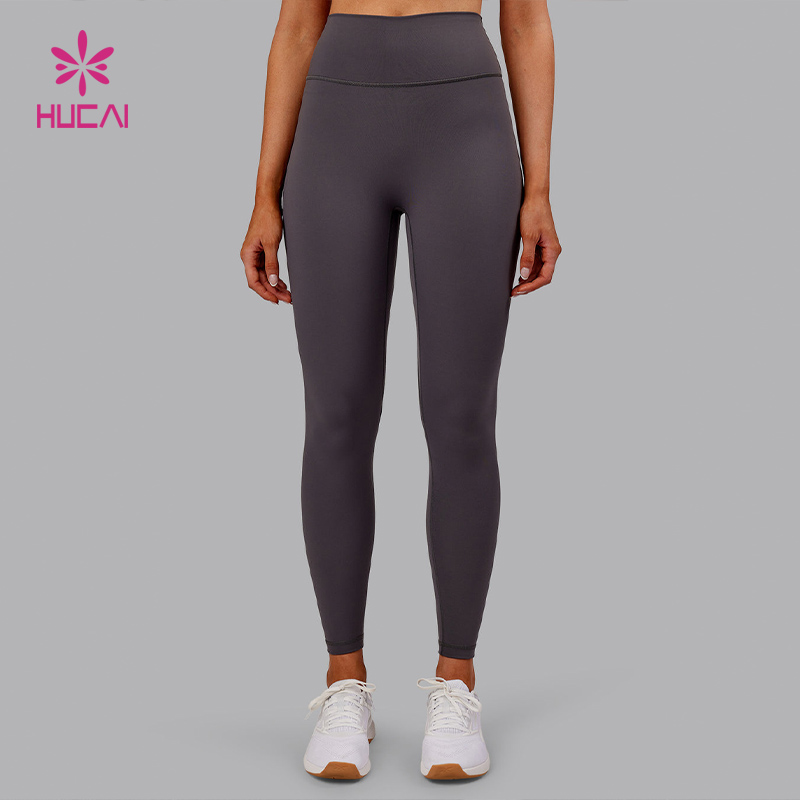
A seam line gives the pattern maker a natural place to adjust rise and coverage. When that line disappears, the rise is decided by the top edge of the leggings and by the way the front panel is drafted over the abdomen. Two briefs can both describe a high rise and still produce very different coverage, because the rise measurement alone does not describe where the garment sits when the wearer moves.
The points worth specifying are the front rise measured from the gusset join to the top edge, the depth of the front panel between the waistband and the crotch area, and the angle at which the panel curves over the abdomen. A front panel that is drafted too flat will pull across the stomach when the wearer bends; one drafted with too much curve can fold or fold back on itself at rest. Both are pattern issues rather than waistband issues, and both are easier to correct before a sample is cut than after.
Coverage and opacity should also be treated as separate items. Coverage describes how much of the body the fabric covers; opacity describes whether the fabric can be seen through under stretch. A seam-free front removes a visual interruption that in some constructions also removed a stretched, thinner zone, so the front panel has to be assessed as one continuous surface. This is one reason brands often pair a smooth front with a slightly denser knit, and why the front-section line belongs in the same conversation as the everyday movement collection planning, where similar constructions are grouped.
Pressure Distribution, Displacement and Roll-Down Control
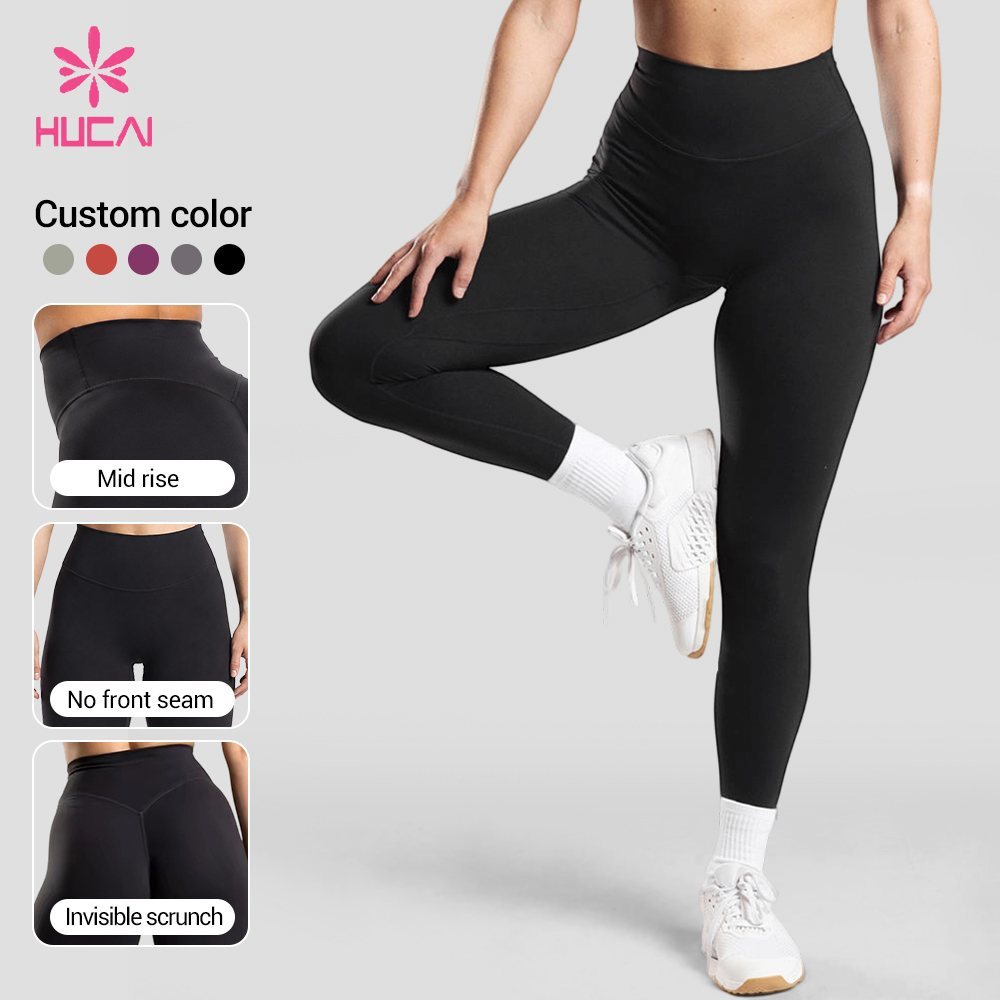
Fit stability in a seam-free front leggings comes down to three observable behaviours: how the waistband pressure is distributed around the body, how far the garment moves during activity, and whether the waistband rolls or folds down. None of these can be read from the pattern alone, and none is solved by simply tightening the waistband.
Pressure distribution starts with the waistband structure. A single-layer folded waistband, a double-layer band, and a band with an internal support strip all spread pressure differently, and the choice interacts with the front panel's stretch direction. If the panel recovers faster than the band, the front pulls the band inward; if the band recovers faster, the band pulls the panel up. Reviewing panel stretch direction and waistband tension together — rather than as two separate specifications — is the point at which most roll-down problems are either prevented or built in.
Displacement is the second behaviour. The garment moves whenever the wearer squats, lunges or sits, and what matters is whether it returns to its starting position. A front panel that has been drafted with slightly too much length will migrate downward over a session, while one drafted too short will ride up at the crotch. Fabric recovery and pattern length have to be assessed together, because a stretchy fabric can mask a length error on the sample table and reveal it after an hour of wear. At HUCAI Sportswear, panel stretch direction is reviewed against the fabric's tested recovery behaviour so that the pattern and the material are decided on the same evidence.
Roll-down is the third behaviour, and it is usually the symptom rather than the cause. It normally points back to one of three conditions: a waistband whose tension does not match the panel, a rise that is too shallow for the way the garment is worn, or a band whose width does not suit the fabric weight. Each has a different correction, which is why a brand that treats roll-down as a single problem tends to add waistband height on each revision without resolving it.
Sample-Stage Validation: What to Check on the Body and After Wash
Seam-free front leggings are validated in three stages, and skipping any one of them tends to move the problem into bulk. The first stage is flat and construction review: gusset shape and placement, panel symmetry, stitch type and finish at the gusset join, and the measurement chart with tolerances. The second stage is on-body movement review, where the sample is assessed in the positions the product is built for. The third stage is after-wash review, because recovery and dimensional change decide whether the approved fit survives its first care cycle.
On-body review should record specific observations rather than a general impression. Useful items include whether the front panel stays level through a deep squat, whether the waistband edge lifts away from the body when the wearer bends forward, whether the gusset join shows any pull lines, and whether the rise measurements taken on the body match the approved chart at the points where the garment is actually worn.
After-wash review should repeat the same measurements against the approved chart and inspect the gusset join and waistband for distortion, seam pucker and surface change. Recognised textile testing frameworks such as ASTM, ISO and AATCC methods give brands a shared language for dimensional stability, stretch recovery and colourfastness, but the test conditions and the pass criteria have to be written into the brief rather than assumed. Practical verification at the sample development stage therefore combines repeated-stretch recovery, wash-and-dry dimensional change against the chart, and a surface inspection of the panel and the gusset join. Fabric direction options and their recovery behaviour can also be reviewed in advance through a fabric selection review, which reduces the number of sample rounds needed to reach a stable front panel.
From Approved Sample to Bulk: Panel Placement, Grading and Consistency
Once the fit sample is approved, the risk moves from design to repetition. A seam-free front panel has no seam to absorb small variations, so panel placement and grading have to be controlled more tightly than on a conventional construction. The approved sample becomes the reference for measurement, workmanship and gusset placement, and any deviation in cutting or joining shows up directly in the front of the garment.
Grading is the first control. As sizes increase, the depth of the front panel, the position of the gusset and the rise all change at different rates. If the gusset position is scaled as a simple percentage rather than drafted per size, larger sizes can end up with a gusset sitting too low, which changes the pull point and the coverage. Grade rules for the gusset and the front panel should therefore be confirmed as part of the approved pattern, not applied at the marker stage.
Manufacturing control is the second. Panel symmetry, fabric grain alignment, gusset placement and stitch tension all need to be held across the run, because there is no front seam to hide a small mismatch. This is where HUCAI Sportswear's production workflow applies panel and gusset checks at defined in-process points, alongside the pre-production review and final inspection that cover measurement and workmanship. Brands can review how this sequence runs in the factory and production procedures overview.
Commercial planning is the third control, and it is where the brief meets the order. The current public MOQ starts from 200 pcs per style, while final colour, size, fabric, trim and customization planning depends on the confirmed project — and a seam-free front construction with several colourways across a full size range is a different production proposal from a single-core-colour programme. Buyers working from a tech pack, measurements and construction details usually begin with an OEM review, while buyers starting from reference images or an early direction can use ODM development to clarify gusset, rise and sample priorities first.
Decision Check: Is the Seam-Free Front Direction Ready for Sampling?
Before requesting samples, confirm the following:
- Gusset specification is written: shape, size and placement are defined on the pattern rather than left to the sample room.
- Front rise and coverage are drafted, not assumed: front rise points, panel depth and the curve over the abdomen are specified with tolerances.
- Panel stretch direction is confirmed: the fabric's stretch and recovery direction match the drafted front panel and gusset.
- Waistband structure matches the panel: band type, width and tension are reviewed together with the front panel rather than separately.
- Validation criteria are agreed: the on-body movement checks and the after-wash measurements that define a pass are listed before the sample is cut.
If three or more criteria are confirmed, the direction is ready for a structured sample request. If fewer than three are resolved, additional development planning will reduce sample revision cycles and control cost.
Next step: if the gusset and rise are still open, prepare the movement positions the leggings are built for, the waistband direction, the front panel's expected coverage and opacity, and the number of colourways planned for launch. Buyers with a confirmed tech pack can send measurements, fabric requirements and construction details to the HUCAI Sportswear leggings manufacturing team for review. Buyers working from a reference or an early concept can share the images and the intended use so the gusset, rise and sample priorities are clarified first.
Founder's Technical Insight: Jean Yuan's Development Note
When brands bring us a seam-free front leggings reference, the surprise in the sample room is rarely the missing seam itself. It is where the tension ends up instead.
With a front seam, the pattern has a line that can be adjusted by a few millimetres to move pressure and to correct a rise that reads long or short. Once that line is gone, the same correction has to come from the gusset shape, the front panel draft and the waistband tension. When a brand changes the front panel but keeps the original gusset, the pull point moves up into the lower abdomen, and the sample is returned as a waistband problem. Adding band height then makes the front grip harder at the top while the real issue sits several centimetres lower.
The second pattern we see is a fabric mismatch rather than a pattern error. A front panel drafted on the assumption that the fabric recovers evenly will behave differently once the panel and gusset recover at different rates. The garment is correct on the table, then the front panel drifts downward across a session, and the brand asks for a shorter rise. Trimming the rise usually makes the crotch ride, because the length was compensating for recovery rather than for the rise itself.
What we check before the first seam-free front sample is cut, and what a brand's development team can check independently:
- Confirm the gusset shape and placement on the pattern before any fabric is cut, and state the pull point you expect in the brief.
- Measure front rise on the body during movement, not only flat on the table, because the two readings diverge under load.
- Review panel stretch direction against tested recovery rather than against a hand-feel judgement.
- Set waistband tension against the panel, and change only one of the two between sample rounds.
- Wash the sample before approving it, and re-measure against the chart so recovery behaviour is part of the approval.
HUCAI Sportswear handles this through pre-production review, defined in-process checkpoints, and sample-to-bulk consistency control, so a structural risk in the front panel is identified before it becomes a production-level one.
FAQ
What changes in a leggings pattern when the front seam is removed?
Three things move at once: the gusset becomes the main structural feature at the crotch, the front rise is set by the panel draft instead of being corrected along a seam, and the waistband and front panel have to share tension differently. The visible result is a smooth front, but the development work is a re-specified load path across the pelvis.
How should the gusset be specified for seam-free front leggings?
Specify gusset shape, size and placement on the pattern, and state the joining method to match the panel thickness and fabric elongation. The gusset decides where stress concentrates during a squat, step or bend, so a shape that looks correct on the flat pattern should still be re-checked on the body in the movement positions the product is built for.
Why does the waistband roll down on a smooth front leggings?
Roll-down is usually a symptom rather than a cause. The common conditions behind it are a waistband whose tension does not match the front panel, a rise that is too shallow for the way the garment is worn, and a band width that does not suit the fabric weight. Each has a different correction, so identifying which one applies is more useful than adding waistband height on every revision.
Which checks should happen before a seam-free front sample is approved?
Review the gusset shape and placement, panel symmetry and the gusset join finish on the flat sample, then check the garment on the body in a deep squat, a forward bend and a seated position, recording whether the front panel stays level and whether the waistband lifts away. Finally, wash the sample and re-measure it against the approved chart to confirm dimensional stability and recovery.
Does a seam-free front change opacity requirements?
Coverage and opacity are separate specifications. Removing the front seam removes a visual interruption, so the front panel is assessed as one continuous surface under stretch. That often leads brands to pair a smooth front with a slightly denser knit, but the opacity target still needs to be confirmed against the actual fabric rather than assumed from the construction.
How does grading affect a seam-free front panel in larger sizes?
Panel depth, gusset position and rise change at different rates as sizes increase. If the gusset position is scaled as a simple percentage instead of being drafted per size, a larger size can end up with the gusset sitting too low, which shifts the pull point and reduces coverage. Grade rules for the gusset and front panel are more reliable when confirmed with the approved pattern.
What is the MOQ for custom seam-free front leggings?
The current public MOQ starts from 200 pcs per style. Final planning depends on the confirmed project, because fabric, colour, size range, trims, logo method, packaging and production complexity all affect how a style is scheduled and produced.
How long does seam-free front leggings sample development usually take?
Sample development usually takes about 10-15 days, depending on style, fabric, trim, logo, revision requirements and confirmed details. Bulk production often takes about 25-30 days after pre-production details and approvals are confirmed, depending on project scope, materials, processes, quantity and scheduling.
Final Takeaway
The decision in a seam-free front leggings brief is not whether to remove the seam, but how the work that seam was doing gets redistributed. Gusset shape and placement, the drafted front rise, panel stretch direction and waistband tension have to be specified together, and the on-body and after-wash checks that define a pass have to be agreed before the sample is cut. Programs that define these conditions early spend fewer rounds correcting a fit problem in the wrong place, and the approved pattern then carries cleanly from sample to bulk. The next practical step is to put the gusset, rise, panel and waistband specifications on one page and confirm which of them are still open.
About HUCAI Sportswear
- Founded in 1998, specialising in women's activewear and sportswear manufacturing
- OEM and ODM development support for sports bras, leggings, shorts, tops and matching sets
- Fabric, trim, pattern, CAD and sample support to clarify product requirements before bulk production
- Structured sample development and sample-to-bulk consistency control
- AQL 2.5-based inspection integrated into the quality workflow
Current certification information can be reviewed during supplier evaluation based on the project and documentation requirements.