Sports Bra Fabric, Lining and Padding Choices: What Brands Should Decide First
- Share
- publisher
- HUCAI Activewear
- Issue Time
- Jun 30,2026
Summary
Learn how private label activewear brands should decide sports bra fabric, lining, and padding before sampling, including support feel, skin comfort, coverage, breathability, wash behavior, and bulk consistency.
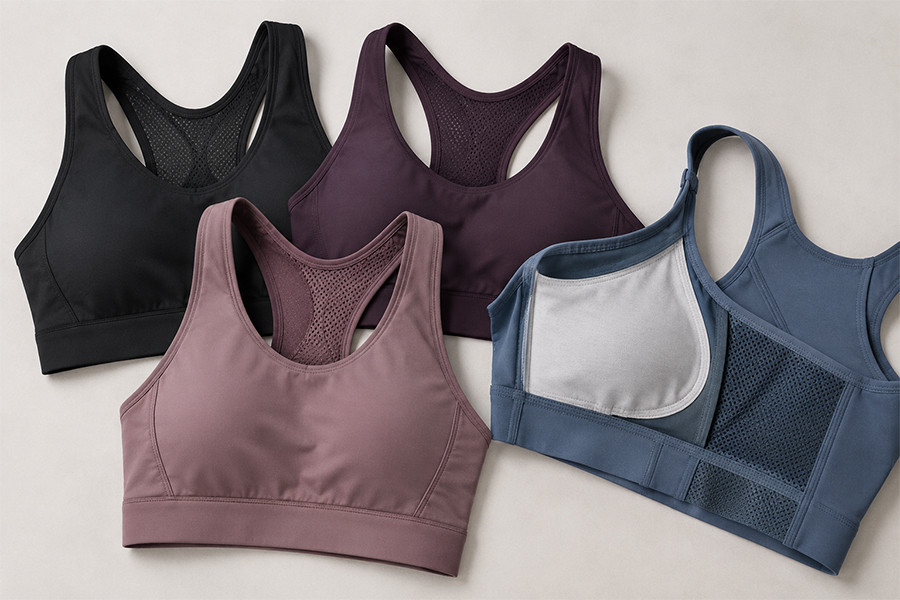
For custom sports bra development, fabric, lining, and padding decisions should be made before the first sample is produced. These choices affect support feel, skin comfort, coverage, shape stability, breathability, washing behavior, and bulk consistency. For private label sports bra brands, a good sample brief should not only show the front design or back strap style. It should also explain what the outer fabric should do, how the lining should feel against the body, and whether the bra needs removable pads, fixed pads, molded cups, or a no-pad direction. At hucai sportswear, these three layers are reviewed together as part of OEM / ODM sports bra development.
Quick Answer
Sports bra fabric, lining, and padding should be confirmed before sampling because support feel, skin comfort, coverage, shape stability, breathability, washing behavior, and bulk consistency all depend on how these three layers work together. A sports bra can look correct visually but still fail in wear if the outer fabric, inner lining, and padding direction are not matched to the intended support level and use scenario.
Table of Contents
- Why fabric, lining and padding should be decided before sampling
- Sports bra outer fabric: support, recovery and handfeel
- Lining: skin comfort, stability and coverage
- Padding: removable pads, fixed pads, molded cups or no-pad direction
- How fabric, lining and padding affect support level
- Common mistakes before sampling
- Decision check before sample request
- FAQ
- Next steps
Why Fabric, Lining and Padding Should Be Decided Before Sampling
```Many sports bra projects begin with style references: square neck, V neck, racerback, crossback, longline, halter, or adjustable strap. These references help communicate the visual direction, but they do not fully define how the bra should feel or perform.
The same outer shape can produce very different samples depending on fabric, lining, and padding. A soft fabric with light lining may create a comfortable yoga bra. A stronger recovery fabric with firmer lining and structured pads may create a more supportive training bra. A no-pad bra may feel clean and minimal, while a removable-pad bra may suit a broader commercial market but require better pad pocket and washing review.
This is why a sports bra sample request should include material-layer decisions. When these details are unclear, sample revisions often become repetitive: the bra feels too soft, the pads shift, the lining feels rough, the shape is uneven, or the support does not match the intended activity.
For brands developing custom sports bras for OEM / ODM programs, fabric, lining, and padding should be treated as connected development choices rather than separate afterthoughts.
Controls handfeel, stretch, recovery, compression, breathability, and support response.
Affects skin comfort, coverage, sweat comfort, shape stability, and internal support feel.
Influences shape, modesty, support feel, washing behavior, and sample evaluation.
Sports Bra Outer Fabric: Support, Recovery and Handfeel
```The outer fabric is the first layer most buyers think about. It affects the look, touch, stretch, recovery, compression, and overall positioning of the sports bra. However, outer fabric should not be chosen only by softness or surface appearance.
For sports bras, fabric should be matched to support level and use scenario. Low support bras may need softer stretch and skin-friendly comfort. Medium support bras usually need balanced recovery and hold. Higher support bras often require stronger fabric response and more controlled stretch.
If a brand is still comparing different fabric directions, a broader sportswear fabric selection review can help clarify whether the project needs soft handfeel, moisture management, compression, elasticity, or stronger durability.
| Fabric Direction | Best For | Sample Review Point |
|---|---|---|
| Soft-touch fabric | Yoga, Pilates, studio, light support, athleisure bras | Check recovery, coverage, underband stability, and skin comfort after movement. |
| Medium-recovery fabric | Training, daily activewear, commercial medium support bras | Review support feel, stretch balance, and whether the bra feels secure without pressure. |
| Compression-led fabric | Medium-high support, sculpting, performance-inspired bras | Check whether support feels stable without becoming restrictive. |
| Breathable or quick-dry direction | Training, warm-weather activewear, running-inspired bras | Review sweat comfort, lining choice, and whether the fabric still supports the structure. |
| Brushed or buttery-soft fabric | Soft-support, studio-to-life, lifestyle-facing bras | Check pilling risk, recovery, pad stability, and bulk fabric consistency. |
The right fabric decision depends on the product role. A fabric that feels premium in a swatch may not support the bra correctly if the lining, underband, and padding direction are not aligned.
```Lining: Skin Comfort, Stability and Coverage
```Lining is often underestimated in sports bra development. Many buyers focus on the outer fabric and cup shape, but the lining is the layer that sits closest to the body. It affects wearing comfort, coverage, stability, sweat feel, and how the bra holds its shape during movement.
A sports bra lining can be soft and lightweight, more supportive, moisture-friendly, mesh-like, or more structured depending on the support target. The lining should not be chosen randomly. It should match the outer fabric, underband, padding, and neckline coverage.
When Softer Lining Works Better
Soft lining is often suitable for low-support yoga bras, Pilates bras, lounge bras, and light studio styles. The goal is comfort against skin, flexibility, and a smooth wearing feel. The risk is that the bra may feel too weak if the outer fabric and underband do not provide enough recovery.
When More Supportive Lining Is Needed
For medium or higher support bras, lining may need stronger stability. It can help improve coverage, reduce movement, and support the cup or front panel. However, if the lining is too firm, the bra may feel stiff or uncomfortable.
When Mesh or Breathable Lining Should Be Reviewed
Mesh or breathable lining can support ventilation and sweat comfort, especially in training or warm-weather styles. But the brand should confirm whether the mesh is used for comfort, visual design, or functional ventilation. Not every mesh choice improves support.
| Lining Decision | What It Affects | Development Risk |
|---|---|---|
| Soft lining | Skin comfort, light support, flexible movement | May lack stability if outer fabric or underband is too soft. |
| Supportive lining | Coverage, hold, front stability, medium support | May feel stiff if not balanced with fabric and pattern. |
| Mesh lining | Breathability, sweat comfort, ventilation detail | May reduce coverage or support if used in the wrong area. |
| Double-layer front | Coverage, modesty, front shape, no-pad direction | May feel too warm or bulky if fabric weight is not suitable. |
For sample review, brands should ask whether the lining feels comfortable after movement, whether it supports the intended coverage, and whether it works with the selected padding direction.
```Padding: Removable Pads, Fixed Pads, Molded Cups or No-Pad Direction
```Padding is one of the most common sports bra sample revision points. It affects shape, modesty, support feel, washing behavior, and customer preference. If padding direction is not confirmed before sampling, the first sample may look acceptable but fail during try-on or wash review.
Brands should decide whether the sports bra needs removable pads, fixed pads, molded cups, light padding, or a no-pad direction. Each choice creates different development requirements.
| Padding Direction | Best For | What to Review |
|---|---|---|
| Removable pads | Commercial sports bras, yoga bras, medium support styles | Pad pocket, pad shifting, washing behavior, opening position, and cup shape. |
| Fixed pads | Brands that want more stable pad placement | Stitching comfort, shape stability, washing durability, and bulk consistency. |
| Molded cups | More structured support or defined shape | Cup size, coverage, neckline fit, pressure balance, and size grading. |
| Light padding | Low to medium support bras needing modesty without bulk | Pad thickness, edge visibility, movement stability, and wearing comfort. |
| No-pad direction | Minimal, clean, soft-support, or double-layer styles | Coverage, lining opacity, fabric thickness, and customer preference. |
Removable Pads Need Pocket Review
Removable pads are common and commercially flexible, but the pad pocket must be reviewed carefully. The opening should be practical, the pad should not shift too easily, and the lining should not twist after washing.
Fixed Pads Need Wash and Bulk Review
Fixed pads can create more stable shape, but they require careful stitching, alignment, and wash review. If fixed pads are not consistent in bulk, the final product can look uneven.
No-Pad Bras Need Better Coverage Planning
A no-pad direction can look clean and feel comfortable, but coverage and modesty must be reviewed. Fabric thickness, lining choice, color, and front panel construction become more important.
```How Fabric, Lining and Padding Affect Support Level
```Support level is not created by one component. It is the result of fabric, lining, padding, underband, straps, neckline, back design, and fit balance working together.
This is why fabric, lining, and padding decisions should connect directly with low, medium, or high support planning. If the brand is still defining support direction, it can review sports bra support-level planning before confirming sample details.
| Support Direction | Fabric Direction | Lining / Padding Direction |
|---|---|---|
| Low support | Soft, flexible, comfortable, moderate recovery | Soft lining, light pads, removable pads, or no-pad direction depending on coverage. |
| Medium support | Balanced recovery, stable stretch, better hold | Supportive lining, removable or fixed pads, better front panel stability. |
| Medium-high support | Stronger recovery, more controlled stretch, higher structure | More supportive lining, stable padding, stronger underband and strap coordination. |
| Studio-to-life bra | Soft handfeel, clean look, flexible comfort | Comfort lining, light pads or no-pad structure, smooth coverage. |
| Matching set bra | Fabric should coordinate with leggings or shorts | Padding and lining should support both comfort and set appearance. |
If the sports bra is part of a bra-and-legging set, fabric and lining decisions should also consider color coordination, handfeel consistency, and how the bra pairs with the bottom. Brands can review custom matching activewear set development for a wider capsule planning view.
```Common Mistakes Before Sampling
```Fabric, lining, and padding problems often appear during the first sports bra sample because the brief was too visual. The brand may send a reference image but not explain support level, lining comfort, pad direction, or wash expectations.
| Common Mistake | Why It Creates Risk | Better Development Approach |
|---|---|---|
| Choosing fabric only by softness | The bra may feel comfortable but lack recovery or support. | Review handfeel together with support level, stretch, recovery, and underband logic. |
| Ignoring lining until after sampling | The inner layer may feel rough, unstable, too warm, or not supportive enough. | Define lining comfort, coverage, breathability, and stability before sampling. |
| Not confirming pad type | Pads may shift, create uneven shape, or fail wash review. | Choose removable, fixed, molded, light padding, or no-pad direction early. |
| Using one material plan for all support levels | Low, medium, and higher support bras need different layer behavior. | Match fabric, lining, and padding to the intended activity and support level. |
| Approving sample only by front appearance | Support feel, skin comfort, pad stability, and wash behavior may still fail. | Review movement, underband, strap, lining, padding, and wash expectations. |
These mistakes are avoidable when the brand prepares a clearer sample brief. The goal is not to make the brief complicated. The goal is to make the first sample more useful.
```Decision Check: Are Fabric, Lining and Padding Ready for Sampling?
Before requesting a sports bra sample, review these questions:
- What support level should the bra provide: low, medium, or higher support?
- What outer fabric direction is needed: soft, supportive, breathable, compression-led, or brushed?
- Should the fabric prioritize handfeel, recovery, stretch, moisture comfort, or structure?
- What lining should touch the skin: soft lining, supportive lining, mesh lining, or double-layer front?
- Is the lining expected to improve comfort, coverage, breathability, or stability?
- Does the bra need removable pads, fixed pads, molded cups, light padding, or no pads?
- How should pads behave after movement and washing?
- Will the bra be sold alone or as part of a matching set?
- Do you already have a tech pack, or do you need help turning reference images into a sample brief?
- How will the approved fabric, lining, and padding standard be controlled in bulk?
Manufacturer Insight: Fabric Problems Often Show Up as Fit or Support Problems
In many sports bra samples, buyers first describe the issue as "not supportive enough," "pads move," "shape looks uneven," or "the bra feels uncomfortable." The root cause may not be only fit. It may come from fabric recovery, lining choice, pad type, underband tension, or how these layers interact.
At hucai sportswear, fabric, lining, and padding are reviewed together before sports bra sampling. This helps brands move from vague comments toward clearer development actions, such as changing fabric recovery, improving lining comfort, adjusting pad pocket structure, or revising the support direction before bulk approval.
Preparing a Sports Bra Sample Brief?
If your brand is developing a custom sports bra, share your target support level, reference images, fabric handfeel, lining expectation, padding preference, underband direction, strap structure, color plan, size range, and estimated quantity with hucai sportswear. We can help review whether your project is closer to OEM execution or ODM development support.
Who This Article Is For
```This guide is written for brands that want to make sports bra sampling clearer by defining fabric, lining, and padding decisions before the first sample is made.
- Growing activewear brands: best fit if you are developing a sports bra line and need clearer material-layer decisions.
- Private label buyers: useful if you need to prepare fabric, lining, padding, logo, color, and MOQ information before inquiry.
- Startup brands: useful if you only have reference images and need to turn them into a practical sample brief.
- Established brands: useful if you already have tech packs but want to review whether the material and padding standards are complete enough for bulk production.
This article is less suitable for buyers who only want ready-stock sports bras, lowest-price logo application, or one-off style sourcing without sample development planning.
```Trust Notes for Buyers
```hucai sportswear helps brands review sports bra outer fabric, lining, padding, underband, strap, and support direction before sampling.
Brands can start from tech packs, reference images, or early product ideas, then choose the right OEM or ODM development path.
Approved samples should define fabric, lining, padding, measurements, logo, label, and quality checkpoints for bulk repeatability.
FAQ: Sports Bra Fabric, Lining and Padding
```What should brands decide first for sports bra fabric?
Brands should first decide the support level and use scenario. After that, they can review whether the sports bra fabric should prioritize softness, recovery, compression, breathability, moisture comfort, or structure. Fabric should support the product role, not only the visual design.
Why is lining important in sports bra development?
Lining affects skin comfort, coverage, sweat comfort, front stability, and how the bra feels during movement. A sports bra with good outer fabric can still feel uncomfortable if the lining is rough, too weak, too warm, or not suitable for the intended support level.
Should sports bras use removable pads or fixed pads?
It depends on the target customer and product role. Removable pads are commercially flexible but need good pocket structure and wash review. Fixed pads can improve placement stability but need careful stitching, alignment, and bulk consistency control. The choice should be confirmed before sampling.
When is a no-pad sports bra suitable?
A no-pad sports bra can be suitable for minimal, soft-support, studio, or double-layer designs. However, coverage and modesty should be reviewed carefully. Fabric thickness, lining choice, neckline, color, and front construction become more important when no pads are used.
Can one fabric work for low and medium support sports bras?
Sometimes one fabric family can support both directions, but the construction and lining may need adjustment. A low-support bra may need softer comfort, while a medium-support bra may need stronger lining, firmer underband, wider straps, or more controlled recovery.
What causes padding to shift in sports bra samples?
Padding can shift when the pad pocket shape, opening position, lining stretch, cup size, or washing behavior is not reviewed carefully. Removable pads are especially sensitive to pocket construction. Sample review should include movement and wash expectations, not only first try-on appearance.
Should lining and padding be included in a tech pack?
Yes. A sports bra tech pack should include outer fabric, lining, padding type, pad size or shape if needed, pad pocket structure, underband direction, strap details, and support expectation. If the brand does not have a complete tech pack, these points should still be included in the sample brief.
What should be checked before bulk production of sports bras?
Before bulk production, brands should confirm approved fabric, lining, padding, measurements, support feel, underband tension, strap stability, color, logo, label, packaging, and pre-production sample standards. These checks help reduce differences between the approved sample and final bulk delivery.
Final Takeaway
```Sports bra fabric, lining, and padding decisions should be made before sampling, not after the first sample feels wrong. These three layers affect support feel, skin comfort, coverage, shape stability, breathability, washing behavior, and bulk consistency.
For private label activewear brands, the goal is not to overcomplicate the sports bra brief. The goal is to make the first sample easier to evaluate. When fabric, lining, and padding are clear, the manufacturer can better understand whether the bra should feel soft, supportive, structured, breathable, minimal, padded, or more performance-led.
A better sports bra project starts with material-layer clarity, then moves into support level, construction, sample review, and bulk production planning.
```Next Steps for Your Sports Bra Material Plan
If you have tech packs: send your outer fabric, lining, padding, underband, strap, measurements, and support specifications for OEM review.
If you have reference images: share your target use scenario, support level, fabric handfeel, lining expectation, padding preference, and quantity range for ODM development review.
If you are still choosing material direction: start by deciding whether the bra should prioritize soft comfort, medium support, stronger structure, breathability, or clean no-pad styling.
Contact hucai sportswear to discuss your sports bra fabric, lining and padding direction