Stretch Woven vs Stretch Knit: Which Fabric Direction Fits Women's Active Pants?
- Share
- publisher
- HUCAI Sportswear
- Issue Time
- Nov 2,2026
Summary
A development guide for women's active pants: how stretch woven and stretch knit differ in structure, which pant types each direction serves, how to specify stretch direction and recovery, and which seam, waistband and sampling decisions decide whether the chosen direction survives bulk.
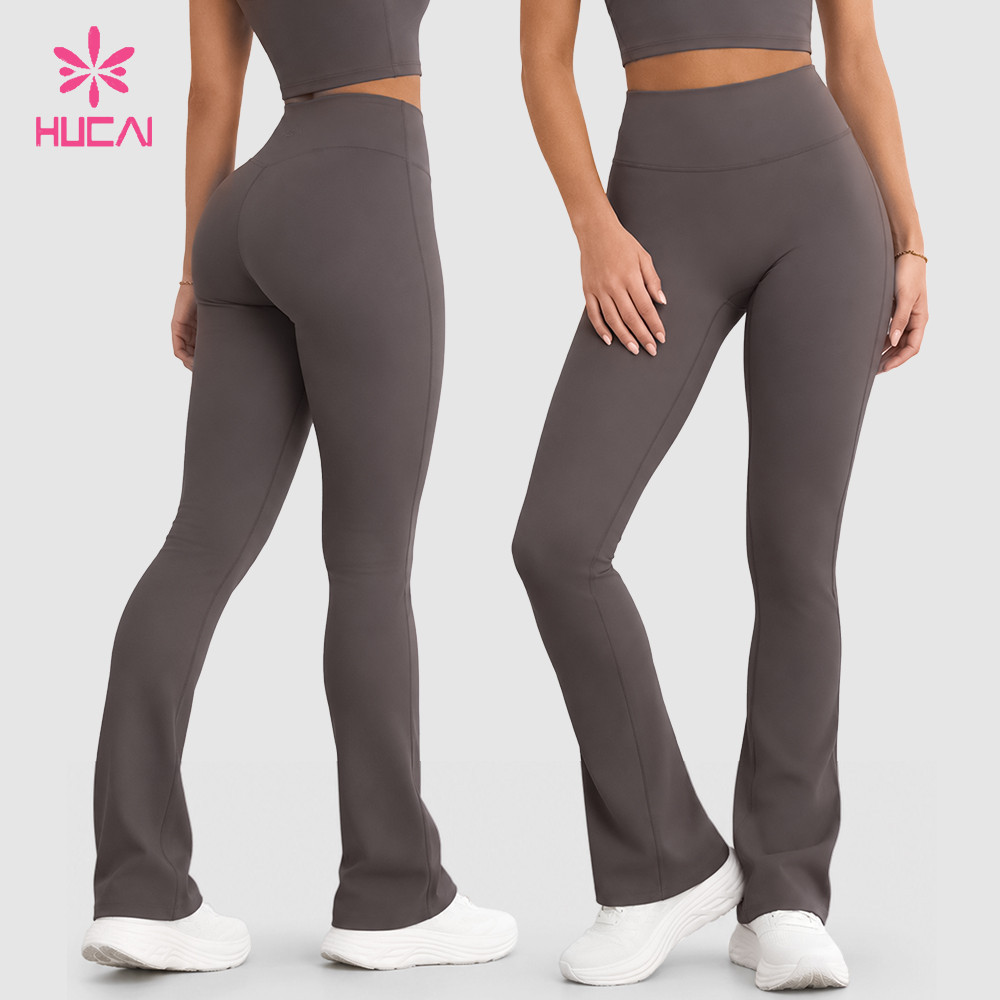
A women's active pant usually fails on the fabric decision before anyone questions the fit. A legging block that reads clean in a knit can turn stiff and short in a stretch woven. A straight-leg pant drafted on a knit block can hang with the wrong weight and lose its seat after two hours of wear. For private label activewear buyers and product developers, choosing between stretch woven and stretch knit is not a hand-feel preference. It decides the pattern block, the seam allowance, the waistband build, the recovery figure you quote to the mill, and how much of the sample round is spent correcting problems that came from the fabric direction rather than from the pattern. HUCAI Sportswear reviews fabric direction at the brief stage for this reason: it is the decision that constrains every later one.
Quick Answer
Stretch knit is the usual direction for leggings and training tights, because its looped structure extends in more than one direction and follows the body through movement. Stretch woven is the usual direction for straight-leg, wide-leg, cargo, travel and hybrid training pants, where the garment has to hold a line instead of following the body. Choose from the pant's job first, then confirm the choice through stretch direction, recovery, seam extensibility and waistband behavior during sampling.
Table of Contents
- Who This Article Is For
- Two Structures, Not Two Grades of Stretch
- Which Pant Types Each Direction Serves
- Stretch Direction and Recovery: The Two Lines Buyers Quote Wrong
- Surface, Opacity and Whether the Pant Must Hold Its Line
- Construction Consequences: Pattern, Seam, Waistband, Pocket
- Cost, MOQ and the Order of Sampling
- Decision Check
- Founder's Technical Insight (Jean Yuan)
- FAQ
- Final Takeaway
Who This Article Is For
- Primary reader: growing activewear brands building a first or second women's active pant program, where the block and the fabric are still open decisions
- Secondary reader: established brands adding a woven pant to a knit-led range, or re-developing a legging block that has been carrying the same fabric for several seasons
- Product stage: product definition and fabric selection, before the fit sample is cut
- Problem being solved: the brief says "stretch" without stating direction, recovery target, test method, or which part of the garment the stretch has to serve
- Who may not need this article: buyers who are only requesting a quotation on a fully approved, already-produced style with locked fabric and measurements
What you gain from this article: a way to state fabric direction in the brief so a mill can answer precisely, four checks that expose a wrong direction before you pay for a second sample round, and the construction points that decide whether the chosen direction survives bulk production.
Two Structures, Not Two Grades of Stretch
Stretch knit and stretch woven are different architectures, and the word "stretch" hides that difference. In a knit, yarn loops are interlocked, so extension comes from the loop geometry as well as from any elastane in the yarn. The panel extends across its whole surface, and it returns because the loops close again. In a woven, warp and weft yarns cross at right angles. The structure has no inherent give, so stretch has to be engineered in: elastane core-spun yarn, a modified weave, or a finishing route that builds mechanical stretch. Extension is usually concentrated in one direction unless the mill supplies a four-way woven.
That difference shows up on the cutting table, not only on the body. A knit panel distributes movement across its full width, so a seam carries a share of the extension. A woven panel resists extension across its surface, so movement is absorbed at the places where the garment is tightest and where the seam sits: the crotch curve, the knee line, the side seam, the waistband join. The same body movement therefore produces a different mechanical event in each fabric direction.
The practical consequence is that a brief which only says "stretch" cannot be answered precisely. A mill needs the direction of extension, the target extension, what recovery is expected after repeated extension, and the test method that will be reported with the shipment. Those four items belong in the fabric specification, not in a later email.
Which Pant Types Each Direction Serves
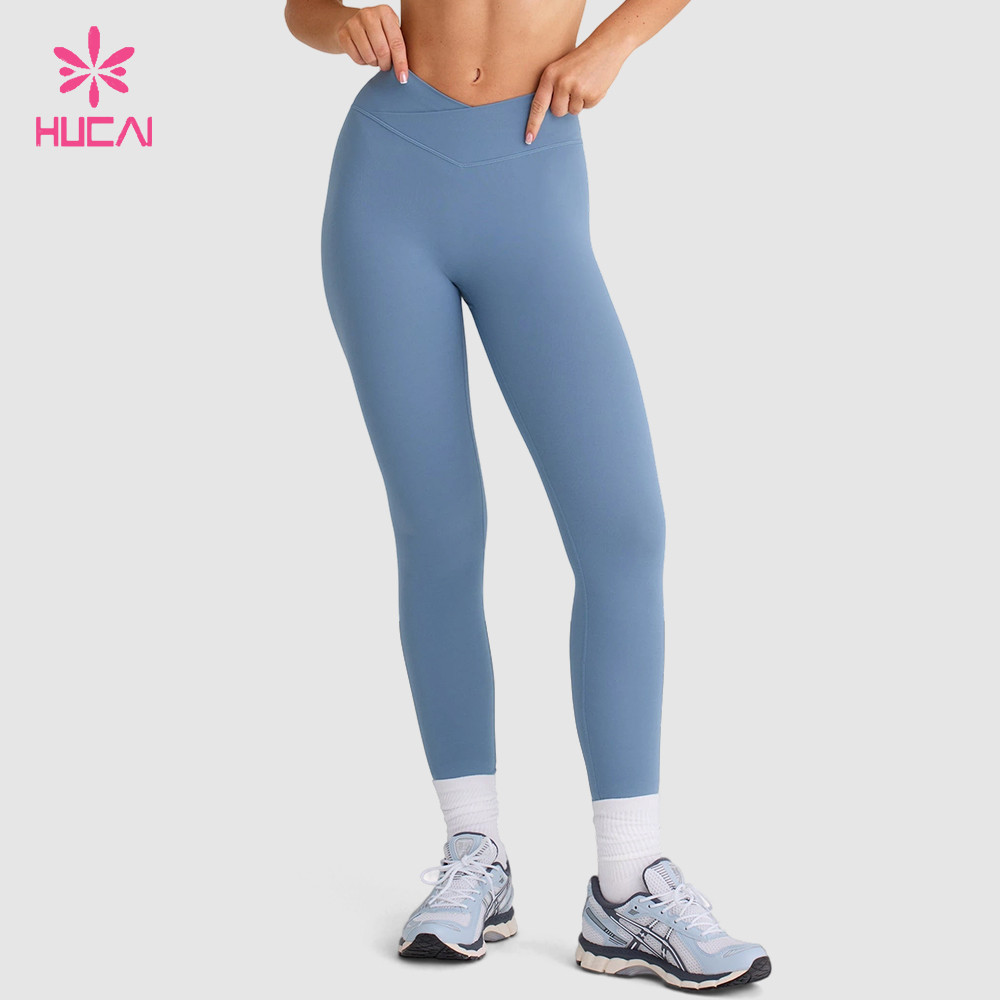
The pant's job is the first filter, because it decides how much the fabric has to follow the body and how much it has to hold a line. In current women's activewear ranges, the split is fairly consistent: knit-led for studio and training silhouettes that read the body, woven-led for lifestyle, travel and utility silhouettes that read as a pant rather than a tight. This is an observation of how established ranges are merchandised, not a rule about what any single brand should produce.
| Pant type | Direction that usually fits | What actually drives the decision |
|---|---|---|
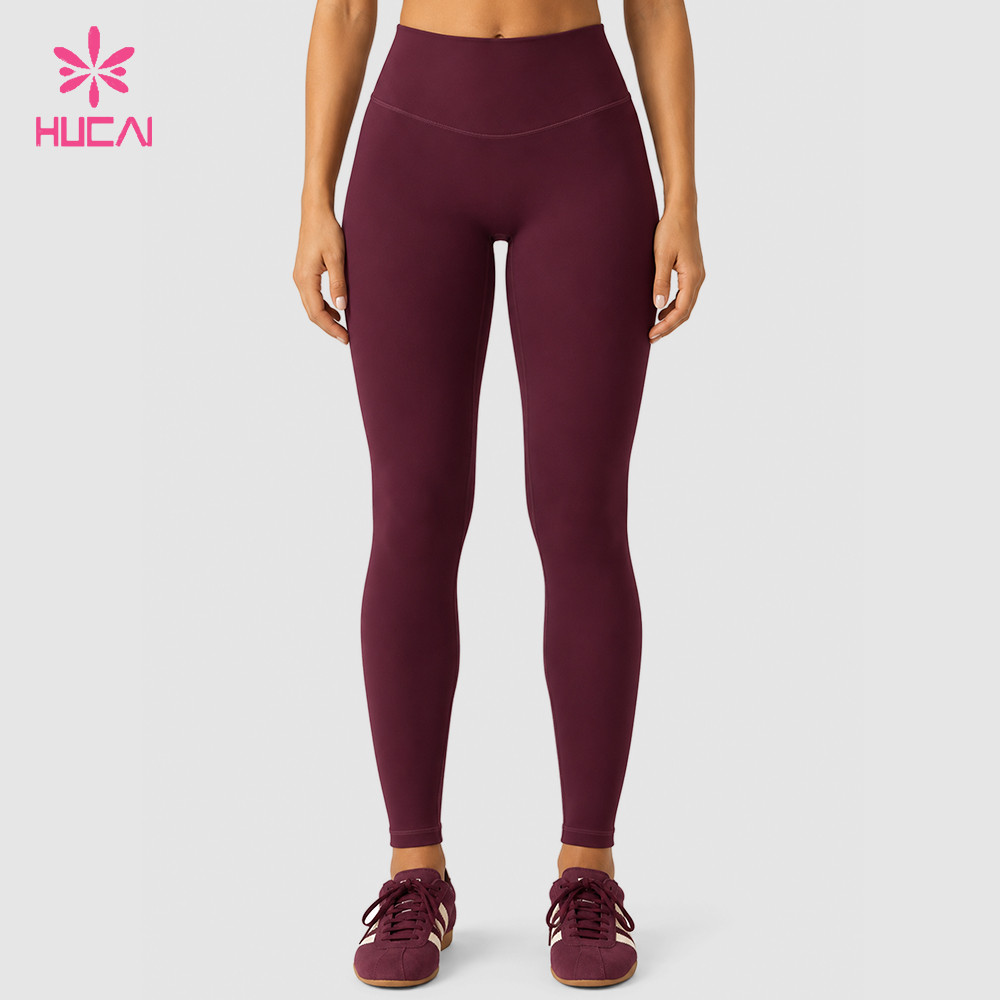
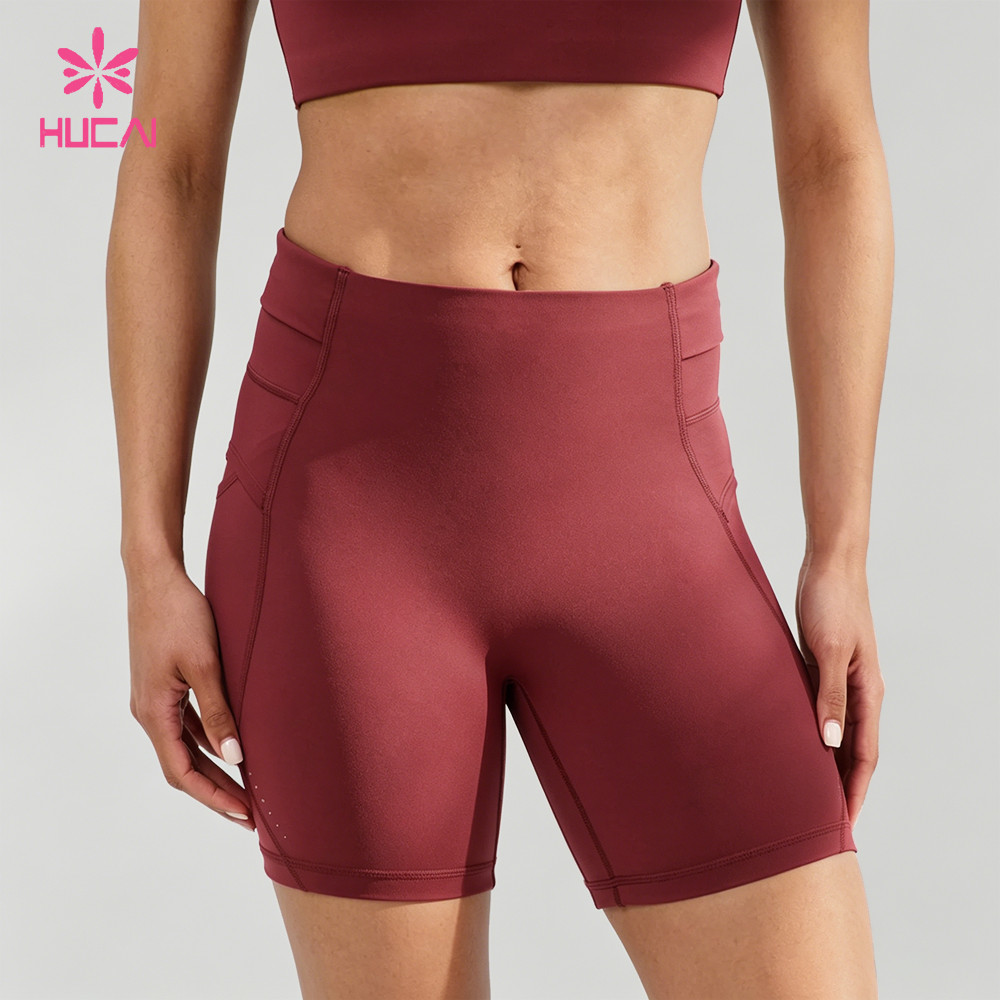
| Leggings, training tights | Stretch knit | Extension in several directions, recovery at knee and seat, opacity under stretch |
| Compression or sculpting tight | Dense stretch knit | Compression direction, panel placement, seam flatness against skin |
| Biker and short tights | Stretch knit | Thigh extension, hem grip, no ride-up through movement |
| Jogger and sweatpant | Knit, including structured knits | Drape and weight, cuff recovery, whether the leg should collapse or hold |
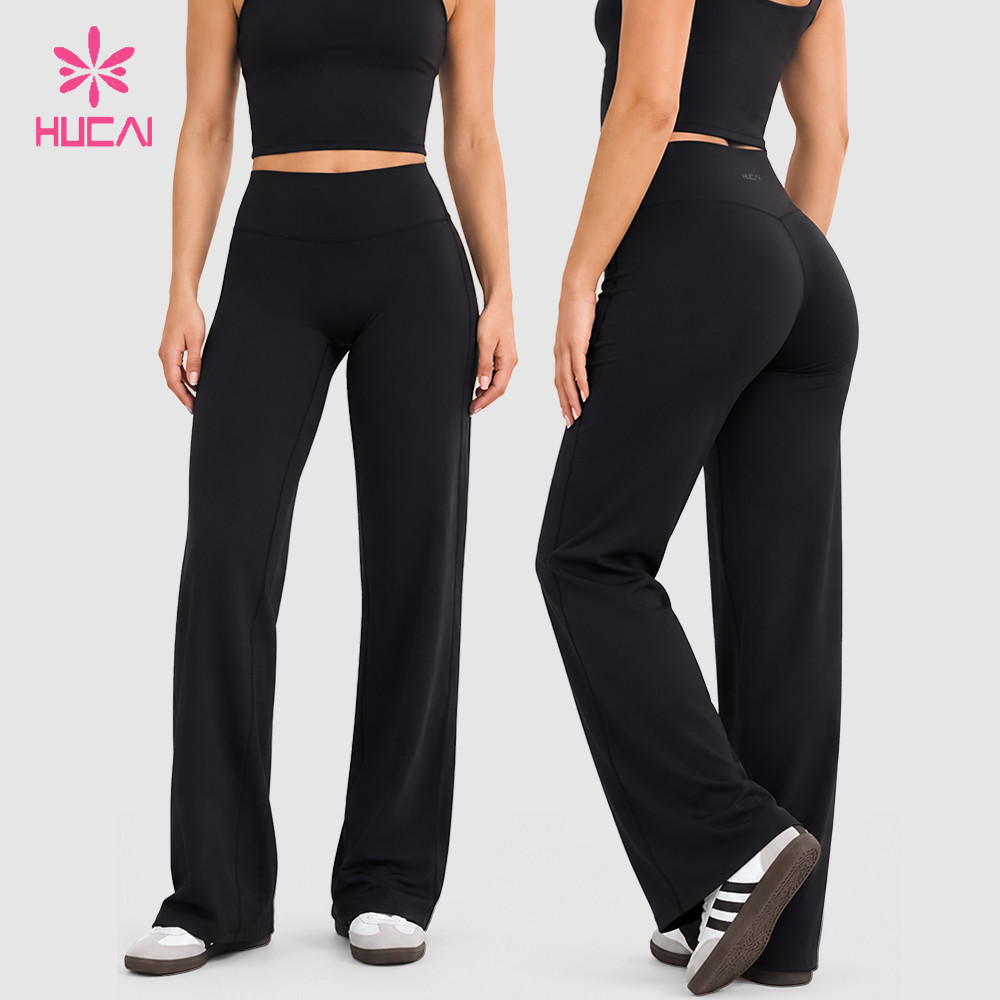
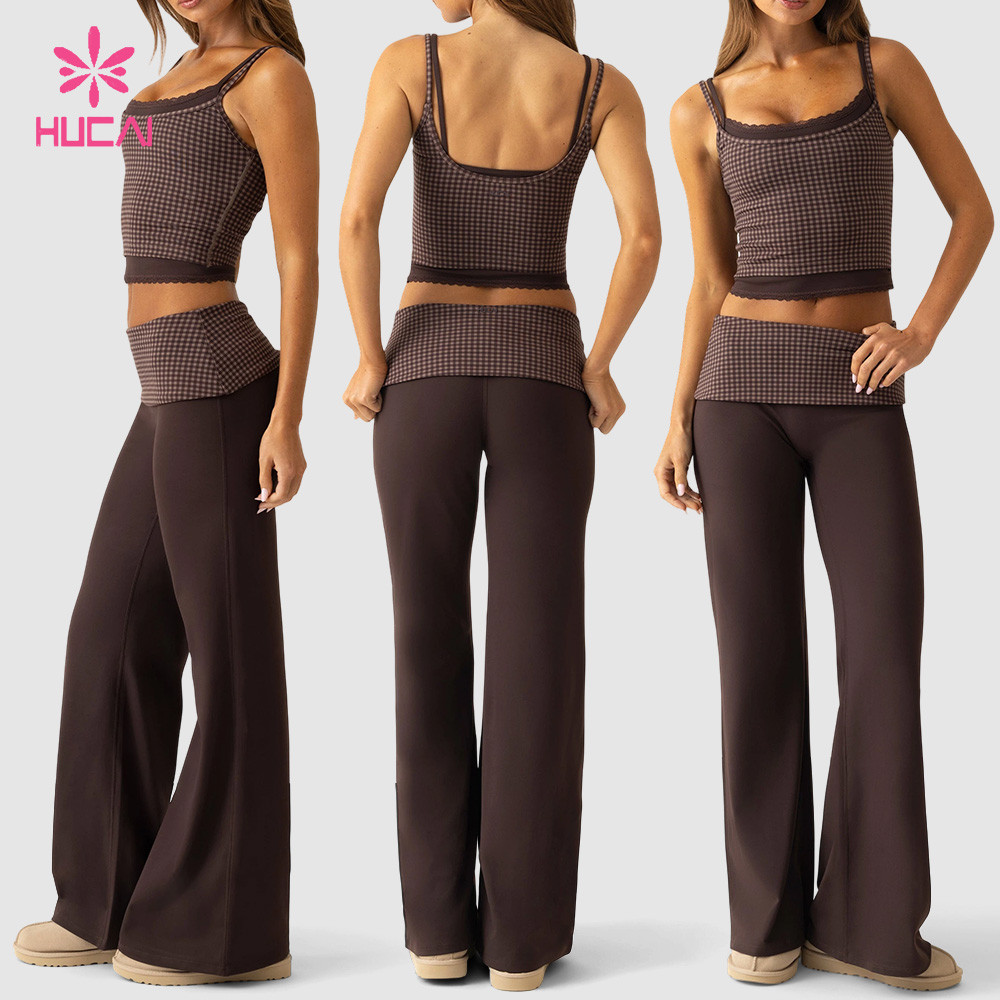
| Straight-leg, wide-leg, flared pant | Stretch woven | Holding a clean line from hip to hem, seat recovery, front panel flatness |
| Cargo and utility pant | Stretch woven | Pocket weight without sag, seam strength, abrasion at pocket edges |
| Travel and commuter pant | Stretch woven | Crease behavior, seat bagging after long sitting, waistband comfort |
| Hybrid training pant | Either, decided by movement range | Whether the silhouette can absorb a gusset or knit panel without losing its line |
| Skort | Woven shell over knit short | Two behaviors in one garment: outer line and inner movement |
The table also explains why mixed constructions exist. A woven shell with a knit gusset or a knit back panel is a legitimate way to keep a clean outer line while giving movement where the body needs it. It is not a shortcut: every added panel adds a seam, a seam adds a potential failure point, and the pattern has to place that seam where it will not rub.
Stretch Direction and Recovery: The Two Lines Buyers Quote Wrong
Two specification lines cause most of the rework we see in pant development: the direction of stretch is left ambiguous, and recovery is treated as part of the same number. "Four-way stretch" describes how many directions extend. It says nothing about how far, at what force, or how completely the fabric returns.
Recovery is the line that matters after the first wear. A knit that extends comfortably but returns slowly will grow at the knee and the seat, and the garment will look larger at the end of a session than at the start. A woven that extends under load but does not return will bag at the seat and stay bagged, because the structure has no loop memory to pull it back. In both cases the visible symptom appears in the garment, while the cause sits in the fabric specification.
This is where named test methods help, because they force the mill and the factory to talk about the same thing. ASTM D2594 covers the stretching properties of knitted fabrics with low power, which is the relevant frame for many legging and jersey knits. ASTM D4964 addresses tension and elongation of elastic fabrics on a constant-rate-of-extension machine, which suits stretch wovens and elasticated components. AATCC 135 covers dimensional change after home laundering, which is how a stretch panel's growth and shrinkage become visible. ISO 13934-1 covers tensile properties of woven fabrics and is useful when seam and panel strength, rather than stretch, is the question. Using a standard family by name and purpose is enough at brief stage; the reported values and tolerances are agreed per project.
In HUCAI Sportswear's development room, the recovery check is done on the panel, not only on the fabric roll. A gauge length is marked along the grain and across it, the panel is extended to the target stated in the brief, released, and measured again after a rest period and again after a home wash. If the panel does not return within the tolerance agreed for that garment, the direction is wrong for that block. Changing the pattern at that point will not fix it.
Surface, Opacity and Whether the Pant Must Hold Its Line
Appearance is where buyers often make the decision emotionally and then justify it technically. It is worth separating three things: surface, opacity, and line.
Surface is the hand-feel story. Knits can be matte, brushed, sandwashed, or smooth, and the surface control is largely a finishing decision. Wovens carry their own surface logic: a matte, slightly dry finish reads as an active pant, while a flat or lightly lustrous finish starts to read as a casual trouser. If the intent is a gym-to-street woven, the finish and the compactness of the weave deserve as much attention in the brief as the stretch figure.
Opacity behaves differently in each direction. In a knit, sheerness under extension depends on stitch density, yarn, elastane content, color depth and whether a lining or double layer is used. In a woven, the base structure is already closed, so the risk shifts from stretch sheerness toward seam grinning and pocket show-through. Neither direction is automatically safer; the test is the same, which is to look at the garment under extension in the color that will actually ship, not in the black development sample.
Line is the commercial reason brands move to woven. A woven holds a straight or wide leg, keeps a front panel flat, and hides the contours that a knit follows by design. The trade is that the same fabric resists movement, which is why the pattern and the movement zones have to be planned together rather than after the fabric is approved.
Construction Consequences: Pattern, Seam, Waistband, Pocket
Once the direction is chosen, the construction has to be re-planned rather than adjusted. A knit pant is built around stretch: flat seams that move with the panel, a rise cut with negative ease so the fabric holds the body, a waistband that grips through elastic recovery, and a gusset that removes bulk from the crotch curve. The sewing specification follows the fabric: stitch type, stitch density, thread elasticity, and seam allowance are all chosen so the seam extends at least as far as the panel it joins. A seam that extends less than the fabric becomes the place where the garment cracks, pulls, or breaks.
A woven pant is built around movement that has to be designed in. The crotch curve needs more room, because the fabric will not give there on its own. Darts, a shaped waistband with interfacing or an elastic casing, pocket bags that do not swing, and often a zip or button placket add operations that a knit legging never needs. Seam strength and seam slippage matter as much as stretch, because the load is carried by the stitch line rather than distributed across the panel. ISO 13934-1 is the frame buyers usually quote when panel and seam strength have to be reported.
The pattern block cannot simply be carried across. A knit block applied to a woven fabric usually produces a pant that is tight through the hip, short in the rise, and strained at the crotch, because the block was drafted to rely on extension that is no longer there. Re-grading a knit block into a woven pant is not a shortcut; it usually costs more sample rounds than drafting the woven block properly the first time.
Mixed construction is the third option, and it needs to be planned as one garment rather than two fabrics. A woven shell with a knit waistband, a knit gusset, or a knit back yoke can hold the outer line while allowing movement. Each addition adds a seam, changes the seam allowance at that join, and creates a new place where the two materials can shrink differently. In HUCAI Sportswear's sample review, mixed panels are checked for differential shrinkage after laundering before the style is approved, because that is where the join usually shows first.
Cost, MOQ and the Order of Sampling
Cost differences between the two directions come from the number of operations, not only from the fabric price per meter. A knit legging typically runs fewer panels, fewer trims, and shorter sewing time per unit. A woven pant usually carries more pattern pieces, a waistband with a closure or casing, pocketing, and more handling per garment. Fabric minimums also behave differently: a stretch woven often has to be developed or sourced in a specific construction and color, while a knit may be available in a wider color program.
This is why a quotation requested from a reference image is only indicative. The same silhouette can be quoted at very different levels depending on whether the shell is knit or woven, how many panels the pattern needs, whether a zip and pocket bags are included, and how the waistband is built. Quotation can be reviewed after the product specifications and project requirements are confirmed. The current public MOQ starts from 200 pcs per style, while final color, size, fabric, trim, and customization planning depends on the confirmed project.
The order of sampling matters more than the number of samples. The fabric direction should be settled on data before a fit sample is cut: the mill's extension and recovery report, the panel-level gauge check, and a hand-feel review against the intended positioning. Only then does the fit sample make sense, because a fit correction made on the wrong fabric direction is a correction to the wrong variable. Sample development usually takes about 10-15 days, depending on style, fabric, trim, logo, revision requirements, and confirmed details. Bulk production often takes about 25-30 days after pre-production details and approvals are confirmed, depending on project scope, materials, processes, quantity, and scheduling.
Decision Check: Is the Fabric Direction Ready for a Sample Brief?
Before requesting samples, confirm the following:
- Pant job is stated in one sentence: whether the garment must follow the body through movement, hold a clean line from hip to hem, or do both in different zones.
- Stretch is specified by direction, not by label: extension direction, target extension, and recovery expectation are written with the test method the mill will report.
- Seam and waistband build match the fabric: seam extensibility, stitch type, and waistband construction have been chosen for this direction rather than reused from the previous block.
- Fabric availability is confirmed for the shipping color: the construction and color are available in the required quantity and dye lot, and opacity has been checked in that color.
- A wear-and-wash trial is planned: the sample will be worn through sitting, stepping and bending, then laundered, before bulk is discussed.
If three or more criteria are confirmed, the direction is ready for a structured sample request. If fewer than three are resolved, additional development planning will reduce sample revision cycles and control cost.
Carry the Fabric Direction Into the Sample Brief
If you already have a tech pack, send the measurements, the intended fabric direction with its stretch and recovery requirement, the seam and waistband specification, and the branding details for OEM review. If you are starting from reference images, share the pant silhouette, the target market, and the movement the garment has to support, and the direction can be narrowed before a block is drafted through ODM development. Buyers who are still comparing fabric options can review the fabric selection process first, then bring a shortlist into the sampling discussion.
Founder's Technical Insight: Jean Yuan's Development Note
When a brand brings us a pant reference, the brief usually contains three requirements that pull against each other: a stretch woven, four-way stretch, and a soft hand feel. In the sample room, that combination almost always resolves in one of two directions. The pant holds its line and restricts at the crotch, or it moves comfortably and loses the line by mid-afternoon. The fabric did not fail. The brief asked for two different garments.
What I ask the team to separate first is extension from recovery. They are not the same property, and one number cannot carry both. Mark a gauge length on the actual panel, one along the grain and one across it. Extend to the target written in the brief, hold, release, and measure again after a rest period and again after one home wash cycle. In my experience, most of what brands describe as a pattern problem appears in that measurement, before the pattern is touched.
The second check is the seam. A seam that extends less than the panel becomes the failure point, no matter how good the fabric is. On a knit, that means matching stitch type and thread elasticity to the panel, then pulling the seam itself. On a woven, it means confirming seam strength and slippage at the highest-load point, which is usually the crotch curve and the waistband join, not the side seam.
The third is the waistband, where two materials with different shrinkage meet. If the shell and the elastic or interfacing move differently in the wash, the waistband will roll, pucker, or sit away from the body, and no fit correction will hold. HUCAI Sportswear keeps all three checks in the sample room as a gate before a style moves to pre-production, because each one is cheaper to fix on a panel than on a bulk cut.
FAQ
Is stretch knit always the right direction for leggings?
For leggings and training tights, stretch knit is the usual direction, because the looped structure extends in more than one direction and returns as the loops close. Exceptions exist, such as structured compression leggings built from a dense four-way woven, but those should be confirmed at the sample stage rather than assumed from a reference image.
Can a stretch woven be used for a legging?
It can, but the construction changes substantially. A woven legging needs a pattern with more room through the hip and crotch, seams that carry load rather than distribute it, and a waistband built to hold without relying on fabric extension. Confirm the block, the seam specification, and the recovery behavior together before approving the sample.
What should a buyer write in the brief instead of "four-way stretch"?
Write the direction of extension, the target extension, the recovery expected after repeated extension, the test method the mill will report, and the area of the garment where the stretch has to perform. "Four-way" only states how many directions extend; it does not state how far, at what force, or how completely the fabric returns.
How do we check stretch recovery before bulk production?
Check it on a panel, not only on the fabric roll. Mark gauge lengths along and across the grain, extend to the target stated in the brief, release, measure after a rest period and again after a home wash, and compare against the tolerance agreed for that garment. AATCC 135 is the usual reference when dimensional change after laundering has to be reported.
Why do stretch woven active pants feel tight at the crotch?
Because movement in a woven is absorbed at the points where the garment is closest to the body, and the crotch curve is the tightest of those points. When a knit block is cut in a woven fabric, the garment loses the extension the block was drafted to rely on. The usual remedies are a re-drafted crotch curve, a gusset, or a knit movement panel placed where it will not disturb the outer line.
Does stretch woven cost more than stretch knit?
It often does, but the fabric price is only one part of the difference. Woven pants usually carry more pattern pieces, more sewing operations, more trims, and tighter fabric minimums. The reliable comparison is a quotation built on confirmed specifications for both directions, rather than a price per meter comparison.
What is the MOQ for a women's active pant program?
The current public MOQ starts from 200 pcs per style. Final color, size range, fabric, trim, logo method and packaging planning depend on the confirmed project, and the fabric direction itself can affect the minimum because woven constructions are often developed per color.
How long does sampling and bulk production take?
Sample development usually takes about 10-15 days, depending on style, fabric, trim, logo, revision requirements, and confirmed details. Bulk production often takes about 25-30 days after pre-production details and approvals are confirmed, depending on project scope, materials, processes, quantity, and scheduling.
Final Takeaway
The fabric direction should be decided from what the pant has to do, then proven on a panel before a block is committed. Leggings and training tights usually belong in stretch knit, because the structure follows the body and distributes extension across the panel. Straight-leg, wide-leg, cargo, travel and hybrid pants usually belong in stretch woven, because the garment has to hold a line that a knit cannot hold. Neither direction is the safer default; the risk sits in carrying a block, a seam specification, or a waistband build across from the other direction without re-checking it.
The practical next step is small. Write the direction, the extension target, the recovery expectation and the test method into the brief, mark a gauge length on the panel that will actually be cut, and check the seam and the waistband join before the fit sample is reviewed. That sequence turns a hand-feel argument into a development decision, and it is the sequence HUCAI Sportswear applies before a pant program moves from sample to bulk.
About HUCAI Sportswear
- Founded in 1998, specializing in women's activewear and sportswear manufacturing
- OEM and ODM development support for sports bras, leggings, shorts, tops, and matching sets
- Fabric, trim and pattern review before sample development, including stretch and recovery checks on the panel
- Structured sample development and sample-to-bulk consistency control, with AQL 2.5-based inspection as part of the quality workflow
Current certification information can be reviewed during supplier evaluation based on the project and documentation requirements.