Studio-to-Street Terry Sets: How to Choose GSM, Drape, and Rib Trims
- Share
- Issue Time
- Nov 18,2026
Summary
A development guide for private label terry sweatshirt and jogger sets: choosing the finished weight band, reading drape from the silhouette, specifying rib trims that survive washing, and holding one shade standard across top and bottom.
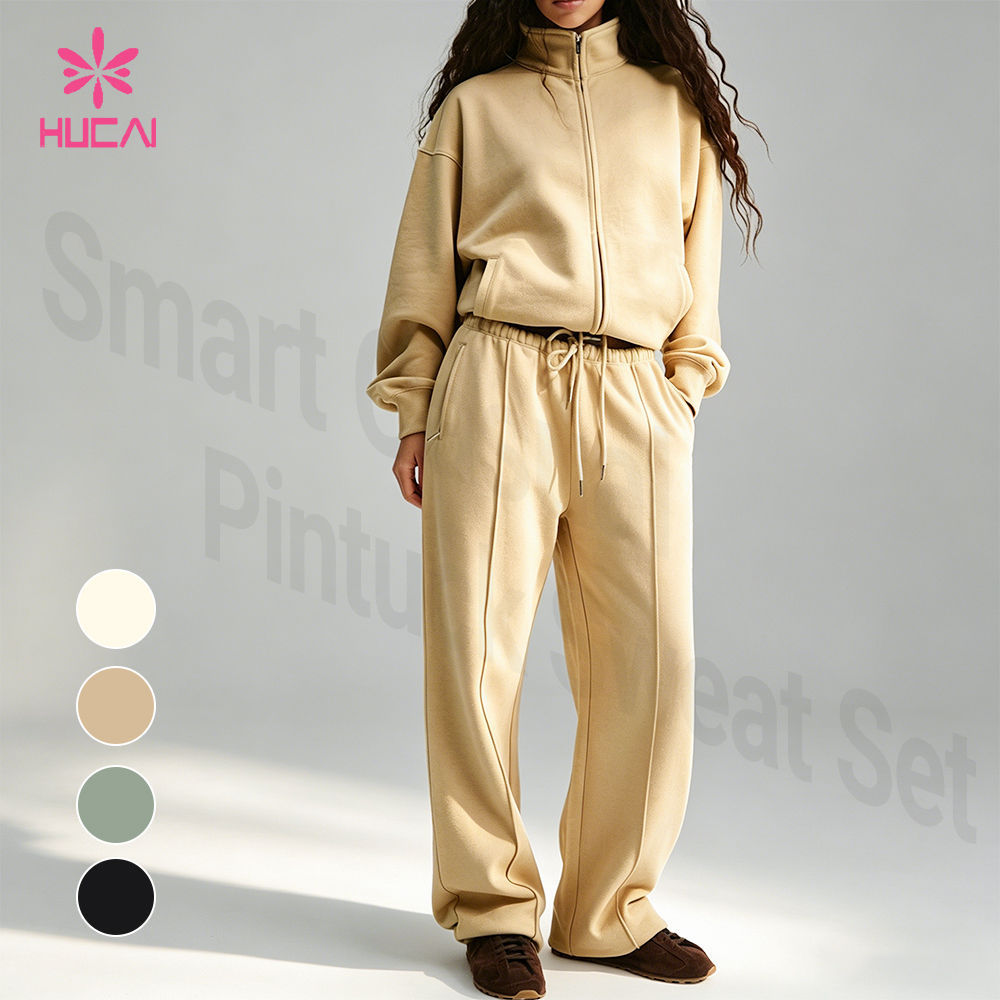
A terry set that works in the studio and on the street is usually specified in one sentence, then argued about for three sample rounds. The reference shows a boxy crew or half-zip, a straight-leg or tapered pant, rib cuffs, a soft hand feel. It does not show the loop structure behind the surface, the weight the silhouette depends on, how far the rib trim will pull the hem, or whether top and bottom can be dyed from one lot. As a private label terry sweatshirt jogger supplier working from tech packs and reference images, HUCAI Sportswear sees those gaps become revision cycles. This guide covers the decisions worth locking before a sample is cut.
Nordic pages reviewed in November 2026 show Casall's AW26 new-in built around mesh and velvet sets, and Stronger's 2026 index listing Winter Club and Essential Elements as seasonal programs. Neither proves terry-specific demand; the question comes from buyers adding a loungewear layer.
Quick Answer
Choose the weight band from the silhouette, not the photo: 240 to 280 gsm for a fluid set, 300 to 340 gsm for a balanced studio-to-street set, 360 gsm and above for a boxy shape. Then confirm loopback or brushed back, specify rib trim by elastane content and band height, and agree a wash-shrinkage target before sampling. Verify weight on a cut sample, not a swatch label.
Table of Contents
Who This Article Is For
- Primary reader: founders and product development managers adding a first loungewear layer.
- Secondary reader: sourcing managers and technical designers holding references without a spec, at concept or reference stage.
- Problem: the set photographs well but arrives heavy, stiff, short after washing, or with a wavy hem.
- Not for you: an approved bulk program needing only a schedule update.
What you gain: a defensible weight band, a rib spec that survives washing, and a reusable acceptance table.
1. Terry Constructions in a Tech Pack
In sourcing, terry covers three related knits. Loopback keeps loops inside and a flat face outside. French terry is the same family with a finer, often brushed inside. Fleece adds a raised pile that hides the loop.
The first question is not which is softer, but what the inside must do: absorb in a studio session, insulate on the walk afterwards, or glide over a base layer. The second is whether the outside face must stay flat for print, embroidery or a pintuck seam. One terry base across crew, half-zip and jogger keeps lab dips, shrinkage and trim sourcing in one path, the logic behind fabric family planning.

2. GSM: Set the Band, Verify the Number
Mass per unit area drives the shoulder drop, the tension the hem band holds and the cost per piece.
Three bands cover most women's terry programs: 240 to 280 gsm for a fluid studio set, 300 to 340 gsm for a relaxed studio-to-street set, and 360 gsm and above for a boxy silhouette. Verify under ISO 3801 or ASTM D3776 on a conditioned cut sample, several cuts per lot, and write the method on the spec so greige is never compared with finished weight. Our fabric selection review treats weight, surface finish and shrinkage route as one decision.
3. Drape and Silhouette
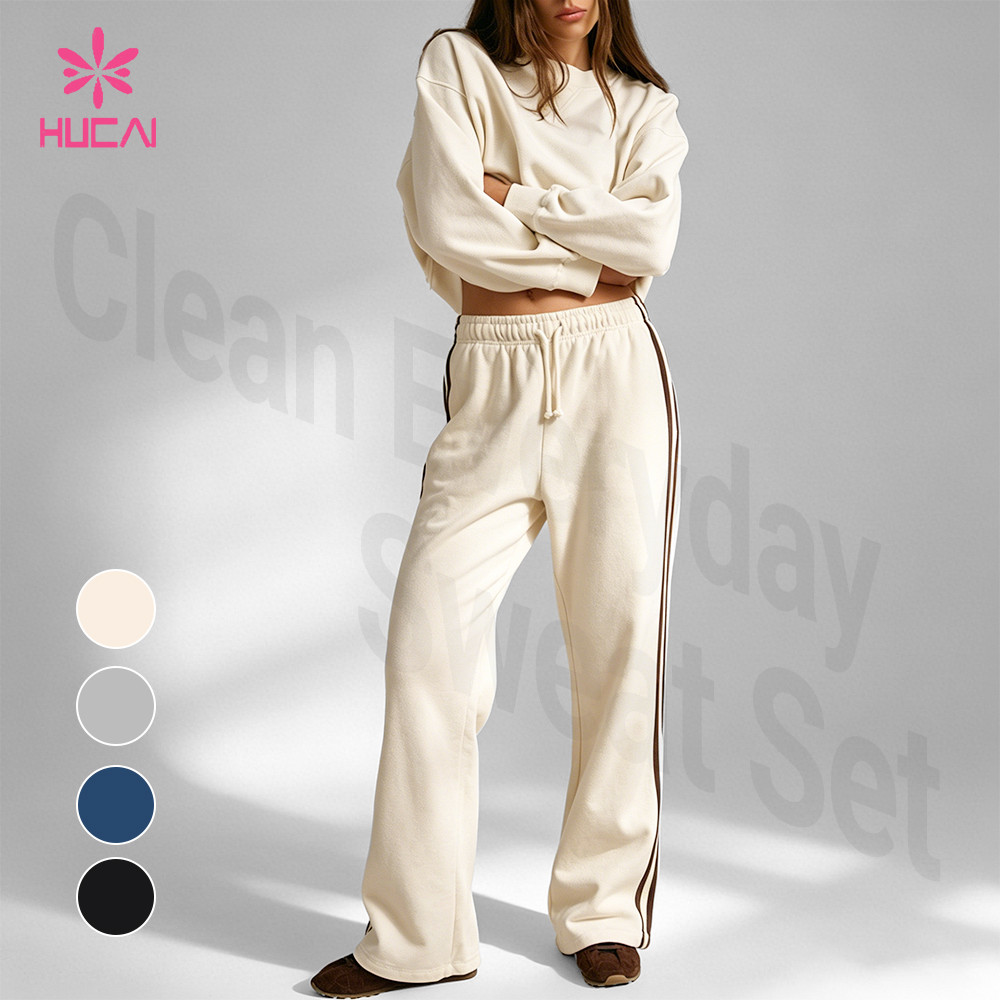
Drape is weight, loop density, stitch tightness and pattern together. A 320 gsm loopback in a straight leg falls cleanly; the same fabric in an oversized drop shoulder with a tight hem band produces a blouson that is either the intended look or reads as a sizing error.
Fix the silhouette, choose the band that delivers it, then adjust the pattern: weight for the shoulder line, length below the band for the break, and a lighter body only where an elasticated cuff defines the shape.
| Option | Hand feel and drape | Typical band | Usual role | Main risk |
|---|---|---|---|---|
| Loopback, unbrushed | Dry, firm, holds a fold | 280 to 340 gsm | Boxy crew with straight-leg pant | Reads stiff if the loop is coarse |
| French terry, light brush | Softer, moderate drape | 260 to 320 gsm | Relaxed studio-to-street set | Brushing moves weight and shade |
| Fleece back, pile | Warm, bulky, low drape | 340 gsm and up | Structured cold-weather set | Seam bulk, lint, slower drying |
4. Rib Trims
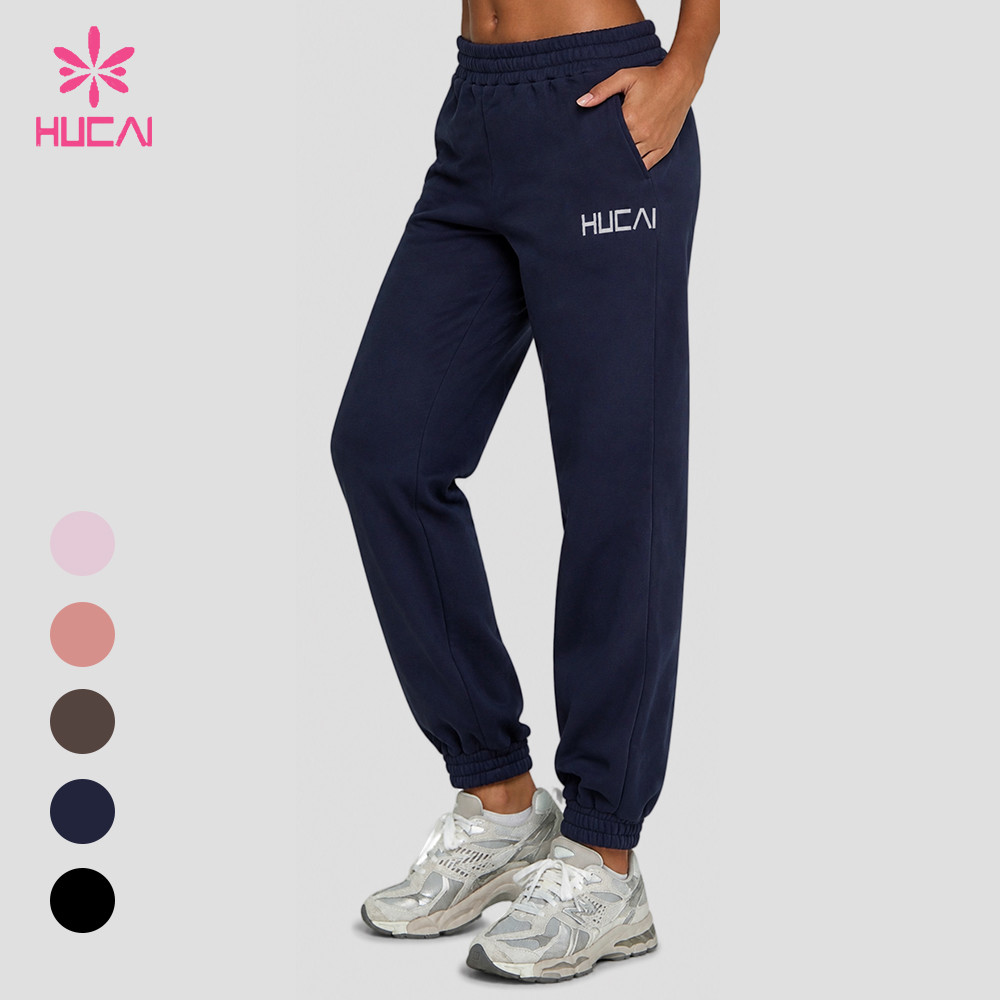
In HUCAI's trim review, most terry sets fail at the trim. Cuffs, hem band and neckband are separate knitted components with their own mass, recovery and shrinkage.
Four parameters decide behaviour: rib structure, usually 1x1 or 2x2; elastane content, which sets how much stretch returns; band height, which sets proportion; and gauge, since a fine rib against coarse loopback reads as two garments. The risk is differential shrinkage: if the rib moves more than the body the hem waves, if less the band stands away. Both appear after the first wash, not in the sample room. Rib distortion at the join is covered in ribbed and textured fabric risks.

5. Preshrinking and Wash Measurement
Terry is a looped knit, and looped knits move. Length shrinkage is usually larger than width, depending on yarn, loop density, compaction and garment washing. A set that measures correctly can lose enough length in one wash to change the proportion.
Lock the number before bulk. Agree a target for length and width, state the wash route, and measure flat at marked points before and after defined cycles. ISO 6330 and AATCC 135 are the usual references; the target is a project decision, written as a proposed acceptance check. Tubular compaction and tensionless drying reduce residual shrinkage before cutting; garment washing removes more but shifts shade. Our sample approval process treats the wash result as part of sample approval.
6. One Set, One Shade Standard
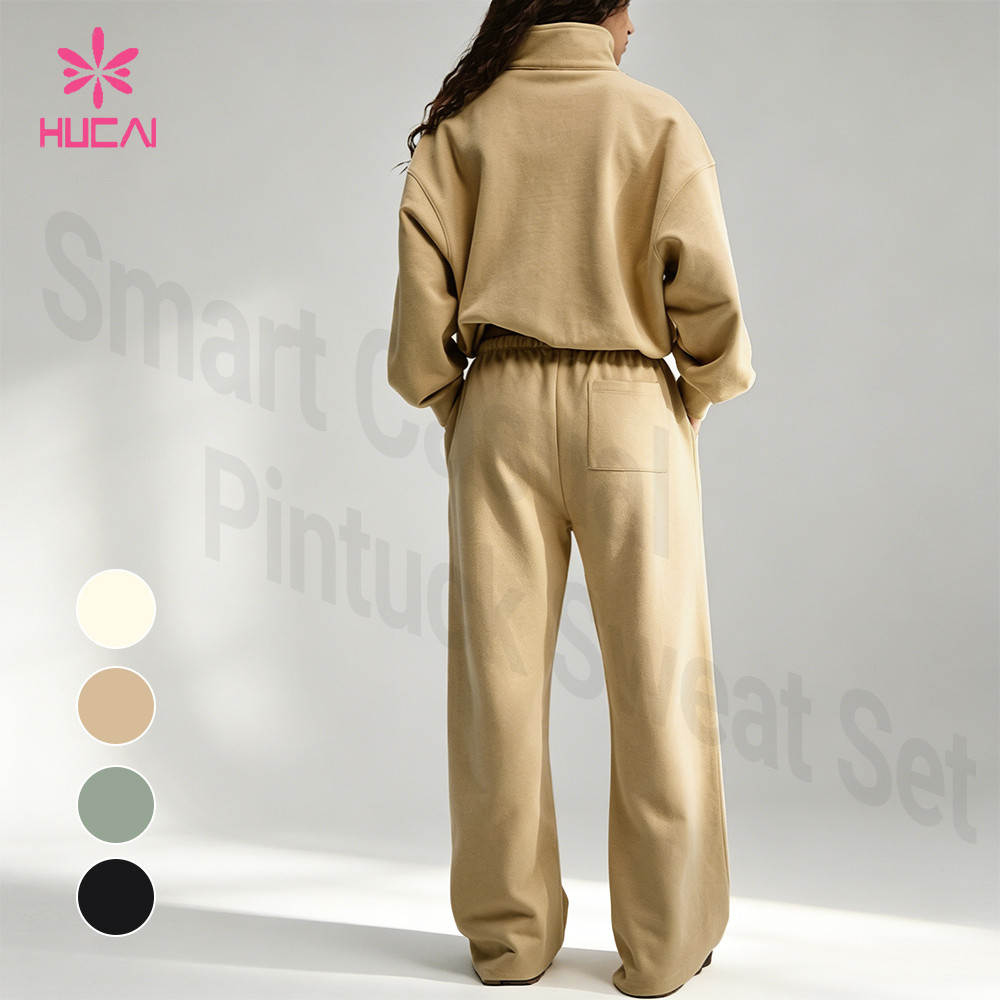
A set is judged as one garment. When top and bottom come from different lots, or the trim is dyed separately, the mismatch shows at the waistline, where a buyer looks first.
Two effects complicate a flat-fabric match: terry reflects light differently from rib, so one recipe reads deeper on the denser trim, and brushing shifts apparent shade. Approve top, bottom and trim as a pair under two light sources and keep it as the bulk reference, following cross-product shade control for capsules. In bulk, book the rib from the same lot as the body and record lot numbers against the approved swatch.
Sample Acceptance and RFQ Inputs
Proposals to agree at sample stage, not fixed limits; the target depends on weight band, wash route and market.
| Check | Method | Where | Proposed acceptance |
|---|---|---|---|
| Mass per unit area | ISO 3801 or ASTM D3776 | Finished fabric | Within 5% of approved |
| Length shrinkage | ISO 6330 or AATCC 135 | Body, flat | Typically 5% or lower |
| Width shrinkage | Same route | Chest and hem | Slightly below length |
| Rib recovery | Repeated stretch cycles | Cuff and hem | No permanent wave |
| Rib to body differential | Same route | Hem and cuff join | No wave after wash |
| Shade match | Two light sources | Waist, cuff, neck | Matches approved pair |
| Fit points | Measurement chart | Chest, length, inseam, cuff | Within approved tolerance chart |
What to send in the RFQ
- Weight band and surface direction, stated as finished fabric.
- Inside construction: loopback, light brush or pile; outside face requirement.
- Rib specification: structure, elastane direction, band heights.
- Size range, target market and the wash route the garment is sold against.
- Shrinkage and shade targets, or a request for a proposed target.
Decision Check: Is This Set Ready for Sampling?
Before requesting samples, confirm the following:
- Weight band: finished mass stated with tolerance, matched to the silhouette.
- Surface: loopback, brush or pile named; outside face clear.
- Rib trim: structure, elastane direction, band heights specified.
- Shrinkage: wash method and cycles agreed, with targets.
- Shade: top, bottom and trim approved as a pair.
Three confirmed items are enough for a sample request. Fewer, and one development review costs less than a second round.
Plan the Set Before the First Sample
With a tech pack, send the weight band, rib specification, measurement chart and shade target for OEM review. From references, send the silhouette, the detail to call out and the intended market, and HUCAI Sportswear can turn them into a sample brief.
Founder's Technical Insight: Jean Yuan's Development Note
In HUCAI Sportswear's sample room, terry sets rarely come back over design. They come back over the hem. When a brand brings a reference, the detail that decides whether it survives the first wash is the shrinkage relationship between body and rib. We cut both from one lot where we can, pre-wash them, and measure the differential before joining. If the rib moves more than the body by even a small margin, the hem waves after washing and no pressing will hold it. The cuff has the same issue: specified only by relaxed measurement, it grows with wear, so we record extended and recovered values too. I would rather hold a sample two days than release a set that looks right on the hanger and tired after one wash.
FAQ
What GSM should a studio-to-street terry set be?
Usually 300 to 340 gsm in finished fabric. Terry at 240 to 280 gsm drapes more and reads as a studio layer; 360 gsm and above holds a boxy shape. Verify on a cut sample, since greige and finished weights differ.
Should I specify loopback or French terry?
Specify by the inside surface. Loopback gives a dry, firm hand; a light French terry brush softens the surface and adds drape; a pile adds warmth with more seam bulk. The outside face requirement, especially for print, usually decides.
Why does the hem band wave after washing?
It waves when the rib shrinks differently from the body, or has too little recovery. The fix belongs in the spec: a trim shrinkage target, a measured differential, and recorded recovery values.
Can top and bottom be dyed from the same lot?
Often yes, when quantity allows and both styles use one fabric base. Where separate lots are unavoidable, approve top, bottom and trim as a pair under two light sources and record lots against the approved swatch.
What is the MOQ for a private label terry set?
The current public MOQ starts from 100 pcs per style, while final colour, size, fabric, trim and customisation depend on the project. Rib sourcing, colour count and wash route are the usual variables.
How long do sampling and bulk take?
Sample development usually takes about 10 to 15 days, depending on style, fabric, trim, logo, revisions and confirmed details. Bulk production often takes about 25 to 30 days after pre-production approvals are confirmed.
Final Takeaway
A terry set is decided by three numbers and one relationship: weight band, shrinkage target, rib specification, and the differential between body and trim. Put them on the spec and the studio-to-street look survives the wash; leave them to the sample room and the revision cycle decides.
Next Step
Ready to develop: send your tech pack, weight band, rib spec and shade target for OEM review. From references: share the set images and the detail to call out for ODM development. Still comparing: review the custom jogger pants programs and matching set programs first.
About HUCAI Sportswear
- Founded in 1998, manufacturing women's activewear in Dongguan, China.
- OEM and ODM development across sweatshirts, joggers, matching sets and training ranges.
- Fabric and trim review, sampling and bulk coordination.
- AQL 2.5-based inspection from pre-production review to final inspection.
Current certification information can be reviewed during supplier evaluation based on the project and documentation requirements.