Textured and Ribbed Performance Fabrics: Stretch, Recovery and Seam Risks Brands Should Review
- Share
- publisher
- HUCAI Sportswear
- Issue Time
- Sep 28,2026
Summary
Ribbed and textured activewear fabrics change more than appearance: rib direction, stretch and recovery balance, opacity under tension, edge behaviour and branding compatibility shift together. This development guide explains what to define before sampling, how to review a textured sample, and which checks prevent the same issues returning in bulk. Includes a brief-readiness checklist, a founder's technical note on pattern rebalancing, and FAQ for private label programmes.
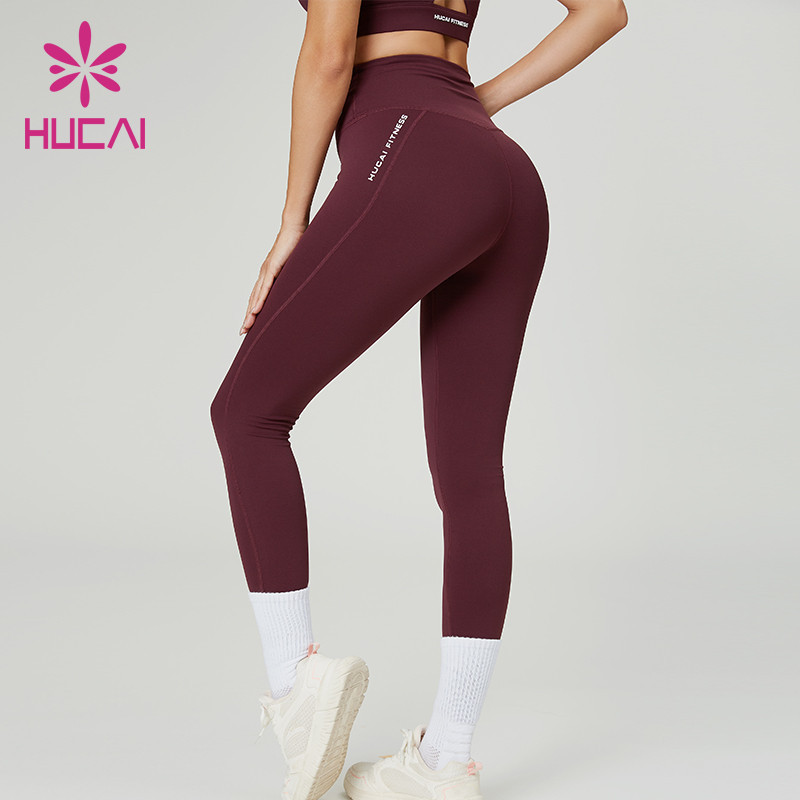
Ribbed and textured surfaces have moved from a seasonal accent to a standing part of many women's activewear ranges. Public product pages and collections from benchmark labels such as THE UPSIDE, Casall, and Adanola show ribbed, brushed, and knit-textured surfaces used across leggings, bras, and matching sets, where the surface itself carries part of the product identity instead of a print. For a brand planning a private label activewear range, that shift creates a development problem rather than a styling choice: a textured fabric is not a flat knit with a different look. Rib direction, stretch balance, opacity, and seam behaviour change together, and the consequences appear first at sampling and again in bulk. This article translates those risks into the decisions a product team can define before the first sample is cut, and explains where HUCAI Sportswear builds these checks into its sample development workflow.
Quick Answer
A textured or ribbed performance fabric should be specified by rib direction, stretch and recovery balance, opacity target, and seam behaviour, not by appearance alone. Flat-fabric approval is not enough, because the same pattern can behave differently on a rib knit: horizontal and vertical stretch are rarely symmetrical, and cut edges can wave where a flat knit sits flat. Brands reduce revision cycles by defining these four variables in the development brief and reviewing them on a worn, moving sample before bulk planning begins.
Table of Contents
- Who This Article Is For
- Why a Textured Surface Changes the Development Brief
- Rib Direction and Stretch and Recovery Balance
- Opacity and Coverage on Textured Knits
- Seam, Binding and Edge Behaviour
- Logo, Trim and Heat-Transfer Compatibility
- Sample-to-Bulk Checks for Shade, Handfeel and Recovery
- Decision Check
- Development Next Step
- Founder's Technical Insight (Jean Yuan)
- FAQ
- Final Takeaway
Who This Article Is For
- Primary reader: growing women's activewear brands adding ribbed or textured product families to an existing flat-knit range.
- Secondary reader: private label buyers and product developers who already hold a fabric direction but have not yet defined how it should behave on the body.
- Product stage: product definition and first sampling, before pre-production approval.
- Problem being solved: a textured fabric that was approved as a swatch produces fit, opacity, or seam problems once the garment is cut and worn.
- Who may not need this article: brands running a confirmed tech pack on an unchanged flat-knit style, where fabric and pattern are already locked.
What you gain from this article: a four-variable way to specify a textured fabric, a section-by-section review list for the sample stage, and a decision checklist you can use before requesting samples.
Why a Textured Surface Changes the Development Brief
Ribbed and textured constructions are produced by changing the knit structure, the yarn path, or the surface treatment, not by printing a pattern onto a flat jersey. In public range architecture from THE UPSIDE, Casall, and Adanola, textured surfaces are used as a visual differentiator inside a plain colour story, which is exactly why they appeal to private label brands: the surface adds depth without a print and without a full-surface artwork cost.
The development consequence is that the same pattern geometry no longer behaves the same way. A rib structure concentrates stretch differently along and across the fabric, so a pattern block that was graded and balanced on a flat knit may distort in the vertical direction, sit differently around the waistband, or change how a panel reads against the body. The brief therefore has to describe the fabric by behaviour, not only by name.
| Fabric direction | What the brief must define | Typical sample risk |
|---|---|---|
| Rib knit | Rib direction, stretch balance along and across, recovery expectation | Garment grows vertically, waistband reads looser than intended |
| Brushed or peached surface | Surface-hand-feel direction, opacity target, colour depth after finishing | Colour reads different from the flat swatch, surface flattens at high-stress zones |
| Textured or structural face | Face and back direction, edge behaviour, logo application method | Cut edges wave, transfer application grips unevenly |
When HUCAI Sportswear reviews a textured fabric direction, the schematic and the pattern review are handled together, because a behaviour change in one usually forces an adjustment in the other. Defining both in the brief is what keeps the first sample useful rather than merely attractive on a hanger.
Rib Direction and Stretch and Recovery Balance
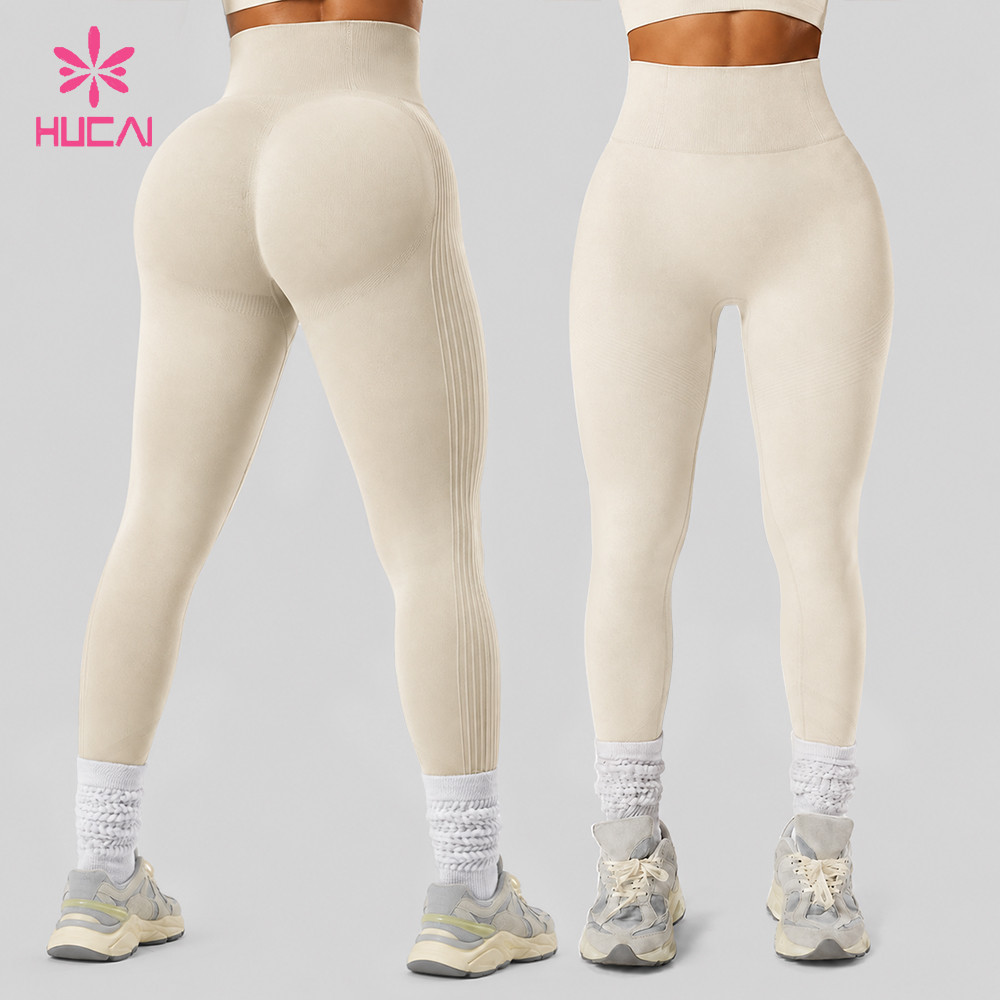
The single most common cause of repeated fit revisions on textured styles is stretch asymmetry. Rib structures typically extend more in one direction than the other, and the difference is not visible on a flat swatch laid on a table. Community threads on r/activewear around ribbed leggings recur to the same complaints, such as a garment that feels correct on the first wear and loosens through the day, or a waistband that starts to move during training. None of those outcomes are random; they are the predictable result of a stretch balance that was never defined.
Industry test methods treat this as a measurable property rather than a judgement call. ASTM knit stretch and recovery test methods and ISO dimensional-stability procedures exist precisely to describe how a knitted fabric elongates and returns, and AATCC colourfastness methods sit alongside them when a brand needs the surface to survive repeated laundering. A development brief that references this family of methods gives both sides a shared definition instead of the word "stretchy".
In practice, three questions resolve most of the risk before sampling:
- Which direction carries the movement? A legging relies on vertical elongation during a squat and lateral elongation across the hip, and a rib that is stronger in one direction will behave differently in each.
- What recovery is expected after elongation? Recovery, not initial stretch, determines whether the garment returns to its intended silhouette after wear and washing.
- Does the pattern need to be rebalanced? Where stretch balance is asymmetric, ease allocation and panel proportions usually need adjustment rather than a simple size change.
This is the point where HUCAI Sportswear reviews fabric behaviour and pattern balance as one decision: the recovery requirement drives the pattern adjustment, and the pattern adjustment determines whether the intended fit line can be held through a size range.
Opacity and Coverage on Textured Knits
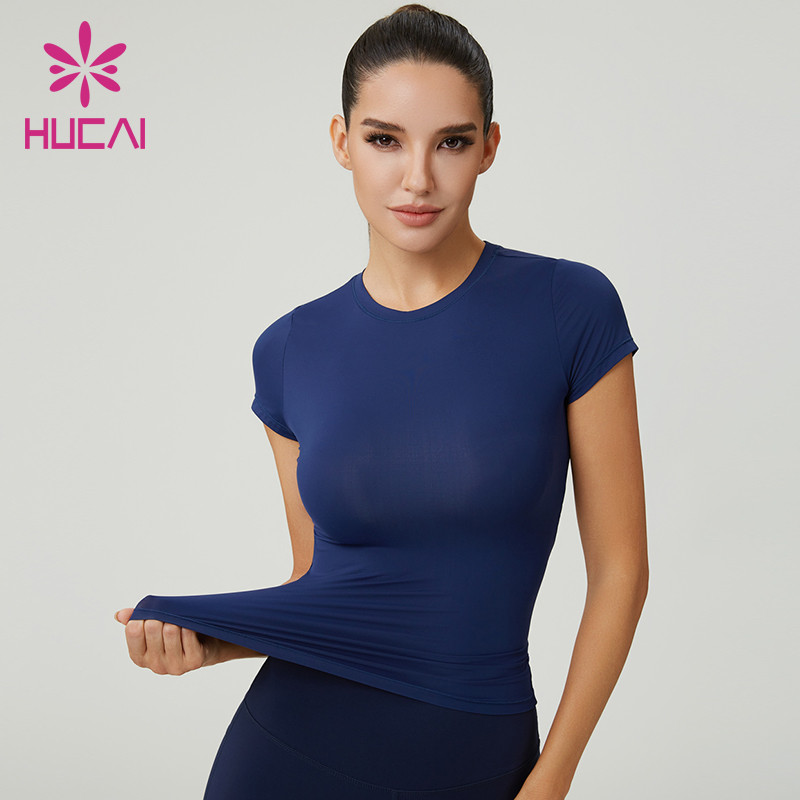
Opacity is a separate variable from weight, and this is where textured families surprise brands most often. A rib structure can read denser than a flat knit at the same weight because the surface has depth, yet the raised ribs and the valleys between them do not stretch at the same rate. Under tension across a hip or a knee, the opening of the structure can reveal what the relaxed swatch concealed. Because coverage is a stress-dependent property, it cannot be approved from a flat fabric sample.
For a private label programme, the practical approach is to define an opacity target by garment zone rather than by fabric alone. Zones under sustained elongation, such as the seat, the front thigh, and the knee, are reviewed at the tension the garment actually experiences, in the same light conditions the end customer will encounter. This is also where colour choice interacts: lighter shades on a textured surface are the least forgiving, and a colour story that works on a flat knit may need to be re-evaluated in a rib.
Rather than asserting a fixed performance level, the sample stage should record what was observed so the decision is evidence-based:
- The zone, the tension applied, and the lighting condition used for the review.
- Whether the appearance is acceptable to the brand's own coverage standard, as a fit direction rather than an absolute claim.
- Whether a lining, a panel change, or a fabric weight adjustment is required, and what that change would cost in handfeel.
- Whether the same decision still holds in the lightest colour of the planned colour story.
Opacity review belongs inside sample development rather than in a separate test round, because the answer usually changes either the pattern or the material direction, and both have to be settled before pre-production confirmation.
Seam, Binding and Edge Behaviour
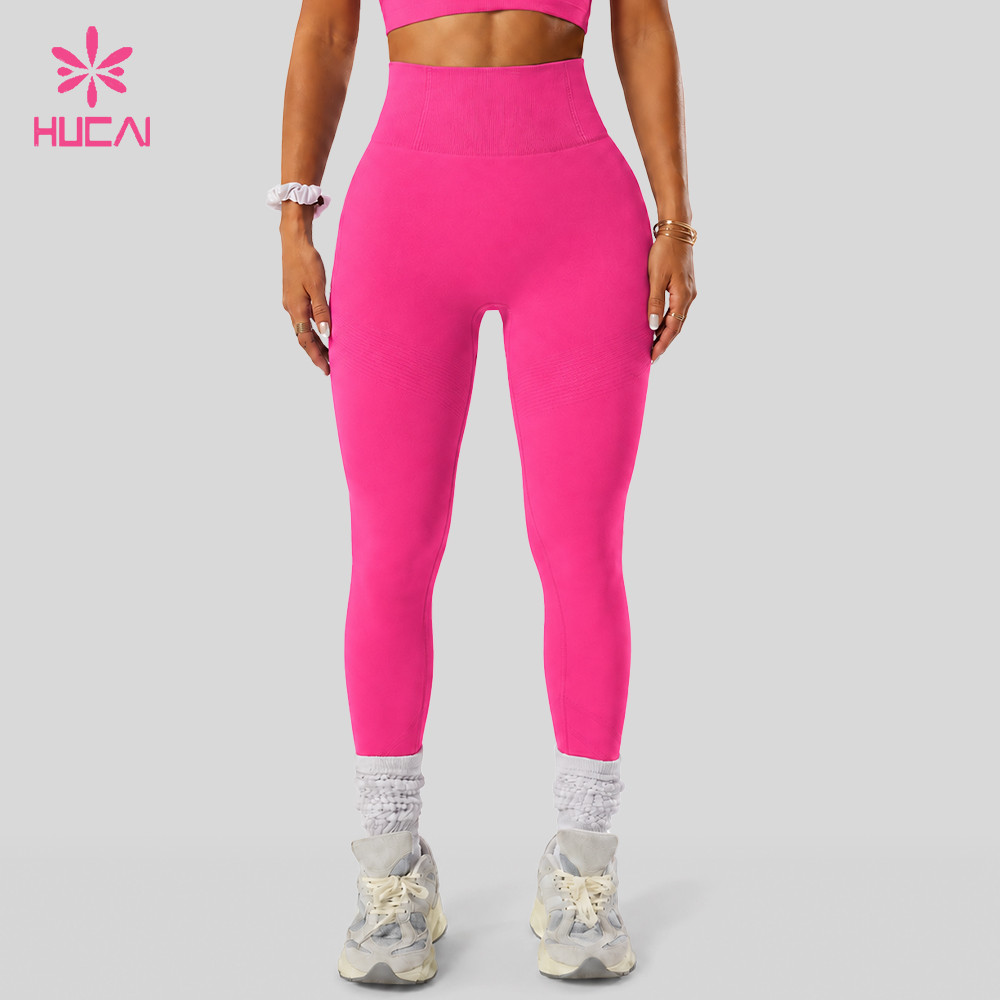
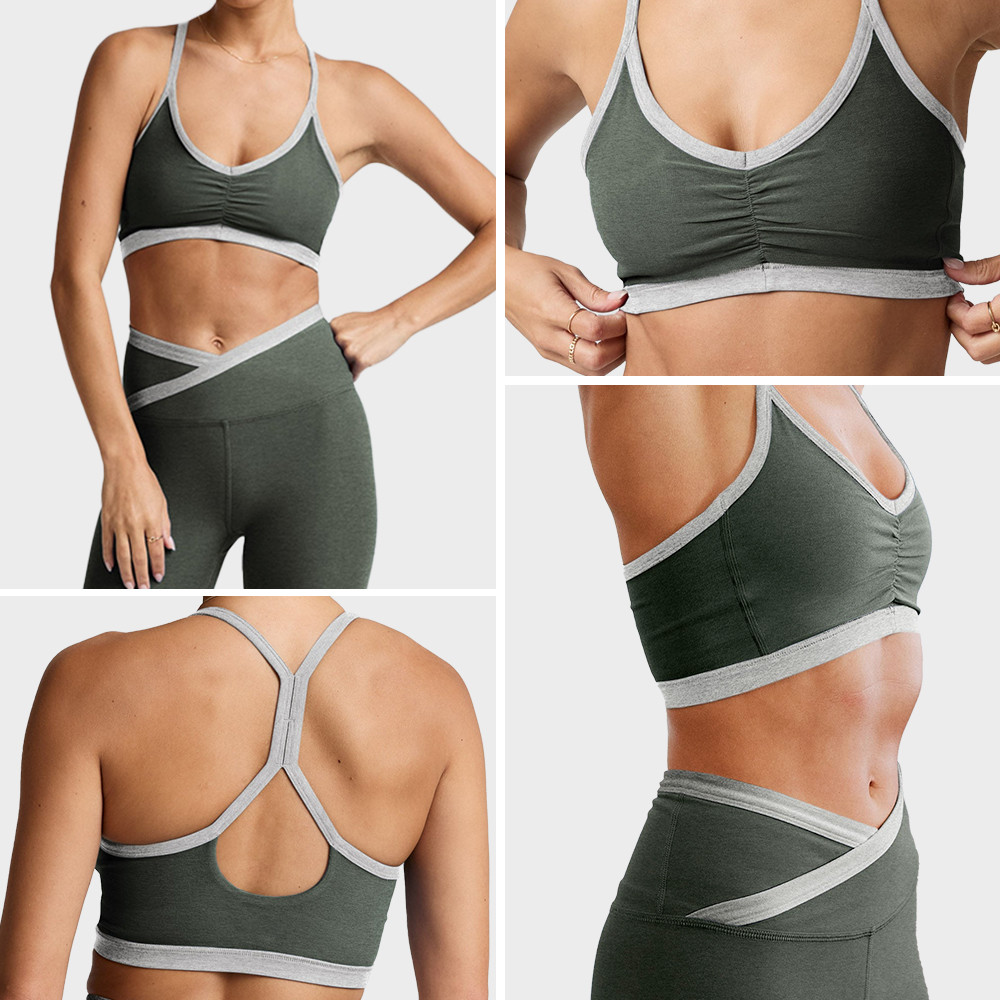
Cut edges behave differently on a textured fabric than on a flat knit, and the difference shows up in three places: waistbands, neckline bindings, and hems. Because a rib structure carries more bulk per unit area, a binding that sits flat on a flat knit can appear wavy on a rib, and an elastic that was specified for a flat knit may read tighter or looser once the fabric underneath has a different compressibility. On bras, the same effect appears along the underband and the neckline edge.
The pattern room describes this as an edge-control problem rather than a sewing problem, and the distinction matters for the brief. If the cause is fabric behaviour, adding machine adjustment alone will not resolve it; the pattern, the binding width, or the elastic specification has to change. This is a common finding for HUCAI Sportswear when a textured direction is introduced into an existing pattern that was developed for a flat knit, which is why edge review is scheduled at the same point as fit review.
Waistband and underband
Compressibility changes how the band grips, which affects perceived tension and how the band sits through movement.
Neckline and armhole binding
Bulkier fabric can make a finished binding read wavy even when the seam itself is correct.
Hem and cut edge
Cut edges may need a different finish approach to hold a clean line after laundering.
A useful discipline at sampling is to review edges both relaxed and under movement, because a hem that looks controlled while standing can curl or flatten once the garment is worn through a range of motion. Reviewing only the static sample is how a controllable issue becomes a bulk complaint.
Logo, Trim and Heat-Transfer Compatibility
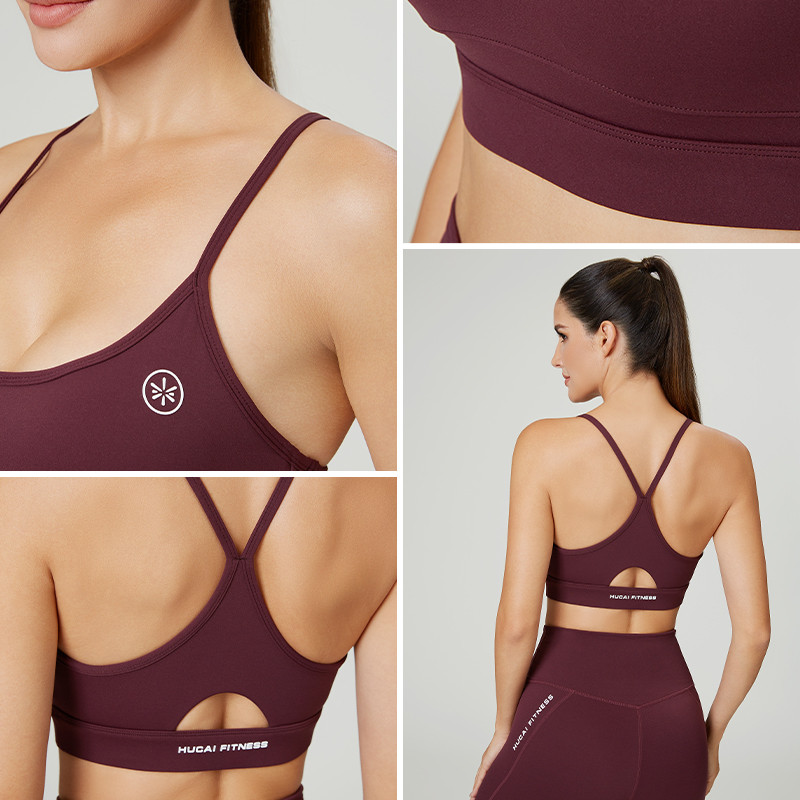
Branding application is the stage where a textured surface most often forces a late change. Heat-transfer and printed branding rely on a consistent contact surface, and a rib or a structural face does not present one. The result is uneven adhesion, partial pickup on the raised ribs, or a print that reads lighter than the approved artwork because the texture interrupts coverage. Public product language from the benchmark brands in this category regularly places branding on a smooth zone rather than across a textured panel, and that is a manufacturing logic as much as a design choice.
Trim behaves similarly. Piping, binding, and contrast tape carry their own stretch characteristics, and pairing a low-extension trim with a high-extension textured body creates puckering along the seam path. The practical brief therefore states two things explicitly: where the logo is allowed to sit, and which trim constructions are compatible with the body fabric's extension range. Where a brand wants branding on a textured surface, the usual answer is a dedicated smooth or flat panel at the placement point, introduced at the pattern stage rather than added to a finished block.
For private label programmes, HUCAI Sportswear reviews logo method, placement, and trim compatibility together with the fabric and pattern review, so the branding decision is settled before the sample is made instead of after the artwork is already approved.
Sample-to-Bulk Checks for Shade, Handfeel and Recovery
Textured fabrics are less tolerant of batch variation than flat knits, because the surface amplifies small differences. A shade difference that would be invisible on a smooth jersey becomes visible where ribs catch light in different directions, and a change in surface treatment can shift how deep a colour reads. Handfeel can also drift between batches without any change in the technical specification, which matters when the surface is part of why the customer chose the product.
The control points that matter most for this fabric family are the approved sample as the reference standard, shade and surface review across the production lots, recovery behaviour after laundering, and edge and seam appearance on finished bulk garments rather than on flat fabric. The quality workflow used by HUCAI Sportswear combines pre-production review, AQL 2.5-based checkpoints, in-process inspection, final inspection, and sample-to-bulk consistency control, and for textured programmes the shade and surface check is given specific attention because that is where the visible variance concentrates.
Two conditions are worth stating plainly. First, colour approval on a textured fabric should be made under the lighting conditions the end customer will actually see, not only under a colour-matching lamp, because the rib direction changes how light is reflected. Second, where a brand plans several colours in one textured family, the lightest colour should be reviewed first, since it will expose both shade variation and coverage behaviour earliest.
Decision Check: Textured Fabric Brief Readiness
Before requesting samples for a textured or ribbed style, confirm the following:
- RIB DIRECTION DEFINED: the direction of the rib or surface structure is stated in the brief, along with its intended relationship to the garment's main stretch axis.
- STRETCH AND RECOVERY TARGET: an expected elongation and return behaviour is described, referencing recognised knitted-fabric test methods rather than a descriptive word alone.
- OPACITY TARGET BY ZONE: the zones under sustained elongation have been identified, and a coverage direction has been agreed for each.
- EDGE AND BINDING STRATEGY: waistband, neckline, and hem finishes have been chosen with the fabric's bulk and compressibility in mind.
- BRANDING PLACEMENT CONFIRMED: the logo method and its placement zone are compatible with the surface, with any smooth panel introduced at the pattern stage.
If three or more criteria are confirmed, the direction is ready for a structured sample request. If fewer than three are resolved, additional development planning will reduce sample revision cycles and control cost.
Founder's Technical Insight: Jean Yuan's Development Note
I am Jean Yuan, founder and head of product development at HUCAI Sportswear. When a brand sends us a ribbed or textured fabric direction, the first thing I ask for is not the swatch — it is the pattern that the style is currently built on, because most of the revision cost in this fabric family is created before anyone sews anything.
Here is the failure pattern I see most often. A brand develops a legging block on a flat knit, approves it, then switches the body fabric to a rib for the next season and expects the same block to hold. It will not. The rib extends more along one axis, and the difference is not distributed evenly across the panel. The waistband, which was stable on the flat knit, now reads looser because the fabric under it compresses differently. The leg length grows through the day because recovery is being asked to do more than the structure can return. None of that is a sewing defect, and none of it can be fixed at the machine.
So we work in this order. First, we measure how the fabric actually behaves — extension in each direction and the return after it is released — and we use recognised knitted-fabric test methods so both sides are describing the same property rather than an impression. Second, we look at where the pattern needs to be rebalanced: ease allocation, panel proportion, and the rise and band geometry. Third, we review the edges, because a binding that sits flat on a flat knit will often show waves on a rib, and the correction belongs in the binding width or the pattern rather than in the operator's hands. Fourth, and only after those three, we look at branding placement, because putting a transfer across a raised surface is a decision that should be made before the pattern is locked, not after the artwork is approved.
The check I would give any product team is this: do not approve a textured fabric on a flat swatch and do not approve the fit on a static sample. Ask for the review to be done on a worn garment through a range of motion, in the lightest colour of the story, with the edges checked both relaxed and under movement. If a supplier answers those three conditions with measured data instead of adjectives, the revision cycle is usually short. If the answers are impressions, expect the problems to reappear in bulk, where they cost considerably more to correct.
FAQ
Is ribbed fabric suitable for leggings?
Yes, provided the rib direction, stretch balance, and recovery expectation are defined for the specific garment rather than assumed from a flat knit. Ribbed constructions are already used across leggings ranges when the pattern is balanced for the fabric's stretch behaviour and the waistband construction suits the fabric's compressibility.
Why can rib fabric distort at seams?
Distortion at seams usually comes from a mismatch between fabric extension and the trim or binding attached to it. When a low-extension binding is sewn onto a high-extension rib body, the seam has nowhere to release the difference, so it puckers or waves. The correction is normally a change in binding width, elastic specification, or panel geometry rather than more machine adjustment.
Does texture affect opacity?
It can, because ribbed and structural surfaces do not stretch uniformly across the raised areas and the valleys between them. A fabric that reads dense in a relaxed state may behave differently in the zones under sustained elongation. Coverage should therefore be reviewed on a worn sample under tension, in the lightest colour planned for the range, rather than decided from a flat swatch.
How should logos be applied to ribbed fabric?
Heat-transfer and printed branding need a consistent contact surface, which a rib or textured face does not naturally provide. The usual approach is to place branding on a smooth or flat zone, introduced as a panel at the pattern stage, and to confirm the method against the actual surface before the sample is approved rather than after the artwork is finalised.
Can textured fabric be used for sports bras?
It can be considered for bras when the support target and the underband construction are reviewed together with the surface. Because a textured fabric carries more bulk and compresses differently, underband tension and neckline edge behaviour need specific attention during sample review, and the support direction should be confirmed as a development target rather than assumed.
Does a ribbed style need a different pattern block than a flat knit?
Often it does, or at least needs rebalancing. Stretch asymmetry means ease allocation, panel proportion, and band geometry may all need adjustment even when the silhouette is unchanged. Reusing a flat-knit block without rebalancing is one of the most common reasons a textured style requires repeated fit revisions.
Should a textured fabric be approved from a swatch?
A swatch is useful for handfeel, colour direction, and surface assessment, but it cannot confirm fit, opacity under tension, or edge behaviour. Those properties depend on how the fabric is cut, sewn, and worn. The practical sequence is to shortlist with a swatch and confirm with a sample garment reviewed through a range of motion.
What should be checked before bulk production?
Before bulk, confirm the approved sample as the reference standard, the shade and surface behaviour across production lots, recovery after laundering, and the edge and seam appearance on finished garments rather than on flat fabric. For textured programmes, shade and surface checks deserve particular attention because batch variation is more visible on a structured surface. Sample development usually takes about 10-15 days, depending on style, fabric, trim, logo, revision requirements, and confirmed details, and bulk production often takes about 25-30 days after pre-production details and approvals are confirmed.
Final Takeaway
Textured and ribbed fabrics are a practical way for a growing brand to add visual depth without a print, but they are a development decision rather than a surface choice. The four variables that decide whether a programme runs smoothly are rib direction, stretch and recovery balance, an opacity target set by zone, and an edge and branding strategy built for the fabric's behaviour rather than inherited from a flat knit. Define those in the brief, review them on a worn sample in the lightest colour of the story, and the revision cycle stays short. Skip them, and the same issues reappear in bulk, where correction costs more. If you are introducing a textured family and want the pattern and material reviewed together before sampling, the fabric selection and sample development paths are the practical starting points.
About HUCAI Sportswear
- Founded in 1998, a women's activewear and sportswear manufacturer based in Humen, Dongguan, China
- OEM, ODM and private label development support for sports bras, leggings, shorts, tops, matching sets and broader yoga, training and athleisure programmes
- Own factory with an integrated development and manufacturing workflow, combining development support, production, quality checkpoints and order follow-up
- Development resources covering fabric, trim, pattern, CAD and sample support, with sample revision and sample-to-bulk coordination
- Quality workflow combining pre-production review, AQL 2.5-based checkpoints, in-process inspection, final inspection and sample-to-bulk consistency control
- MES and ERP-supported tracking, together with a hanging production system, supporting scheduling, production visibility and order follow-up
- The current public MOQ starts from 100 pcs per style, while final color, size, fabric, trim, and customization planning depends on the confirmed project
Current certification information can be reviewed during supplier evaluation based on the project and documentation requirements. Recycled or certified material options can be reviewed based on project requirements and available documentation.