Waistband, Compression and Opacity: Common Leggings Sample Problems Brands Should Review Early
- Share
- publisher
- HUCAI Activewear
- Issue Time
- Jun 19,2026
Summary
Learn why waistband roll-down, compression issues, and opacity problems happen in custom leggings samples, and what private label activewear brands should review before bulk production.
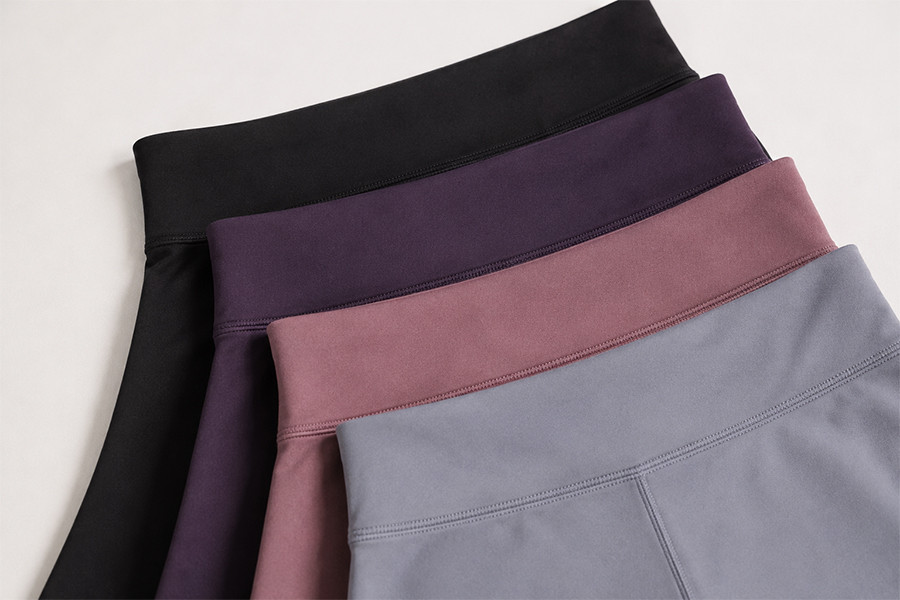
In private label leggings, many sample problems do not appear clearly in flat product photos. Waistband roll-down, weak compression, unstable opacity, loose recovery, and fit discomfort often become obvious only after movement, stretch, squat testing, or repeated wear. For custom leggings development, a leggings manufacturer should help brands review these issues before bulk production. At hucai sportswear, waistband logic, compression balance, fabric recovery, opacity, fit, and sample-to-bulk consistency are reviewed as connected development points, not isolated sample defects.
Quick Answer
Most leggings sample problems are not isolated defects. Waistband roll-down, weak compression, unstable opacity, loose recovery, and fit discomfort usually come from fabric, pattern, construction, size grading, or approval decisions that were not reviewed clearly before bulk production. Brands should check these points during sample development, not after the style is already approved.
Table of Contents
- Why leggings sample problems often appear after wear testing
- Waistband roll-down: what usually causes it
- Compression feels wrong: too tight, too weak, or inconsistent
- Opacity and squat coverage: why flat samples are not enough
- How waistband, compression and opacity affect each other
- Sample-stage review checklist before approval
- Decision check before bulk production
- FAQ
- Next steps
Why Leggings Sample Problems Often Appear After Wear Testing
```A leggings sample can look correct on a table and still fail during real movement. This is one reason leggings development requires more than visual sample approval. The garment must be reviewed through fabric stretch, waistband pressure, compression level, opacity under tension, rise balance, pattern tension, seam placement, and size grading.
For activewear brands, the most common sample problems are often connected. A waistband that rolls down may be related to fabric recovery. Compression that feels too tight may be related to pattern tension or size grading. Opacity that fails during squat testing may be related to fabric density, color, GSM, and stretch behavior.
This is why custom leggings development should include problem diagnosis before bulk production. If these points are left until the final stage, the brand may face repeated sample revisions, delayed approval, or bulk inconsistency.
Flat photos do not fully show waistband hold, squat coverage, movement comfort, or stretch recovery.
Waistband, compression, opacity, fabric recovery, and fit balance often influence each other.
These issues should be reviewed before bulk approval, not after production standards are already locked.
For brands developing OEM or ODM leggings, early diagnosis helps turn sample feedback into clear development action. Instead of saying "the leggings do not feel right," the review should identify whether the cause is fabric, waistband, pattern, compression, opacity, construction, or grading.
```Waistband Roll-Down: What Usually Causes It
```Waistband roll-down is one of the most common leggings sample problems. It can happen in yoga leggings, training leggings, sculpting leggings, and everyday leggings, but the development cause is not always the same.
A waistband may roll down because the height is not suitable, the pressure is too weak, the fabric recovery is not strong enough, the front rise or back rise is unbalanced, the elastic direction is wrong, or the size grading does not support the intended body range.
Waistband Height Is Not the Whole Answer
Some brands assume a taller waistband automatically creates stronger support. In reality, waistband height must be reviewed together with rise, fabric recovery, pattern tension, and pressure balance. A high-rise waistband can still roll if the fabric does not recover well or if the pressure is not distributed correctly.
Soft Waistbands Need Recovery Review
Soft waistbands can work well for yoga, Pilates, studio, and everyday leggings. However, softer pressure still needs fabric recovery. If the waistband stretches out after wear, the leggings may feel comfortable at first but unstable later.
Training Waistbands Need Hold Without Discomfort
Training or sculpting leggings often need stronger waistband hold. But too much pressure can create discomfort, digging, or a restrictive feeling. The goal is not simply "more support." The goal is a pressure balance that matches the product role.
| Waistband Problem | Likely Development Cause | What to Review at Sample Stage |
|---|---|---|
| Waistband rolls down during movement | Height, pressure, recovery, front rise, or back rise is not balanced. | Waistband construction, elastic direction, rise balance, fabric recovery, and size grading. |
| Waistband feels too tight | Pressure, pattern tension, or elastic direction is too aggressive. | Waistband pressure, size grading, fabric power, and target activity. |
| Waistband feels soft but unstable | Fabric recovery or waistband structure is too weak for the product role. | Recovery after stretch, waistband height, support direction, and wearing test. |
| Waistband changes feel across sizes | Size grading does not keep pressure consistent. | Grading rule, waist measurement, elastic behavior, and fit test across sizes. |
For brands planning a serious leggings category, waistband logic should be included in the first product brief. It should not be treated as a correction after the sample already feels wrong.
```Compression Feels Wrong: Too Tight, Too Weak, or Inconsistent
```Compression is another common reason for repeated sample revisions. A buyer may describe the sample as "not supportive enough," "too tight," "too hard to wear," or "not sculpting enough." These comments may sound subjective, but they usually come from clear development causes.
Compression is affected by fabric power, spandex ratio, knit structure, GSM, pattern tension, hip curve, rise, waistband pressure, and size grading. It should be defined before sampling as light support, soft compression, medium compression, or stronger sculpting support.
Soft Compression Is Not Weak Development
Soft compression can be suitable for yoga, Pilates, studio, and all-day leggings. The product should feel comfortable, flexible, and easy to move in. The risk is that the fabric may become loose after repeated wear if recovery is not reviewed carefully.
Sculpting Compression Needs Wearability
Sculpting leggings often need stronger compression, but stronger pressure can reduce comfort if the pattern or size grading is too aggressive. A sculpting effect should still allow the wearer to move, breathe, and wear the product comfortably.
Compression Should Match the Activity
A training legging, a yoga legging, and an everyday legging should not use the same compression target. Product role should guide the support level, not only visual shaping.
| Compression Feedback | Possible Cause | Sample Stage Action |
|---|---|---|
| Feels too loose after wear | Fabric recovery, spandex ratio, knit structure, or pattern tension is not strong enough. | Retest recovery and review fabric direction or pattern tension. |
| Feels too tight | Compression level, waistband pressure, or size grading is too aggressive. | Reduce pressure through fabric choice, pattern adjustment, or grading review. |
| Looks sculpting but feels restrictive | Visual contouring is prioritized over wearing comfort. | Review hip curve, rise, inseam, compression target, and movement comfort. |
| Compression changes across sizes | Size grading does not preserve the intended support balance. | Fit-test more than one size before final approval. |
For more fabric-side planning, brands can review sportswear fabric selection before deciding whether the project needs soft comfort, medium support, or stronger sculpting compression.
```Opacity and Squat Coverage: Why Flat Samples Are Not Enough
```Opacity is one of the most important confidence points in custom leggings. A sample can look opaque on the table but become unstable under stretch, squat, strong lighting, or high-movement use.
Opacity depends on fabric density, GSM, color, knit structure, stretch behavior, spandex ratio, size grading, and how the garment fits the body. Light colors, sculpting fabrics, and high-stretch zones often need extra review.
Light Colors Need More Careful Review
Light colors can expose opacity issues faster than dark shades. If a brand is planning seasonal colors, neutral shades, or matching set colors, squat coverage should be checked before bulk fabric approval.
GSM Alone Does Not Guarantee Coverage
Heavier fabric may improve coverage, but GSM alone is not enough. Knit density, stretch behavior, color, surface finish, and size grading can all affect the final result.
Opacity Should Be Checked Under Tension
Opacity should be tested when the fabric is stretched on the body, not only as a swatch. Squat, bend, stretch, and movement positions can reveal issues that do not appear in flat fabric review.
| Opacity Issue | Likely Development Cause | What to Review |
|---|---|---|
| Squat coverage is not stable | Fabric density, GSM, color, stretch behavior, or size grading may not support opacity. | Light-color behavior, fabric stretch under tension, GSM, density, and size range. |
| Fabric looks opaque flat but not on body | Flat review did not include stretch or body tension. | Wear test, squat test, high-stretch zones, and size-specific fit. |
| Light colors feel riskier than dark colors | Dye shade, fabric base, and stretch behavior affect coverage. | Lab dip, bulk fabric shade, color under stretch, and final fabric approval. |
| Bulk opacity differs from sample | Fabric batch, finishing, or GSM behavior may vary. | Bulk fabric approval, pre-production sample, and fabric consistency control. |
Opacity should be treated as a product-performance decision. It is not only a visual preference, especially for workout leggings, sculpting leggings, and light-color matching set bottoms.
```How Waistband, Compression and Opacity Affect Each Other
```Waistband, compression, and opacity are often reviewed separately, but in real leggings development they affect each other. This is why a sample problem may not be solved by changing only one detail.
For example, increasing compression may improve support but can make the leggings feel restrictive. Raising the waistband may improve coverage but can create pressure if the fabric recovery is too strong. Choosing a softer fabric may improve comfort but reduce opacity or shape retention.
| Development Decision | Can Improve | Can Also Create Risk |
|---|---|---|
| Stronger fabric recovery | Better hold, shape retention, and training support. | May feel too tight if pattern and size grading are not adjusted. |
| Higher waistband | More coverage and a stronger high-rise look. | May roll or dig if pressure and rise balance are wrong. |
| Softer handfeel | Better comfort for yoga, studio, and everyday use. | May lose recovery or support if fabric structure is too weak. |
| Higher compression | More sculpting and support expression. | May reduce comfort or expose grading problems. |
| Lighter color direction | Stronger seasonal or premium visual story. | May create opacity and lab dip control challenges. |
This is why hucai sportswear reviews leggings samples through product role, fabric direction, waistband logic, compression balance, opacity, fit, and sample-to-bulk control together. The goal is not to overcomplicate the project. The goal is to avoid fixing one problem while creating another.
```Sample-Stage Review Checklist Before Approval
```Before approving a custom leggings sample, brands should check the garment against its intended product role. A yoga legging, training legging, sculpting legging, and everyday legging should not be approved by exactly the same standard.
1. Product Role
Confirm whether the style is for yoga, training, running, sculpting, everyday wear, or a matching set. This controls how strict the review should be for waistband, compression, and opacity.
2. Waistband Hold
Check whether the waistband stays in place during movement. Review height, pressure, front rise, back rise, elastic direction, fabric recovery, and grading.
3. Compression Target
Confirm whether the product should feel light, medium, supportive, or sculpting. Do not approve compression only by visual contouring.
4. Opacity Under Stretch
Check squat coverage, light-color behavior, high-stretch areas, and fabric behavior under body tension.
5. Fit and Pattern Tension
Review hip curve, crotch fit, inseam, ankle opening, rise, and body movement. A small pattern issue can affect both comfort and appearance.
6. Fabric Recovery After Wear
Stretch recovery should be reviewed after movement, not only during first try-on. Soft fabric may feel pleasant but become loose if recovery is weak.
7. Size Grading
Do not assume one sample size represents the full size range. Waistband pressure, compression, rise, and opacity can behave differently across sizes.
8. Sample-to-Bulk Standard
Before bulk production, confirm the approved sample standard, fabric, lab dip, measurements, logo placement, label, packing, and pre-production review points.
For broader production follow-up, brands can review HUCAI's manufacturing capacity and production management information.
```Decision Check: Is Your Leggings Sample Ready for Bulk?
Before approving a leggings sample, review these questions:
- Does the waistband stay in place during real movement?
- Is the waistband pressure comfortable across the intended size range?
- Does the compression match the product role?
- Does the fabric recover after repeated stretch?
- Is opacity stable under squat, bend, and stretch?
- Have light colors been checked more carefully?
- Is the rise balance correct in front and back?
- Does the pattern support hip curve, crotch fit, and inseam comfort?
- Are logo, label, and packaging details confirmed?
- Is the approved sample standard clear enough for bulk production?
Manufacturer Insight: A Sample Problem Is Usually a System Problem
When a leggings sample fails, the issue is rarely only one visible defect. Waistband roll-down may involve rise balance, fabric recovery, elastic direction, and size grading. Compression complaints may involve fabric power, pattern tension, waistband pressure, and activity level. Opacity issues may involve fabric density, GSM, color, stretch behavior, and body tension.
At hucai sportswear, leggings sample review is handled as a connected development process. This helps brands move from vague feedback such as "it does not feel right" toward clearer actions: adjust waistband pressure, revise rise, retest fabric recovery, improve opacity review, or refine pattern tension before bulk approval.
Reviewing a Leggings Sample?
If your leggings sample has waistband, compression, opacity, fit, or recovery issues, share your tech pack, reference sample, fabric direction, product role, fit comments, and quantity range with hucai sportswear. We can help review whether the issue is closer to fabric, pattern, construction, grading, or sample approval logic.
Who This Article Is For
```This guide is written for brands that want to understand why leggings samples fail before they move into bulk production.
- Growing activewear brands: best fit if you are already sampling leggings and facing repeated waistband, compression, or opacity revisions.
- Private label buyers: useful if you need to prepare clearer sample comments before approving a leggings project.
- Startup brands: useful if you are preparing your first custom leggings sample and want to avoid common development problems early.
- Established brands: useful if you have tech packs but want to review whether your fit, fabric, and sample approval standards are clear enough.
This article is less suitable for buyers only looking for ready-stock leggings or simple product descriptions without sample development review.
```Trust Notes for Buyers
```hucai sportswear reviews leggings sample issues through fabric, pattern, waistband, compression, opacity, and size grading instead of treating them as isolated defects.
Approved samples should become clear production standards, covering fabric, fit, measurements, color, logo, and packing details.
Brands can start from complete tech packs, reference samples, or product direction, then decide whether OEM execution or ODM support is more suitable.
FAQ: Leggings Sample Problems
```Why does the waistband roll down in leggings samples?
Waistband roll-down usually happens when waistband height, pressure, fabric recovery, front rise, back rise, elastic direction, or size grading is not balanced. A taller waistband does not automatically solve the problem. The waistband must match the product role, fabric behavior, pattern tension, and intended movement.
What causes leggings to feel soft but become loose after wear?
This often comes from weak fabric recovery, knit structure, spandex ratio, or pattern tension. A soft fabric can feel comfortable at first but lose shape after repeated stretch. During sampling, brands should review recovery after movement, not only first-touch handfeel.
Why does compression feel too tight in custom leggings?
Compression can feel too tight when the fabric power, pattern tension, waistband pressure, rise, hip curve, or size grading is too aggressive for the product role. Sculpting leggings need support, but the garment should still remain wearable and comfortable during movement.
How should brands define compression before sampling?
Brands should define whether the leggings need light support, soft compression, medium compression, or stronger sculpting compression. The correct target depends on whether the leggings are for yoga, studio, training, running, everyday wear, or a matching set bottom.
What affects opacity in leggings?
Opacity is affected by fabric density, GSM, color, stretch behavior, knit structure, spandex ratio, size grading, and how the leggings fit under tension. Light colors and sculpting fabrics usually need more careful squat coverage and stretch review before bulk approval.
Why do leggings look opaque flat but not during squat testing?
Flat fabric review does not show how the garment behaves under body tension. During squat, bend, or stretch positions, the fabric expands and may expose density, color, or grading issues. This is why opacity should be checked on the body during sample review.
Can sample problems be solved by changing only the fabric?
Sometimes fabric adjustment helps, but many leggings problems involve multiple factors. Waistband, compression, opacity, pattern tension, rise, gusset, seams, and grading can all affect the final result. A proper sample review should identify the development cause before making changes.
What should be confirmed before moving leggings from sample to bulk?
Before bulk production, brands should confirm the approved sample standard, fabric, lab dip, measurements, waistband pressure, compression target, opacity, logo placement, label, packaging, and pre-production review points. These details help reduce avoidable differences between approved sample and bulk delivery.
Final Takeaway
```Waistband roll-down, compression complaints, and opacity problems are not small sample details. They are signs that fabric, pattern, construction, grading, or approval standards need to be reviewed more clearly.
For private label activewear brands, the best time to solve these problems is during sample development. Once bulk standards are locked, changes become more costly and harder to control.
A stronger leggings project should review waistband, compression, opacity, fit, and sample-to-bulk consistency as one connected system. That is how brands move from a visually acceptable sample toward a more reliable product program.
```Next Steps for Your Leggings Sample Review
If you have a sample issue: share fit comments, wear-test feedback, sample photos, fabric direction, and target product role.
If you have a tech pack: send specifications, measurement chart, waistband details, fabric information, and size range for OEM review.
If you only have reference images: share your target use scenario, compression direction, opacity expectation, and quantity range for ODM development review.
Contact hucai sportswear to review your leggings sample problem