What Brands Should Check Before Bulk Production for Matching Activewear Sets
- Share
- publisher
- HUCAI Sportswear
- Issue Time
- Jun 4,2026
Summary
Learn what brands should check before bulk production for matching activewear sets, including color consistency, fabric handfeel, fit balance, trims, logo placement, and sample-to-bulk control.
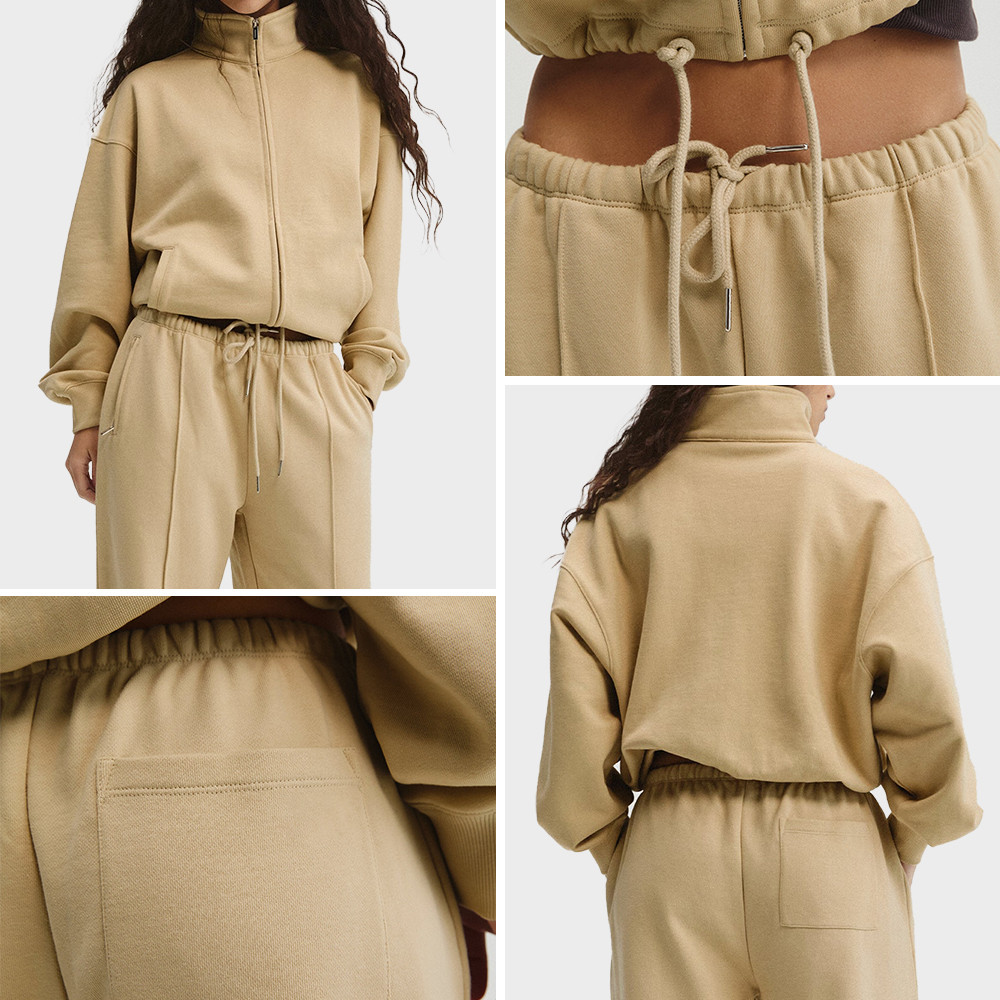
Matching activewear sets can look ready for bulk production after one approved sample, but private label brands should not rely on visual approval alone. For custom women's activewear, OEM / ODM development, and sample-to-bulk planning, the top and bottom must be checked for color consistency, fabric handfeel, compression, fit balance, logo placement, trim alignment, size grading, and production repeatability before bulk starts.
As a women's activewear manufacturer, HUCAI Sportswear helps brands review matching set details before approved samples move into larger production. The goal is to make sure the sports bra, leggings, shorts, tank, or jacket still feel like one coordinated product system after fabric, color, trim, and size details are confirmed.
Quick Answer
Before bulk production for matching activewear sets, brands should check color consistency, fabric batch behavior, handfeel, compression, top-and-bottom fit balance, logo placement, trim alignment, packaging details, and approved measurements. A matching set should not only look coordinated in photos; it should feel consistent when worn, stretched, washed, packed, and produced in quantity.
The most important step is pre-production review. Once the sample is approved, the brand and manufacturer should confirm fabric standards, color standards, trims, construction details, size grading, and quality checkpoints before bulk production begins.
Why Matching Sets Need Extra Checks Before Bulk
Matching sets are easy to approve visually, but they can be risky in bulk production if the details are not controlled. A sports bra and leggings may look coordinated in one sample photo, but the final set may still have color, compression, fit, or trim differences once production starts.
The reason is that a matching set is not one product. It is a coordinated system. The top and bottom may use different fabric weights, pattern pieces, elastic, lining, stitches, logo methods, and stress points.
For example, a sports bra may need stronger recovery and underband control, while leggings need opacity, waistband stability, and compression. Even if both pieces use the same color name, the final appearance can shift if the fabric base, dye behavior, or surface finish is different.
Bulk production becomes smoother when the set is reviewed as a whole before the pre-production stage.
Who This Article Is For
This article is mainly for activewear brands preparing matching sets for bulk production after sample approval.
- Growing brands developing sports bra and leggings sets, top and shorts sets, or light activewear sets.
- Private label buyers preparing custom activewear set orders.
- Established brands reviewing repeat orders, new colors, or capsule extensions.
- Startup brands trying to understand what should be confirmed before a first bulk order.
- Brands that want better sample-to-bulk consistency instead of approving samples only by appearance.
It is less suitable for buyers only looking for low-price stock sets or one-time visual trend products with no concern for fabric, fit, quality, or repeatability.
What This Guide Helps You Check
Set Consistency
Understand how color, fabric, compression, shine, handfeel, and fit balance affect whether the top and bottom feel like one set.
Bulk Readiness
Know what should be confirmed before bulk production, including swatches, trims, approved measurements, logo positions, and packaging details.
Risk Reduction
Identify common sample-to-bulk issues early so the approved direction is clearer before production follow-up begins.
1. Color Consistency Across Top and Bottom
Color consistency is one of the first details buyers notice in a matching set. However, color matching is not always as simple as using the same color name across two styles.
Different fabric bases can absorb dye differently. A sports bra fabric may have a different surface texture, shine, or stretch behavior from leggings fabric. Shorts shell fabric may reflect light differently from a fitted top. These differences can make two pieces look slightly different even when they follow the same color direction.
Before bulk production, brands should confirm:
- Approved color standard or lab dip
- Fabric base used for each style
- Color appearance under natural and indoor light
- Surface shine or matte finish
- Color consistency between top and bottom after stretch
- Color plan for future restocks or new color drops
For brands planning coordinated sets, custom matching set development should include color review as a production decision, not only a design decision.
2. Fabric Handfeel, Compression, and Stretch Behavior
Matching sets do not always need identical fabric, but the fabric roles should be compatible. A sports bra may need more recovery and support, while leggings may need stronger compression and opacity. A top may need breathability, while shorts may need lighter movement or liner support.
The risk appears when the fabrics feel unrelated. The set may look coordinated on a hanger but feel inconsistent when worn.
Brands should check:
- Is the handfeel consistent with the brand positioning?
- Does the sports bra provide enough support without feeling too rigid?
- Do the leggings maintain compression and opacity during stretch?
- Do shorts or tops feel too lightweight compared with the rest of the set?
- Does the fabric recover after movement?
- Will the fabric choice support future color or style extensions?
Brands comparing fabric roles can review fabric selection for activewear before confirming the bulk direction.
3. Fit Balance and Size Grading Across the Set
A matching set should feel balanced on the body. If the sports bra feels firm but the legging waistband feels loose, the set may not feel coordinated even if the color is correct.
Fit balance includes both sample fit and size grading. The approved sample size may look correct, but problems can appear when the style is graded across a full size range.
For sports bra and leggings sets, brands should review:
- Sports bra underband tension
- Strap pressure and neckline coverage
- Leggings waistband stability
- Compression level between sizes
- Opacity when stretched
- Top and bottom proportion on different body sizes
For shorts sets, brands should also review inseam, leg opening, waistband movement, pocket placement, and liner comfort.
If the set includes sports bras or leggings, brands can connect fit review with custom sports bra development and custom leggings development.
4. Logo, Trim, Label, and Packaging Alignment
Matching set consistency is not only about fabric and color. Logo placement, trim selection, label position, and packaging also affect how the final product is perceived.
A tonal logo may work well for a quiet premium set. A reflective logo may suit a running or training set. A larger contrast logo may support a street-active direction, but it can feel too strong if the set is designed around a clean look.
Before bulk production, brands should confirm:
- Logo method and exact placement on each piece
- Logo size and color standard
- Heat transfer, embroidery, woven label, or printed label direction
- Elastic, drawcord, zipper, or pocket trim consistency
- Care label and size label placement
- Packaging method for set orders
These details may seem small, but they influence the final commercial feel of the set.
5. Pre-Production Review and Sample-to-Bulk Follow-Up
The approved sample is not the end of development. It is the reference point for bulk production. Before bulk starts, brands should confirm which sample details are final and which still need adjustment.
A proper pre-production review should cover:
- Approved sample comments
- Final measurements and tolerance requirements
- Fabric and color standards
- Trim and logo approvals
- Construction and stitch details
- Size grading and size range
- Packaging and labeling requirements
- Inspection focus points for the set
This review is especially important for OEM projects where the brand already has tech packs, specifications, and approved samples. Brands with confirmed specifications can connect this process with OEM activewear manufacturing.
Decision Check Before Bulk Production
Before moving a matching activewear set into bulk production, brands should confirm the following points.
- Approved Sample: Are the final sample comments clearly recorded and approved?
- Color Standard: Is the color standard confirmed for each fabric base?
- Fabric Role: Does each product use the right fabric for support, compression, breathability, or movement?
- Fit Balance: Do the top and bottom feel balanced when worn together?
- Size Grading: Are grading rules reviewed across the full size range?
- Logo Placement: Are logo method, size, color, and placement confirmed for every piece?
- Trim Details: Are elastic, zippers, drawcords, labels, and packaging aligned?
- Quality Focus: What should be checked first during bulk inspection?
Preparing a Matching Set for Bulk Production?
If your sample is approved but the bulk details are not fully aligned, review color, fabric, fit, trim, logo, packaging, and inspection points before production starts.
Share your approved sample comments, tech pack, color standards, fabric details, logo placement, size range, MOQ questions, or bulk planning needs. HUCAI Sportswear can help review whether your project is ready for OEM execution or still needs ODM development support.
Manufacturer Insight: A Matching Set Can Fail Even When Both Samples Look Good
A common sample-to-bulk issue is that each piece looks acceptable on its own, but the full set does not feel consistent together.
The sports bra may have good support, but the leggings fabric may feel too different. The shorts may match the color, but the handfeel may feel lighter than expected. The logo placement may work on the top but look unbalanced on the bottom. These issues are not always obvious when styles are reviewed separately.
At HUCAI Sportswear, matching set follow-up is usually reviewed through product coordination, not only individual SKU approval. Once fabric, measurements, color standards, trims, logo methods, and sample comments are confirmed, AQL 2.5-based quality checkpoints and MES / ERP-supported follow-up can help improve coordination from sample approval to bulk production.
These systems do not guarantee that every development decision is correct. They help the team track and follow confirmed details more clearly after the approved direction is set.
FAQ: Matching Activewear Set Bulk Production
1. What should brands check before bulk production for matching activewear sets?
Brands should check color consistency, fabric handfeel, compression, fit balance, size grading, logo placement, trim details, packaging, and approved sample comments. A matching set should be reviewed as one coordinated product system, not only as separate top and bottom styles. This helps reduce confusion before bulk production starts.
2. Why can color look different between the top and bottom?
Color can look different because fabric bases, surface texture, shine, stretch behavior, and dye absorption may vary between styles. A sports bra and leggings may use different fabric weights or constructions, even if they follow the same color direction. Brands should review lab dips, approved swatches, and color appearance across each fabric base before bulk production.
3. Should matching sets always use the same fabric?
Not always. Some matching sets need the same fabric for a uniform handfeel and appearance, but others need compatible fabrics instead. For example, a sports bra may need stronger recovery, while leggings may need more compression and opacity. The key is to make sure the fabrics feel coordinated and support the same product story.
4. What is a pre-production sample for matching sets?
A pre-production sample is a reference sample used to confirm final construction, measurements, fabric, trims, color, logo placement, and packaging before bulk production. For matching sets, it helps align the top and bottom as one order. It is especially useful when the set includes different fabrics, trims, or size grading requirements.
5. What is the MOQ for custom matching activewear sets?
The current public-facing MOQ is from 100 pcs / style. For matching sets, final order planning depends on whether the top and bottom are treated as separate styles, how many colors and sizes are included, fabric choices, logo methods, trims, and packaging requirements. A focused first set is usually easier to control than a wide multi-color launch.
6. How can brands reduce sample-to-bulk differences?
Brands can reduce sample-to-bulk differences by confirming approved samples, fabric standards, color standards, measurements, tolerances, construction details, trims, logo placement, size grading, and inspection focus points before production. Clear documentation and pre-production review help the manufacturer follow the approved direction more accurately during bulk production.
7. Is matching set bulk production better for OEM or ODM?
OEM is better when the brand already has tech packs, approved samples, fabric standards, measurements, logo details, and packaging requirements. ODM is better when the brand still needs help defining the set structure, fabric family, color direction, or product roles. Many growing brands start with ODM planning and move into OEM-style execution after samples are approved.
8. What causes matching set bulk production problems?
Common problems include color mismatch, fabric handfeel differences, compression inconsistency, waistband or underband fit issues, inaccurate logo placement, trim mismatch, unclear size grading, and incomplete sample comments. These issues often happen when top and bottom styles are reviewed separately instead of as one coordinated set before bulk production.
Final Takeaway
Matching activewear sets should be reviewed as coordinated product systems before bulk production.
The strongest bulk orders usually come from clear decisions around color standards, fabric compatibility, compression, fit balance, size grading, trims, logo placement, packaging, and pre-production review. When these details are confirmed early, brands can reduce avoidable sample-to-bulk issues and build more reliable matching set programs.