What Brands Should Confirm Before Sampling a Women's Sports Bra
- Share
- Issue Time
- Apr 27,2026
Summary
Learn what brands should confirm before sampling a women’s sports bra. This B2B guide explains how to define support level, activity use, fabric direction, underband logic, cup choice, and sample priorities before development begins. It is written for growing brands and private label buyers working with a women’s sportswear manufacturer and looking for a clearer path from first sample to bulk production.
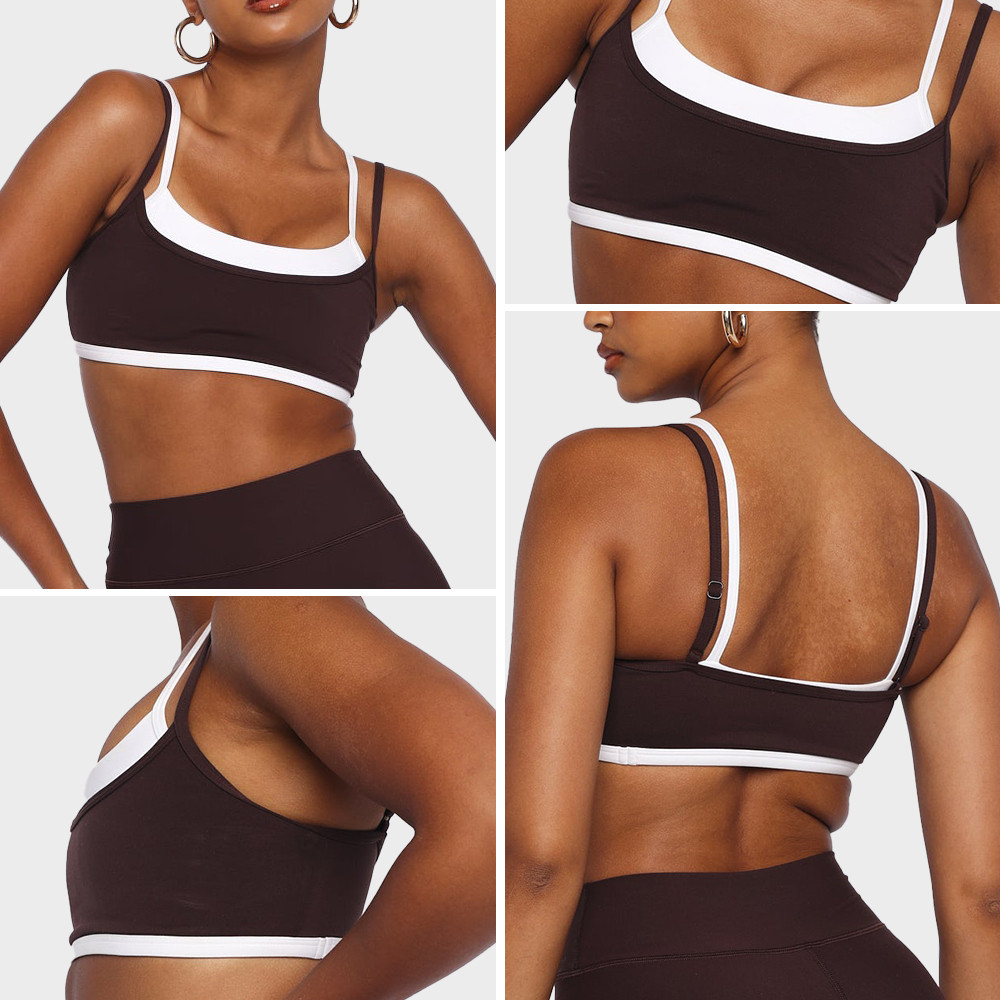
For many brands, the first sports bra sample is where the real project starts to show its weaknesses. A reference image may look clear enough, and the silhouette may feel straightforward, but a women’s sports bra is not a category that responds well to vague assumptions. For brands working with a women’s sportswear manufacturer, planning private label development, or deciding between OEM and ODM support, the first sample usually becomes much more useful when the team defines one clear product role before development begins.
At hucai sportswear, sports bra projects usually become easier to guide when support level, activity scenario, fabric behavior, underband direction, cup choice, and sample purpose are clarified early. A sports bra sample should not be trying to test everything at once. It should be testing one clearer direction well enough to move the project forward.
Quick Answer
Before sampling a women’s sports bra, brands should confirm support direction, intended activity, fabric role, strap and underband expectations, cup or padding logic, and what the first sample is actually meant to prove. The clearer those points are, the easier it becomes to reduce avoidable revisions and move from sample approval toward more stable bulk execution.
Table of Contents
- Who This Article Is For
- What Brands Usually Need Before Sampling
- Why a Sports Bra Sample Should Test One Clear Product Role
- What Support and Activity Direction Should Be Confirmed First
- What Fabric, Strap, Underband, and Cup Choices Change in Development
- What Brands Should Decide Before the First Sample Round
- When ODM Is More Practical Than OEM
- Why Sample-to-Bulk Control Matters More in Support-Led Categories
- Manufacturer Insight
- FAQ
- Final Takeaway
Who This Article Is For
This article is mainly for growing women’s sportswear brands that already know they want to develop a sports bra, but have not yet built a clear enough sample brief. It is also useful for private label buyers working from reference images, early sketches, or mood direction rather than from a fully completed technical pack.
It is less useful for buyers who only want a fast price before support logic, structure direction, and use scenario have been defined. In sports bra development, unclear starting assumptions often create more sample rounds than the visible design itself.
Clearer support definition
So the first sample is testing one real direction instead of too many mixed expectations.
Fewer avoidable revisions
Especially around underband feel, strap response, fabric behavior, cup choice, and coverage balance.
A stronger path to bulk
Because sample approval becomes more valuable when the product role was defined clearly from the start.
Why a Sports Bra Sample Should Test One Clear Product Role
One common mistake in sports bra development is expecting the first sample to answer too many questions at the same time. A team may want to judge support level, fabric handfeel, strap styling, cup structure, neckline appearance, comfort, and all-day wearability from one first round.
In practice, that usually creates confusion rather than clarity. A stronger first sample is built around one clearer product role. Is the bra meant for low-impact studio use, moderate training, or a more support-led performance direction? Once that is answered, the rest of the brief becomes easier to control.
What Support and Activity Direction Should Be Confirmed First
Before anything else, brands should define where the bra is meant to sit inside the range. A yoga or studio bra should not be evaluated in the same way as a bra intended for more active training. Even if the silhouette is similar, the project logic is different.
- Support level: low, medium, or more support-led.
- Use scenario: yoga, studio, light training, or a broader all-day sportswear role.
- Body feel: softer and easier, or more secure and held-in.
- Collection role: standalone bra, coordinated set component, or layered capsule piece.
This part should be clearer before visual details take over the conversation. If the product role is still unclear, brands often judge the first sample against changing expectations instead of one stable standard.
What Fabric, Strap, Underband, and Cup Choices Change in Development
Once the support and activity direction are clear, several other choices start to matter much more. These are not small technical details. They affect how the bra behaves in wear and how the sample should be reviewed.
Fabric role
The fabric should support the intended wear feel. Softer handfeel and stronger support behavior often need different priorities from the start.
Strap and underband logic
Strap placement, width, adjustment, and underband feel should follow the real support target, not only the visual design direction.
Cup and inside construction
Removable cups, inner support layers, and lighter or more structured inside setups all change how the sample should be assessed.
This is also where brands often realize that a sports bra is not only a surface design question. The visible shape matters, but the inside logic usually determines whether the style can become a stable product rather than only a good-looking sample.
What Brands Should Decide Before the First Sample Round
Before the first sports bra sample is made, the brief does not need to answer every future question. But it should be clear enough to test one real direction properly.
- Support target: what the bra should feel like in wear.
- Activity role: where and how the bra is meant to be used.
- Fabric expectation: soft, supportive, smoother, or more stable.
- Coverage and shape priorities: neckline, side coverage, back logic, and how the bra should sit visually.
- Cup decision: removable pads, built-in shaping, or lighter inside support.
- Sample objective: whether the first round is testing support, fit, style direction, or a more complete combination.
For many brands, a better first sample comes from a clearer checklist rather than from a longer inspiration board. Once the testing goal is cleaner, the review process usually becomes more useful as well.
When ODM Is More Practical Than OEM
Not every sports bra project should begin the same way. The better path depends on how clearly the support direction, measurements, and product role have already been defined.
You are closer to an OEM path if...
- The support target and use scenario are already clear.
- You have measurements, tech packs, or established specifications.
- You mainly need controlled execution, sample confirmation, and bulk follow-through.
- The sports bra already has a defined role inside your collection.
ODM is more practical if...
- You have reference images but not yet a complete sports bra brief.
- You still need help defining support, fabric behavior, or internal construction direction.
- You want product development input before locking measurements and trims.
- You are still deciding how the bra should function inside the range.
Need help turning your sports bra idea into a clearer sample brief?
If your team has visual references but still needs a cleaner support target, construction logic, or sample goal, it usually helps to define the product role first instead of trying to judge everything after the first sample arrives.
Why Sample-to-Bulk Control Matters More in Support-Led Categories
Sports bras are one of the categories where bulk inconsistency becomes visible quickly. A small change in fabric recovery, strap response, cup stability, or underband feel can change the product experience more than many brands expect.
At hucai sportswear, this is why sample approval should not be treated as only a style checkpoint. For support-led women’s sportswear categories, better product definition at the sampling stage usually creates a stronger reference for pre-production review and bulk follow-up later. That is also where AQL 2.5-based checkpoints, clearer approval standards, and more connected production coordination become more useful.
Production visibility matters too. Once a sports bra project moves into bulk, support consistency depends on more than one technical choice. MES and ERP-based coordination on the production side do not remove the need for a strong brief, but they help keep follow-up more organized once the approved direction has been confirmed.
Manufacturer Insight
A common failure pattern we see in sports bra projects is not that the sample looks obviously wrong. The bigger issue is that the brand is still trying to decide what the bra should actually do after the first sample has already been made.
One review comment asks for softer feel. Another asks for stronger hold. Another asks for more open styling. Another asks for more coverage. In many early-stage projects, the most useful correction is not “change the factory,” but “define the product role more clearly before the first sample round.”
FAQ
What should be confirmed before sampling a women’s sports bra?
Brands should usually confirm support level, intended activity, fabric direction, underband and strap expectations, cup choice, and the specific goal of the first sample. The clearer these points are, the more useful the first sample becomes.
How should brands define support level before the first sample?
The best starting point is usually the intended activity and wear feel. A bra developed for yoga or studio use should not be judged by the same support assumptions as a bra intended for more active training. Support should follow product role, not only appearance.
Should fabric choice or support target come first?
In many cases, the support target should come first. Fabric selection becomes more useful once the brand knows whether the bra should feel softer, more stable, or more support-led. Fabric should support the product role instead of trying to define it too late.
How should brands think about underband tension before sampling?
Underband direction should be judged as part of the total support feel, not only as a separate trim detail. It affects hold, comfort, recovery, and how the bra behaves in real wear, so it should be part of the first brief rather than a late-stage adjustment only.
Do removable cups need to be decided before sampling?
It usually helps to decide early whether the bra should use removable cups, lighter shaping, or a different inside structure. The inside logic affects sample review, support feel, and how the style behaves after washing and repeated wear.
Can a sports bra project start without a full tech pack?
In many cases, yes. A project can still begin with reference images, support direction, intended use, and a clearer sample goal. That situation is often more suitable for an ODM-led start before the project moves into a more execution-focused OEM path.
Why do sports bra samples often go through repeated revisions?
A common reason is that too many expectations were left undefined at the start. When support, fabric feel, coverage, cup logic, and styling are all being decided at once, the first sample becomes harder to judge against one stable standard.
Why does sample-to-bulk control matter so much in sports bras?
Because support-led categories are sensitive to small changes. If fabric recovery, strap response, or underband feel shifts in bulk, the product can behave differently from the approved sample. That is why clearer pre-production control matters so much in sports bra projects.
Final Takeaway
The best sports bra sample briefs do not try to answer everything at once. They define one clear product role strongly enough to test the right direction from the start.
When support level, activity, fabric, underband logic, cup strategy, and sample purpose are aligned early, the project becomes easier to review, easier to revise, and easier to carry into bulk. That is what makes a sports bra project more commercially workable from the beginning.
Ready to move the sports bra project forward?
Choose the next step based on how clear your current brief already is.
- Go to OEM Service if your support targets, specs, and construction logic are already defined.
- Go to ODM Service if you still need help shaping support direction, fabric logic, or the first sample brief.
- Explore the Sports Bra Manufacturer page if you want to review the full development path first.
Trust Note
This article is written from a manufacturer and product-development perspective. The goal is not to make sports bra sampling sound complicated for its own sake, but to help brands define a clearer starting brief before sample rounds begin.
Hucai sportswear is not presented here as only a name. It is presented as the company structure behind the project: a women’s sportswear-focused manufacturer with OEM and ODM support, in-house development resources, sports bra and leggings as core women’s categories, AQL 2.5-based quality logic, and a more connected path from sample planning into bulk follow-up.