When Fashion-Led Woven Fabrics Meet Running Shorts: Movement, Drape and Construction Trade-Offs
- Share
- publisher
- HUCAI Sportswear
- Issue Time
- Sep 30,2026
Summary
A fashion-led woven can work in a running short when drape and appearance are balanced with stride mobility, recovery and construction compatibility. This guide covers where a woven shell has to give during the stride, why drape and handfeel do not predict running behaviour, how the liner, waistband and pockets must be confirmed together, and which sample run and wash checks decide whether the short is ready for bulk.
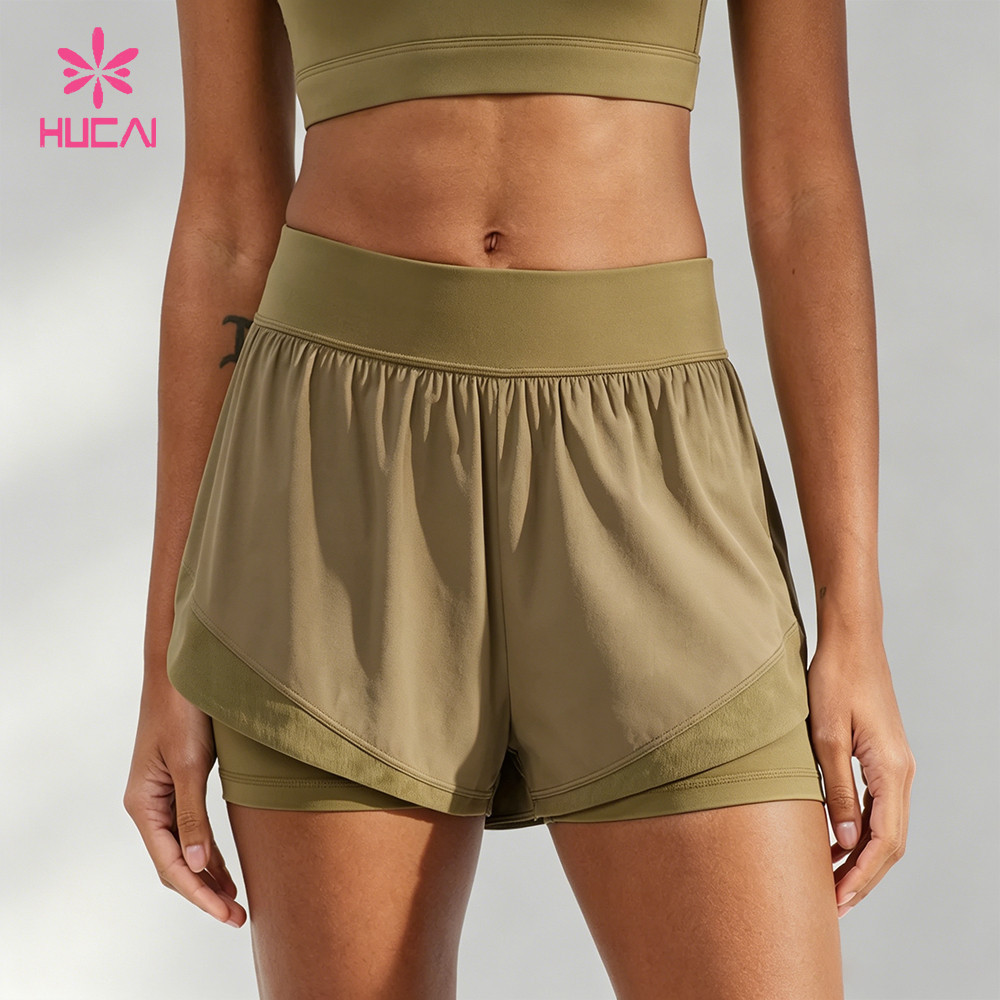
When a running short is developed around a fashion-led woven instead of a knit, the brief usually arrives as a picture: a cleaner surface, a little more structure, a silhouette that reads as lifestyle as much as it reads as sport. The development question behind that picture is harder. A woven shell changes how the leg opening behaves, how the hem hangs when the body is still, what happens once stride length increases, and how every attached component — liner, waistband, pocket, binding, split — behaves under tension it was never originally tested against.
Across recent assortments, running and active shorts have moved toward cleaner woven appearances while keeping performance positioning. That direction is visible in public product lines from brands such as Athleta and Gymshark, where woven-look shells sit alongside compression liners and utility detailing. The visual language is consistent across the market. The construction consequences are not, and they are rarely visible in a photo. This guide sets out the trade-offs a brand should resolve before a woven running short is approved for sampling, and the checks that decide whether it survives a movement test.
Quick Answer
A fashion-led woven can work in a running short when drape and appearance are balanced with stride mobility, recovery and construction compatibility. The short still has to move with the leg, hold its shape after washing, and accept a liner, waistband, pocket and hem treatment without distortion. Woven selection should therefore be decided together with pattern ease, shell volume, liner system and hem construction — not on fabric appearance alone.
Table of Contents
- Who This Article Is For
- What a Fashion-Led Woven Direction Actually Changes
- Stride Mobility: Where a Woven Shell Has To Give
- Drape, Handfeel and Noise: Hanging vs Running Behaviour
- Liner, Waistband and Pocket Compatibility
- Seams, Hems and Side Splits
- Sample Run Testing and Bulk Consistency
- Decision Check
- Founder's Technical Insight (Jean Yuan)
- FAQ
- Final Takeaway
Who This Article Is For
- Primary reader: growing running and training brands adding a woven or woven-look short to an assortment that has so far been knit-led.
- Secondary reader: premium activewear buyers and product developers working from reference images rather than a completed specification.
- Product stage: the direction is defined and reference garments exist, but fabric, liner system, hem construction and shell volume are not yet locked.
- Problem being solved: the reference pair looks right on a hanger, but no one has confirmed whether the woven will move with the stride, hold its shape after washing, or work with the liner and pocket the design requires.
- Who may not need this article: brands that only produce knit shorts and have no intention of changing shell material. The fabric and mobility logic here is specific to woven and stretch-woven shells.
What you gain from this article: a way to decide woven direction against movement requirements instead of appearance alone, a shortlist of construction components that must be reviewed together, a sample-stage run test sequence, and a clear view of what to confirm before bulk fabric is committed.
What a Fashion-Led Woven Direction Actually Changes
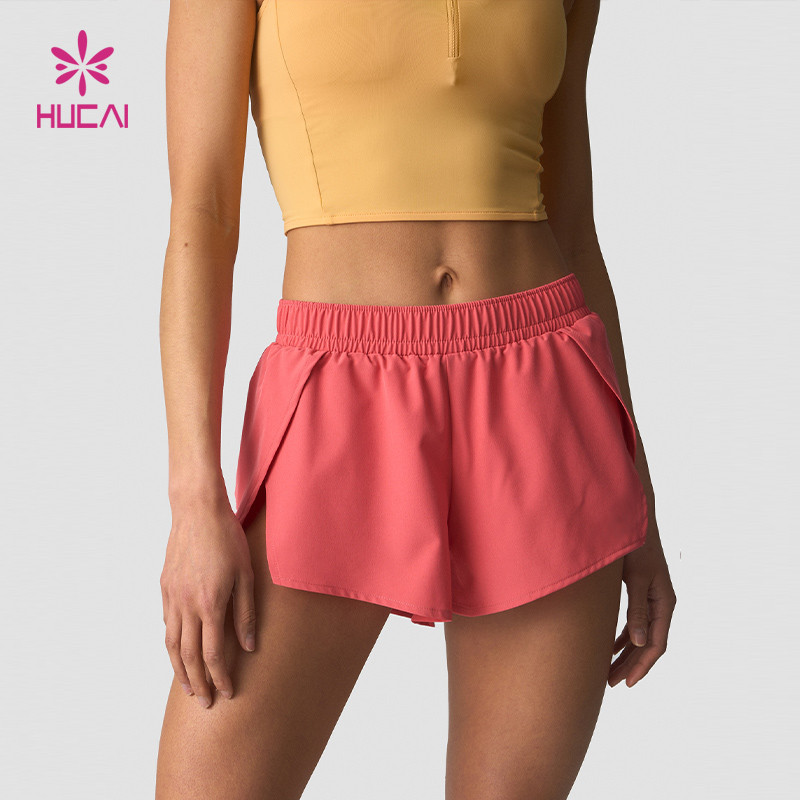
A knit running short and a woven running short are not the same product with a different surface. Knit shells are built around stretch in the material itself, so the pattern can stay relatively simple and the fabric absorbs much of the movement. A woven shell carries far less inherent give, which means movement has to come from somewhere else: pattern ease, panel placement, side splits, gusset shaping or a controlled amount of stretch built into the yarn.
That shift moves the centre of the development brief. Surface appearance, weight and colour depth are still decided at fabric stage, but shell volume, hem line and split depth become primary decisions rather than finishing details. A short that is visually clean but geometrically under-designed will read as restrictive the moment the wearer lengthens the stride.
The uncomfortable part is that these consequences are largely invisible in a flat-lay photo. A woven shell photographed on a mannequin tells you about drape, colour and proportion. It does not tell you how the front rise behaves during a long stride, whether the hem catches the quadriceps, or whether the liner creeps when the shell does not. Those are movement-stage findings, and they arrive after sampling unless the brief anticipated them.
For brands working from reference images rather than a specification, the practical first step is to separate the reference into what is a look decision and what is a construction decision. Running short development starts with that separation, because a woven shell chosen for appearance will still have to satisfy liner tension, waistband recovery and hem behaviour once it reaches the sample room.
Stride Mobility: Where a Woven Shell Has To Give
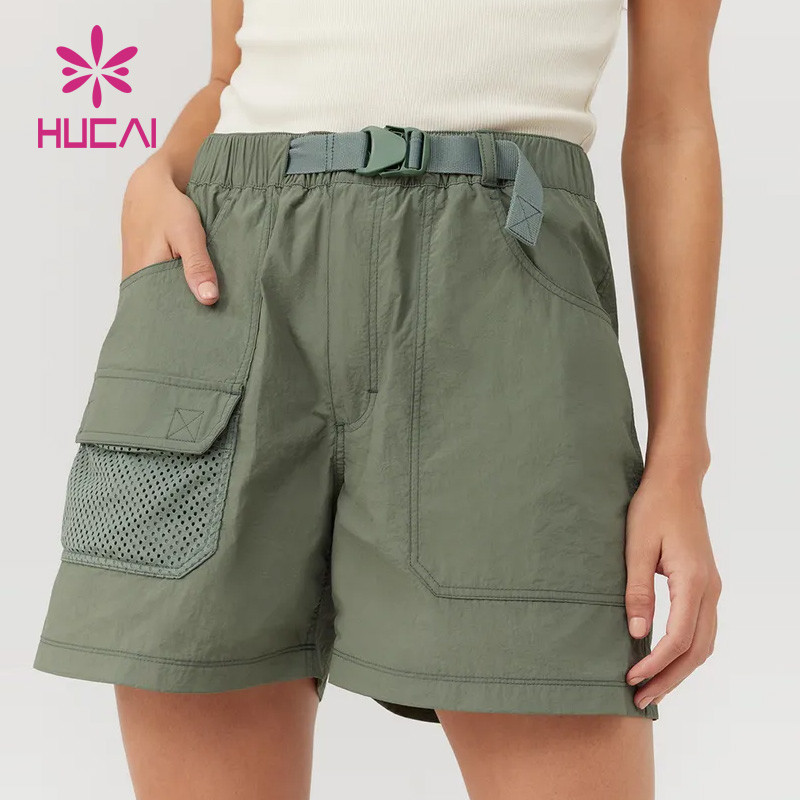
Stride mobility in a woven short is not one property. It is the result of four decisions that interact: the amount of stretch or mechanical give in the fabric, the ease built into the pattern around hip and thigh, the shell volume chosen for the silhouette, and the depth of the side split or vent that releases the hem during extension.
When these four are balanced, the short reads as light and unrestricted even though the base fabric has limited stretch. When they are not, the failure is predictable. If the pattern is tight and the split is shallow, the hem pulls across the front of the thigh and the rise drags. If the shell is oversized to compensate, the fabric starts to move independently of the body, the liner becomes visible at the leg opening, and the silhouette loses the crisp line that made the woven direction attractive in the first place.
Practical development consequence: shell volume and split depth should be treated as compensation controls, not styling choices. Increasing one usually requires re-checking the other, and both should be reviewed against the liner, because a loose shell over a fixed compression liner produces a specific problem — the liner no longer tracks the shell, so it rides up independently during running.
This is where a reference-led project most often diverges from a specification-led one. In HUCAI Sportswear's development workflow, the OEM and ODM paths handle this differently: a buyer with a tech pack can have ease, split depth and shell volume specified directly, while a buyer working from reference images needs those values reconstructed from the intended activity before a pattern is cut. Both routes are workable; only one of them avoids a first sample that has to be rebuilt from the pattern up.
For brands deciding how much stretch the shell genuinely needs, the material review sequence matters more than the specific number. Fabric selection for a woven shell should evaluate four-way versus two-way give, recovery after repeated extension, and how the surface reads once the fabric is under tension — not just how it feels flat on the table.
Drape, Handfeel and Noise: Hanging Behaviour vs Running Behaviour
Drape is the property most visible in photography and least predictive of running performance. A woven that drapes softly and photographs with a clean vertical line may still produce shell sticking, hem bounce or audible fabric noise once the wearer is moving. The reverse is also true: a firmer, more technical woven that feels stiff in the hand can be perfectly comfortable at running pace because it holds a shape away from the leg.
The useful way to frame this is to separate three properties that buyers often merge into one word.
- Drape describes how the fabric falls and how much it follows the body contour. It governs silhouette and proportion.
- Handfeel describes surface character and touch — smooth, dry, brushed, slightly crisp. It governs perceived quality and comfort at the waistband and hem edge.
- Mechanical behaviour describes what the fabric does under repeated extension: how quickly it recovers, whether it holds a crease, whether it stays quiet against itself, and whether the surface abrades in contact with a liner.
A short can score well on the first two and fail on the third. Fabric noise in particular is almost never surfaced at fabric approval, because noise only appears when two layers slide against each other at speed — which is exactly what happens between a woven shell and a compression liner. If the shell and liner surfaces are both smooth and low-friction in the wrong direction, the layers chatter.
The development answer is not to reject drape-led fabrics. It is to test drape-led candidates under extension and in contact with the intended liner before committing. Where a brand is choosing between several visually similar wovens, the deciding factor is usually recovery and surface interaction, not how the swatch photographs.
Liner, Waistband and Pocket Compatibility
In a two-in-one running short, the liner is not an accessory. It is a structural partner to the shell, and it decides whether the garment behaves as one product or two independent layers. Three relationships matter most.
Liner tension versus shell volume. The liner sits against the body and follows it. The shell floats. If the shell is cut with generous volume and the liner is cut at a fixed compression level, the gaps between them change continuously during running. The practical checks are whether the liner stays seated at the leg opening, whether it becomes visible below the shell hem, and whether the two hems travel together or separate.
Waistband recovery versus shell weight. A woven shell does not stretch at the waist the way a knit does, so the waistband carries the whole retention load. Two common problems follow. A waistband with insufficient recovery slowly migrates under a heavier shell, especially when a phone sits in a rear pocket. A waistband with excessive tension creates pressure points that become obvious only after a long run. Because the waistband is usually attached after the shell is cut, mismatches surface late.
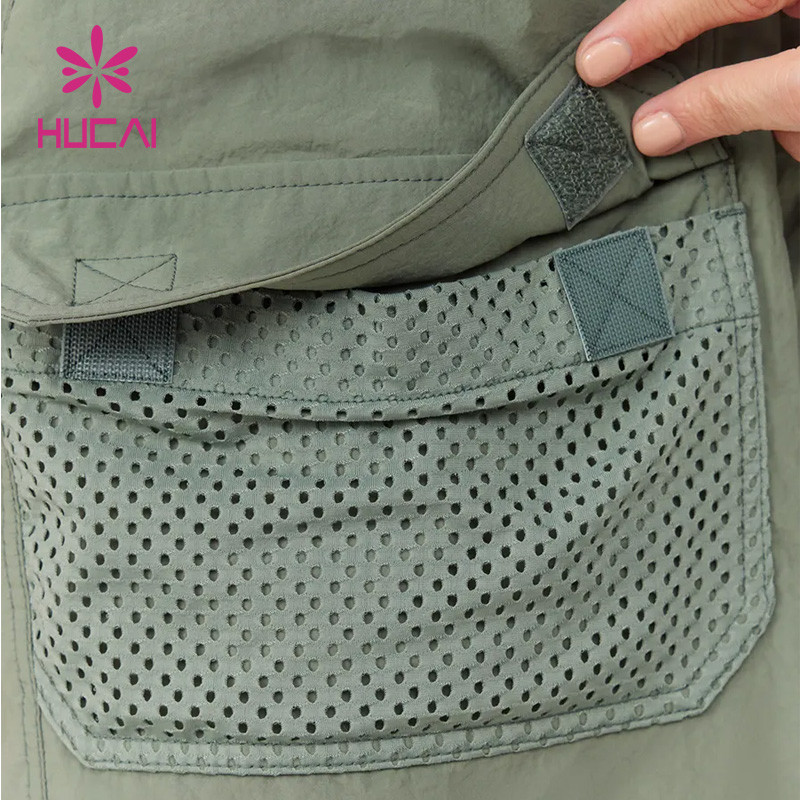
Pocket behaviour versus shell movement. A pocket built into a knit shell is anchored by the fabric around it. A pocket built into a woven shell depends on the seam path and stabilisation. When a phone or keys are carried, the pocket mass pulls on the panel it is sewn into, and that pull transfers directly into the hem and rise. The design intent for a zip pocket, a side pocket and a rear pocket should be defined before the pattern is graded, not added once the silhouette is approved.
Because these three relationships cross material and pattern decisions, they cannot be reviewed in sequence. HUCAI Sportswear reviews liner selection, waistband tension and pocket placement as one compatibility set during sample development, so that an adjustment to one does not silently invalidate the other two. The same logic applies to private label programmes, where the trim and label package adds weight and thickness to the waistband and pocket areas that a plain sample does not carry.
Where a brand is moving a knit silhouette into a woven shell, the safest route is to re-confirm the waistband and pocket specification rather than assume the existing construction transfers. Specification transfer between shell types is one of the most consistent sources of avoidable second samples.
Seams, Hems and Side Splits: Where Woven Construction Shows
Woven construction exposes detail that knit construction can hide. On a knit shell, seam irregularity and hem waviness are partly absorbed by the fabric's stretch. On a woven shell, the same irregularity remains visible, and because the surface is usually cleaner by design, there is less visual noise to distract from it.
Three construction areas decide how a woven running short reads.
- Hem finishing. A plain turned hem on a low-stretch woven can pucker along the curve, particularly over a curved or scooped hem line. A bound or faced hem holds a cleaner edge but adds weight and a visible line. The choice should follow the hem shape: the more curved the hem, the more the finishing method matters.
- Side splits and vents. Split depth is a movement variable, but it is also an edge-finishing variable. A split that is deep enough to release the stride also exposes the finish at the split point, which is a common starting point for fraying and for the shell flaring outward away from the liner.
- Seam direction and placement. On a woven shell, seam direction relative to warp and weft changes how the panel hangs. A panel cut slightly off-grain can introduce a subtle twist that only becomes visible once the garment is worn, not when it is laid flat.
The pattern requirement that follows is straightforward: the woven shell should be cut and validated with the hem treatment already decided, and with the split depth already set. Approving a silhouette with a provisional hem and deferring the finishing method to pre-production removes the only opportunity to see the finished edge behave.
A related check concerns binding and contrast trim, which are common on fashion-led woven shorts. Trim that has different stretch or recovery from the shell fabric will pull the hem out of line, and the effect is more visible on a woven surface than on a knit. Where binding is planned, it should be evaluated as part of the shell specification rather than as a trim addition.
Sample Run Testing and Bulk Consistency
The movement behaviour of a woven running short cannot be confirmed on a fitting stand. It needs a wearer, a defined movement set and a wash cycle. A practical sample-stage sequence covers four steps.
- Static fit review. Confirm waistband position, rise, hem line, liner seat and pocket access while standing. This establishes the baseline and captures the measurements that the bulk order will be checked against.
- Movement review. A standard set works better than an open trial: short and long stride, standing and seated, deep knee bend, and a repeated leg-extension set. Record where the hem travels, whether the liner stays seated, whether the rise pulls and whether the shell separates from the liner.
- Load review. Repeat the movement set with the intended pocket load — phone, keys or gel — because a loaded pocket changes how the shell hangs and how the waistband recovers.
- Wash and recovery review. Wash and dry the sample under the conditions the brand expects the end customer to use, then re-check shell measurements, hem flatness, recovery at the hem and liner, and whether creases from the previous wear have relaxed.
Bulk consistency then depends on controlling the variables that the sample established. For a woven shell, the critical controls are shade and finish consistency across the shell panels, cut direction, and the measurement tolerances at the hem, split point and waistband. These three are the points where a woven short is most likely to drift between sample and bulk, because they are the points where the fabric has the least ability to self-correct.
A short that passed a movement review and a wash review at sample stage gives the production team a genuine reference. A short that passed only a static fitting review gives them a specification without a behaviour baseline, and the difference is usually discovered after the first bulk shipment. Sample development is where that baseline is created, and it is also where a revision is cheapest to make.
Decision Check: Is This Woven Running Short Ready for Sampling?
Before committing fabric and cutting a sample, confirm the following five items:
- Movement source: the brief states where mobility comes from — fabric give, pattern ease, split depth or shell volume — and which of these is the primary control.
- Liner system: liner type, compression level and attachment points are defined, and the liner has been assessed with the shell in contact rather than separately.
- Waistband and load: waistband recovery is specified against the intended shell weight and the intended pocket load, with the heaviest realistic carry item named.
- Hem and split: hem finishing method and split depth are decided before the silhouette is approved, including any binding or contrast trim and its stretch compatibility.
- Review sequence: the brand has agreed a movement set, a rated load and a wash cycle, and knows which measurements will be re-checked after the wash.
If three or more items are resolved, the direction is ready for a structured sample request. If fewer than three are resolved, the remaining items are usually cheaper to settle as a specification discussion than as a sample revision, because each unresolved item tends to change the pattern rather than a single trim detail.
Founder's Technical Insight: Jean Yuan's Development Note
When brands bring us a woven running short for the first time, the pattern of failure in our sample room is consistent, and it is almost never the fabric choice. It is a mismatch between how the shell was drafted and how the liner was drafted.
Here is the mechanism. A compression liner is drafted to sit under tension, so it is stable against the body. A woven shell is drafted with ease, so it is stable against the liner but not against the body. When a runner extends the stride, the quadriceps lengthens, the liner follows it, and the shell does not — at least not at the same rate. If the shell hem is cut too close to the liner hem, the liner either pulls the shell out of shape at the split, or the shell holds its line and the liner escapes below it. Both look like a fitting problem. Neither is. They are the same drafting problem seen from two angles.
In my experience, the fix is decided before cutting, in three checks. First, confirm the liner's finished length and its tension direction, then set the shell hem deliberately against that number rather than against the reference garment. Second, confirm the waistband recovery against the shell weight plus the intended pocket load; a waistband that is correct on an unloaded sample is frequently too light in wear. Third, decide the hem finishing method before the panel is cut. A turned hem on a curved woven edge will behave differently from a bonded or faced edge, and if the panel is cut before that decision, the test result is meaningless.
The item brands most often leave out is the wash review. Woven shells rarely fail visibly on the first wear. They fail in the third or fourth wash, when the hem has crept and the recovery has relaxed, and at that point the fabric is already committed. A buyer who checks the sample after washing is working from real behaviour; a buyer who checks it straight off the ironing table is working from an assumption.
At HUCAI Sportswear we review liner, waistband and hem finishing together during sample development rather than as separate approvals, because on a woven shell these three decisions trade against each other. The rule we work to is simple: if the liner length, the shell hem and the waistband recovery are not mutually confirmed, the sample is not ready to be graded.
FAQ
Do running shorts need a stretch woven fabric?
Not necessarily, but the lower the stretch in the shell, the more mobility has to come from pattern ease, shell volume and split depth. A low-stretch woven can run comfortably when the pattern releases the stride properly. A stretch woven gives the pattern more tolerance and usually reduces the number of revisions, but it is not a substitute for correct ease and split geometry.
What causes fabric noise in a woven running short?
Noise usually comes from two low-friction surfaces moving against each other — most often the woven shell against the compression liner. It is a surface-interaction result, not a fabric weight result, and it is rarely detected at swatch stage. It should be reviewed with the intended liner in place, during a movement test rather than on a fitting stand.
How does drape affect running shorts?
Drape determines silhouette, hem line and how much the shell follows or floats away from the leg. A soft drape gives a cleaner vertical line and a more lifestyle appearance but needs more control at the hem. A firmer drape holds its shape away from the leg and can feel more unrestricted at pace, though it may look stiffer in photography. The right choice depends on the intended activity and the silhouette target, and both should be validated in movement.
Can a fashion woven work with a compression liner?
Yes, and it is a common construction. The requirement is that the liner finished length, the shell hem and the waistband recovery are confirmed together. When a compression liner is combined with a low-stretch shell, the two layers recover at different rates, so the liner-to-shell relationship has to be set deliberately rather than inherited from an existing knit style.
What should be tested during sample runs?
A defined movement set — short and long stride, standing and seated, deep knee bend and repeated leg extension — plus a rated load using the heaviest carry item, followed by a wash and dry cycle under the expected end-customer conditions. The review should record hem travel, liner seating, rise behaviour, shell-to-liner separation and post-wash recovery, so the results can be compared across revisions.
How do pockets change shell behaviour?
A loaded pocket transfers weight into the panel it is sewn into, and that pull reaches the hem and rise. On a woven shell, which has less ability to absorb the load through stretch, the effect is more visible than on a knit. Pocket placement, seam path and any stabilisation should therefore be defined before grading, and tested with the intended load rather than empty.
What is the MOQ for a custom woven running short?
The current public MOQ starts from 100 pcs per style. Final quantity planning depends on the confirmed project, including fabric selection, colour count, size range, trim and packaging, and the customization level of the waistband and pocket construction. Colour and fabric planning should be confirmed alongside the style count because they affect how the order is scheduled.
How long does sampling and bulk take?
Sample development usually takes about 10-15 days, depending on style, fabric, trim, logo, revision requirements and confirmed details. Bulk production often takes about 25-30 days after pre-production details and approvals are confirmed, depending on project scope, materials, processes, quantity and scheduling. Where a woven shell and its liner are developed together, the liner decision should be settled before the sample date is agreed, because a late liner change typically reopens the pattern.
Final Takeaway
A fashion-led woven can work in a running short, but it only works when the mobility problem is solved deliberately. Decide first where movement will come from — fabric give, pattern ease, split depth or shell volume — then confirm the liner, waistband and hem against that decision rather than after it. Validate the result with a movement set, a rated load and a wash cycle, because the failures that matter in a woven shell appear in use and after washing, not on the ironing table. Confirm these five items before sampling and the woven direction stops being a risk and becomes a product. HUCAI Sportswear reviews shell fabric, liner, waistband and hem finishing as one development set so that each revision settles a real question instead of reopening the last one.
About HUCAI Sportswear
- Founded in 1998, specializing in women's activewear and sportswear manufacturing
- OEM and ODM development support for sports bras, leggings, shorts, tops, and matching sets
- Structured sample development and sample-to-bulk consistency control
- AQL 2.5-based inspection as part of the quality workflow
Current certification information can be reviewed during supplier evaluation based on the project and documentation requirements. Recycled or certified material options can be reviewed based on project requirements and available documentation.