Women’s Winter Running Tights: Thermal Zoning vs Compression Zoning
- Share
- Issue Time
- Nov 24,2026
Summary
A B2B development guide to women’s winter running tights: separating thermal zoning from compression zoning, placing the knee boundary, comparing three zoning routes, and setting sample and bulk acceptance checks for OEM and ODM programmes.
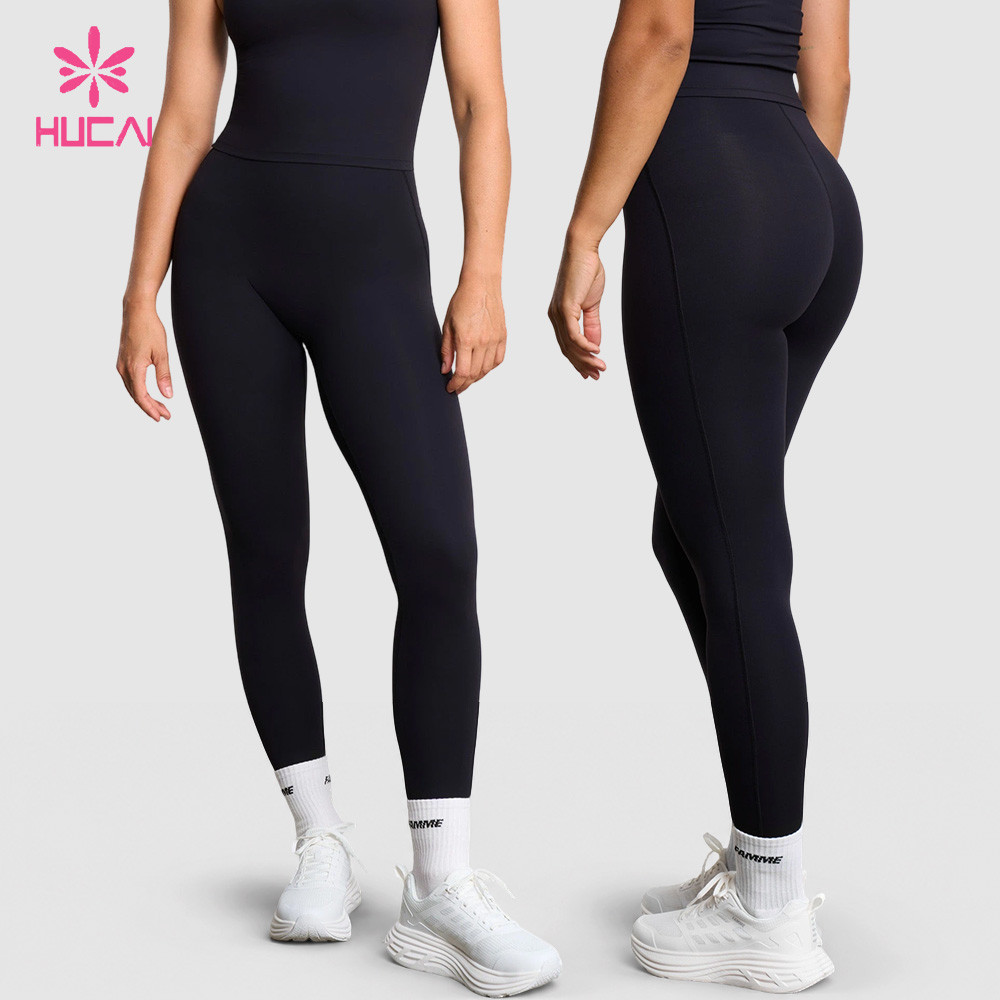
A winter running tight often fails in the sample room for reasons unrelated to fabric quality. It can be warm at the thigh and cold at the calf, supportive at the waist and restrictive behind the knee, because two engineering logics share one leg. Buyers bringing a cold-weather reference to HUCAI Sportswear often find that panel placement, not the fabric name, is the decision. This article separates thermal zoning from compression zoning and sets the checks that keep a zone map from drifting.
Quick Answer
Thermal zoning places insulation where the leg loses heat and needs no support. Compression zoning places higher-modulus panels where load and joint travel allow. Most winter running tights need a hybrid: compression through thigh and calf, a brushed panel over quad and shin, low tension behind the knee. The zone map, not the fabric name, is what a buyer approves before sampling.
Table of Contents
Who This Article Is For
- Primary reader: founders and product developers building a first cold-weather tight.
- Secondary reader: sourcing managers and technical designers comparing suppliers on one reference.
- Stage: product definition to first sample, with a reference image and size range.
- Not for: studio or summer programmes.
What you gain: a zone map for your tech pack, three zoning routes and their cost drivers, one acceptance table, and the inputs a factory needs before quoting.
Thermal Zoning and Compression Zoning Are Two Different Maps
Thermal zoning decides where insulation sits. Compression zoning decides where modulus sits, meaning how much force stretches the fabric at a point. A brushed face or bonded panel changes the first map; a higher-modulus knit or shaped side panel changes the second. Both are placement decisions made on a pattern.
The maps rarely agree. Insulation wants continuous coverage across quad and shin, where a modulus change is most visible; compression wants a gradient from knee to ankle, where brushing adds bulk. Specify "warm and compressive" without a map and every supplier invents a different compromise. Public range observation supports the pattern, not demand: 2XU's Fall 26 collection, viewed on its US retail site, presents cold-weather tights built around mapped panels and graduated support. That is a design-language signal only and implies no partnership with HUCAI Sportswear.
Where Insulation Belongs, and Where It Does Not
Heat loss on a running leg is uneven. The front quad and shin take wind first, the outer calf stays exposed on the stride, and the knee crease generates its own heat and needs room to close. A workable map treats the leg as three bands, not one tube.
- Full brushed-back layer: simplest to cut, no boundaries, but no support variation and brushing sits in the crease.
- Brushed front panel, plain back: warmth on quad and shin, better recovery at the knee; adds one panel and seam per leg.
- Bonded front layer: warmest without a liner, a flat bond line, with its own wash check.
- Liner: largest warmth and bulk step, and most likely to change grading.
Each option changes panel count, sewing steps and recovery. Brushing also moves opacity and pilling risk, so a brushed panel needs its own result, as covered in adding warmth without bulk.
Where Support Belongs Without Fighting the Knee
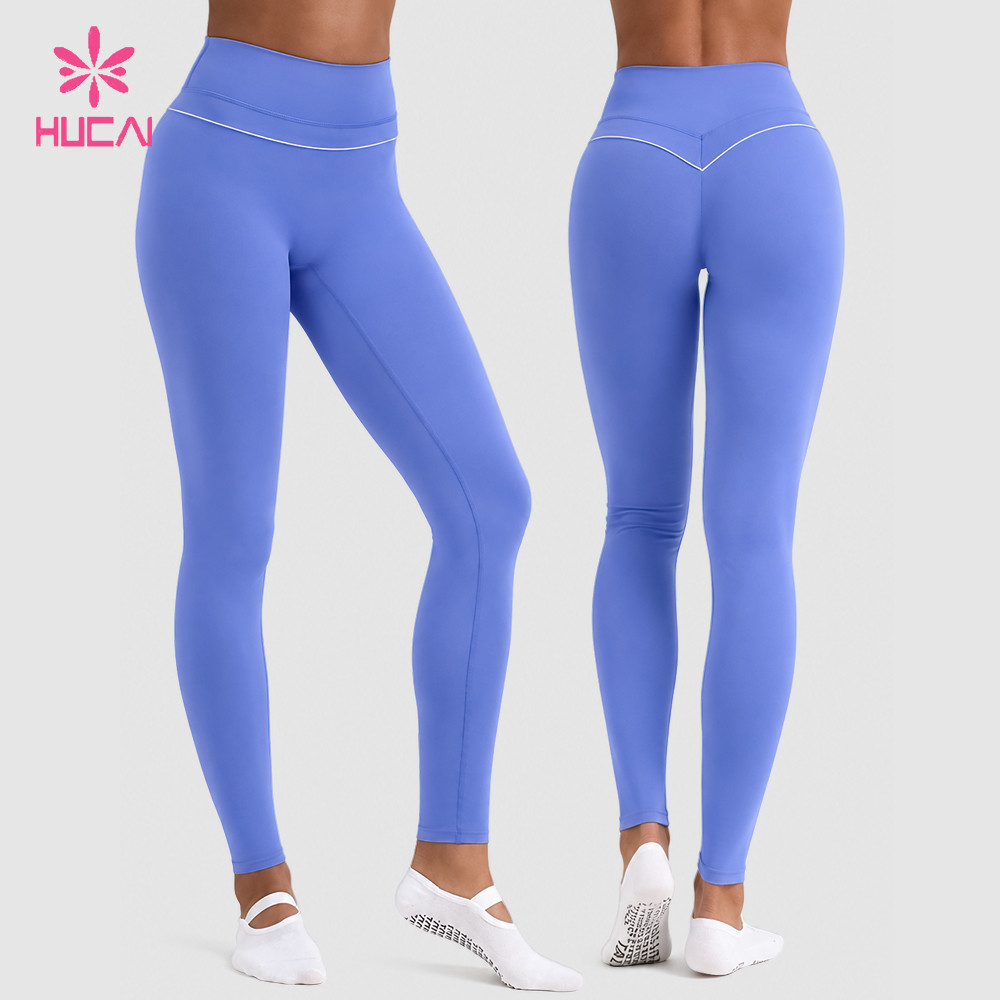
Compression zoning asks where the garment can apply load without restricting the stride. Waistband and upper thigh tolerate a firmer hand, the calf tolerates a sleeve, and the knee does not tolerate a modulus change across its crease, because two panels extending differently leave the seam to absorb the difference.
The working rule in pattern review is a boundary two to three centimetres above the patella and off the crease. Treat those figures as proposed starting points: position depends on rise, inseam, modulus and size grade. On a full-length tight the boundary falls where the thigh panel meets a straight leg panel; on a 7/8 it disappears into the hem, which is why shorter lengths clear approval first. The fabric side appears in the guide to stretch direction for active pants and in defining compression direction.
Choosing a Route: Thermal-Led, Compression-Led or Hybrid
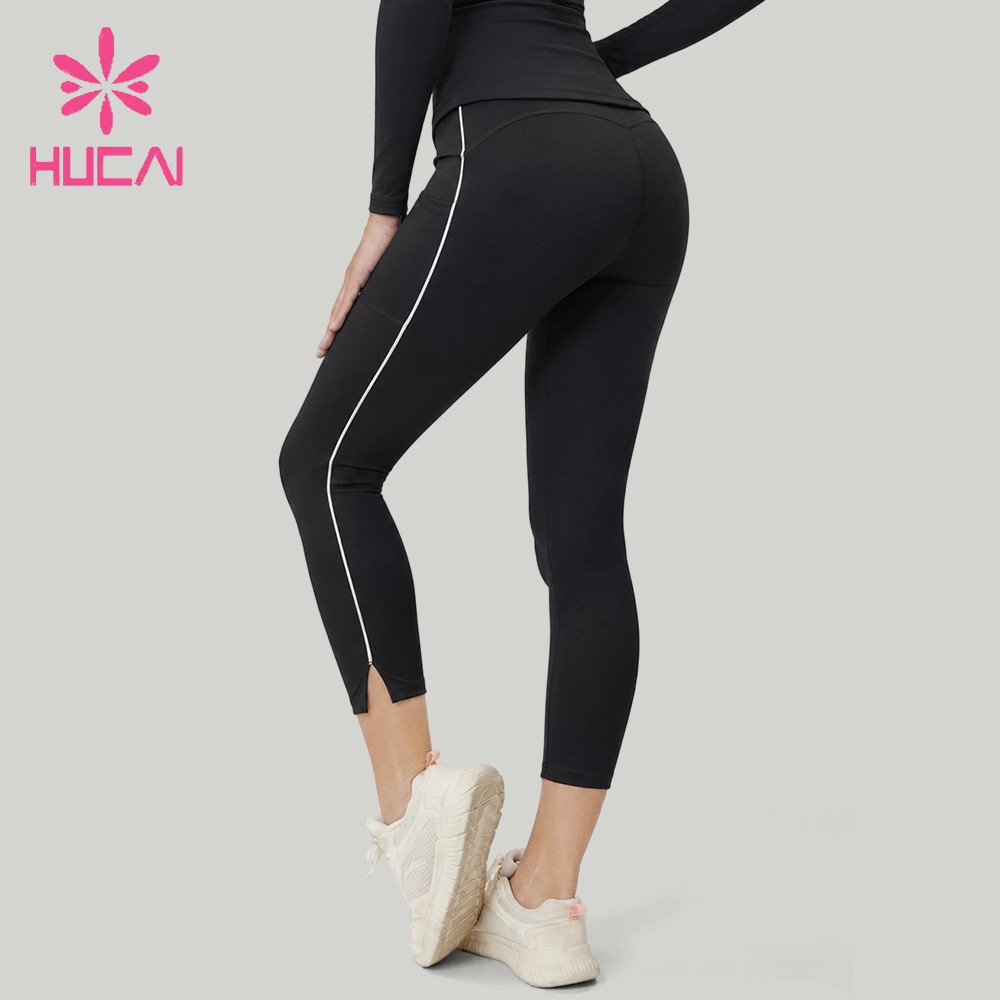
Once the maps are separated, the buyer chooses which leads. That choice sets panel count, cutting steps and quantity.
| Route | Where it works | Main risk | Cost driver |
|---|---|---|---|
| Thermal-led | Deep cold, simple range | Bulk at the knee | Fewest panels; from 100 pcs/style |
| Compression-led | Run labels with an approved fit block | Cold spots at shin and calf | More grading; needs a tech pack |
| Hybrid | One tight for cold mornings and tempo runs | Most boundaries, most revisions | Highest panel count |
The trade-off is panel count against revision rounds. Every boundary adds a seam, a shade match and a measure. A five-panel hybrid can be the right product and the wrong first order if the base fit is unapproved. Approve the plain leg first, then add the thermal panel.
Sample Checks That Prove the Zone Map Works
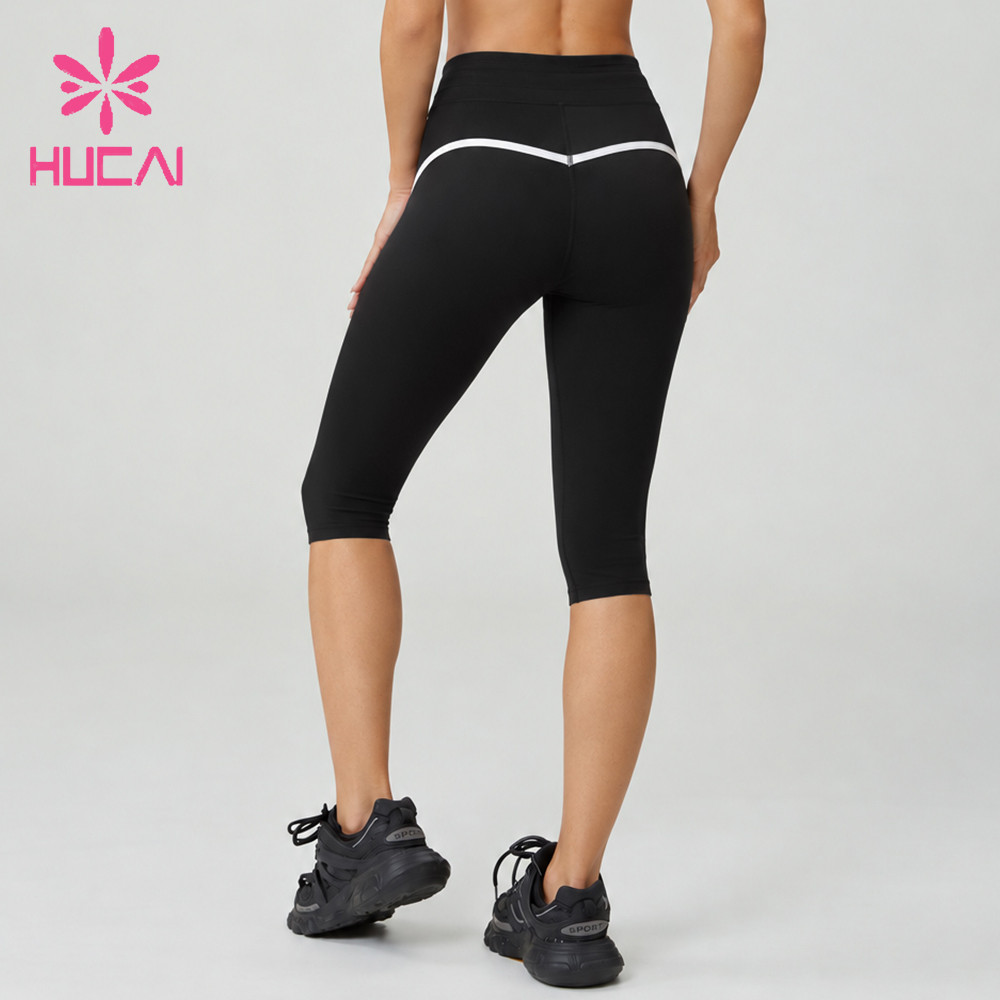
A zone map is a drawing until the sample is measured on a moving body. These are proposed acceptance checks for a first or second sample, adjusted once fabric and size range are confirmed: agreement points, not results.
| Check | Method | Proposed acceptance |
|---|---|---|
| Knee boundary | Mark it, then 15 minutes treadmill and 20 squats | 20 mm or more above the patella, off the crease |
| Extension match | Strips from both panels at the agreed force | Inside the agreed tolerance |
| Warmth map | Wearer marks zones after a 30 minute cold run | No unplanned cold band |
| Opacity and recovery | Deep squat over a contrasting layer; five washes per ISO 6330 | No show-through; inside shrinkage tolerance |
| Reflectivity | Checked against hem and calf on graded sizes | Consistent across sizes, not on a seam |
Run these on one size before grading: a boundary that fails at the base size fails everywhere. HUCAI Sportswear agrees the acceptance figures in writing before the next sample is cut.
Bulk Control and the RFQ Inputs That Prevent Drift
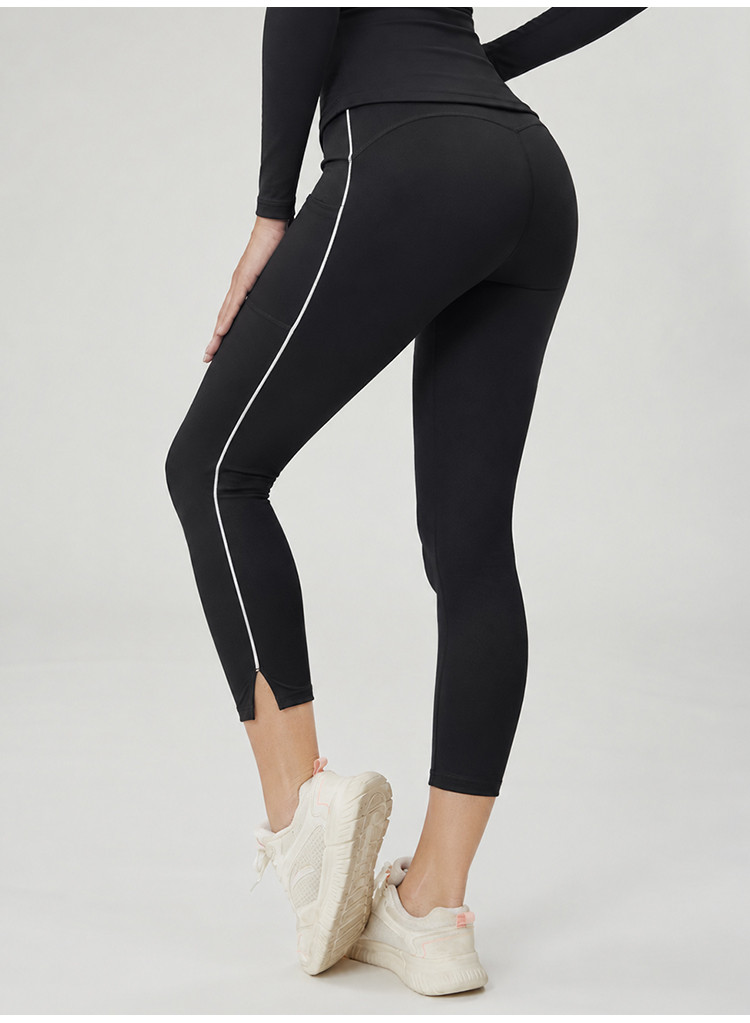
Zoned tights drift for three reasons: nap direction, lot matching and boundary registration. A brushed face has a direction, so panels cut opposite ways read as two shades in raking light. Thermal and compression panels come from different rolls and need one shade approval. Each boundary needs a registration mark, so a panel sewn 8 mm off is caught at the machine.
Cut all panels of one garment the same way, record roll and lot per panel type, add a notch at each boundary, spot check positions in process, and run AQL 2.5-based inspection at the end. MES and ERP-supported tracking keeps lots attached for repeat runs.
- Zone map on the pattern, each panel marked thermal or compression.
- Target modulus per panel and seam tolerance.
- Fabric and nap direction per panel.
- Colour count, size range and the base fit used.
- Wash and test requirements, including third-party reports.
With those inputs a quotation is built on a defined garment instead of an assumption. Sample development usually takes about 10–15 days once panels and materials are confirmed, and bulk production often takes about 25–30 days after approvals.
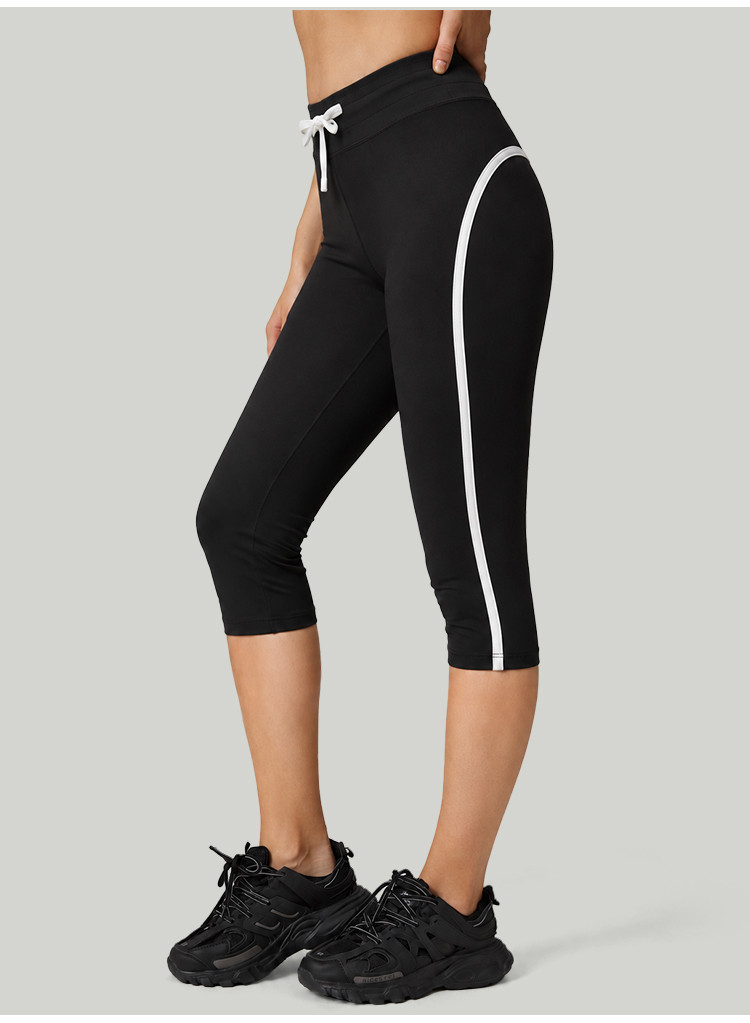
Decision Check: Is the Zone Map Ready for Sampling?
Before requesting samples, confirm the following:
- Map drawn: each panel is named and marked thermal or compression.
- Boundary set: the knee boundary has a number, tied to rise.
- Tolerance written: the allowed extension difference at each seam is stated.
- Base size approved: the plain leg is fitted before panels are added.
- Bulk controls owned: nap direction, lot matching and registration each have a check.
With three or more confirmed, the direction is ready for a sample request. With fewer, planning costs less than a sample round built on a guess.
Ready to move? Send the reference tight, panel list, base size measurements and target modulus for an OEM review. If panels are undefined, share the reference images and the use case and the team can build the map first.
Founder's Technical Insight: Jean Yuan's Development Note
The mistake I see most often is not the fabric choice. It is treating the brushed panel as a warmer version of the same cloth. The failure shows at the boundary: brushed front panel and plain calf panel cut in opposite directions, the nap catching light differently, so the seam reads as a colour break although both came from one dye lot. The second failure is the knee. A boundary on the crease looks right on a standing fit model and puckers after ten minutes of running, because the panels extend differently.
So we watch two numbers rather than the hand feel: strip extension per panel, and boundary position before the wear test. If panels disagree beyond tolerance, we change the panel, not the stitch. A boundary is cheaper to fix on paper than on a graded range.
Before bulk approval, confirm: nap direction of each brushed panel, roll and lot per panel type, boundary position on base and largest size, and extension difference at each seam.
FAQ
What is the difference between thermal zoning and compression zoning?
Thermal zoning decides where insulation sits; compression zoning decides where modulus sits. The first controls warmth and bulk, the second support and recovery. They conflict at the knee, the waist and every boundary, so the map is approved before sampling.
Which route suits a first cold-weather tight?
A compression-led plain leg with one brushed front panel. It keeps boundary count low, proves waistband and knee behaviour on a stable block, and adds the thermal panel as a revision. A five-panel hybrid belongs later.
Where should insulation stop on the leg?
Short of the flexion crease behind the knee. Warmth belongs over front quad, shin and outer calf; the crease needs low bulk and recovery. Start two to three centimetres above the patella, then confirm in a run test.
Can one fabric deliver both warmth and compression?
Only partly. A heavier brushed-back fabric adds warmth and some support, but also bulk and slower recovery, the wrong trade behind the knee. Brands needing both end up with two panels, paid for in panel count and inspection.
What causes bunching behind the knee?
Usually a boundary seam on the crease, or two panels whose extension differs beyond tolerance. Excess back-leg length and brushing in the crease make it worse. Fix pattern and panel position first; a different seam rarely solves it.
What is the MOQ, and how long does development take?
The current public MOQ starts from 100 pcs per style, with final colour, size, fabric, trim and panel planning depending on the project. Sample development usually takes about 10–15 days once panels and materials are confirmed; bulk often takes about 25–30 days after approvals.
Final Takeaway
A winter running tight is decided by where its panels go, not the fabric card name. Separate the thermal map from the compression map, keep the boundary off the knee crease, and approve the plain leg before adding panels. Then fix acceptance points in writing and control nap direction and lot matching in bulk. HUCAI Sportswear reviews zone maps at tech pack stage, the cheapest place to catch a boundary that will not survive grading.
About HUCAI Sportswear
- Founded in 1998, making women's activewear in Dongguan, China
- OEM and ODM development for leggings, sports bras, shorts, tops and sets, with zone maps reviewed at tech pack stage
- Sample-to-bulk consistency control with in-process checks
- AQL 2.5-based inspection; MES and ERP tracking with a hanging production system
Current certification information can be reviewed during supplier evaluation, based on the project requirements.