Repeated Wear and Product Longevity: What Activewear Brands Should Validate Before Bulk Production
- Share
- publisher
- HUCAI Sportswear
- Issue Time
- Oct 29,2026
Summary
Repeated wear exposes the failure modes a fabric test report cannot: surface pilling, dimensional change after washing, colour shift across panels, seam and elastic fatigue, and localized abrasion at wear points. This guide sets out what brands should validate before bulk, how to judge each point against a retained reference, and how to turn the result into a bulk inspection standard.
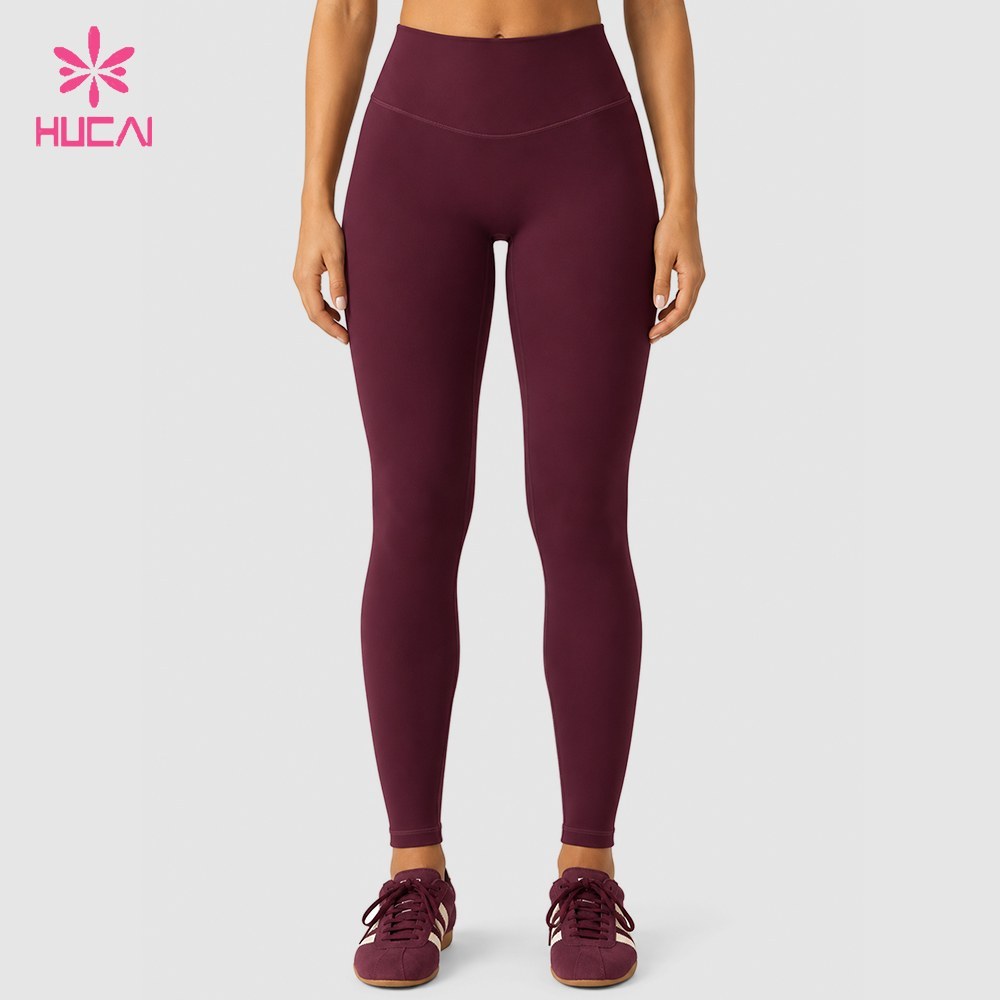
Repeated wear is where an activewear specification usually fails first, and rarely in the place the brand expected. A fabric can pass a stretch and recovery check at the mill and still show surface fuzz at the inner thigh after a month of training, or a waistband that starts to roll after the third home wash. When that surfaces after bulk delivery, the cost is not the fabric itself. It is the rework, the returns, the replacement shipment, and the review threads that arrive with photographs attached.
That is why longevity is better handled as a validation problem than as a material claim. It is also why HUCAI Sportswear reviews durability at garment level, on the styles and wear points that will actually ship, before a purchase order is issued. This guide sets out the failure modes a brand should name, the checks that expose them during sampling, and the decision rule that keeps a style out of bulk until the evidence exists.
Quick Answer
Product longevity is validated by testing defined failure modes at garment level, not by relying on a single fabric test report. Before bulk, a brand should name the failure modes that matter for the style, fix a test method and wash condition, test the smallest and largest sizes, judge results against an agreed reference, and record a pass or fail for each wear point. The usual list covers surface pilling and snagging, dimensional change after washing, colour durability across panels, seam and elastic integrity, and localized abrasion at named wear points. Brands working from a tech pack can run this through OEM review; brands still defining the product usually need ODM development support first.
Who This Article Is For
The primary reader is a growing activewear brand preparing a first or second bulk order, usually with a defined style range and an approved sample but without a written durability protocol. The secondary reader is an established brand whose returns or review data has started to point at wear failure rather than fit.
You will get the most from this if you already have a sample, a care-label intention, and a target market. If you are still choosing between three reference images with no confirmed fabric direction, the sequence below still applies, but it belongs later: define the product first, then define how it must survive.
You do not need it if your styles are short-life promotional pieces where replacement is priced into the margin, or if your buyer already supplies a current test protocol the factory must follow. In that case, the useful check is whether that protocol reaches garment level, or stops at fabric.
What a Structured Durability Review Changes
- Fewer late surprises. Failure modes are named before sampling, so the first sample review already asks about the right points instead of general appearance.
- Testable specifications. Wording such as "durable" or "premium handfeel" is replaced by a method, a condition, and a tolerance the sample room can act on.
- Fair bulk comparison. An approved sample plus a retained reference photo gives the inspection team a baseline for judging bulk, not an opinion.
- Clearer supplier conversations. Fabric and trim suppliers answer a specific question, which makes their reports usable instead of decorative.
Longevity Is a Specification, Not a Promise
A fabric test report describes a lot of fabric under one set of conditions. A garment is a different object: it has cut edges, seams, elastic, a waistband interface, panels joined at different stretch directions, and a pattern that concentrates stress in specific places. The gap between those two objects is where most longevity failures live.
Consumer wear discussions in training communities such as r/activewear and r/xxfitness describe the same pattern repeatedly: a garment that feels correct in the first weeks, then changes at the inner thigh, the underband edge or the seat after repeated washing. Established brands have also published care notes and fabric disclaimers on product pages, which acknowledges that performance expectations are bounded by care conditions and wear concentration. Neither signal is a laboratory result, but both point to the same conclusion: the question is not whether a fabric is good, but which failure mode appears first on this garment.
For practical purposes, a validation protocol needs six fields before it can be executed. Write them down and the rest of the conversation becomes specific.
| Field | What it must state | Why it matters |
|---|---|---|
| Failure mode | The named defect, described as it would appear on the garment | "Durability" cannot be judged; "pilling at the inner thigh after washing" can |
| Method | The test route, either a recognized industry method or a defined in-house procedure | Two labs following different routes produce numbers that cannot be compared |
| Condition | Wash temperature, detergent type, drying method, number of cycles | Dimensional and colour results are meaningless without the condition attached |
| Sample | How many pieces, which sizes, which colourways, from which production route | A single medium sample hides grading and panel problems |
| Judgement | The scale used, plus a retained reference photo or swatch | Without a reference, "acceptable" drifts between reviewers and factories |
| Decision rule | What result blocks bulk, what result needs revision, what result passes | A test that cannot stop a shipment is documentation, not control |
HUCAI Sportswear reviews these fields against the tech pack during development review, because several of them change the pattern or the trim selection rather than only the fabric choice. A tolerance written after sampling is usually a tolerance written around a problem.
Surface Change: Pilling, Snagging and Finish Wear
Pilling is fibre migration, not dirt. Short fibres work loose under friction, roll into small balls, and stay attached because the knit structure holds them. Three variables drive it: fibre length and staple quality in the yarn, knit density and cover factor, and the surface treatment applied to the fabric. A brushed or sanded surface improves the first impression of handfeel and usually increases the risk, because the finishing step raises fibres deliberately.
Snagging is the related failure. A fine-gauge knit with exposed yarn loops catches on hook-and-loop closures, bag straps and watch bands, and the pulled loop becomes a permanent line. Two fabrics with identical composition can behave differently here, which is why composition alone is a weak specification.
Garment-level judgement matters more than fabric-level judgement, because friction is not evenly distributed. On leggings, the inner thigh and the seat carry the highest abrasion load. On a sports bra, the underband edge and the strap-to-cup junction take it. Testing a flat swatch tells you about the fabric; rubbing the assembled garment at those points tells you about the product.
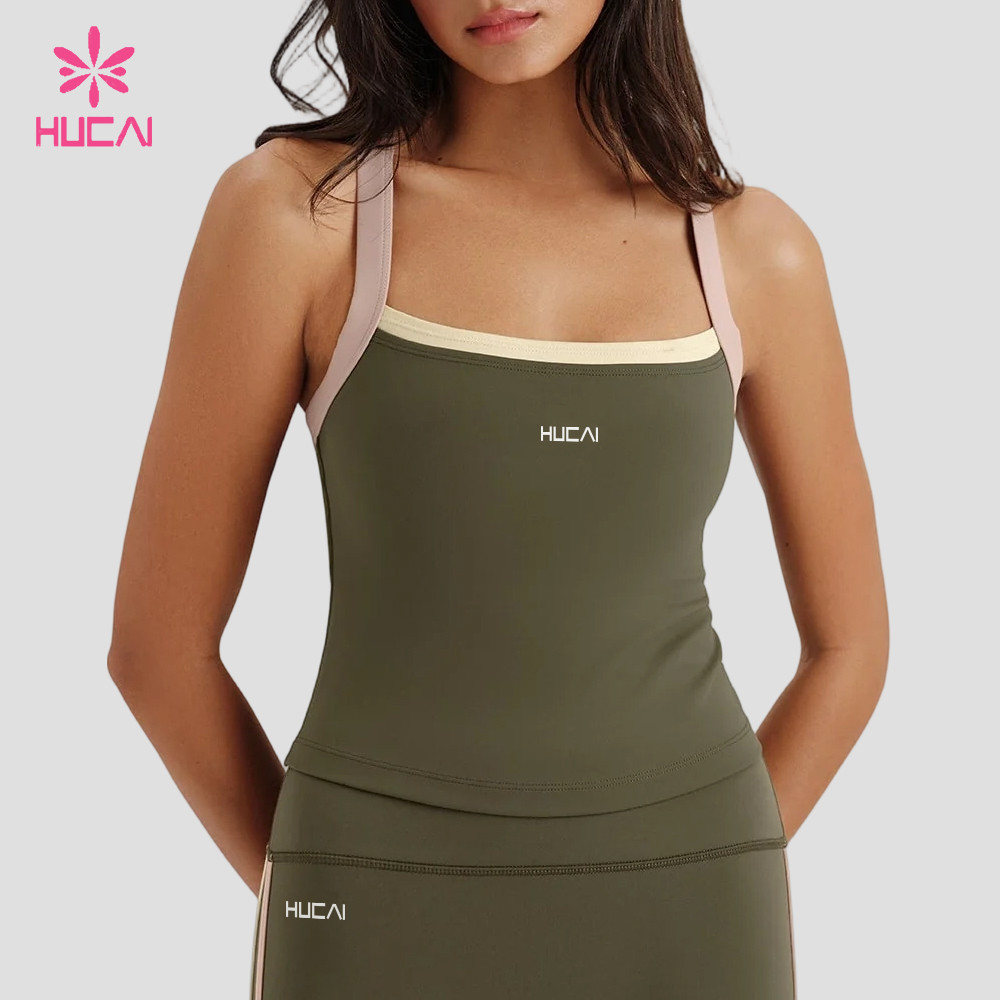
A workable approach is to test the fabric with a recognized pilling method for a baseline, then run a garment-level rub at three or four named wear points and compare each against a retained photograph of the unworn sample. Agree the acceptable appearance during sample approval, not during bulk inspection. For brushed and sandwashed surfaces, this agreement should be explicit, because the same finish that gives the intended handfeel will look different after ten washes. The fabric selection review is the right place to settle that trade-off, before the finish is locked.
Dimensional and Shape Stability After Washing
Shrinkage is often quoted as a single percentage, which hides the two things that actually cause complaints: where the garment shrank, and whether the panels shrank by the same amount. A legging whose leg panels relax while the waistband interlining holds its length will twist at the side seam and roll at the top edge, even if the overall length change is inside tolerance.
Fix the measurement points before you test. For leggings, that usually means half waist, waistband height, hip, inseam and leg opening. For a sports bra, it means underband length, cup depth at the apex, strap length and armhole. Measure flat, before and after the defined wash cycles, and record the change per point in centimetres rather than one aggregate figure. Then repeat on the assembled garment, because seam and elastic behaviour is not the sum of the panels.
The wash condition must be written into the specification, not assumed. Temperature, detergent, spin, and whether the garment is line dried or tumble dried all move the result. A brand selling into a market where tumble drying is normal needs a condition that reflects that, otherwise the tolerance describes care behaviour the customer will not follow.
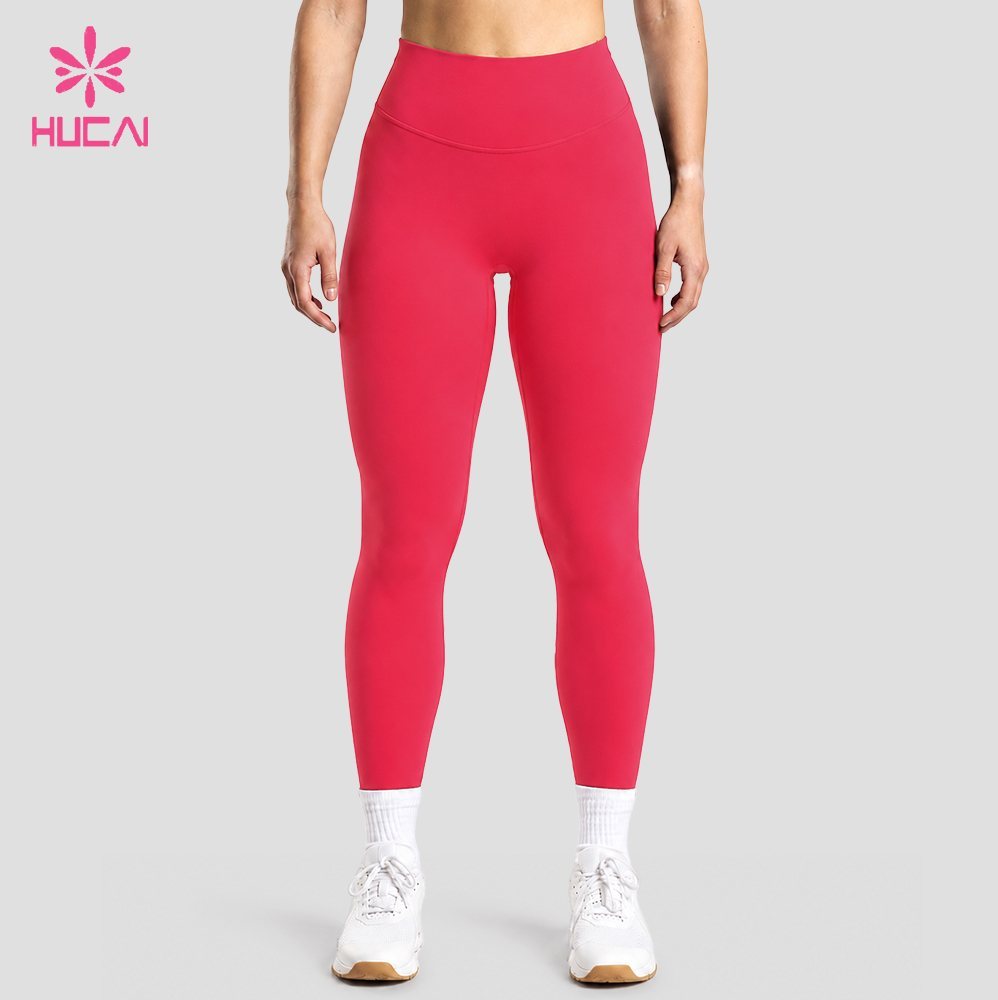
Differential shrinkage between shell fabric and trim is the practical risk to design out. If the waistband elastic, the binding, or the interlining has a different shrinkage route from the shell, the sample may look correct on day one and distort after the first wash. HUCAI Sportswear checks trim and shell behaviour together during sample development for this reason, and the check belongs in the sample approval sequence rather than in a pre-shipment inspection.
Colour Durability Across Panels and Dye Lots
Colour failure rarely looks like a garment turning a different colour. It usually appears as a contrast: a binding that shifts lighter than the body, a mesh panel that bleeds into an adjacent light panel, a black that crocks onto a white underband, or a bra and legging in the same set that no longer match after washing.
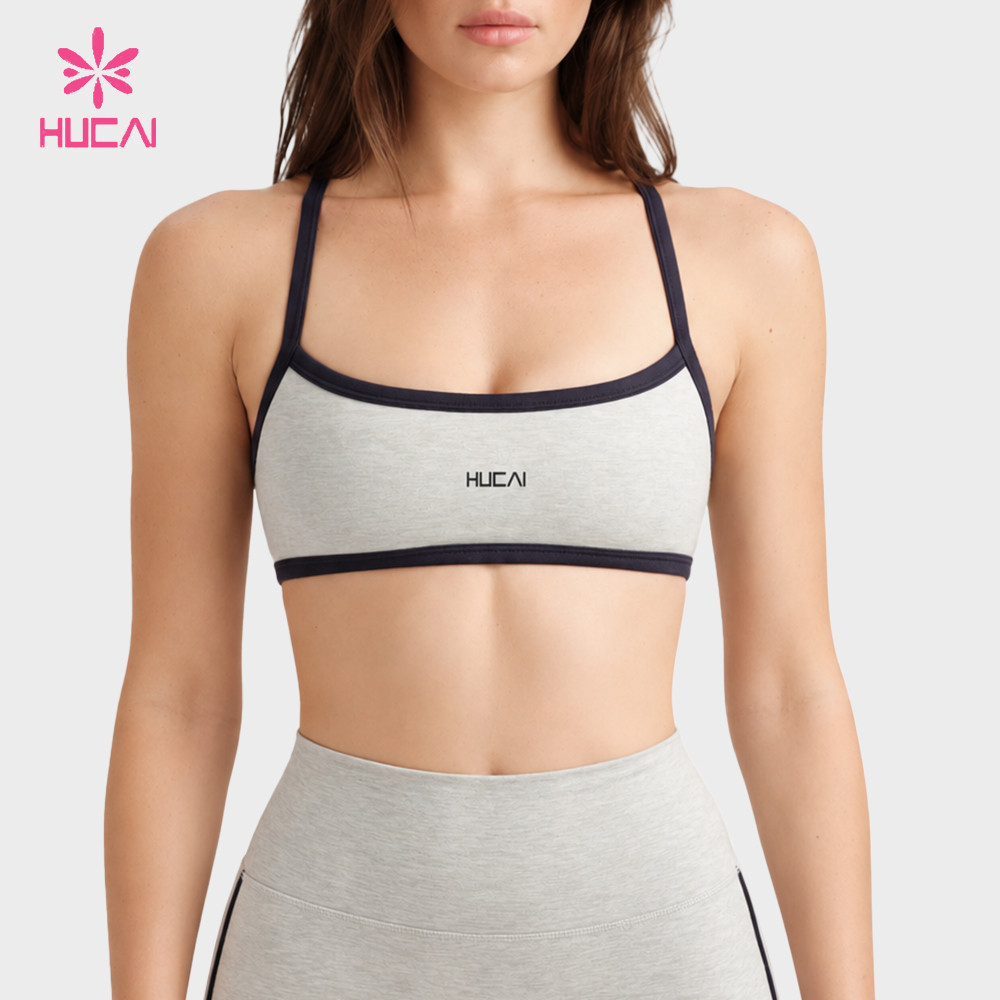
Three separate questions need separate answers. Wash fastness asks how much colour leaves the garment and whether it transfers to adjacent material in the same load. Crocking asks whether colour transfers by rubbing, which matters most on deep shades and on the inside of a waistband. Shade consistency asks whether the approved colour still matches across panels, substrates and dye lots. A multi-piece set makes the third question harder, because the bra shell, the binding and the legging may be different substrates dyed on different lines. Approving a set colour on one substrate and assuming the others will follow is one of the most common and most visible errors in matched sets.
The control is procedural. Approve the colour on each substrate, keep a retained approved swatch per lot, and require a lab dip approval before bulk dyeing rather than after. For dark shades and contrast trims, define the acceptable transfer level during sample review and state it in the purchase specification. The matching set development route is where this is usually settled, because the set is the product and the colour has to hold across both pieces.
Seam, Stitch, Elastic and Trim Integrity
Seams fail in three recognizable ways. The stitch can break under extension when thread and fabric elongation are mismatched. The seam can slip when a smooth, high-stretch knit does not grip the stitch, opening a gap along the seam line. The seam can abrade, where a topstitched edge or a flat seam is rubbed until the thread wears through before the fabric does.
Elastic is the second system to validate. An underband or waistband does not fail suddenly; it loses recovery progressively, and the visible symptom is rolling, riding or gaping rather than a break. Testing it once at the start proves little. The useful check is recovery after the defined wash cycle, measured at the band rather than on a flat elastic strip, because the band is folded, joined and under tension in the garment.
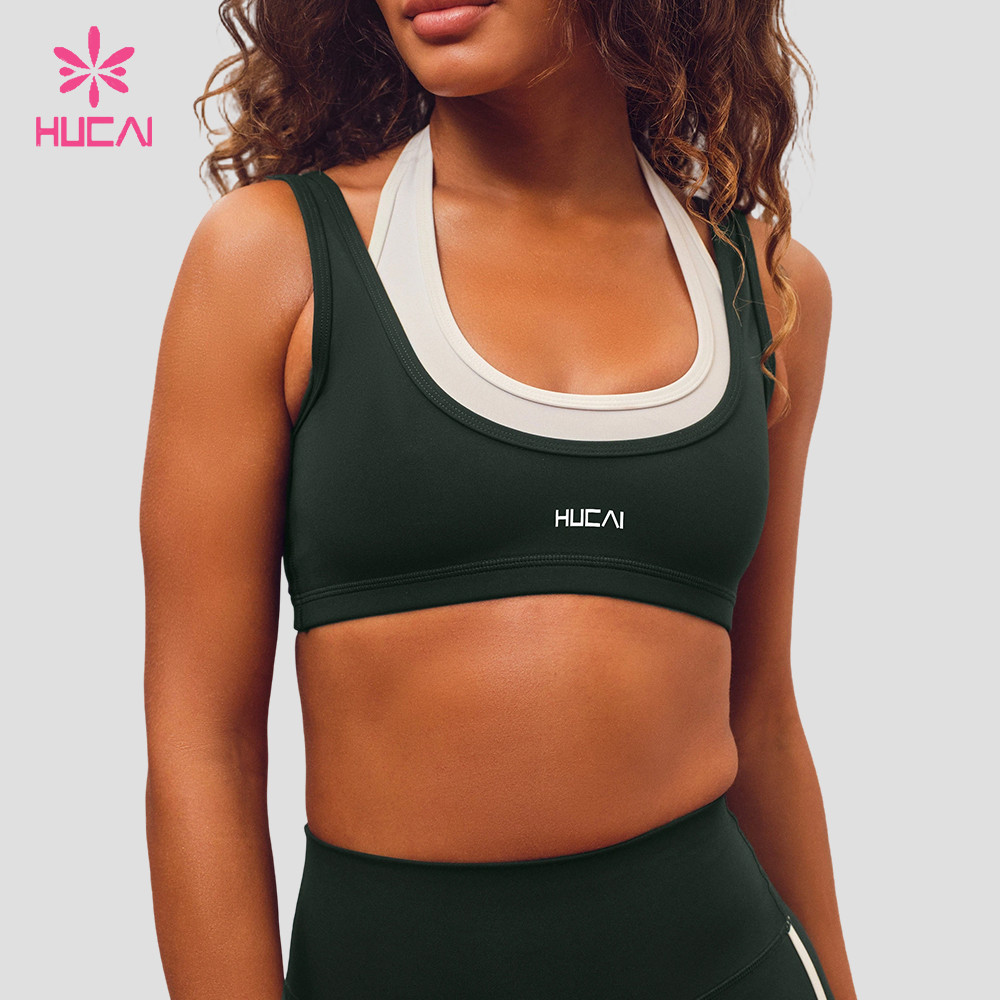
Trim is the third. Heat transfer logos lift at the edges after repeated washing, particularly on a brushed surface where the fibres give the adhesive less to grip. Woven labels, heat-sealed seams, zipper pulls, and silicone gripper prints each have their own wear route. None of these are visible in a fabric test.
For a brand shipping its first bulk order, the practical sequence is to write the seam type and stitch density into the tech pack, run a seam extension check on the assembled garment, then wash and re-check the same seams and bands. HUCAI Sportswear runs this against the approved sample during OEM review, so the standard is fixed before cutting rather than negotiated after inspection.
The Wear-Point Map: Where the Same Fabric Fails Differently
Two styles made from the same fabric lot can have completely different longevity outcomes, because the pattern decides where friction lands. A gusset that places a seam exactly at the highest abrasion point of the inner thigh will wear through before the fabric surface shows any pilling. A waistband whose seam sits at the centre front will show a ridge after washing while the rest of the band is intact. A strap junction that carries load through a single row of stitching concentrates stress on one line of thread.
A wear-point map is a simple drawing of the pattern with the high-friction and high-tension zones marked, agreed between the brand and the sample room before the first sample is cut. It converts a general instruction into a short list of places to inspect. In practice, five zones cover most women's activewear:
- Gusset and inner thigh. Highest abrasion load on leggings; the seam position matters as much as the fabric.
- Underband edge and strap junction. Elastic fatigue plus skin friction; the edge is a cut edge with exposed yarn.
- Seat and centre back seam. Stretch cycling under movement, plus abrasion from seating surfaces.
- Hem and leg opening. Repeated contact, and the place where a coverstitch or binding shows wear first.
- Logo, label and trim. Adhesion and abrasion, often on the exact panel that gets rubbed.
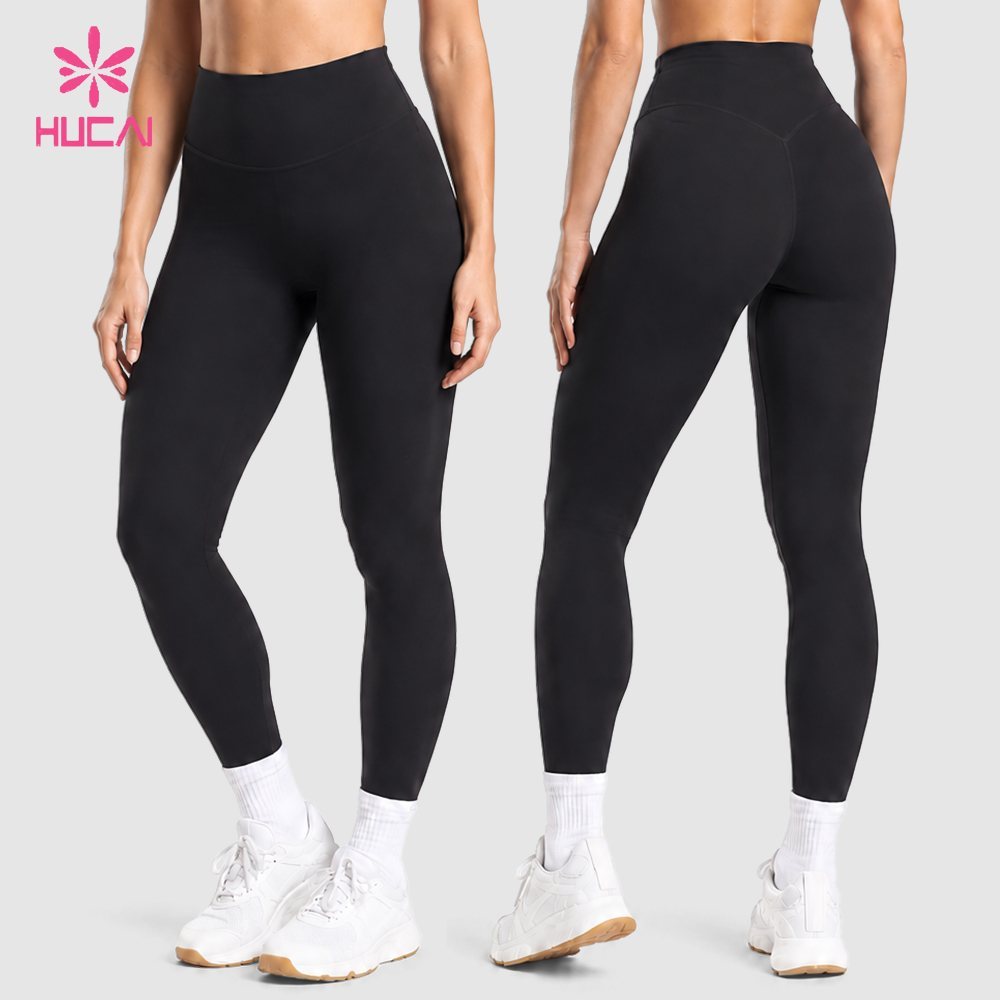
Once the map exists, it changes development decisions rather than only inspection. Panel lines move away from the high-friction zone, a gusset construction is chosen for abrasion rather than only for comfort, and a logo method is selected for the surface it sits on. The leggings and sports bra development routes on this site carry more detail on those construction choices: see custom leggings manufacturing and sports bra development.
Decision Check: Is This Style Ready for Bulk?
Use this check after sample approval and before the purchase order. It is deliberately short, because a long checklist that nobody completes is worse than a short one that stops a shipment.
- Failure modes named. The style has a written list of the failure modes that matter for its category and wear points. If not, the specification is not testable yet.
- Method and condition fixed. Each failure mode has a method and a wash or abrasion condition attached. If the condition is missing, the result cannot be repeated.
- Sizes and colourways covered. At least the smallest and largest sizes, plus any size where the pattern changes, and every substrate used in a set. If only one size was tested, grading risk is unverified.
- Reference retained. An approved sample or photograph exists for each judged point. If not, judgement will drift between reviewers.
- Result recorded per point. Each wear point has a recorded outcome, not an overall impression. If the record is a sentence, bulk cannot be compared against it.
- A decision rule exists. There is a stated consequence for a fail: revise, re-source, or accept with a documented reason. If nothing changes after a fail, the review has no authority.
If five or six of these are in place, the style is in a reasonable position to move into bulk planning. If two or three are missing, the gap is usually in the specification rather than in the factory, and it is cheaper to close it now than after cutting.
Bring the Wear Points Into the Sample Review
If you already have a tech pack, the fastest route is a durability-focused sample review: send the specification, the intended care condition, the target market and the wear points you are most concerned about, and ask for those points to be checked and photographed during sampling. HUCAI Sportswear reviews the tech pack, fabric and trim direction, seam standards and branding before sampling, so the review starts from your specification rather than from a generic checklist.
Send your tech pack for OEM review and mark the wear points you want validated.
If the product is still being defined from reference images, the sequence is different: the wear-point map is built during development, and the fabric and construction options are narrowed before a sample is cut. Start from ODM development support in that case.
Founder's Technical Insight: Jean Yuan's Development Note
I am Jean Yuan, founder and head of product development at HUCAI Sportswear. The failure I am asked about most often is not a fabric that wears out. It is a fabric that passes a pilling test at the mill and then fails at the underband edge or the inner thigh within a few weeks of real wear.
The cause is usually not the fibre. The test measured a flat surface, while the garment presents a cut edge, a folded band and a seam to the same friction. At a cut edge the yarns are severed and the elastic is exposed: under repeated load the edge curls, the exposed yarn abrades, and the stitch line holding the fold starts to show. None of that appears on a flat swatch. The same logic explains why a gusset seam placed at the highest abrasion point fails before the fabric does. The seam is a ridge, and the ridge takes the load.
When a brand brings a style for bulk review, what I watch is whether the wear points are marked on the pattern. If they are, we can move a seam, choose a different edge finish, or select a logo method that survives the panel it sits on. If they are not, the sample can look correct and still fail in a predictable place, because nothing in the construction was asked to protect that zone.
Before cutting bulk fabric, I ask the development team to confirm four things: wear points marked on the pattern and on the sample; a wash condition that matches the care label the brand intends to publish; an approved colour reference for every substrate in a set; and a sample-approval photograph behind every inspection point at bulk. With those four in place, bulk inspection is a comparison. Without them, it is an opinion.
FAQ
What does activewear durability testing actually cover?
It covers the specific ways a garment can degrade, not a general quality score. For women's activewear the usual set is surface change such as pilling and snagging, dimensional change and shape loss after washing, colour durability including wash fastness and transfer, seam and stitch integrity, elastic recovery at bands, and trim or logo adhesion. Each one needs its own method and condition, because a result without the condition cannot be repeated.
How many wash cycles should we test before bulk?
There is no universal number: the right figure follows the care claim and the market. A practical approach is a short screening set during sampling to expose the direction of change, then a cycle count that matches the product's expected life and the care label you intend to publish. What matters more than the count is that the count, temperature and drying method are written into the specification, so the result means the same thing at sample stage and at bulk inspection.
Can a fabric supplier's test report replace garment testing?
No. A supplier report describes a fabric lot under one condition. It cannot describe a cut edge, a folded underband, a seam ridge or the interaction between a shell and a trim with different shrinkage. The report is useful as a baseline and as a sourcing comparison, but the bulk decision should rest on garment-level checks at the wear points that will actually ship.
Which sizes should be included in the test sample?
At minimum the smallest and largest sizes in the range, plus any size where the pattern or the panel layout changes. Small sizes show seam and elastic behaviour under different curvature; large sizes show where stretch is highest and where a seam may sit on a different part of the body. Testing only a medium sample verifies the block, not the grade.
How do we judge pilling without a laboratory?
Judge against a retained reference rather than against an opinion. Photograph the approved sample at each wear point under consistent light before wear or washing, then compare the same point afterwards at the same distance and light. Agree the acceptance level during sample approval, and if the brand intends to publish a pilling claim, use a recognized industry method so the claim rests on a method rather than on internal judgement.
Why do the bra and leggings in a set stop matching after washing?
Usually because the two pieces are different substrates, or were dyed on different lots, and the colour was approved on only one of them. Wash fastness and shade shift are not identical across a knit body, a mesh panel and a binding. Approving colour per substrate and retaining a swatch per lot is the control; a single set photo is not.
Does durability validation change MOQ or production timing?
It can change the review sequence, because a wash-and-wear round adds a step before bulk approval. The public MOQ starts from 200 pcs per style, with final planning depending on fabric, colour, size range, trims, logo method and packaging. Sample development usually takes about 10-15 days depending on style, fabric, trims, branding and revision requirements, and bulk production often takes about 25-30 days after pre-production details and approvals are confirmed. Added validation time depends on cycle count and whether a re-sample is needed, so plan it into the calendar rather than discover it at the end.
What should we send for a durability-focused development review?
Send the tech pack or reference images, the care label you intend to publish, the target market, the fabric and trim direction if already chosen, and the wear points you are most concerned about. If you have review data or returned garments, include the photographs, so the sample room can check the right places instead of reviewing general appearance.
Final Takeaway
Longevity is decided by which failure mode appears first, and that is a specification question. A brand that names its failure modes, fixes the method and wash condition, tests the sizes and substrates that carry risk, judges against a retained reference, and attaches a consequence to a fail is doing something a fabric test report cannot do: it is controlling the bulk decision.
The cheapest moment to close that gap is between sample approval and the purchase order. After cutting, the same information becomes a claim, a rework plan, or a credit note.
Next Step
Ready to develop: send your tech pack, measurements, fabric and trim requirements, and branding specifications for OEM review, and mark the wear points you want validated during sampling.
Need development guidance: if fabric direction, construction or the wear-point map is still open, review the options with the development team before a sample is cut.
Still evaluating: read the sample policy and the factory and production procedures before you prepare a brief, so the sampling and inspection sequence is clear.
Trust Notes
- HUCAI Sportswear is a women's activewear and sportswear manufacturer in Dongguan, China, founded in 1998, supporting OEM, ODM, private label development, sampling and bulk production.
- Quality control is aligned with AQL 2.5 inspection principles, with pre-production review, in-process checkpoints and final inspection; AQL 2.5 is an inspection framework, not a zero-defect assurance.
- Current certification information can be reviewed during supplier evaluation based on the project and documentation requirements.
- Recycled or certified material options can be reviewed based on project requirements and available documentation.