Water-Resistant Running Jackets: What OEM Buyers Should Test Before Bulk
- Share
- Issue Time
- Nov 25,2026
Summary
A pre-bulk test plan for women's water-resistant running jackets. It splits the claim into spray rating, hydrostatic head and seam integrity, compares five shell options, maps the leak paths at seams, zips, hood and cuffs, sets an eight-point acceptance table, and lists the RFQ inputs and bulk controls that keep the approved sample and the shipment on one standard.
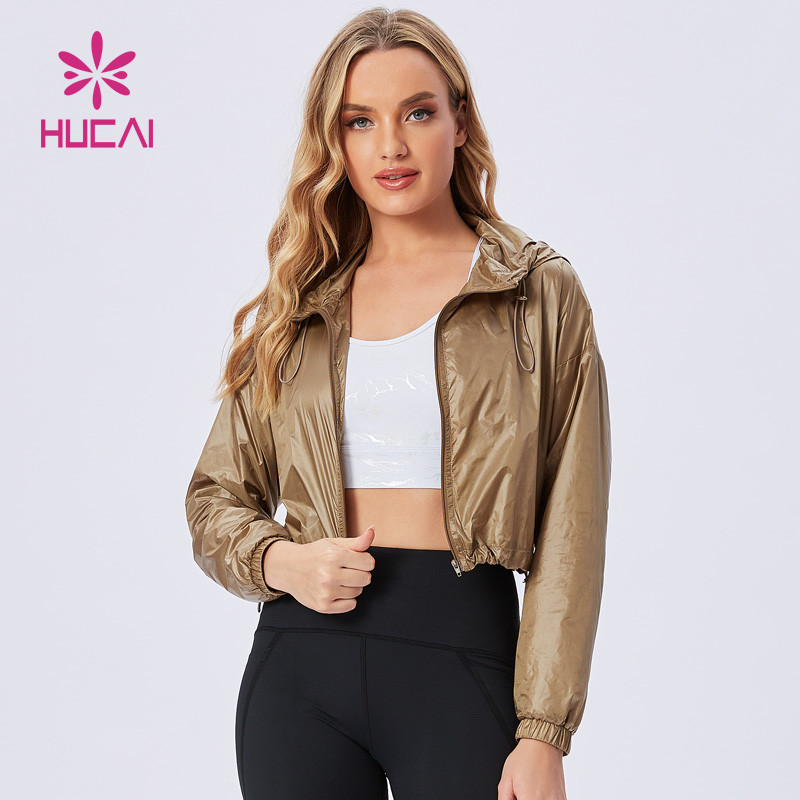
Most water-resistant running jacket briefs arrive as a sentence rather than a specification: a reference jacket, a shower-proof claim and a target landed price. That is enough to open a sample, not to approve bulk. Protection is lost in stages — first at the seams, then at the zip and hood, then quietly after the fifth home wash — and each stage needs its own check. HUCAI Sportswear reviews women's outer layers this way: turn the claim into measurable properties, test them on the same sample, then write the standard bulk will be judged against.
Quick Answer
"Water-resistant" is not a test result, so it cannot be approved as one. Specify three things separately: surface repellency (spray rating), pressure resistance of fabric and seams (hydrostatic head or a rain test), and how much of both survives washing. Then confirm that the zip, hood, cuff and hem close the garment; a coated fabric with open seams still wets out.
Table of Contents
Who This Article Is For
- Primary reader: product developer or sourcing manager adding a light shell to a women's run or training range.
- Secondary reader: technical designer writing the construction and test section of the tech pack.
- Product stage: between a reference jacket and the first sample, or between an approved sample and a bulk commitment.
- Problem being solved: a shower-proof claim that supplier, sample and shipment do not currently share.
- Who may not need this article: brands developing only knit mid-layers or insulated puffers.
What you gain from this article: a three-part way to define the claim, proposed acceptance checks for your laboratory, a leak-path list, and the RFQ inputs that hold sample and shipment to one standard.
What "Water-Resistant" Must Mean Before It Reaches a Tech Pack
Three different failures sit behind one marketing word. Surface wetting is water beading and then soaking into the face fabric. Penetration is water pushed through the fabric under pressure. Ingress is water entering at a seam, zip, hood edge or cuff, where no barrier exists.
Buyers therefore need the claim split into a test, a unit and a substrate. "Spray rating 4 after five home washes on the shell face" is a specification; "water-resistant finish" is not. Name the method and its edition, because results from different methods are not interchangeable, and a mill report on flat fabric does not describe a sewn, taped garment.
The Sweaty Betty new arrivals page, reviewed in November 2026, presents running and training outer layers as a distinct layer with their own wind and shower language — a structural observation about UK merchandising, not test evidence, and no supply relationship is implied.
Shell Options and What Each One Can Realistically Pass
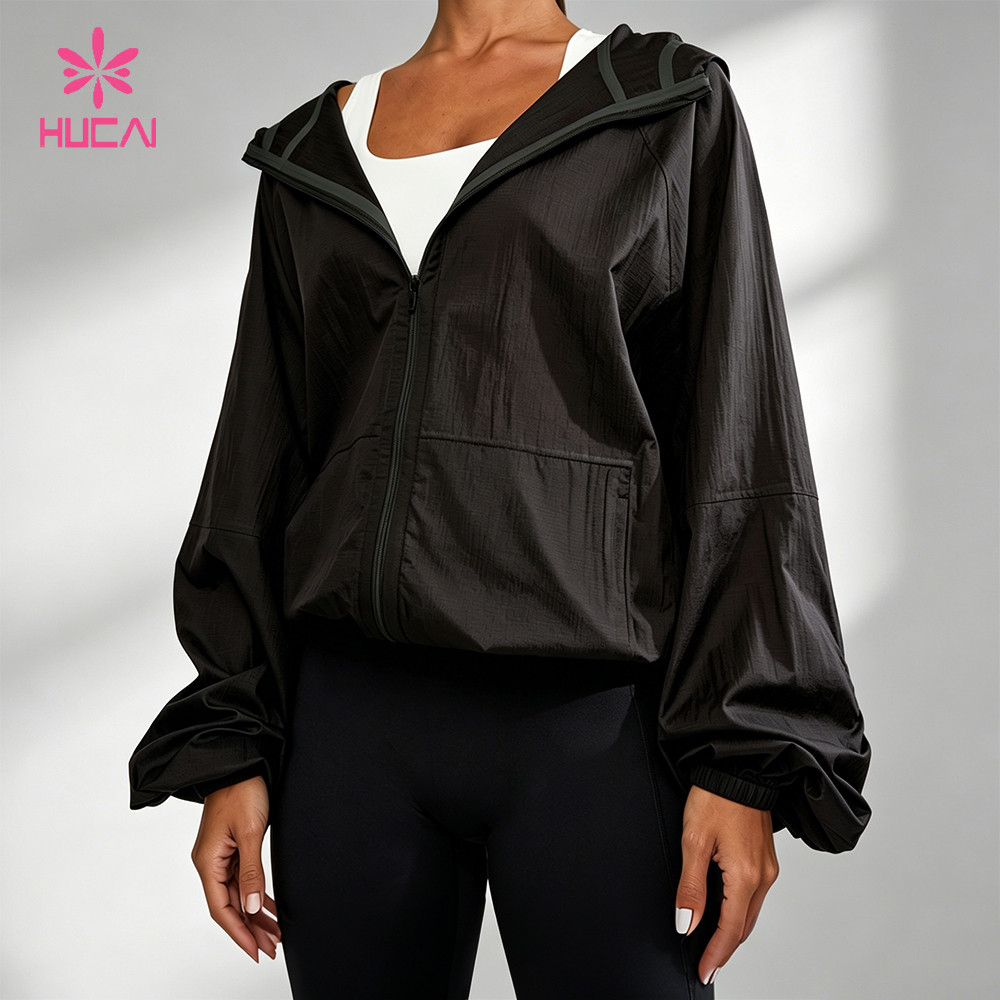
Fabric choice follows the claim. A repellent stretch woven with no membrane handles wind and light showers and samples quickly, but will not hold pressure on a long wet run. A 2.5-layer laminate adds a membrane and printed backer for real pressure resistance and packability, at higher cost, with a backer that can abrade. A 3-layer laminate is the most durable and the stiffest; it changes allowances and order planning.
| Option | Can support | Fails at | Sample implication |
|---|---|---|---|
| Repellent stretch woven, no membrane | Wind, light shower | Pressure on long runs; seam wicking | Fastest to sample; finish durability must be tested |
| 2.5-layer laminate | Sustained rain at a stated head | Backer abrasion; pack creasing | Seam sealing plan required |
| 3-layer laminate | Repeated wet use | Stiffness, cost, quantity | Allowance and tape width review |
| Softshell or bonded | Stretch comfort, cold dry days | Weight; seam bulk | Grading and seam bulk checks |
| Repellent knit | Movement, drizzle | Pressure and seam ingress | Position as shower-resistant only |

Seams, Zips, Hood, Cuff and Hem: the Leak Paths That Decide Approval
Fabric data sheets describe a flat surface; a jacket is mostly edges. Overlocked seams provide no barrier, flatlock seams wick along the thread, and taped seams create one only where the tape covers the graded allowance and is applied at controlled temperature and pressure. Full and critical-seam taping are different products at different costs, so name which seams are sealed.
- Seam plan: list every seam, its type and whether it is taped; test hood, shoulder and chest seams, not fabric alone.
- Zip: a water-resistant coil, a storm flap behind it and a protected top stop decide whether the centre front leaks.
- Hood and collar: adjustment points, brim stiffness and collar height decide whether rain runs in at the neck.
- Cuff and hem: elastic cuffs, internal storm cuffs and a hem drawcord stop water climbing; bonded hems cost more.
Breathability: the Trade-Off Buyers Underestimate
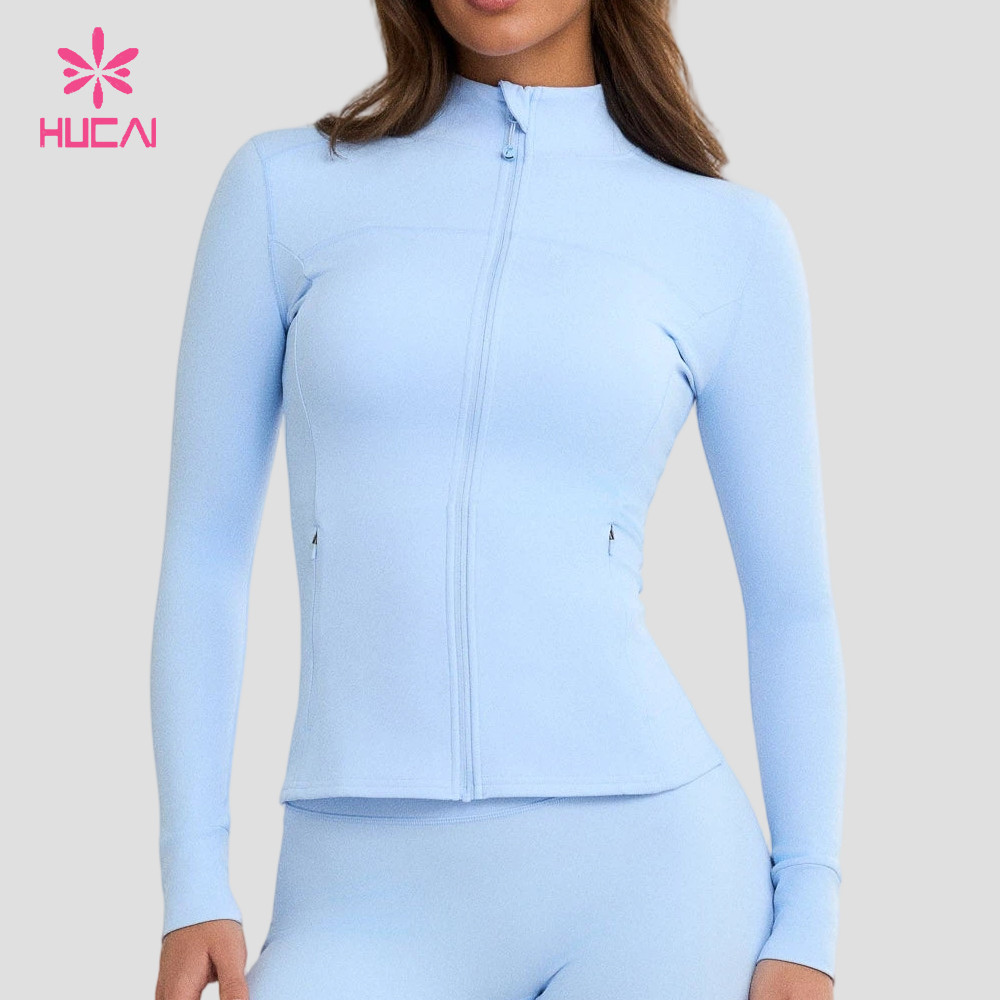
A barrier that keeps rain out also keeps vapour in. Breathability is reported as water-vapour transmission (ASTM E96, ISO 15496) or as resistance to evaporative heat transfer (RET, ISO 11092). The methods are not convertible, so compare only figures produced the same way on the same substrate; a flat-fabric mill figure reads better than the sewn garment, because tape, lining and overlap reduce open area.
Ventilation is a construction decision as much as a fabric one: a back yoke vent, pit zips, a mesh-lined body or a lighter back panel move vapour without changing the membrane. For a short urban run, over-specifying breathability buys cost nobody notices; for long wet efforts, condensation inside the jacket is the complaint that returns, and at HUCAI Sportswear the vent plan is fixed at sample review.
The Pre-Bulk Test Plan: Methods, Sequence and Acceptance
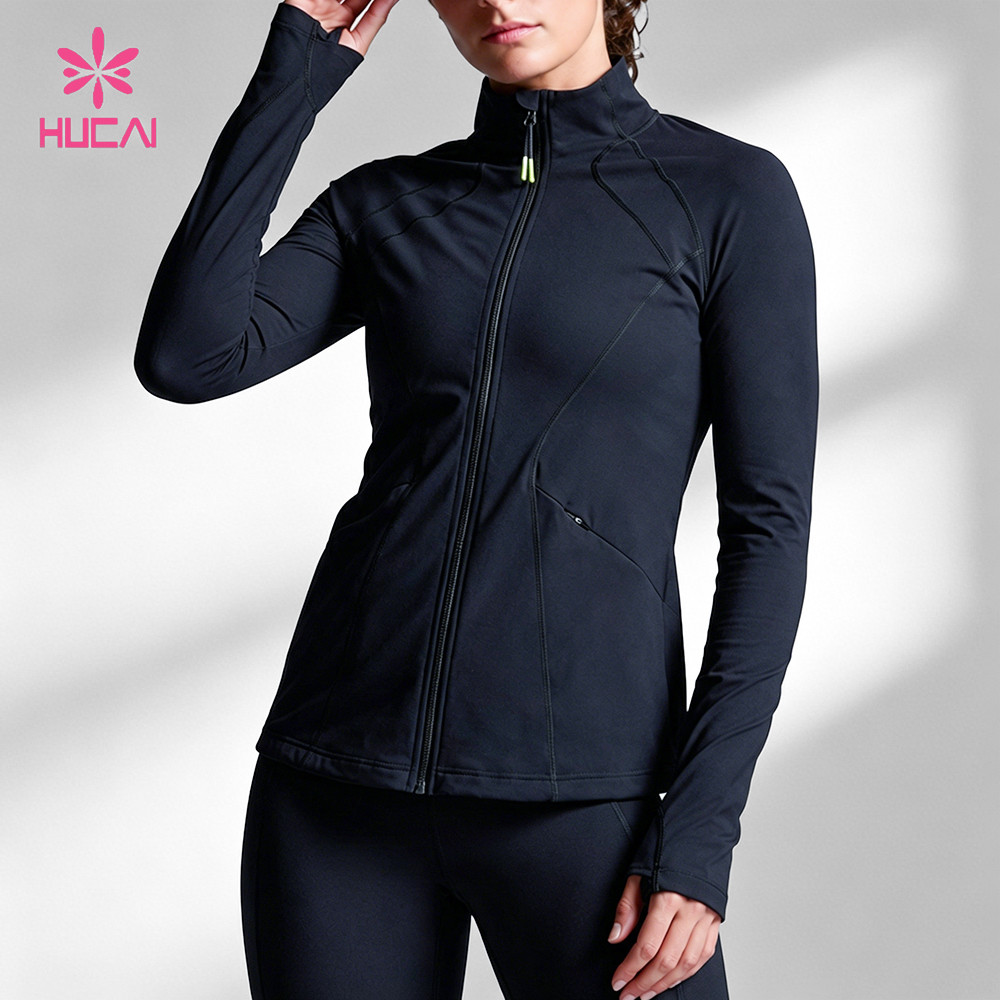
Run these checks in order, on the same sample, and record the grade, method and wash cycle. The values are proposed acceptance checks for a women's light running shell, a starting point for discussion with your laboratory rather than published limits.
| Check | Point tested | Method reference | Proposed acceptance |
|---|---|---|---|
| Surface repellency, new | Shell face | AATCC 22 / ISO 4920 spray | Grade 4 or better |
| Repellency after washing | Shell face | 5 home washes (AATCC 135 / ISO 6330), then spray | No more than one grade lost |
| Pressure resistance | Shell face | AATCC 127 / ISO 811 hydrostatic | Figure set to the claim; waterproof needs a higher head |
| Seam integrity | Hood, shoulder, chest seams | Hydrostatic on seam area, or AATCC 35 rain test | No visible penetration at the seam |
| Centre-front zip | Zip, flap, stops | Directed spray and rain test | Lining inner face stays dry |
| Breathability | Shell and lining | ASTM E96 or ISO 15496; RET to ISO 11092 | Quoted by the method used in the mill report |
| Finish recovery | Washed shell | Spray test, re-apply finish, re-test | Rating returns to the approved grade |
| Wet appearance | Full garment | Visual, wet and dry, under D65 | No shading change at seams or tape |
Sequence matters. A spray test on a new shell proves the finish was applied; the same test after washing proves it survives the care label. A fabric-only hydrostatic result does not describe the jacket, because water enters through the seams first.
Bulk Control and the RFQ Inputs That Prevent Drift
Bulk drift rarely starts with the fabric roll. It starts with finish concentration in the padding bath, and with tape temperature and pressure. Keep the approved sample and its test record as the reference, verify each dye lot, and check the first article of every colour against the sealed seam plan. AQL 2.5-based inspection covers workmanship; at HUCAI Sportswear, water performance gets its own spot check per lot.
Write these into the RFQ; each changes sample and quotation:
- Exact claim wording, target market and evidence the brand must hold.
- Test methods, acceptance values and the wash cycles to be simulated.
- Seam plan, tape width and which seams are sealed.
- Zip type, storm flap, hood adjustment, cuff and hem construction.
- Fabric weight, stretch direction, colourways and finish requirements.
- Size range, target quantity, delivery window and sample priority.
Decision Check: Is the Water-Resistance Spec Ready for Sampling?
Confirm five points before a sample is cut. If three or more are unresolved, the first sample tests the brief, not the jacket.
- Claim: exact wording, market and substantiation the brand will hold.
- Fabric: mill report with method, unit and substrate named.
- Seams: which are taped, at what width, and how adhesion is checked after washing.
- Openings: zip, flap, hood, cuff and hem drawn rather than described.
- Test plan: methods, wash sequence, sample points and who signs the record.
Moving to a sample: send the reference jacket or tech pack with claim wording, target market, size range, colourways and test requirements, and confirm which seams are sealed before cutting.
Founder's Technical Insight: Jean Yuan's Development Note
In our sample room, the jacket that fails rarely has the wrong fabric. It is the one where the seam allowance was trimmed to reduce bulk and nobody re-checked the tape. A 20 mm tape needs roughly that much flat seam to bond on, plus tolerance. When the allowance tightens on a curved raglan or hood seam, the tape bridges, puckers at the curve, and the operator presses harder. On the bench it looks acceptable; five washes later the edge lifts, and the leak appears where the pattern changed.
What I ask brands to check: allowance against tape width at the largest and smallest size, the curvature of every taped seam, the press settings on the work ticket, and a wash-then-peel check per colour. Keeping the approved sample, seam plan and test record together lets bulk questions be answered from evidence rather than memory.
FAQ
Is a water-resistant jacket the same as a waterproof jacket?
No. Water-resistant usually means a repellent surface finish with limited pressure resistance, while waterproof implies a barrier plus sealed seams tested to a stated head. The method and figure in the tech pack matter most.
Which tests should go into the tech pack for a running jacket?
Three groups: spray rating for surface repellency, hydrostatic head or a rain test for pressure and seams, and breathability by a named method. Add the wash cycle and acceptance value.
Do all seams need taping?
Not necessarily. Critical-seam taping covers hood, shoulder and chest seams where water collects; full taping costs more and suits a stronger claim. Either way, name the seams and tape width.
How many washes should the finish survive?
A five-home-wash baseline is a practical starting point, tested to AATCC 135 or ISO 6330 before the spray rating is repeated. Align it with the printed care label.
Can development start from a reference jacket instead of a tech pack?
Yes. For ODM projects, HUCAI Sportswear can start from reference images or a sample garment, then clarify fabric, seam plan, openings and test priorities before sampling. The public MOQ starts from 100 pcs per style.
What affects sampling and bulk timing for a shell?
Fabric and membrane availability, tape and zip sourcing, colour count and test rounds. Sample development usually takes about 10-15 days; bulk production often takes about 25-30 days after approvals, subject to project confirmation.
Final Takeaway
A water-resistance claim is only as good as the test behind it and the seam that carries it. Fix the method, figure, seam plan and wash cycle before the first sample, and bulk becomes a production question, not a negotiation.
About HUCAI Sportswear
- Founded in 1998, manufacturing women's activewear and sportswear in Dongguan, China
- OEM and ODM development support, including women's jackets, windbreakers and outer layers
- Fabric and trim review, sample development and sample-to-bulk consistency control
- AQL 2.5-based inspection within a structured quality workflow
Current certification information can be reviewed during supplier evaluation based on the project and documentation requirements.