Wrinkle-Resistant Performance Fabrics: What Travel-Ready Activewear Actually Needs From the Material
- Share
- publisher
- HUCAI Sportswear
- Issue Time
- Oct 26,2026
Summary
How travel-ready activewear should define wrinkle resistance through fiber choice, knit or woven structure, finishing route, sampling validation and care-label planning.
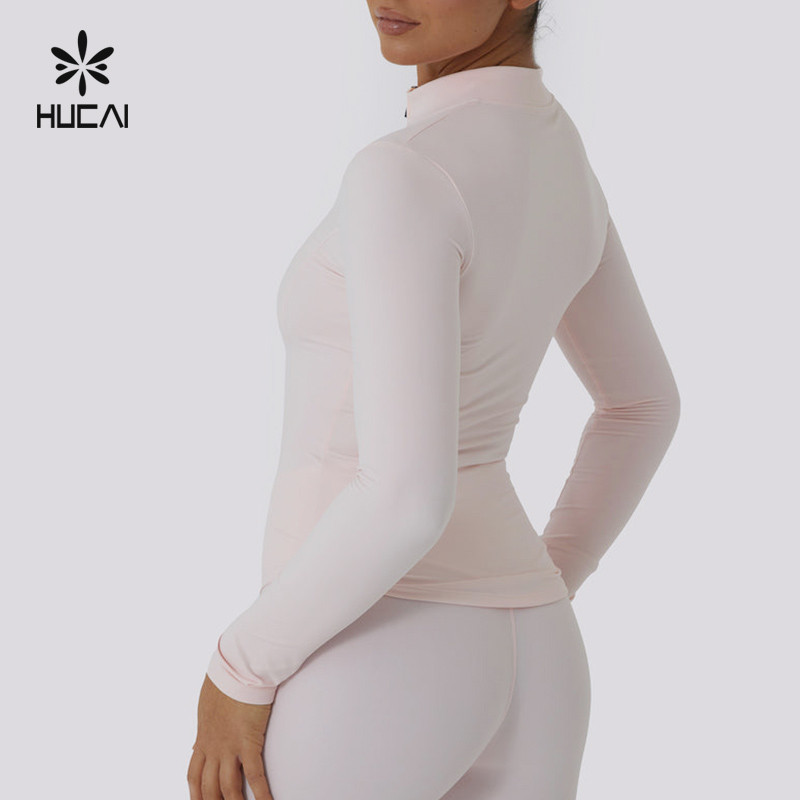
Travel-ready activewear is usually sold on a feeling: it packs small, it comes out of a bag looking presentable, and it does not need ironing in a hotel room. That feeling is decided long before the sample is cut, in fiber selection, knit or woven structure, fabric density, finishing route, and how the garment is folded. When a developing brand briefs this category to a manufacturer, the request often arrives as a single line, "wrinkle resistant", with no target, no test method and no care condition attached. HUCAI Sportswear reviews travel and easy-care programs for women's activewear brands, and the first development question is always the same: which of the four travel conditions actually applies to your product, and what will you accept as evidence that the material meets it?
Quick Answer
Wrinkle resistance in travel-ready activewear is a material system, not a fabric label. It depends on filament versus staple fiber, knit or woven structure, density, finishing route, and how the finished garment behaves after compression packing and laundering. The practical approach is to convert "wrinkle resistant" into a measurable target, test it on the actual fabric and the actual fold pattern, and confirm it before bulk rather than after the first customer complaint.
Table of Contents
- Who This Article Is For
- What Travel-Ready Actually Asks of the Fabric
- Fiber Choice: Filament and Staple Behave Differently
- Structure and Density: Where Crease Lines Form
- Finishing: Where Most Wrinkle Claims Come From
- What to Validate at Sampling
- Cost, MOQ and Care Label Consequences
- Decision Check
- Founder's Technical Insight (Jean Yuan)
- FAQ
- Final Takeaway
Who This Article Is For
- Primary reader: growing women's activewear brands building a travel, commute or multi-day trip capsule and defining fabric direction for the first time.
- Secondary reader: established brands adding an easy-care travel line inside an existing collection, where fabric consistency with the core range matters.
- Product stage: fabric shortlisting and sample brief preparation, before the first fit sample is cut.
- Problem being solved: the brief says wrinkle resistant, but nobody has defined what that means in a test, a fold pattern or a care condition.
- Who may not need this article: teams that have already locked a fabric with written test reports and only need a production slot.
What you gain from this article: a way to translate a vague travel brief into fabric, structure and finishing decisions, a sampling validation sequence you can put in a tech pack, and a clear view of what a finishing route costs you in hand feel, care wording and production planning.
What Travel-Ready Actually Asks of the Fabric
Travel is not one wear condition. It is four, and they stress a fabric in different ways. First, compression: a garment spends hours folded inside a packing cube or a carry-on, under the weight of everything above it. Second, repeated folding along the same lines, which is how a permanent crease appears at a sleeve or a knee. Third, humidity and temperature swings between a cabin, an airport and a destination. Fourth, limited care: a hotel sink, a quick hang, no iron.
Each condition points to a different property. Compression packing is about recovery from sustained deformation. Repeated folding is about crease sharpness and whether the line relaxes out. Humidity and heat are about dimensional stability. Limited care is about how the fabric behaves after a hand wash and a hang dry, which is often where a finish stops performing.
This is why "wrinkle resistant" alone is not a specification. A fabric can recover well from a folded state but show seam pucker at a placket, or look smooth on the hanger and fail after the first wash. Leading activewear brands that publish travel or commute capsules tend to solve this visually rather than chemically: matte synthetic surfaces, minimal panel breaks, and silhouettes with few sharp fold lines. That is a public design observation, not a claim about any brand's supply chain, and it points to a useful development lesson. Structure and seaming can remove visible crease risk before a finish is asked to hide it.
The same category also shows up in buyer communities as a care complaint rather than a fiber complaint: collars that lose shape, cuffs that stay creased, dark leggings that mark along the fold. Those reports are qualitative, but they identify where a validation protocol should concentrate. For a brand assembling a travel set, the useful next step is to align the garment architecture with the packing behaviour, which is where gym activewear development usually starts in our sample room.
Fiber Choice: Filament and Staple Behave Differently
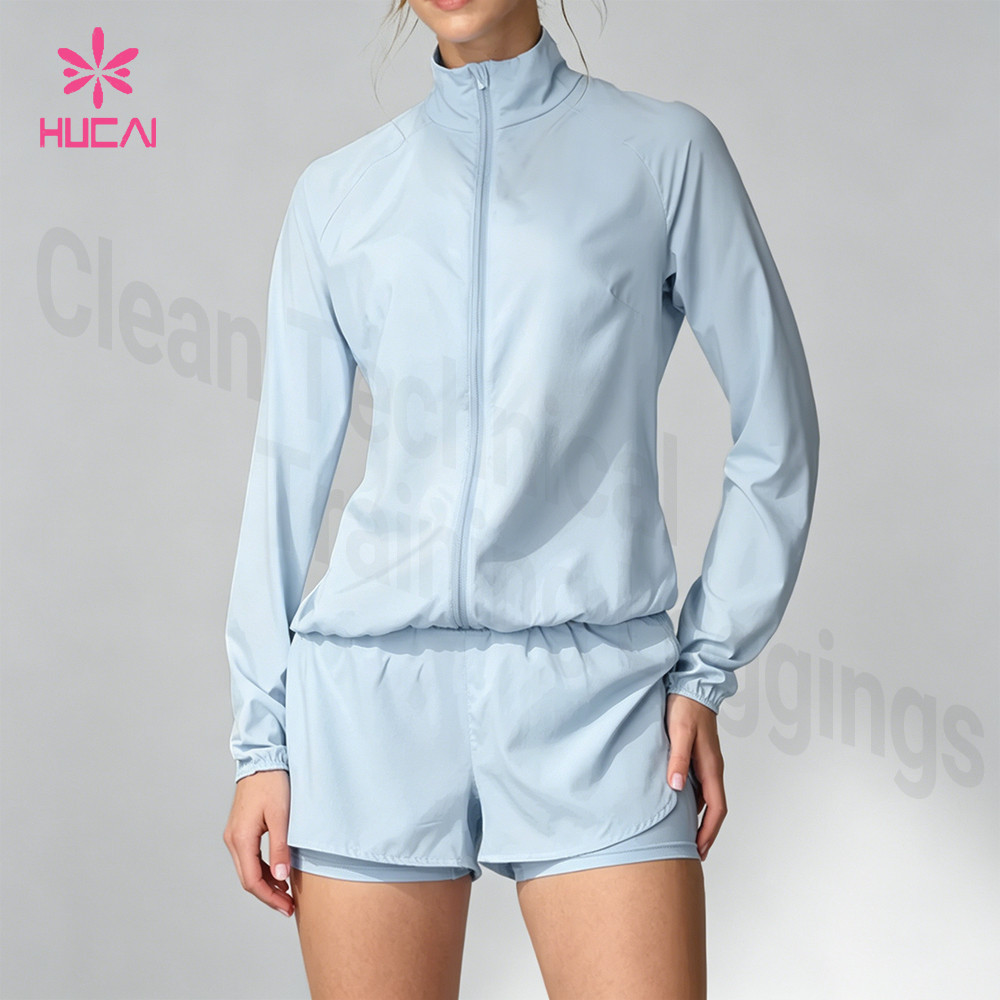
Most crease behaviour starts at the fiber. Filament yarns, typically polyester or polyamide, are continuous and smooth, so they slide back into place after folding and show fewer sharp creases. Staple yarns, such as cotton, wool, modal and other regenerated cellulose, are short fibers twisted together, which gives softness and a dry hand feel but also gives the fiber ends somewhere to bend and stay bent.
That difference is not a ranking. It is a trade-off map. A filament-based interlock can look flat and clean out of a bag but may read as technical or shiny against a brand's softer core range. A staple-rich jersey feels better against skin but will usually need more help from structure, density or finishing to hold a presentable surface after packing.
Blends are where most commercial travel fabrics sit, and the blend ratio changes the outcome more than the fiber names on the label. A small staple component softens the hand; too much and crease recovery drops. Texturized or air-textured filament adds bulk and stretch without the crease penalty of staple, which is why it appears often in travel knits.
Two cautions belong at this stage. First, do not accept a fiber name as evidence of performance: two polyester knits can behave very differently depending on yarn, density and finishing. Second, do not let hand feel be judged from a swatch card alone. A swatch that feels right flat may crease badly once it is cut into a sleeve. This is the point where fabric selection for stretch, recovery and surface should be treated as a development decision with tests attached, not a catalogue choice.

Structure and Density: Where Crease Lines Form
Structure decides where a crease can appear and how visible it will be. In a circular knit, the loop geometry allows the fabric to recover in two directions, so a fold tends to relax rather than hold. In a woven, yarns interlace at right angles, which gives a cleaner drape and a crisper surface but also a memory for the fold line, especially in a tight construction.
Density and weight matter as much as the structure type. A heavier, denser knit resists sharp creasing because there is more material to distribute the bend, but it also packs bulkier and dries more slowly, which works against the travel brief. A light knit packs well and may crease less sharply but can look thin at a seam. The right answer usually sits in the middle and is confirmed by a pack test rather than by GSM alone.
Panel design is the part brands control most directly and often overlook. Every seam is a hinge. A placket, a princess seam or a knee break concentrates the fold, and that is where a crease reads first in a photograph or a mirror. Reducing panel breaks, choosing a smooth construction instead of a heavily pieced one, and placing seams away from the fold lines can lower visible crease risk without changing the fiber at all.
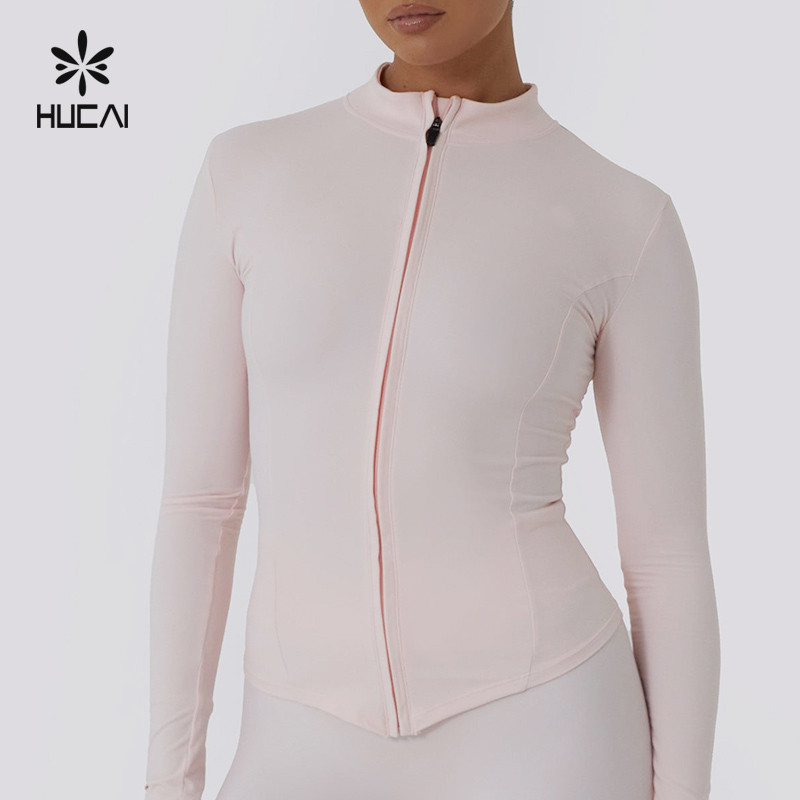
In HUCAI Sportswear's pattern review, the fold pattern of the packed garment is laid over the panel plan so the seam positions can be checked against the lines that will actually be compressed. For bottoms, the waistband and the knee area carry most of the travel evidence. A high-rise waistband with a clean front panel distributes compression better than a pieced front, and a straight or wide leg shows fewer sharp fold lines than a tight legging that has been compressed into a cube. This is why travel programmes often move toward leggings and pull-on bottom development with fewer front panels rather than toward tighter constructions.
Finishing: Where Most Wrinkle Claims Come From
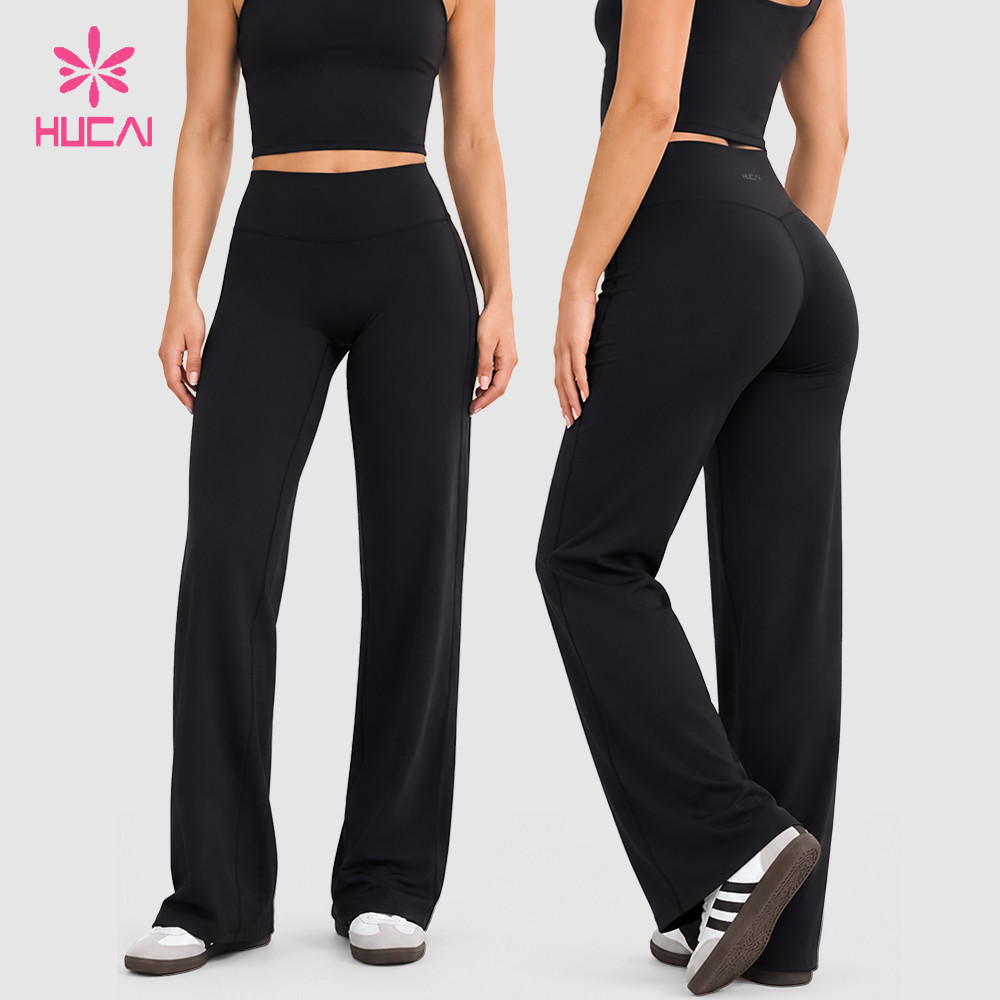
When a fabric is described as wrinkle resistant in a supplier line sheet, the property usually comes from finishing rather than from the yarn. Three routes appear most often. Mechanical finishing, such as calendering, flattens the surface and reduces visible fibre disturbance. Resin or crosslinking anti-crease finishing changes how the fiber relaxes after deformation. Surface treatment, whether a smooth calender or a light peaching, changes how light reflects off a fold and therefore how visible the crease looks.
Each route has a cost that belongs in the brief. Calendering improves surface smoothness but can reduce breathability and hand softness. Resin finishing can hold a flat appearance through packing, but over-application makes a knit feel papery and can affect stretch recovery and seam behaviour. Peached surfaces hide fine creases well but attract lint and can pill faster in areas of abrasion.
Durability of the finish is the question buyers ask last and should ask first. A finish that performs on the greige roll may weaken after the first home wash, so any claim should be tied to an after-laundering appearance evaluation, not to a bench observation. Industry bodies publish appearance-based methods for wrinkle recovery and for the appearance of garments after repeated home laundering; those methods describe how to grade, not what result a specific fabric will achieve. The honest position for a brand is a target grade compared against a reference photo set, agreed with the supplier before sampling.
There is also a design route that avoids the chemistry argument entirely. A smooth construction with few seams, a matte surface, and a silhouette that does not fold on itself will read as tidy in most travel conditions without a heavy finish. Several established brands take that route for travel capsules, and it is usually the cheaper and more stable option when the target market includes warm, humid destinations.

What to Validate at Sampling
The sampling stage is where a wrinkle target either becomes real or stays a sentence in a brief. A practical sequence has four parts, and all four should be written into the sample request so the result can be compared across suppliers.
Pack simulation. Fold the sample the way the end customer will, place it under a defined weight for a defined period, then unpack and hang. Photograph immediately, then again after a fixed interval. The point is not a lab number but a repeatable comparison between candidates.
Crease grading. Grade against a reference photo set rather than a verbal scale. A three-step or five-step visual scale agreed at the start removes most of the argument later, and it can be applied to the same garment after washing.
After-care behaviour. Wash to the care instruction you intend to print, dry as instructed, and grade again. Check dimensional change and seam appearance at the same time, since a finish that holds the surface but distorts the placket is not a win.
Construction interaction. Check the collar stand, cuff, placket, pocket mouth and knee area specifically. These are the places where a crease becomes visible and where a finishing route can create pucker instead of removing it.
Where the direction still lives in reference images, the fastest path is usually ODM development from reference images: the reference fixes the look, and the fabric and finishing route are then selected against the validation sequence above rather than around it.
Cost, MOQ and Care Label Consequences
A finishing route is a production step, and production steps change cost, minimum order and lead time. A stock fabric with no additional finishing is the simplest case. A fabric that needs a specific calender or resin route usually means a minimum yardage, a dye lot decision and a longer fabric lead time, all of which sit upstream of the garment MOQ.
Care labelling follows the same logic. A finish that is sensitive to high temperature limits the wash and dry instructions you can print, and that has a commercial consequence: a travel garment that must be washed cold and hang dried is a harder sell in a market used to tumble drying. It is better to decide that trade-off at fabric selection than to discover it when the care label is drafted.
Cost also moves with colour. Deep blacks and saturated darks show crease lines and surface sheen more than mid-tones, so a dark colourway may need a stricter surface standard than the same fabric in a light colour. That is a sampling question, not a marketing question.
HUCAI Sportswear plans a finishing route against fabric lead time, dye lot and the garment minimum at the same time, because approving a finish after the fabric is booked is where travel capsules usually lose their launch date. For a travel capsule, the practical planning baseline is a public MOQ from 200 pcs per style, with final colour, size, fabric, trim and customization planning depending on the confirmed project. Keeping the capsule on one or two fabric qualities, rather than one quality per style, is usually what protects both the minimum and the consistency. Bulk production often takes about 25-30 days after pre-production details and approvals are confirmed, depending on project scope, materials, processes, quantity and scheduling, and a finishing step should be counted inside that plan rather than after it.
Decision Check: Is the Travel Direction Ready for Sampling?
Before requesting samples, confirm the following:
- Travel condition defined: which of compression packing, repeated folding, humidity and limited care applies, and in what order of priority.
- Fabric direction agreed: filament, staple or blend, with the hand-feel consequence accepted in writing rather than assumed.
- Structure and panels fixed: knit or woven, density range, and the seam positions most likely to hold a fold line.
- Finishing route named: mechanical, resin or surface treatment, with the after-care limitation it creates.
- Validation method written: pack simulation, grading reference and after-laundry check included in the sample request.
If three or more criteria are confirmed, the direction is ready for a structured sample request. If fewer than three are resolved, more development planning will usually cost less than a revision round. A preparation checklist for the first inquiry is available in what to prepare before requesting a sample.
Mid-article checkpoint: if the fabric direction, panel plan and validation method are already written down and you hold a tech pack with measurements, send the specification for OEM specification review. If the travel brief is still a set of reference images, resolve the fabric and finishing route before the pattern is graded, because changing either after grading resets the fit work.
Founder's Technical Insight: Jean Yuan's Development Note
"When a brand brings us a travel brief, the mistake I see most often is treating the finish as a rescue step. The fabric is chosen for hand feel, the sample is cut, and then an anti-crease finish is asked to fix the packing behaviour. It rarely works, because the finish sits on the surface while the crease comes from the structure underneath."
"Two things go wrong in a predictable order. First, heat setting on a synthetic filament knit decides how the fabric remembers a fold. If the setting temperature or the tension across the stenter is uneven, one panel will relax out of a crease and the adjacent panel will hold it, and the garment looks inconsistent rather than wrinkled. Second, resin finishing applied too heavily to lift a crease grade makes the knit stiff at the seam. The placket then puckers after the first wash, and the complaint arrives as a quality issue even though the fabric passed the bench check."
"What we watch before bulk is therefore not a single wrinkle number. In our sample room, HUCAI Sportswear checks four things together: whether the fold line relaxes within the hang interval agreed with the brand, whether the placket and collar stand stay flat after the intended wash, whether stretch recovery at the knee and elbow is unchanged by the finishing route, and whether the hand feel still matches the swatch the brand approved. If the finish improves the crease grade but changes the hand or the recovery, we would rather adjust density or panel layout and keep the finish light."
"My checklist for a brand's development team before approving bulk yardage: confirm the finishing route in writing with the mill, not just the fabric name; keep one reference garment that has been packed and washed as the visual standard; state the wash and dry conditions you will print on the label; and agree who signs off if the first bulk lot grades differently from the sample. Those four items prevent most of the disputes I have seen on easy-care programmes."
FAQ
Can a manufacturer guarantee wrinkle-free activewear?
No. Wrinkle resistance can be specified as a target and validated against an agreed method, but travel conditions vary too much for an absolute promise. The workable approach is a graded target, a reference photo set and a defined pack and wash condition.
Which fabrics crease least in a travel capsule?
Filament-based synthetic knits and smooth wovens generally show fewer sharp creases than staple-rich jerseys. Blend ratio, density and finishing still change the result, so the fabric should be judged as a finished garment rather than as a swatch.
Does anti-crease finishing affect stretch recovery?
It can. A heavier resin route may reduce elasticity and stiffen the seam, which shows up as pucker at a placket or a collar stand. Recovery at the knee and elbow should be re-checked after finishing, not only on the greige fabric.
How should wrinkle resistance be tested before bulk?
Use a repeatable pack simulation, grade the result against a reference photo set, then wash and dry to the intended care instruction and grade again. Add dimensional change and seam appearance to the same review so the finish is not judged in isolation.
Does the finish survive repeated washing?
It depends on the chemistry and the care condition, and it should be verified through an after-laundering appearance evaluation rather than assumed. If the finish degrades early, the care label and the marketing language both need to reflect that.
What is the MOQ for a travel activewear capsule?
The current public MOQ starts from 200 pcs per style. Final colour, size range, fabric, trim and customization planning depends on the confirmed project, and a special finishing route can add a fabric minimum upstream of the garment minimum.
How long does sample development usually take?
Sample development usually takes about 10-15 days, depending on style, fabric, trim, logo, revision requirements and confirmed details. If a finishing route has to be developed or matched, the fabric lead time sits in front of that window.
Can wrinkle resistance be combined with a soft hand feel?
Often, but not automatically. The usual compromise is a lighter finish with a denser structure, or a filament blend with a texturized yarn. The combination should be proven on a garment sample, since hand feel judged flat rarely predicts how the fabric reads at a collar or a cuff.
Final Takeaway
Travel-ready activewear is decided by material logic, not by an adjective. Fiber type sets the starting behaviour, structure and density decide where a crease becomes visible, finishing changes the surface and often the hand, and the care label records the compromise. The brands that get this right treat wrinkle resistance as a target with a test attached, agree the reference standard before sampling, and keep the finish as light as the structure allows.
Ready to develop: send your tech pack, fabric direction and intended care instruction for OEM specification review. Still defining the direction: share reference images, the travel conditions that matter for your market, and the hand feel you want to keep, and the fabric and finishing route can be narrowed before pattern grading begins.
About HUCAI Sportswear
- Founded in 1998, specializing in women's activewear and sportswear manufacturing
- OEM and ODM development support for sports bras, leggings, shorts, tops and matching sets
- Structured sample development and sample-to-bulk consistency control
- AQL 2.5-based inspection as part of the quality workflow
Current certification information can be reviewed during supplier evaluation based on the project and documentation requirements.